dailynewsnblog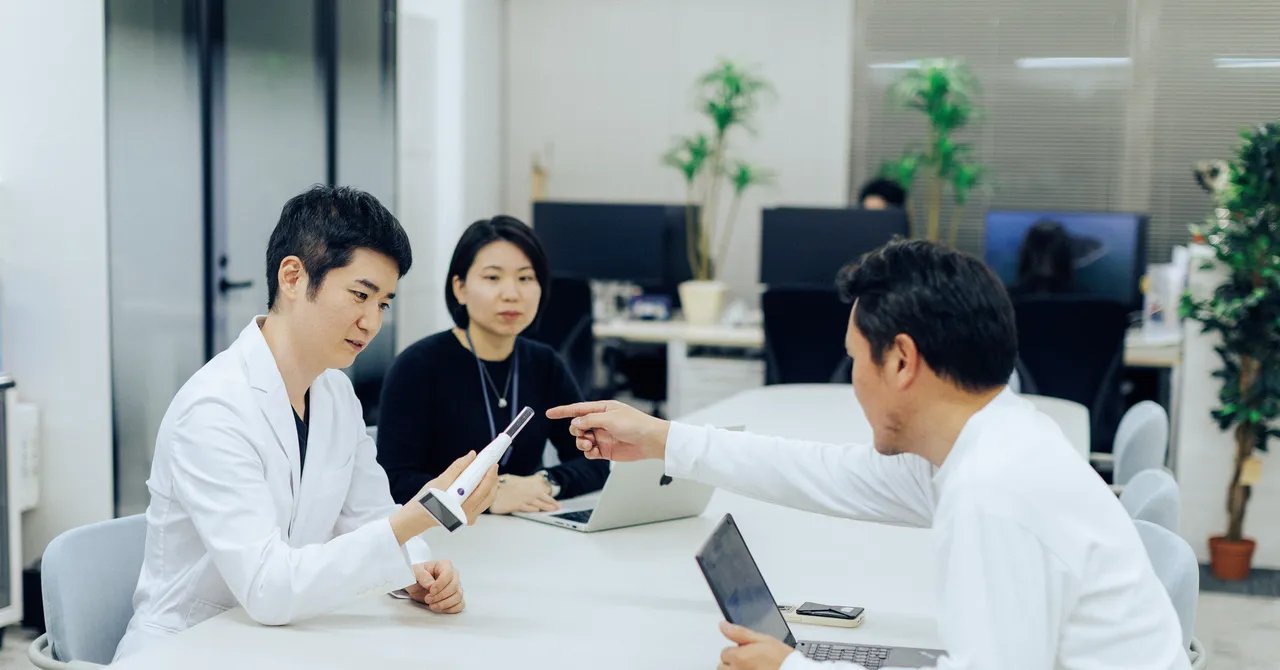
When a doctor examines a patient’s throat, they use a process that’s been handed down pretty much unchanged since ancient times. It’s one of the most fundamental components of the physical exam, alongside measuring body temperature and listening to a heartbeat. However, the patterns of findings that appear in the throat differ depending on the pathogen, and an enormous amount of information lies hidden there. A Japanese company called Iris, led by Sho Okuyama, is seeking to unlock that information using artificial intelligence.
The system developed by Iris, Nodoca, uses AI to analyze images of the pharynx captured with a compact camera-equipped device, together with information from the patient’s medical interview and other data, and returns an influenza assessment in a little over 10 seconds. It eliminates the need for the conventional test—one that is prone to causing discomfort because it requires inserting a swab deep into the nose to collect a nasal specimen—and can also be used at an earlier stage after symptom onset.
In 2022, it became the first AI-equipped medical device in Japan to receive approval as a “new medical device” and gain coverage under the national health insurance system. It has since been introduced at more than 2,000 medical institutions across Japan. In October 2025, it also received approval for an additional function related to Covid-19.
Okuyama is a former emergency physician who also has experience practicing medicine on remote islands. On an island with only a few hundred residents, the only medical equipment available was essentially a stethoscope, and he says he had to rely on his own eyes and ears to treat patients.
“When people hear ‘medical AI,’ they tend to think of the part that makes diagnoses,” Okuyama says. “But the real differentiating factor lies in sensing—how the data is acquired. We developed our own hardware and ventured into the area of pharyngeal images, which no one had touched.”
When the company was founded in 2017, there was no training data for AI focused on the throat. Okuyama therefore lent dedicated cameras to around 100 medical institutions and, over the course of about three years, collected data with patients’ consent. By overcoming three major uncertainties—the development of the hardware, the collection of training data, and whether AI-assisted diagnosis could truly be made to work—the company opened the path to practical implementation.
Once Nodoca had been commercialized, its accuracy improved at an accelerating pace. Every time it is used in clinical practice, anonymized processed data are accumulated. The number of throat images, which had been in the hundreds of thousands before launch, has now grown to several million. This network effect has become a barrier to entry for competitors, and no latecomers have emerged in the same field.
The potential of Nodoca extends beyond infectious diseases. Images of the throat capture patterns in the mucosa and blood vessels, and the company is also conducting research and development on AI capable of detecting lifestyle-related diseases such as diabetes and hypertension by identifying changes in those patterns.
“I think that in about 10 years, we’ll reach an era in which a single photograph of the throat can be used to perform a comprehensive range of tests,” Okuyama says. “The cost of AI inference is extremely low, so even if we increase the number of tests, the cost of providing them hardly changes.”

The Goal of “Redesigning” Health Care
Looking further ahead, Okuyama is considering whether AI can serve as the foundation for redesigning health care itself. AI-powered medical interviews and online consultations have already become a reality, followed by in-person care from primary care physicians and treatment at specialist hospitals. Okuyama envisions a future in which AI is implemented at every stage of that process.
To make this AI-driven redesign of health care a reality, Okuyama has also been actively proposing regulatory reform and lobbying government ministries.