dailynewsnblog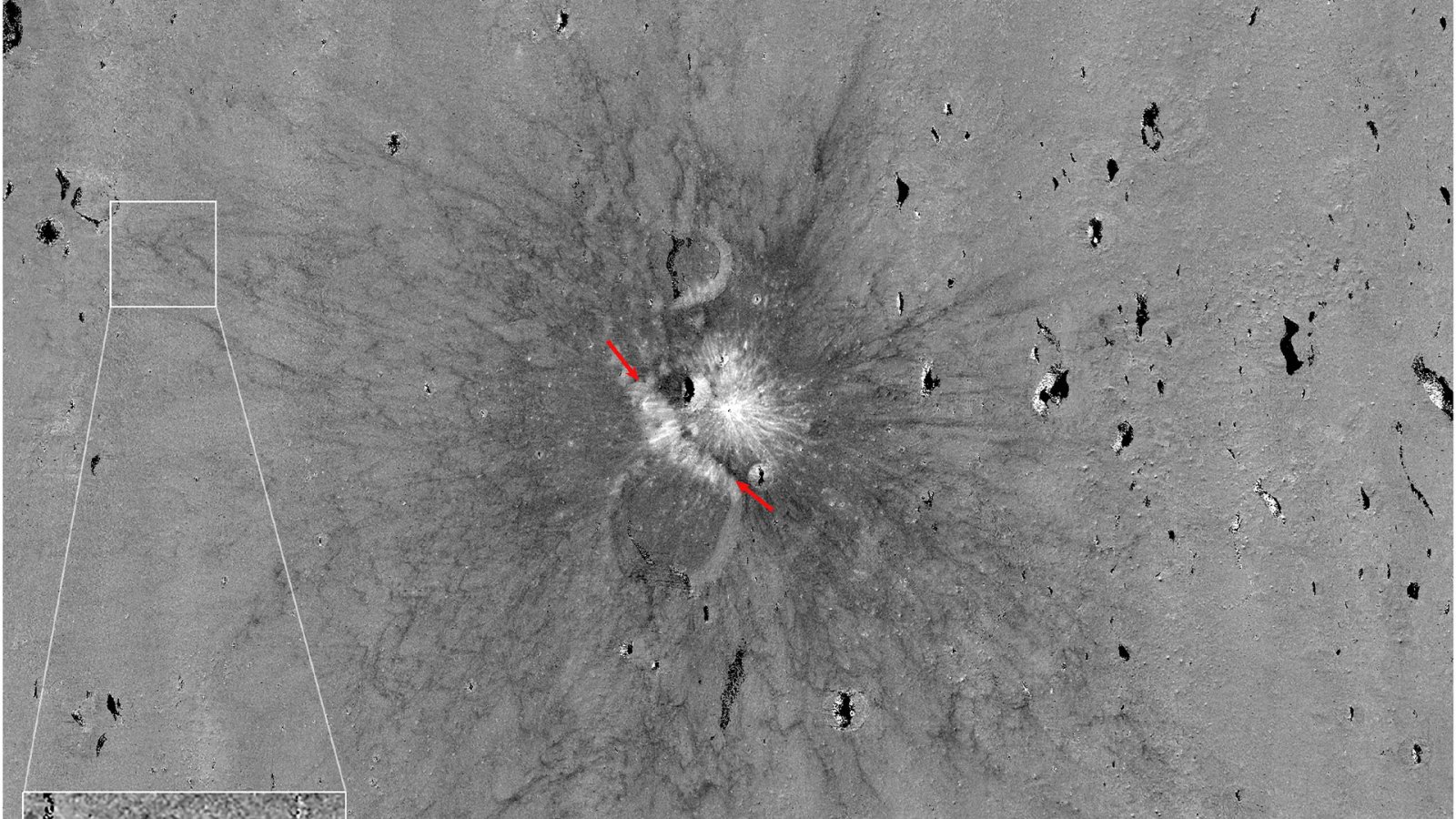
The moon has more than 2 million craters on its surface, but the overwhelming majority of the big ones happened long before humans ever started looking at it. That means when someone notices a new big crater, it’s a pretty big deal, and that’s exactly what happened when NASA’s Lunar Orbiter found a brand-new crater it had never seen before that was large enough to get someone’s attention.
The crater was spotted by NASA scientist Robert Wagner on a routine data-quality check and published in an article in Science Advances. Wagner says the object that crashed into the moon and created the crater likely hit sometime between April 11, 2024, and May 22, 2024, and was likely about the size of a six-story building. It left a rather sizable dent, which now has the distinction of being the biggest new crater ever spotted by NASA’s Lunar Reconnaissance Orbiter.
“I just stopped, dropped everything, and started looking into what that spot was,” Wagner said in a statement.
The LRO scans the entire moon’s surface once every 14 days, meaning humans have a constant stream of new data about the surface, and since the moon has no atmosphere, its pockmarked surface remains largely intact until another asteroid or meteor barrels into it.
NASA says that the LRO has found approximately 1,000 new impact craters and over 100,000 other changes to the moon’s surface during its 17 years in service. Since the satellite can see craters only about 30 feet wide or larger, that also means many small impacts go virtually unnoticed, leaving the total number of changes to the moon’s surface a mystery.
One big hole

What makes this particular crater special is that it’s huge. At 728 feet wide, it’s more than twice the size of a football field, and at 141 feet deep is about the length of three yellow school buses stacked end to end. Impact craters that big don’t show up every day, every year or even every decade.
“Crater production models indicate that an impact of this magnitude is expected to occur only once every 132 years on the moon,” Wagner wrote in the article. “As such, this event constitutes a statistically rare, effectively one-in-a-lifetime observation.”
It’s the latest in a pretty busy year for the moon, which had human visitors for the first time in 50 years with the Artemis II mission before an abandoned SpaceX rocket crash-landed into it, which left a crater substantially smaller than the one Wagner found.
NASA named the crater McGetchin, after Tom McGetchin, a scientist who became the director of the Lunar Science Institute in 1977, shortly before his death in 1979.

See full bio