dailynewsnblog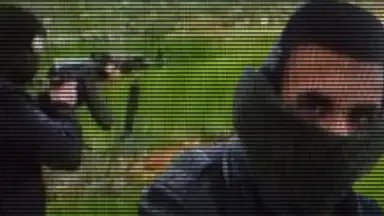

Wassim Boughadou is wanted by the RCMP for terrorism. He insists he is “absolutely” willing to fly home from Turkey to surrender to police.
But the Montreal-born 34-year-old claims he can’t because Global Affairs Canada won’t let him.
“I am in a limbo,” he wrote in a text message, part of a cache of documents obtained by Global News that have gone unreported until now.
The RCMP and Global Affairs Canada would not comment on Boughadou. His Ottawa lawyer also declined to comment.
The case, however, is detailed in hundreds of pages of court records that show how Ottawa is struggling to deal with Canadian citizens captured abroad during the Syrian conflict.
Canadians in Syria, Iraq and Turkey have asked the courts to order the government to repatriate them. Intelligence officials warn that some of them are national security threats.
The debate over whether to bring them back or leave them overseas has left a growing list of Canadians wanted for terrorism — but not so badly that the government has helped them come home.
According to an appeal Boughadou filed in the Federal Court, he was arrested in Turkey in 2017 and imprisoned for being a member of a terrorist organization.
He claims he was forced to sign a statement that said he was part of the Islamic State, but denied he was in the group, although he said his wife was.
Once he completed his sentence in March 2024, Turkey ordered his deportation and he bought a seat on a flight from Istanbul to Montreal that was to arrive on May 15 of that year.
On that same date, Quebec court records show the RCMP national security team in Montreal obtained a warrant for Boughadou’s arrest on the grounds that he might commit a terrorist offence.
Boughadou’s family notified the government about the flight booking, but Canadian embassy officials in Ankara would not renew his expired passport.
Three more times in 2025, he tried to fly home, but without a travel document, he had to abandon the trips, according to the files.
Canadian officials last denied his repatriation request on Nov. 6. 2025, saying Turkey was alleging he had escaped from detention and was a fugitive, which he denies.
“In the absence of a passport or travel document, the applicant does not have permission to board an international flight,” his lawyer, Yavar Hameed, told the court.
If not for the government’s “obstruction and delay,” Boughadou would have been back in Canada more than a year ago, according to the lawyer.
Iraqi security forces lead suspected Islamic State militants for questioning, after they were transferred from Syria to Iraq, at Al-Karkh Central Prison in Baghdad, Iraq, Thursday, Feb. 12, 2026. (AP Photo/Hadi Mizban).
The former Montreal computer programming student is not the only one fighting in court to get home, as the government responds to those it calls Canadian Extremist Travellers (CETs).
The families of four Canadian men held in Syria as suspected ISIS members also took the government to court, but a 2023 ruling said Ottawa had no obligation to repatriate them.
In January, the mother of a Canadian held in Syria asked the Federal Court to order the government to bring home her son, who was identified only as S.S.
Iraqi officials said in February that they were holding an undisclosed number of Canadians while they investigated their alleged involvement in ISIS.
The Canadian Security Intelligence Service addressed the situation in its May 1 annual report, which referred to the “possible repatriation to Canada” of ISIS members held overseas.
“Absent of sufficient mitigation measures, CSIS assessed that some of these CETs would likely pose national security and public safety risks,” the report said.
The RCMP said in a statement to Global News that managing the dangers posed by returning extremists was one of its priorities.
“When the RCMP becomes aware of an individual’s return to Canada, we collaborate with a range of government of Canada departments and agencies, as well as law enforcement and community partners, to assess and mitigate potential risks,” the police force said in a statement.
Responses are guided by “robust” threat assessments and can include terrorism charges or peace bonds that restrict the movements of suspects.
“The RCMP can also engage with a returnee and their family to open up dialogue, to help support the individual’s disengagement from their radical ideology.”
Brother-in-law says they went to Syria together
Free Syrian Army fighter, Azaz, Syria, Dec. 17, 2012. (AP Photo/Virginie Nguyen Hoang, File).
A Canadian of Algerian descent, Boughadou was allegedly part of a group of Montreal youths who were seen engaging in what appeared to be military-style training at a Quebec shooting range before leaving for the Middle East.
At the time, the civil war in Syria was becoming a magnet for extremists from around the world, and the Montreal group attracted police attention.
“They were disenfranchised young people that got together, they radicalized,” former RCMP assistant commissioner Ches Parsons said in an interview.
Now retired from policing, Parsons was the RCMP’s director general of national security when Boughadou and his associates were on the radar of counter-terrorism investigators.
He said the “Cote-des-Neiges crew,” named after a Montreal neighbourhood, felt they weren’t accepted in Canada, and “found their way overseas.”
Some went to Syria to join armed Islamist groups, but “when they get over there, they find that war is not what they thought it would be,” said Parsons, a partner at Pearl Strategic Counsel.
Boughadou left Canada in 2012. In an interview with La Presse, he said his departure was precipitated by the confiscation of his firearms by police, but denied supporting ISIS.
He claimed that as a Muslim, he was not accepted in Quebec, “especially if you have a political vision of Islam that they don’t like.”
“If you want to go and help someone who is oppressed, you don’t have the right. When you are oppressed, you must defend yourself,” he reportedly said.
“We must fight to defend Islam.”
“According to the Canadian government’s definition, yes, I’m a radical. I won’t lie,” he continued. “But in my eyes, I’m not a radical. I’m not an extremist.”
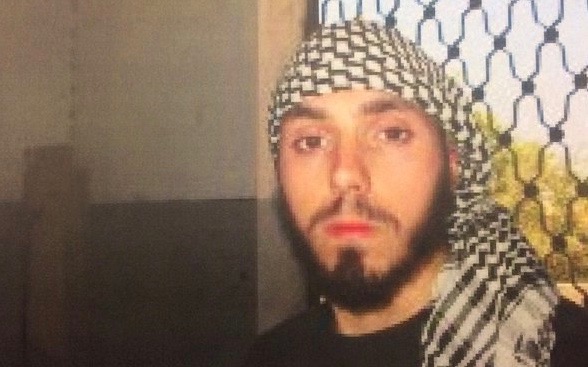
Ismael Habib knew Boughadou because their wives were sisters. He said Boughadou warned him before leaving Canada that police suspected them both of terrorism.
Concerned, Habib joined Boughabou in Turkey and they crossed the border into Syria, he said in statements following his arrest.
Ismael Habib.
They stayed in territory controlled by the Free Syrian Army, the Islamist group Ahrar Ash-Sham and a band of Chechens, Habib said.
Both bought AK-47s and were photographed “in combat gear, with Boughadou wearing a bulletproof vest and the accused sporting a long knife at his waist,” according to the court.
In his testimony, Habib downplayed the trip to Syria, but the court said he was not credible and had gone there for “jihad,” spending three months with the armed groups.
Habib was arrested after crossing back into Turkey from Syria, apparently because Canada had cancelled his passport. He was deported to Canada and convicted of trying to join ISIS.
In response to Habib’s statements, Boughadou said the courts had found he was not credible. He also claimed La Presse had misquoted him.
Other news outlets, meanwhile, had reported “baseless” allegations about him, he said, and a video seized by police during a search of his parents’ house had been mischaracterized.
The video, which shows him firing a military-style rifle while advancing on foot, was part of his marriage celebration in Algeria, where such behaviour is “Arab custom,” he said.
His face was masked in the video, he claimed, because he has “an allergy to gunpowder.”
The materials recently filed in court also tell a new version of events: that he went searching for his family and was “falsely” accused of going to Syria.
Wife tried to ‘lure’ him to Syria
The account of Boughadou’s history was submitted to the court in the affidavit of an activist who is helping him return to Canada.
According to the self-described social justice advocate Matthew Behrens, Boughadou appointed him to act as his representative with Global Affairs Canada.
The activist claimed Boughadou also asked him to relay his version of events to the court because it would be too “difficult and re-traumatizing” to do so himself.
According to the affidavit, Boughadou’s troubles began with his wife’s sister, whom he said “agitated for his family to go to Syria and join ISIS.”
“Boughadou rejected the idea and told me he asked his wife to drop contact with her sister. She refused and was indoctrinated to the point that she ran away with her sister to Syria.”
Looking for help finding his wife and son, he went to the RCMP, but the officers instead tried to recruit him to spy on a Montreal imam who was “sending individuals to go to Syria,” the affidavit said.
“Boughadou was told he would receive money, protection and assistance getting his son back” if he took the assignment, according to the affidavit.
But he refused and flew to Turkey, where he hired local women to search ISIS guesthouses in Syria for his wife, the affidavit said.
They did not find her, the affidavit said, adding that Boughadou believes his wife’s plan all along was to “lure” him to Syria, and that when he resisted, she began “encouraging ISIS to harm him.”
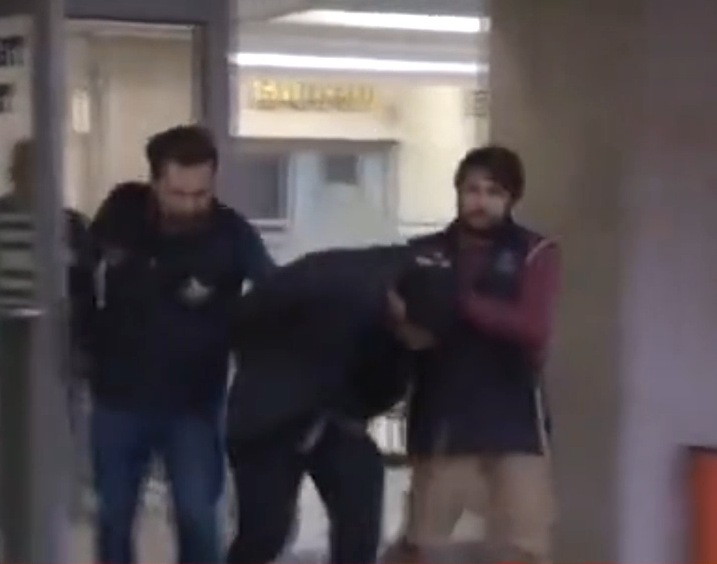
Image from news video showing the arrest of Wassim Boughadou in Adana, Turkey, March 2017.
In March 2017, Boughadou was arrested in Adana, Turkey. He was convicted by a Turkish court in 2018 of being a member of an “armed terrorist group.”
His appeal to the Canadian court alleges the conviction was based on a coerced confession, and said he was tortured until he signed a statement written in Turkish.
“He believes the statement that he was forced to sign incorrectly conceded that he had joined ISIS in an effort to rescue his son,” according to the activist’s affidavit.
Wassim Boughadou has applied to renew his expired passport, but is still waiting.
While Boughadou was imprisoned in Turkey, his Canadian passport expired. He applied to renew it in 2023, in anticipation of his upcoming release.
But in text messages filed in court, Canadian officials told Boughadou that even if he had a travel document, he could not leave the country due to his “irregular” status in Turkey and “factors beyond our control.”
“I am living in a pitiful situation,” he wrote in an email to the Canadian Embassy in Ankara, in which he said he was “basically living as a refugee.”
His rights were being infringed, he said. Should he be arrested or hospitalized in Turkey, he would hold the government responsible, he wrote.
His court application claims the situation has exacerbated his autism and attention deficit hyperactivity disorder, as well as other health problems.
It asks the court to order the government to issue him a travel document so he can return, adding that Turkish authorities have deemed him de-radicalized and he is willing “to surrender to the RCMP upon arrival.”
Messages with the Canadian Embassy about returning Wassim Boughadou to Canada.
Federal Court
Parsons said it’s better to bring Canadian extremists home so police can at least put them on peace bonds, and intelligence officials can watch them.
Otherwise, they could escape and go on to commit acts of terrorism, or return to Canada undetected, creating national security problems.
“If you leave them overseas, there is the risk that they will get out and then you lose control of them,” he said.
“All things considered, at least within the context of the current threat environment, I think it best to bring them home where we can keep our eyes on them and give them the best chance of being rehabilitated.”
Former CSIS analyst Phil Gurski said Canada can’t stop citizens from returning but shouldn’t facilitate it for those involved in terrorism.
The difficulty is that police might lack sufficient evidence on what Canadians did while serving in a foreign terrorist group, he said.
“They’ve got to be arrested and charged, but my concern is we won’t have the evidence for a successful prosecution.”
To date, Canada has repatriated women who left the country to join ISIS, as well as their children, but no men.
During fighting that erupted in northeast Syria in January, the U.S. transferred male ISIS suspects who were imprisoned there to Iraq.
“Canada is aware of the transfer of detainees from Syria to Iraq, including reports of Canadian citizens being transferred,” a Global Affairs Canada spokesperson said.
“The government of Canada is not currently in the process of repatriating any Canadians from Iraq.”
Stewart.Bell@globalnews.ca