dailynewsnblog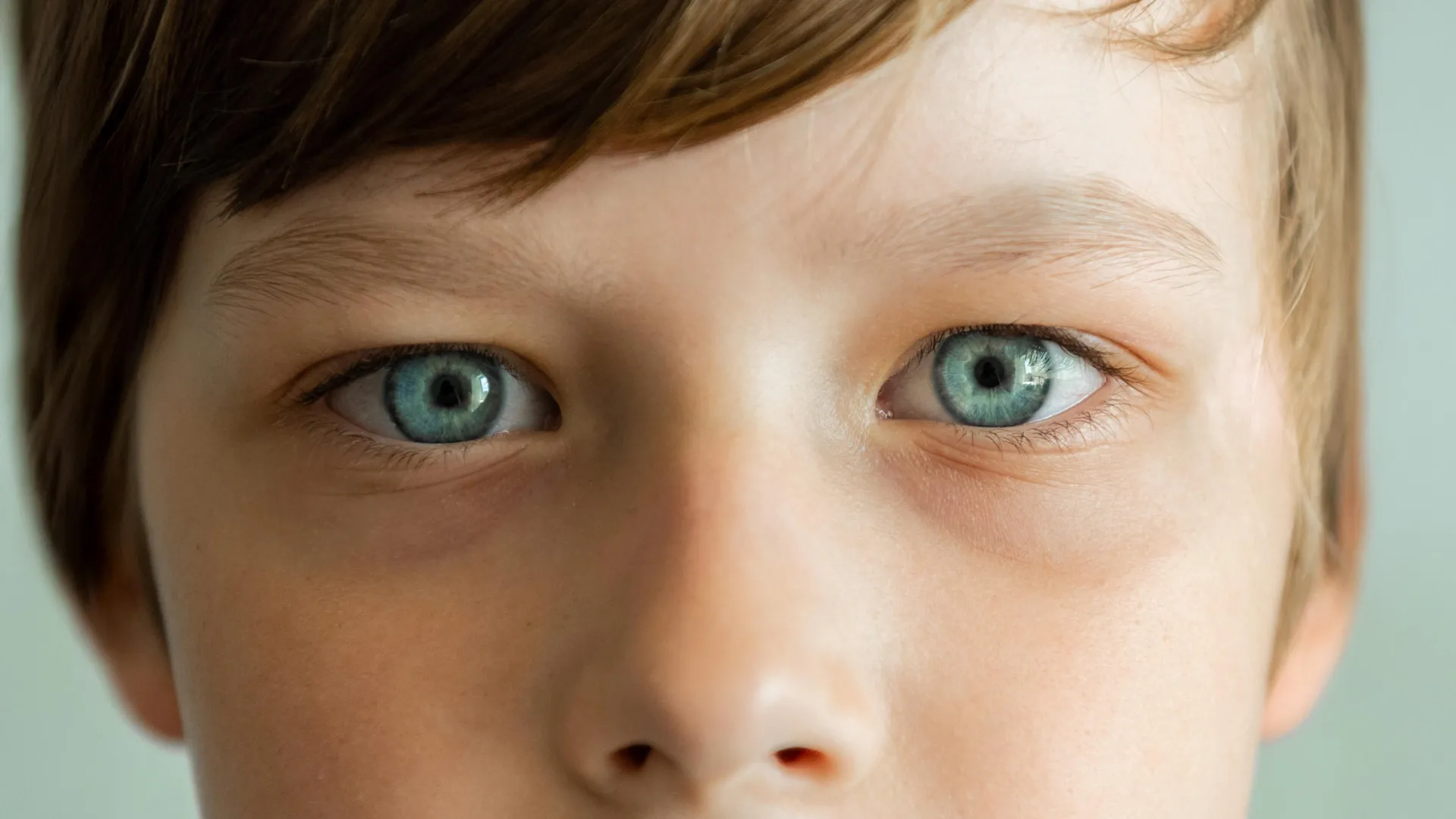
Children who spend more time indoors looking at screens and less time outside are more likely to develop myopia, also known as nearsightedness. The problem is growing rapidly worldwide, with some experts estimating that nearly 5 billion people (or 50% of the world population) could be nearsighted by 2050.
New research led by scientists at Cincinnati Children’s and the University of Alabama at Birmingham points to indoor lighting as a possible way to reduce that risk. The findings were published online Aug. 18, 2026, in Cell Reports Medicine.
The study examined indigo light, a short wavelength of visible light that is plentiful in natural sunlight but largely absent from standard white LED lighting. In experiments with tree shrews, whose visual systems share important similarities with those of humans, researchers found that exposure to indigo light completely prevented the development of nearsightedness.
“The model of myopia we use in the tree shrew is fairly extreme,” says corresponding author Richard Lang, PhD, director of research in the Division of Ophthalmology at Cincinnati Children’s. “So, if indigo light can suppress myopia in these tests, then it should also be quite effective in humans.”
How Myopia Changes the Eye
Myopia develops when the eye becomes too long from front to back. As a result, incoming light focuses in front of the retina rather than directly on it, making distant objects appear blurry.
The condition often begins during childhood and may continue to worsen through adolescence. Glasses or contact lenses can correct blurry vision, but severe myopia also raises the risk of serious eye problems later in life, including retinal detachment, glaucoma, and macular degeneration.
Why Researchers Study Tree Shrews
Tree shrews were chosen for the experiments because their eyes have anatomical and optical characteristics that are similar to human eyes.
First author Rafael Grytz, PhD, a visual sciences expert with the University of Alabama Birmingham (UAB), uses tiny spectacles designed for tree shrews. These spectacles produce a strong signal that encourages myopia in one eye, while the other eye provides a comparison.
“Even though tree shrews look like squirrels, they are a near-primate, with an eye very similar to that of humans, and so are a good model to study the cause of myopia in the human population,” Grytz says.
The researchers exposed the animals to several different wavelengths of light and tracked how their eyes changed. A biometer was used to measure the eye shape and axial length, while an autorefractor monitored changes in refraction over time.
Searching for the Right Wavelength
Previous experiments in mice had indicated that violet light near 380 nanometers could reduce myopia. Those studies also showed that opsin 5 (OPN5), a light-sensing receptor, was necessary for the protective effect.
However, light at that wavelength did not produce the same response in tree shrews. Their eye lenses, like human lenses, block most wavelengths below roughly 400 nanometers.
“Human lenses, and now we know tree shrew lenses, don’t transmit a lot of light in the ultra-violet spectrum,” Lang says. “They basically cut off most wavelengths below 400 nanometers. This finding pushed us to explore slightly longer wavelengths that could still stimulate OPN5. Ultimately, we found that indigo light from 419 to 446 nanometers was the most effective at preventing myopia.”
That result led the researchers toward indigo light, which is capable of passing through the lens while still activating the biological pathway they were investigating.
What Indoor Lighting May Be Missing
The findings add support to the idea that modern indoor environments may expose developing eyes to a different spectrum of light than humans experienced throughout most of their evolution.
Standard white LEDs generally peak around 450 nanometers and provide plenty of longer-wavelength light needed for normal vision. However, they contain relatively little indigo light, which appears to activate nonvisual opsins involved in biological processes beyond forming images.
“We evolved outside in the full-spectrum light provided by our sun,” Lang says. “When we live inside, we don’t get all the wavelengths the eye needs for normal refractive development, and so we get myopia. That’s the basic message of this paper.”
One possible strategy for reducing myopia is for children to spend more time outdoors. Outside, their eyes regularly switch focus between nearby and distant objects, and their bodies receive the full spectrum of natural sunlight. But researchers note that dramatically reversing society’s shift toward indoor, technology-centered lifestyles may be difficult.
A second possibility is to redesign indoor lighting so that it better reproduces the wavelengths present outdoors.
In 2021, building on earlier research into the effects of light on eye development, Cincinnati Children’s became the first pediatric hospital to install a programmable, full-spectrum lighting system in its neonatal intensive care unit (NICU). Researchers are continuing to study the effects of that system.
Specialty lamps are already sold for other biological purposes, including helping people cope with disruptions to natural circadian rhythms such as jet lag. But lighting products designed with the particular characteristics that might help prevent myopia are not yet widely available.
Testing Indigo Light in Children
The Science of Light Center at Cincinnati Children’s is investigating how different lighting environments may influence children’s health. Although the tree shrew experiments produced strong results, researchers still need to determine whether indigo-enriched lighting can actually prevent myopia in children.
The next stage of the research is expected to involve installing improved lighting systems in participating daycare spaces. Children would then be followed over time so researchers could compare myopia rates with those seen in daycare centers using conventional lighting.
According to Lang, the goal is not simply to increase the brightness of indoor spaces. Instead, researchers want to make artificial light more biologically complete by bringing its spectrum closer to the natural light humans evolved under.
“What’s our best option? It is to change the lighting environment inside,” Lang says. “If future clinical studies confirm the findings, indigo-enriched lighting could become a safe, passive and scalable way to help reduce childhood myopia risk.”
About the Study
The research was conducted through a collaboration between Richard Lang’s team at Cincinnati Children’s and Rafael Grytz’s group at UAB. Takahiro Yamashita at Kyoto University and Mehlika Inanici at The University of Washington also made important contributions.
Funding came from several organizations, including the National Eye Institute of the National Institutes of Health (EY026588, EY036560, EY032633, EY003039, EY038143, EY028666, EY032029, EY032752, EY032566, and EY034456); the National Institute of General Medical Science (GM152641); the Japan Agency for Medical Research and Development (22gm1510007); the EyeSight Foundation of Alabama, Research to Prevent Blindness, the Henry M. Hollis Fund, the Emma and Irving Goldman Scholar Endowed Chair and the Cincinnati Children’s Hospital Research Foundation.
Grytz and Lang report that they are inventors named on pending patents covering lighting devices related to the research. Grytz is also founder and CSO of Electric Indigo, a UAB startup in which UAB holds an ownership interest.