dailynewsnblog
Being an airline pilot in the US was not always the extremely high-paying career that it is today. Fundamentally, salaries are driven by supply and demand, but in the 2000s, most US carriers were struggling. In addition to the fact that airlines generally weren’t hiring, companies at times furloughed pilots during the decade, and the unions went to the negotiating table to work out a solution to stop or minimize the furloughs. Among other concessions, they agreed to large pay cuts.
But looking beyond the legacy carriers, pilot salaries at regional airlines were also far lower than they are today, historically paying new first officers under $25,000 a year. But there’s always been an alternative path to the legacy carriers: the US Air Force and the US Navy. While commercial pilots have received large salary boosts in recent years, the US military remains a lucrative path to becoming an airline pilot and is high-paying in its own right.
The Breakdown Of US Navy Pilot Pay

The most commonly cited component of a Navy pilot’s salary is the base pay. The annual base pay for a new O-1 Ensign amounts to just under $50,000, which can jump up to over $113,000 for an O-4 Lieutenant Commander with over ten years of service. Those who reach the O-5 Commander rank may find themselves earning between $80,000 and $137,000 a year in base pay, while O-6 Captains are entitled to a base pay salary between $96,000 and $172,000, depending on years of service.
But in addition to base pay, the US Navy also offers Aviation Incentive Pay (AvIP), essentially additional flight pay. This starts at $125 per month and grows up to $840 per month for those with 14 years of experience. The third layer of compensation is the Aviation Command Retention Bonus (ACRB), which pays out $17,500 per year for a two-year commitment or $40,000 per year for a three-year commitment, while the US Navy also offers a separate $120,000 three-year bonus to select TAR (Training and Administration of the Reserve) officers at the O-5 rank.
As well as the direct compensation, naval aviators also receive a tax-free basic housing allowance, as well as a basic tax-free allowance for food costs. As a whole, a career in the US Navy can be highly lucrative, with the Navy offering significant financial incentives in addition to generally high direct compensation. This is an attempt to improve retention rates, as the Navy generally struggles with pilot retention.
The Other Benefit Of Going To The Navy

While legacy airline pilot salaries are high due to the overall success of these airlines and a rapid increase in senior pilot retirements, regional salaries have increased largely due to a reduced supply of new pilots. Largely, this is because of the FAA’s 1,500-hour rule, introduced in 2013, which requires pilots to hold at least 1,500 hours of total flight experience to qualify for an ATPL. This delayed the timeline for prospective pilots to reach the airlines, where the real money can be earned, and given that flight training can exceed $100,000, it made the career far more difficult financially.
At the US Navy, however, aviators are given a salary during training rather than having to pay six figures to fly. In addition, while regional pilot salaries today are competitive with those paid to Naval aviators, pilots going the civilian route typically need to spend at least a year, but usually two or three years, working other jobs as a commercial pilot (but not an airline pilot). The most common job that new commercial pilots take to gain their 1,500 hours is working as a CFI (certified flight instructor), but these jobs pay very little compared to the Navy.
Path To The Airlines | Time |
|---|---|
Flight training (PPL->IR->CPL->MER) | One to two years |
Time building (250 hours to 1,500 hours) | One to two years |
Regional airline | At least two to five years, time as captain typically desired |
The Navy (as well as the United States Air Force) has long been a popular pathway for prospective aviators looking to make a career as a pilot. Navy pilots are typically required to serve for eight years after being qualified, in addition to their roughly two-year training period. When looking at the historical outlook for a pilot’s earnings during those ten years, the military was often the more lucrative choice. Of course, the downside to serving in the military is the service commitment and the dedication required, which isn’t for everyone.
How Much Do Fighter Pilots Earn Vs. Commercial Airline Pilots In 2026?
A closer look at what pilots earn in both fields around the world.
Why The Navy Is No Longer As Popular A Pathway

Neither the Navy nor the Air Force have ever been a quick pathway towards becoming an airline pilot. With a decade-long service commitment, aviators remain enlisted until their 30s, and the work is also highly demanding, as is the lifestyle. What’s more, those who enlist are not guaranteed to fly fixed-wing aircraft, or even to be selected as a pilot at all. The benefits of the Navy, however, are the high pay, the lifestyle for those who prefer it, as well as the skills aviators gain from military flying.
In recent years, however, legacy airlines have been hiring at an unprecedented rate, and have introduced flow programs from regional subsidiaries. For pilots, this means the timeline from zero hours to legacy carriers has generally decreased. It’s more common today to see  American Airlines,
  Delta Air Lines, and
  United Airlines hire pilots in their late 20s, while military pilots cannot retire from service until their 30s. What’s more, while CFIs still make low salaries, pay rates at regional airlines have skyrocketed in recent years.
Airline | Wholly-Owned Regional Subsidiaries |
|---|---|
Alaska Airlines | Horizon Air |
American Airlines | Envoy Air, Piedmont Airlines, PSA Airlines |
Delta Air Lines | Endeavor Air |
When considering deployments, the service commitment, the rigorous lifestyle, and long periods away from family, the Navy is no longer as compelling an option. What’s more, given the rise in regional pilot salaries and the generally shorter timelines to get hired at a legacy carrier compared to 15 years ago, it’s not always the better path financially. Increasingly, prospective pilots are choosing to go the civilian route, while the Navy and Air Force are for those who want to serve their country.
The Salaries Of Regional Airline Pilots

The military route has traditionally been the higher-paying, more stable option for early-career pilots, though not necessarily the fastest. The recent development isn’t really that military salaries are competitive with regional airline pilot pay rates, but rather, the opposite. Whereas a first officer at Endeavor Air would be entitled to roughly $25,000 a year in 2011, they’re paid over $100,000 a year today. These pay rates increase each year, with captains bringing in over $160,000 at least.
Of course, the job of an airline pilot has never been the most stable, and this is especially true at regional airlines, which are at the mercy of the legacy carriers that either own them or contract their flying to them (look at Compass Airlines). However, these carriers have been doing extremely well for the most part in recent years, and it’s routinely advertised that there has never been a better time to become a commercial pilot. For the most part, this is, in fact, true.
Many regional airlines are operating with temporary pay increases that were implemented post-pandemic, and many pilots at these carriers are bracing for pay cuts. As a whole, however, the job of a regional airline pilot has become unusually high-paying as well as stable. It’s difficult to predict how long this will last, given that the aviation industry has always been highly cyclical. But for now, it’s still an extremely good job, especially compared to the salaries and schedules offered by entry-level positions in other lines of work, rather than a difficult stepping stone.
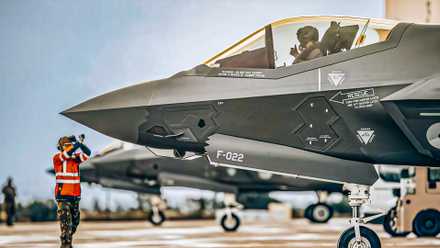
Is It True That US Air Force Pilots With The Highest Ranks Earn Less Than Commercial Pilots?
This is certainly a fascinating financial question.
Life At The United States Air Force

The United States Air Force and United States Navy have fairly similar training programs, with each one tailored to the needs of the branch. Many US Navy pilots have to be trained to operate out of aircraft carriers, while the USAF has many more transport positions compared to the US Navy. Both require their pilots to be certified as officers, which introduces its own set of requirements. The US Navy requires its pilots to serve for eight years after completing training, while the USAF requires ten years after being qualified.
Base pay rates are identical across all US military branches, and are determined by rank as well as years of service. However, the different branches do offer different incentive packages. The USAF has recently been offering much higher incentives, giving out a $600,000 bonus for pilots who remain for 12 years, and it also offers other lucrative forms of compensation similar to the Navy.
As a whole, the US military is for those who actively want to serve, and those who do are rewarded substantially by the US. While there are higher-paying pilot jobs out there, flying for either the US Navy or the US Air Force is a highly rewarding career, and it’s one that has its pilots leaving with excellent flying skills as well as pride for serving the country.