dailynewsnblog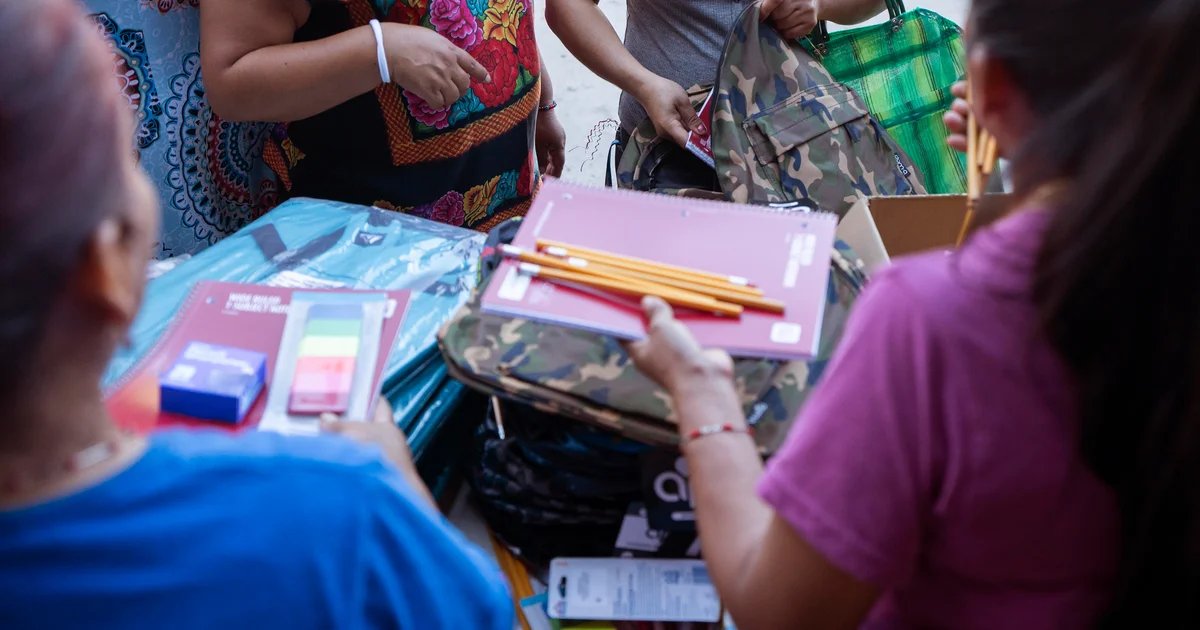
The little girl stared up at Norma Gómez from the doorway of her neighbor’s apartment, her sad, brown eyes suddenly flashing with hope.
“Are you the person who’s going to bring my mom back?” she asked.
Gómez struggled to find an answer. It was a December morning, and she’d brought food, diapers, baby wipes, and clothes — items she hoped would help the 6-year-old girl, her baby brother, and the neighbor who had stepped in to care for them. The children were left alone after federal immigration agents arrested their parents outside their apartment in Oxnard, a mostly Latino agricultural community on the Southern California coast. But Gómez had no power to bring the parents back.
“We’re working on that,” Gómez recalled telling the girl. In reality, she was at a loss for how to answer truthfully without upsetting her.
Karla Gachet for KFF Health News 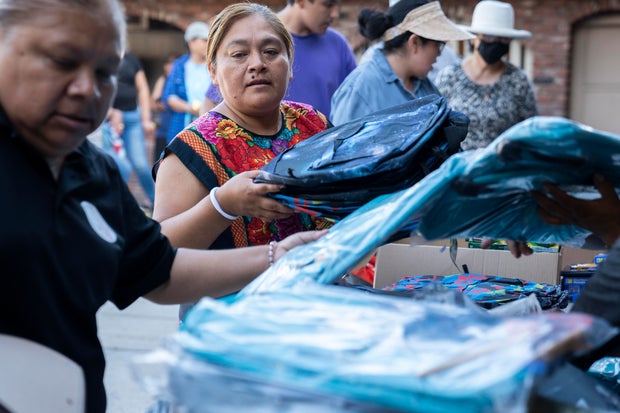
As a project manager for a nonprofit that provides food assistance to immigrant families affected by Immigration and Customs Enforcement raids, Gómez has witnessed the tumult and pain that have roiled the lives of millions of immigrant families since President Trump returned to office, with devastating consequences for children’s health. They include an estimated 205,000 children with at least one parent detained by immigration authorities through April, a number that has undoubtedly climbed since. Separation from parents harms children psychologically. It destabilizes families, often leaving the remaining parent or caregiver scrambling to stay housed, buy food, and fulfill kids’ medical needs. Some kids are left alone to care for themselves.
Many kids whose parents aren’t detained are experiencing threats to their health and well-being too. Two children in the South died by suicide in February 2025 after reportedly being bullied over their family’s alleged immigration status.
Millions of children live in families losing access to medical care, food, tax credits, and other supports as federal and state governments roll back eligibility for immigrants with and without legal status. Fear of federal enforcement has pushed parents to avoid taking kids to school, going to the doctor, and engaging in social activities. Some have disenrolled from or avoided signing kids up for health and nutrition programs.
Children from immigrant backgrounds are also living in fear. They’re experiencing more emotional distress, increased bullying in school, and anxiety about racial profiling by ICE, even when they or their family members are citizens or legal residents.
Most of these children are American citizens. About 1 in 4 U.S.-born kids have an immigrant parent, including around 4.6 million with a parent who lacks legal status.
“I’m really concerned about how long it’s going to take for us as a country to address all of the harm that’s happening to this generation of kids,” said Wendy Cervantes, director of immigration and immigrant families at the Center for Law and Social Policy. “This type of stress can have long-term developmental harm and can really inhibit their ability to do well in school, to have good health outcomes, and to grow into thriving, stable adults.”
Karla Gachet for KFF Health News 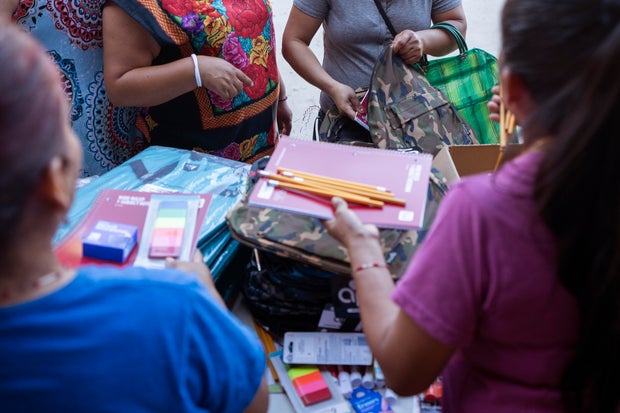
Curbing public benefits
Mr. Trump has made cracking down on immigrants — including the children of immigrants — a priority since his second term began last year. On Inauguration Day, he issued an executive order purporting to end birthright citizenship for kids born to parents without legal status or in the country on temporary visas, an attempt ultimately blocked by the Supreme Court.
His administration, with the approval of Republicans in Congress, has poured billions of dollars into immigration enforcement, detaining the parents of an estimated 145,000 U.S. citizen children as of April, and, according to an analysis by nonprofit newsroom The Marshall Project, over 6,200 children. It’s sought to rescind temporary protected status for over 1 million immigrants, tens of thousands of whom have U.S. citizen children, and stalled renewals in the Deferred Action for Childhood Arrivals program, which includes the parents of about 300,000 citizen children.
White House officials say the immigration crackdown benefits American citizens by freeing up resources such as jobs and housing, reducing pressure on public coffers, expelling criminals, and restoring integrity to the immigration system. (Multiple studies have shown that mass deportations harm U.S. workers). Mr. Trump and other Republican leaders have argued that birthright citizenship encourages unauthorized immigration and “birth tourism,” and that TPS has allowed immigrants from “dangerous, third-world countries” to remain in the United States indefinitely under what is supposed to be a temporary program.
In a statement, White House spokesperson Lauren Bis did not directly address whether the administration is concerned about long-term harm to children and increased healthcare costs because of its immigration policies. Instead, she repeated past White House criticisms that President Joe Biden’s immigration policies allowed children to be trafficked across the U.S. border.
“The real story is the psychiatric impact on the tens of thousands of children who were smuggled across the border–many by human and sex traffickers,” she wrote in an email.
Only 39% of Americans approve of Mr. Trump’s handling of immigration, according to a recent Associated Press-NORC Center for Public Affairs Research poll.
Stephen Miller, the chief architect of Mr. Trump’s immigration policies, has accused the children of immigrants of draining public resources and perpetuating problems from their parents’ home countries. Research, however, shows that immigrants earn more and do better the longer they live in the United States and that they and their children assimilate rapidly. Data also shows that they rely less on welfare than native-born Americans.
“This is the great lie of mass migration,” Miller wrote on the social platform X in November. “You are not just importing individuals. You are importing societies. No magic transformation occurs when failed states cross borders. At scale, migrants and their descendants recreate the conditions, and terrors, of their broken homelands.”
The Republican tax-and-spending law enacted last summer curbs immigrant eligibility for health and food assistance programs. And this July, the administration issued new “public charge” rules that give immigration officers broad discretion to deny green cards to lawfully present immigrants if they or family members have used public benefit programs, a move that could result in over a million U.S. citizen children disenrolling from safety net healthcare programs.
Together but afraid
Separation from parents is traumatic for children and can lead to lifelong health problems, including anxiety, depression, cardiovascular disease, and learning difficulties. Children separated from their parents at the border during the first Trump administration were found to exhibit lasting trauma. Researchers have also tied deportations and detentions of immigrant parents — as well as the threat of them — to widespread emotional trauma, higher school dropout rates, housing instability, and hunger among both immigrant and U.S.-born children.
It’s also costly to society. A 2024 study by federal researchers estimated that health conditions related to childhood trauma accounted for $292 billion in healthcare spending in 2021 alone, including from taxpayer-funded programs such as Medicaid and Medicare.
Emmanuel, a 13-year-old in Oxnard, gets anxious every time his dad goes to work as a farm laborer, his mother, Ana, said. He asks her for reassurance that his father will return, and about what would happen to him if his parents got detained. He tries to hurry Ana up when they’re out in public, worried that ICE could suddenly appear. KFF Health News is not using their full names because they fear deportation.
Doctors and therapists interviewed by KFF Health News said they have seen a notable increase in children from immigrant families exhibiting mental health problems, especially anxiety. Kimberly McNally, a pediatrician at the Inglewood South La Brea Health Center, said she’s constantly referring children of all ages for mental health services related to fears that their parents will be taken away. At daycares, kids have been showing up with an extra bag in case their parents don’t pick them up, said Liza Davis, advocacy director for Children in Immigrant Families at The Children’s Partnership, which works with a coalition of early childhood educators.
Sometimes, the distress leads young people to take extreme actions. In June, 19-year-old Eliel José took his own life after his father was deported from the Atlanta area to Mexico, according to Univision.
Rosie Harrison, executive director of Grow Initiative GA, a community organization that serves low-income families, said she’s received multiple calls over the past year from immigrant parents seeking help for suicidal and depressed kids. Their situations are often made worse because many lack health insurance and can’t afford to pay for therapy. That’s often because parents have lost jobs that came with health insurance due to worksite raids or because of eligibility changes imposed by the Trump administration.
“I’m concerned about the families that are going to be burying their child,” Harrison said. “I’m concerned that we are going to miss out on having an amazing person do amazing things for our community, for our country, because they took their life.”
Strength under pressure
Many children are showing resilience, though.
In a role reversal, some children have become their parents’ protectors. They go grocery shopping and take their younger siblings to school so that their parents don’t have to leave the house.
Giselle Gonzalez, a university student and volunteer with the immigrant protection network VC Defensa in Ventura County, California, said she’ll never forget the morning last summer when she woke up to the sound of kids on bicycles pedaling through her immigrant-heavy neighborhood in Thousand Oaks, yelling “La migra! La migra! Don’t come out!” They’d spotted ICE agents grabbing factory workers and gardeners on their way to work, she said.
Neighbors, community groups, health providers, and others have also stepped up in a variety of ways to support children and families affected by immigration enforcement. They deliver groceries, provide free therapy, walk kids to school, and help parents create emergency childcare plans in case they get detained or deported.
Ultimately, more humane immigration policies and enforcement tactics will be required to end the harm being done to children, academic experts and advocates said.
Researchers at Arizona State University point to a pilot called the Family Case Management Program as a model for keeping families together while also enforcing immigration laws. Launched in January 2016 under President Barack Obama, the program allowed families seeking asylum to remain in the community while awaiting resolution of their cases. Through a case manager, they received support in meeting the obligations of their immigration cases and preparing for deportation if needed. The program, which proved successful and cost-effective, was terminated by the first Trump administration.
At Venice Family Clinic in Los Angeles, case manager Mabel Alavez sees the pressures facing families who are still together but worried they could be separated. Many of the people are parents or grandparents who have been in the U.S. for decades. Some are afraid to take their children to school, the park, or the beach. They ask whether it’s safe to enroll their U.S.-born kids in Medicaid. She helps families who are facing eviction because they’re afraid to go to work and can no longer afford rent. She often helps them create plans for who will look after their children if they get detained.
Raised in an immigrant family herself, Alavez knows how challenging it can be for kids who are first-generation Americans to navigate growing up, going to school, and finding a sense of belonging in a country their parents aren’t from.
“It’s hard for me to imagine how they could possibly do that in addition to what’s going on now,” she said. “I do feel like there will be a big impact on them. What that might look like, I’m not exactly sure.”
KFF Health News is a national newsroom that produces in-depth journalism about health issues and is one of the core operating programs at KFF — the independent source for health policy research, polling, and journalism.