dailynewsnblog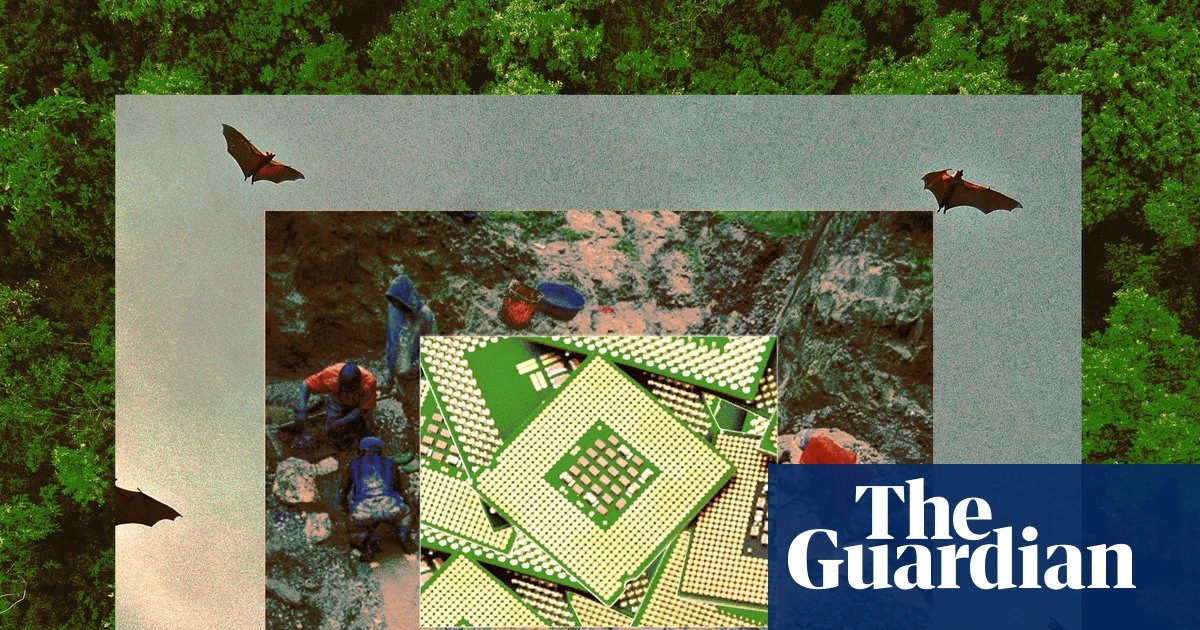
For decades after the discovery of Ebolavirus in 1976, outbreaks of the disease were relatively small and contained, affecting a few hundred people at most.
Not any more. In recent years, outbreaks of Ebola have been much larger, affecting thousands and even tens of thousands of people across multiple countries. The 2014 outbreak of Ebola in West Africa infected over 28,000 people in 10 countries on three continents. The current eruption, which began in early May and shows no signs of abating, has caused 363 confirmed cases in Democratic Republic of the Congo and has crossed into Uganda.
The conventional explanation has to do with the larger and more interconnected human populations that pathogens can access. But there’s a more fundamental driver: the transformation of the underlying ecology of Ebola, which is being re-made, in part, by the rising global hunger for minerals to power the hi-tech economy.
Most of the time, viruses such as Ebola live quietly in the bodies of their animal hosts, widely understood to be bats, causing them little or no harm. Virus-laden bats who live in places like the Democratic Republic of the Congo (DRC), whose borders encompass 60% of the world’s second largest rainforest, usually reach only a few people in remote locations, resulting in small outbreaks that quickly burn out. With repeated exposures, people who live around Ebola-carrying bats acquire a degree of immunity to the virus, with one survey suggesting that nearly 20% of forest-dwelling people in Gabon have developed immune protections against Ebolavirus.
But cutting down the trees in which bats live ruptures this delicate balance between Ebola-carrying animals and humans. The bats don’t just vanish when their trees are gone. They squeeze into the fragments of forest that remain, in closer proximity to humans, increasing the likelihood of encounters in which humans are exposed to their viral-laden blood, saliva and excreta. That’s why, with each per cent increase in deforestation in Central Africa, as a 2025 analysis found, the incidence of malaria and Ebola spikes by 20% to 40% . It’s why the 2014 Ebola epidemic was preceded by the loss of 85% of the forest cover in the south-west corner of Guinea, where the outbreak began. The current outbreak of Bundibugyo Ebola fits the pattern, too, being preceded by a record loss of 1.5m acres of Congo basin rainforest in 2024, according to satellite data analyzed by Global Forest Watch.
Humanity’s pressure on the world’s forests is nothing new. We’ve been cutting down trees for fuel and to grow food on which to nourish ourselves for millennia. But in the case of DRC, there’s also a new driver of deforestation that has more to do with the peculiar demands of the modern global economy than human survival. One trigger for these losses, the Norwegian University of Life Sciences economist Malte Ladewig found, is the increasing allure of so-called “artisanal” mining: local people digging for minerals such as gold, coltan and cobalt to sell into the global supply chain via an informal network of smugglers and intermediaries.
Artisanal mining employs an estimated 2 million people in DRC, including over 380,000 in eastern DRC. There are plenty of mineral-flecked rocks to go around. Although DRC is the world’s top producer of cobalt and Africa’s largest producer of copper, because of the country’s political instability and history of armed conflict, most of the DRC’s mineral wealth, valued at $24tn, remains untapped by the commercial mining industry. At the same time, skyrocketing global demand for the so-called “3TG” minerals (tungsten, tin, tantalum and gold) required to build tech products ranging from semiconductors to smartphones, is expected to triple in coming years. In a race to counter China’s dominance of the sector, Donald Trump suspended rules against so-called “conflict minerals” in 2018 and last year signed an agreement with DRC for access to its mineral abundance in exchange for security.
The result for people who live amid mineral-rich forests is a choice: between subsistence farming, which is now plagued with more erratic rainfall due to climate change, declines in soil fertility, the decimation of agricultural markets by conflict and hunting for minerals. When Ladewig surveyed local people in eastern DRC, he found that artisanal mining had become a “widespread livelihood activity”, involving over 30% of local households.
But the hunt for minerals alters the ecology of Ebola in peculiar ways that juice the pathogen’s ability to spread among us. When people expand their farms, they generally push into forests from the edges. Those who seek minerals, in contrast, plunge deep into the core of the forest. The rising price of minerals attracts people from all over, including those who don’t enjoy the acquired immunity of regular forest-dwelling people. Far away from settled areas and agricultural markets, they are more likely to sustain themselves by hunting, bringing human bodies and those of other animals into intimate contact. If their prey include animals that harbor Ebolaviruses such as Bundibugyo, any pathogens they pick up can easily spread to others in makeshift mining towns with notoriously poor sanitation and little health infrastructure.
Whether artisanal mining played a role in the sequence of events that sparked the current epidemic is unknown. But we do know that the first cluster of fatal cases emerged in Mongbwalu in north-eastern DRC, a swelling mining town littered with unregulated gold mining areas. It’s also clear from satellite data that last year, as the price of gold doubled in response to the president’s tariffs, the forests around Mongbwalu were sliced open, pushing a new frontier deeper into the jungle. The scientist Matthew Hansen tracks changes in global forest cover using satellite data from Nasa and the US Geological Survey (USGS). He zoomed into Mongbwalu on his map of global forest change from 2000-2025 while sharing his screen with me on a video call. Wobbly lines of bright blue, indicating areas newly deforested in 2025, radiated out of Mongbwalu to the west and the south. “Wow”, he said, looking at it. The pattern was clear. “There is a ton of mining around here. Holy shit.”
In the midst of deadly outbreaks, it’s understandable that experts and policymakers focus on how we respond to epidemics and how we can better prepare ourselves for the next one. But in the case of novel pathogens such as Bundibugyo, which can elude standard diagnostic tests and vaccines, there’s no level of preparedness or responsiveness that can squash them before they start their exponential spread. It’s only the third and relatively ignored pillar of policymaking around pandemics that can: preventing the broken ecologies that drive novel pathogens into human populations in the first place. That will mean more attention to the health of ecosystems such as the forests of the Congo basin, and how its minerals might be inside the smartphone tingling in your pocket.
-
Sonia Shah is the author of five books including Pandemic: Tracking Contagions, from Cholera to Ebola and Beyond, and writes the newsletter Cross Pollinations on Substack