dailynewsnblog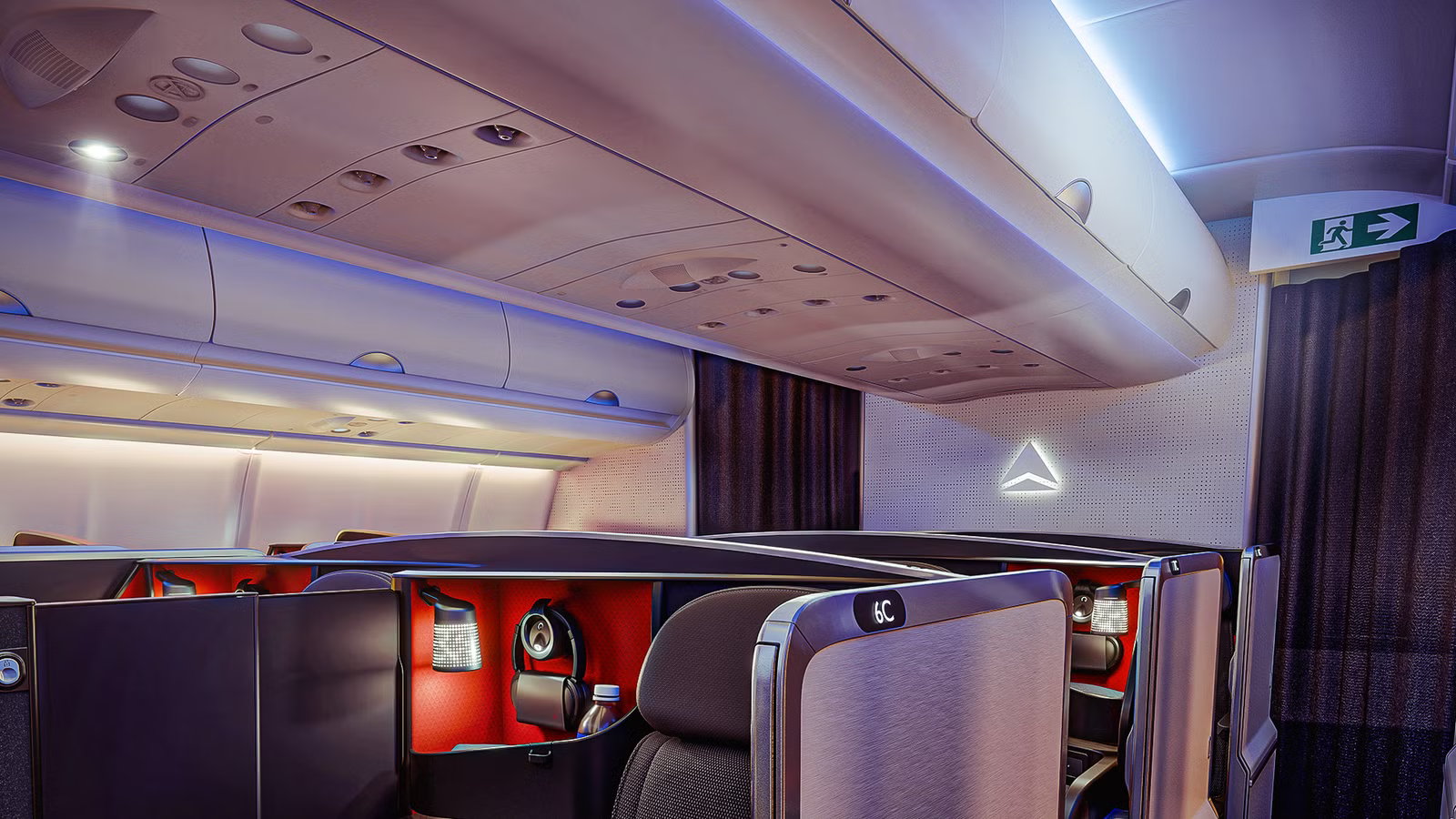
 Delta Air Lines is preparing to introduce a widebody aircraft that reflects its changing business model. The Airbus A350-1000 will feature 101 premium seats, including 53 business-class suites and 48 premium economy seats, giving front-of-cabin passengers far more prominence than on a conventional long-haul configuration. The surprising part is what the decision says about the airline’s priorities.
For years, filling economy cabins was central to long-haul economics, with premium seats providing a valuable supplement to the revenue generated at the back of the aircraft. Delta’s latest financial results suggest that balance is shifting. With premium ticket revenue overtaking Main Cabin revenue for the first time in the second quarter of 2026, CEO Ed Bastian and his team have a powerful financial incentive to rethink the traditional widebody cabin. The question is how the A350-1000 will turn that strategy into a competitive advantage, and what it means for the passengers who will occupy the remaining economy seats.
Why Delta’s A350-1000 Is Different From A Conventional Long-Haul Aircraft

The answer begins with Delta’s decision to make the Airbus A350-1000 its most premium-focused aircraft. The airline unveiled its next-generation Delta One suite in April 2026, confirming that the new widebody would deliver a substantially upgraded business-class experience and a redesigned premium economy cabin. The aircraft is expected to begin arriving in 2027, making it an important part of Delta’s next phase of international fleet development. Delta’s official announcement best indicates how the airline intends to differentiate the aircraft.
The planned configuration includes 53 Delta One suites and 48 Premium Select seats, giving it 101 seats across those two premium cabins. That is a significant commitment to higher-priced travel, particularly when compared with Delta’s existing A350-900s, which have 32 Delta One seats and 48 Premium Select seats in their published configuration. As a result, the A350-1000 will have 21 more business-class suites than the A350-900, an increase of about 66%. You can compare the existing aircraft layout with Delta’s A350-900 seat specifications.
However, an important distinction exists between the 101 seats in the two premium cabins and the airline’s broader definition of premium seating. Delta has also highlighted Delta Comfort as part of the A350-1000’s premium mix, bringing the proportion of seats categorized as premium to around 50%. The aircraft will still carry a substantial economy cabin, so the change does not eliminate affordable seating. Instead, Delta is allocating more of its aircraft to products that can command higher fares and encourage customers to spend more on each journey. Why is the airline so confident that demand will support this approach?
Premium Ticket Revenue Has Finally Overtaken Main Cabin

Delta’s second-quarter 2026 results provide the clearest financial explanation. In the three months ended June 30, premium ticket revenue reached $6.92 billion, up from $6.85 billion in Main Cabin tickets. The difference was relatively narrow (about $69 million), but the milestone was significant because premium ticket sales had overtaken Main Cabin ticket sales for the first time. According to Delta’s June-quarter financial results, premium ticket revenue increased 17% year over year, compared with 8% growth in Main Cabin ticket revenue.
However, Delta’s broader financial picture extends beyond ticket sales. The airline reported that diversified revenue streams accounted for 61% of total revenue in the quarter, up two percentage points from a year earlier. That category includes premium products and other sources such as loyalty, cargo, and maintenance, repair, and overhaul services. It would be inaccurate to interpret the 61% figure as premium ticket revenue alone, but it demonstrates how much Delta’s financial performance now depends on businesses beyond conventional economy fares.
The company is also benefiting from strong corporate demand. Delta reported that premium corporate sales rose more than 25%, with investments in Delta Comfort and Premium Select driving the growth. For the A350-1000, this creates a compelling commercial opportunity: the aircraft can serve business travelers willing to pay for privacy and a lie-flat bed while also offering a more comfortable alternative to standard economy for travelers who do not require a business-class suite. But the revenue crossover raises another question: is Delta simply responding to demand, or is it actively reshaping the market it wants to serve?
Delta Is Choosing Higher Yields Over Main Cabin Seat Growth

Delta’s strategy focuses more on each seat’s value than on how many seats it can sell. CEO Ed Bastian and Chief Commercial Officer Joe Esposito have said the airline intends to prioritize premium demand rather than continue expanding Main Cabin capacity as its main growth strategy. Their comments, reported in the Q2 2026 earnings call transcript, reflect a wider effort to move away from competing primarily on the lowest available fare.
That does not mean Delta is abandoning economy passengers. Its Main Cabin revenue still increased year over year, and the airline continues to sell hundreds of economy seats on its widebody aircraft. Instead, the company is placing greater emphasis on its seat mix, the fares those seats can generate, and the additional spending they can encourage. A premium seat can generate substantially more revenue than a standard economy seat, though the actual difference depends on the route, demand, season, and the cost of providing the service.
The economics matter most when operating expenses rise. Delta reported an adjusted fuel price of $3.93 per gallon in the June quarter, up 75% from a year earlier, while adjusted fuel expense rose 77%. Those figures, included in the official earnings release, show why airlines have an incentive to extract more revenue from their available capacity. Higher fares cannot automatically offset every increase in fuel, labor, or aircraft costs, but stronger premium yields can help protect margins.
For the A350-1000, the decision goes far beyond the cabin design. Delta is investing in an aircraft that can concentrate more of its business-class capacity into private suites while expanding its premium economy offering. That configuration could be particularly attractive on long-haul routes where corporate travelers, affluent leisure passengers and customers using loyalty benefits create demand for higher-priced products. The next question is whether Delta’s investment stops with the new aircraft or extends to the rest of its widebody fleet.
The A350-1000 Is Only One Part Of Delta’s Premium Overhaul

Delta is also investing in new and existing aircraft, so the A350-1000 will not be the only widebody offering an upgraded business-class experience. Delta has also ordered 30 Boeing 787-10s with a premium heavy cabin. Regarding existing planes, the airline has announced a program costing more than $1 billion to refresh its cabins, including extensive work on 42 Airbus A330-200 and A330-300 aircraft. The aircraft will receive Delta One suites with privacy doors and cabin-wide updates. Every seat on the refreshed A330S and the new A350-1000 will get larger seatback screens, Bluetooth connectivity, USB-C charging, and universal power outlets. Details of the investment and cabin changes are available in Delta’s announcement of its next-generation suites. You can also check our detailed seat maps here.
Essentially, Delta is pursuing a fleet-wide product strategy. A passenger flying on a refreshed A330 should get a more consistent premium experience, even if the aircraft doesn’t offer the same configuration as the A350-1000. Delta expects more than 800 aircraft to receive its modern interiors over the next five years, giving the program a much wider reach than the new A350 variant alone.
The business-class seat is central to that investment. Delta developed its next-generation Delta One suite through a two-year design process informed by a decade of customer and employee feedback. Privacy doors are intended to give passengers a more enclosed personal space, while improved screens and charging options address expectations that have become increasingly important on long-haul journeys. Delta has also announced plans to expand suite availability across its fleet, with The Points Guy’s coverage of the cabin program adding context.
The strategy also has a competitive dimension. Delta is trying to distinguish its long-haul product through the overall experience, not by the number of seats in each cabin. A modern business-class suite may help attract customers who compare airlines on privacy, comfort, and onboard technology rather than fare alone. Yet premium seating is only valuable if travelers consistently pay for it, which makes Delta’s loyalty program and its relationship with American Express very important.
Why American Express And SkyMiles Are Central To The Aircraft’s Economics

Delta’s premium strategy extends beyond the aircraft itself. Its relationship with American Express generates substantial revenue through the co-branded card partnership, helping the airline earn money from customers even when they are not purchasing a flight. In 2025, American Express remuneration reached $8.2 billion, up 11% from the previous year, according to Delta’s full-year financial results. Delta’s longer-term target is to reach approximately $9 billion in remuneration in 2026.
That income stream strengthens the airline’s ability to invest in premium cabins, airport lounges, and onboard amenities. It also gives Delta more opportunities to build customer relationships through SkyMiles, credit-card benefits, and travel-related spending. The connection isn’t that every cardholder will purchase a Delta One suite, but that the airline has built a system where loyalty engagement and premium travel reinforce one another.
The A350-1000 fits into this system by offering a more differentiated product for customers who highly value comfort. Premium passengers may pay more for a lie-flat bed, a private suite, and lounge access, while frequent travelers can also use miles or other benefits to improve their experience. Premium Economy gives Delta another option for customers who want more space and comfort without paying for business class. According to Delta’s Premium Select product information, the cabin offers more personal space, wider seats, and greater recline than standard economy.
Nevertheless, loyalty revenue and premium ticket revenue are not the same. The former includes payments tied to Delta’s partnership and broader loyalty network, while the latter reflects revenue from premium airline tickets. Together, they help explain why the airline invests heavily in cabin upgrades, but they don’t guarantee every premium seat will command a high fare on every flight. The remaining challenge is making the aircraft’s economics work when demand weakens, or passengers become more price-sensitive.
Catch what other flight trackers miss
Emergency squawks, holds, NOTAMs — live signals, no signup.
Open tracker
Catch what other flight trackers miss
Emergency squawks, holds, NOTAMs — live signals, no signup.
Open tracker
Delta’s A350-1000 Will Test How Far Premium-First Flying Can Go

The A350-1000 represents a long-term bet that Delta can earn more by improving the value of its passenger offering than by continually expanding the number of economy seats available. That approach matters most on long-haul routes, where business-class suites and premium economy can support a differentiated product while the aircraft continues to carry passengers on more affordable fares. The new configuration does not eliminate economy, but it places premium cabins at the center of the aircraft’s commercial proposition.
There is also a competitive context. Delta has committed to ordering 20 A350-1000s, a fleet decision that signals the aircraft’s substantial role in its future long-haul network. As discussed in our analysis of Delta’s A350-1000 order, the order points toward a different approach to international growth, with the aircraft’s size and premium cabin configuration central to the airline’s plans.
Still, the strategy carries risks. Premium demand can shift with corporate travel budgets, economic conditions, and competition from other airlines. A more expensive cabin also needs sufficient demand across seasons, and no amount of cabin refinement can guarantee premium fares will remain high. Delta’s second-quarter results underscore the pressure: despite strong revenue growth, adjusted fuel expense rose sharply, showing how external costs can erode the benefits of stronger ticket sales.
The aircraft’s arrival in 2027 will mark a fleet milestone and provide a practical test of whether Delta can translate its premium-revenue lead into sustained returns on a new generation of long-haul aircraft. The airline has already demonstrated that premium tickets can generate more revenue than Main Cabin tickets in a quarter. The next challenge is to prove that a premium-focused cabin can deliver the same commercial advantage over the aircraft’s life.
Catch what other trackers miss
Emergency squawks, holds, NOTAMs — live signals, no signup.
Open tracker
Catch what other trackers miss
Emergency squawks, holds, NOTAMs — live signals, no signup.
Open tracker