dailynewsnblog
Greek life at Cornell University should be ended permanently if leadership can’t be convinced that fraternity gatherings there can be safe, the school’s president, Michael Kotlikoff, said at a contentious meeting of the Faculty Senate on Wednesday night.
“I really appreciate the sentiment of a lot of faculty and a lot of leadership of the university that have said to me it’s time for Greek life to go,” Kotlikoff said at the meeting. “I do think as an academic institution we should study things, make decisions based on data and fact.”
“If at the end of the day, fraternities cannot exist in a safe environment and we can’t be convinced that they can be safe, then we should make that decision,” he continued. “But we should make it, it seems to me, based on data and study and expertise, not on emotion.”
Kotlikoff made the remarks at the start of a meeting where Faculty Senate members debated a resolution of no confidence in the school’s administration. A vote on it is expected following another meeting Oct. 28.
The meeting was closed to the media, but CBS News New York exclusively obtained video from the meeting before Cornell released audio of it early Thursday.
Matt Burkhartt/AFP via Getty Images 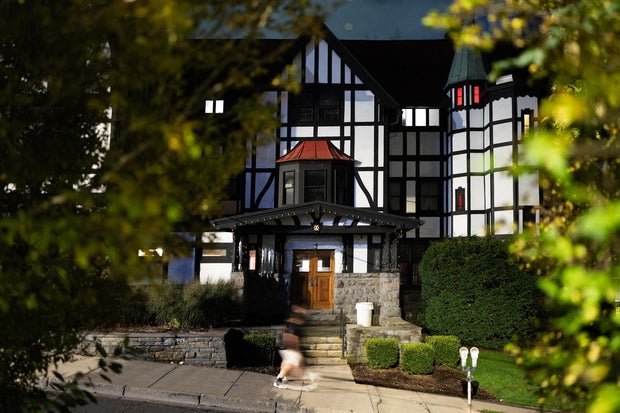
More than 300 people attended, including about 100 in person and nearly 200 on Zoom, and it lasted over two hours, associate professor Ariana Kim said.
The meeting was held in the wake of Jane Doe’s civil lawsuit alleging she was drugged and sexually assaulted by multiple men at a fraternity house at Cornell in 2024. CBS News has reached out to attorneys for all of the accused; two responded and denied the allegations, while others have denied wrongdoing in comments elsewhere. None of the accused have been charged with a crime.
In an opening statement at the meeting, Kotlikoff outlined the concern with fraternities on campus, saying it had become “quite clear” frats were now the center of social activity for students.
“Many bars and areas without drinking in Collegetown shut down post-COVID,” Kotlikoff said. “And we’re now in a situation in which much of the social activity occurs in private houses. We don’t have full ability to be confident that what goes on in those houses is safe.”
All fraternity parties have been suspended at Cornell through the end of the school year as an independent investigation — led by former U.S. Deputy Attorney General Sally Yates — is now underway into “how the University prevents and responds to sexual harassment, sexual assault and related misconduct on campus,” the school said in a statement.
President questioned before “no confidence” debate
The school’s administration has faced intense criticism over how it responded after Jane Doe first reported the alleged gang rape.
The resolution to be voted on later this month states that the Faculty Senate “has no confidence in the ability of the central administration to effectively address the ongoing crisis of sexual assault at Cornell University.” The resolution, which needs a simple majority to succeed, is largely symbolic as the Faculty Senate cannot fire anyone in the administration.
At the meeting, one associate professor described the resolution as having “mostly strong support” and “some opposition.”
The Faculty Senate on Wednesday asked how Kotlikoff planned to regain the trust of students, alumni and the broader Cornell community, particularly following the arrests of people on campus during protests in recent years.
“He really did not answer questions, and he really didn’t take responsibility or accountability for problems that we have,” said Risa Lieberwitz, a professor of labor and employment law, who relayed what happened during the closed portion of the Faculty Senate meeting.
Faculty members pressed Kotlikoff on why it took “a long time” for him to speak out about the Jane Doe lawsuit, and how the statements he did make were “seemingly in response to the press.”
“I really reject the idea that I had no interest in it or was not concerned about it,” Kotlikoff said. “That was my message to the community as soon as we learned about it, as soon as it was reported to the Title IX office, and that was the reason that we established this (independent) task force.”
Spencer Platt/Getty Images 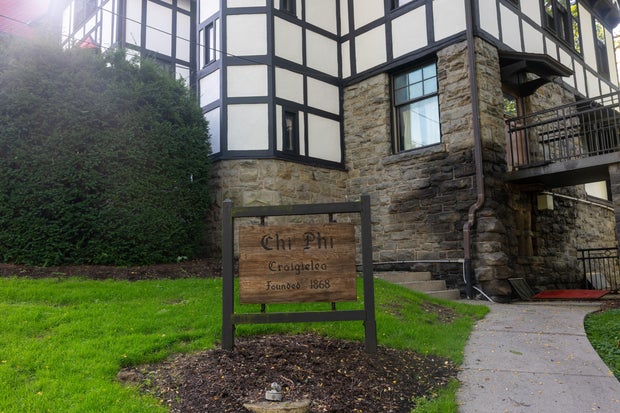
The Q&A lasted for about 45 minutes before Kotlikoff left the building, and faculty members turned to the no-confidence resolution.
Supporters of the resolution said they lacked confidence in the school’s administration to make “systematic change” at Cornell, Lieberwitz said.
“People were talking about the lack of effective democratic governance on campus,” she added.
A smaller group, largely made up of faculty members from the math and physics departments, argued they needed “more information or data” before making a final decision, Kim said.
Professor Paul Ortiz, the resolution’s lead sponsor, said those who opposed the resolution know Kotlikoff well.
“They know him on a first-name basis,” he said. “They have friendships like that with him that go back many years.”
Ortiz and Kim said they each received more than 100 messages from alumni on Wednesday, urging them to vote in favor of the resolution and “hold the administration accountable.”
Tommy Li, a Cornell student who spoke with CBS News outside the meeting, said he hoped the resolution would pass and described Kotlikoff’s response to Jane Doe’s allegations as a “horrible mishandling.”
The Faculty Senate will hold another hearing on Oct. 28 before its members vote on the resolution.
“If it were to be put to a vote today, I would say it — the resolution would pass,” Ortiz said.