dailynewsnblog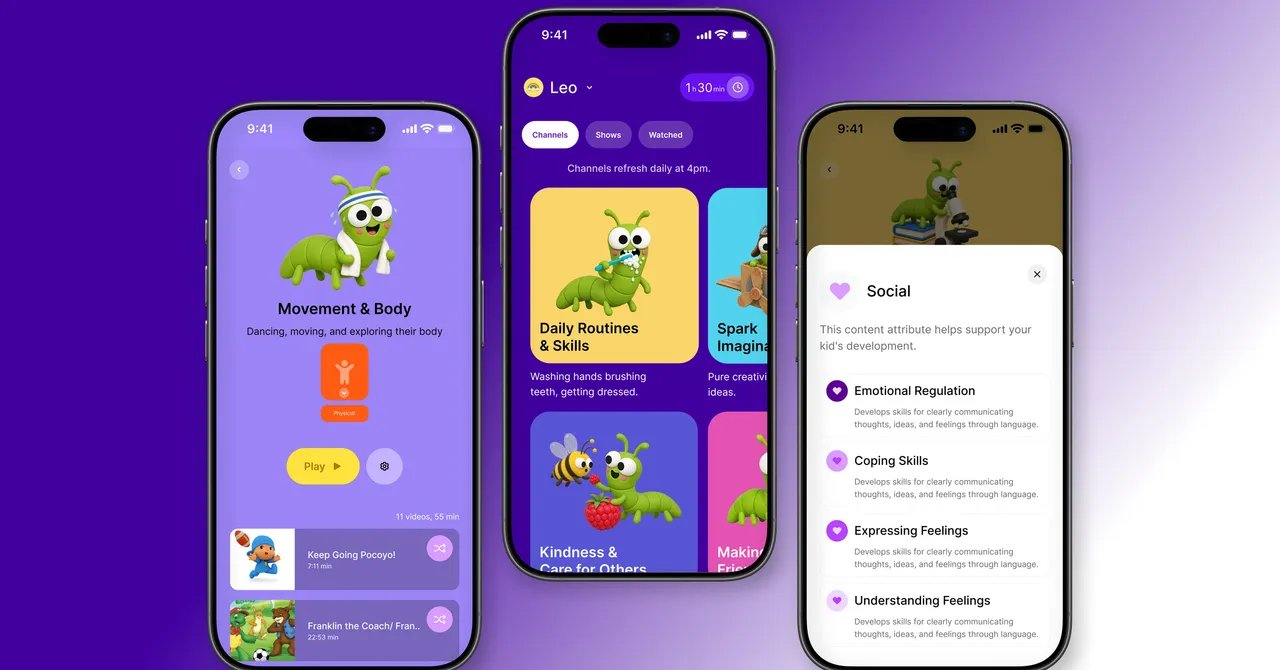
If you have young kids or if you know somebody who does, then you know about YouTube’s AI slop problem.
Videos targeted at children on the platform are often filled with bizarre and hyperstimulating content that’s AI generated. Not all of it is age-appropriate. These videos autoplay on endless, algorithmically curated streams punctuated by ads.
Maka, a new streaming app for kids aged 0 to 6, is positioning itself as an antidote to that concern. The platform has zero ads, doesn’t allow autoplay or endless scrolling, and its algorithms intentionally do not maximize watch time.
The company’s cofounder and chief product officer Tanyella Leta tells WIRED the platform is purposely abandoning the mechanisms that “turn children’s media into an engagement machine.”
Maka’s CEO and cofounder Isabel Sheinman adds that a lot of the streamers were built to serve adults, not children. “Kids were really the afterthought,” she says. Sheinman wants to set a much higher bar for what quality looks like in children’s media, which she says has been warped by harmful incentives. “Maka was built with child development science and children’s behavior first and foremost.”
Launching today, Maka’s programming slate is a mix of licensed content from global studios and independent creators. It features 25 shows in its curated catalog, including Franklin, The Wiggles, Pocoyo, Vida the Vet and Sesame Street. The platform runs on a subscription service, with a $15 monthly plan and a $107 annual plan.
It was during the Covid pandemic that Sheinman and Leta became obsessed with thinking about how to redesign kids’ media. The solution? Every episode streamed on Maka is evaluated by child development experts through Imprint, a framework created with researchers at the Yale Child Study Center. The evaluation process, which examines everything from scene cuts to how fast-paced content is, maps adolescent development across seven core domains. It looks for things like emotional regulation, kindness, how child-caregiver relationships are modeled in a story, and how a story might support critical thinking or language development.
AI-generated content has only added a new wrinkle to kids’ entertainment: videos are incoherent, have no plot, or contain outright misinformation, but are packaged to look like learning. Some of it, as WIRED has previously reported, is disturbingly sexualized, featuring gore and other fetishes.
Michael Robb, director of research at the media literacy nonprofit Common Sense Media, says that on a platform like YouTube, slop videos that have the veneer of education sit side by side with carefully designed educational shows. Robb says YouTube and other kids’ streaming platforms have not done enough to distinguish educational content from slop, which has only made filtering content harder for parents. “Platforms have taken steps to reduce kids’ exposure to age-inappropriate content, and that matters. But ‘not inappropriate’ is a very low bar. There’s a big gulf between that and media created intentionally with kids in mind.”
A 2020 study by Common Sense Media on YouTube videos watched by young kids found 75 percent had “weak or no educational value.” Kids also frequently ended up watching ads and content intended for older audiences.