dailynewsnblog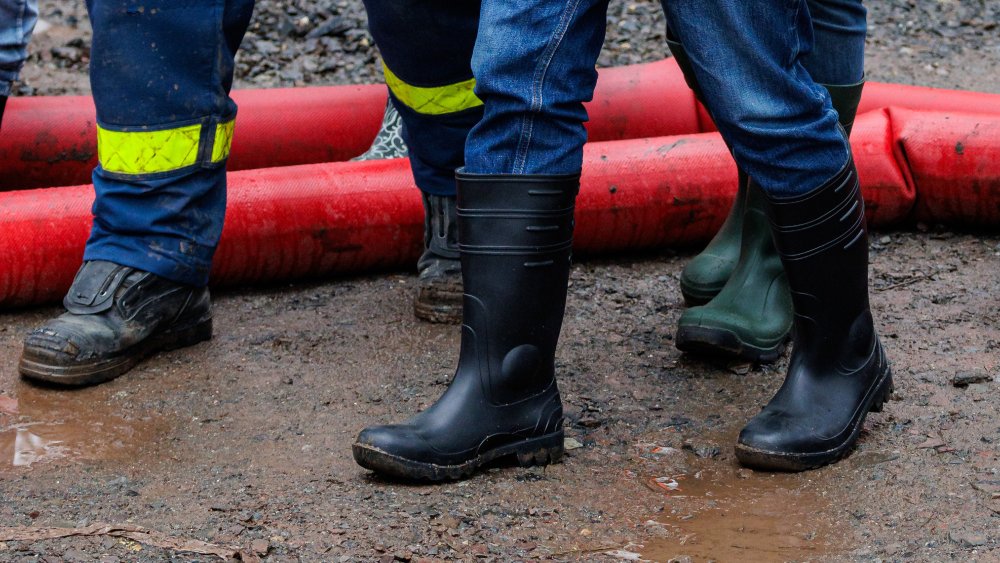
This year’s expected Super El Niño could delay winter boot purchases as warmer temperatures take hold, or usher in an early rain boot buying season due to increased storms and flooding.
Retailers already have placed their usual orders, and while some may increase orders for rain boots, others may elect to stay cautious even with predictions of a volatile El Niño season this fall and winter.
Rick Ravel, president of Karavel Shoes and Karavel Run in Austin, Tex., said his company began tracking weather last November for this fall, finding that traditional El Niño would show colder and rainier [weather] in the south and drier in the north, starting in November. “We went to the Atlanta February Market and added Merry People out of Australia for rain boots, which are due this month. This is the first time we have added rain boots in over 30 years,” he said.
He said for the season, his company is up 36 percent in women’s boots after deciding to increase inventory since “we were so conservative based on last year’s sales.”
Ravel also spoke of a “real surprise” in the trail categories. “We are up over 16 percent in women’s trail shoes and sandals and up over 6 percent for men’s,” he said.” We bought more of the waterproof styles and it seems to be paying off. We just started getting some idea about the weather for spring ’27 showing cooler and wetter for March [and] slowly drying out to May, which was like this year.”
Ravel added that the company might push back some of the sandal orders due in February and early March. That’s because the “forecasts get more accurate about 90 days in advance,” he explained.
Duffy Lee Baehr, the owner of Baehr Feet Shoe Boutique in Spartanburg, S.C., said she’s being cautious with her buys, due mostly to the economy. “I don’t want too much stock since the economy still seems so iffy,” Baehr said, explaining that online sales have been down and noting that usually means that the “rest of the country is not spending as freely” as in previous years.
“I have waterproof boots in and look forward to seeing how El Niño may affect sales,” added Baehr.
An executive at an independent retailer located in a state in the mid-Atlantic region said he isn’t too focused on the potential impact from El Niño, but his store also isn’t in the direct line of fire from any disruptive patterns in weather conditions.
So how unpredictable could El Niño be this year?
The World Meteorological Organization on June 2 declared 2026-2027 to be a historically strong Super El Niño event this year. That could possibly make 2026 to 2027 one of the warmest on record, although parts of the West and South, especially the Gulf Coast, could face a particularly stormy winter with a greater likelihood of rainfall and flood risks.
According to Planalytics, the El Niño climate shift is expected to bring inconsistent regional weather patterns. For the northern U.S., the expectation is milder winter conditions and less snow, which could translate into weaker demand for cold weather gear. For the southern U.S., weather is expected to be cooler and wetter than normal, which could increase seasonal demand for rainwear and gear.
According to Circana, weather volatility isn’t just a forecasting challenge, it’s also a planning challenge as the big opportunity for retailers lies in understanding how uneven seasonal weather patterns across the U.S. will reshape consumer demand.
“Hurricanes cause sales disruptions. While they can drive demand for practical, weather-ready categories — rubber boots, rain boots, waterproof work and hiking footwear — they also disrupt and delay sales for the broader everyday and fashion segments of the footwear sector,” said Michael McNamara, chief executive officer of forecasting firm GhostCom Analytics, which focuses on the impact of major events on consumer spending.
“This season, the lack of hurricanes hitting major population centers on the East Coast should generally result in a more consistent, stable sales pattern for most of the footwear sector,” McNamara said.
Gabriella Santaniello, founder and CEO of research firm A Line Partners, said that if El Niño brings a warmer-than-usual winter as expected, it would likely delay footwear sales, particularly for boots and weatherproof styles.
“Consumers tend to wait to purchase these products until they actually need them, so El Niño could push footwear purchases to later into the season,” she explained. “Fashion boots will likely see demand earlier, but I would expect that demand to come later than usual if temperatures remain above average.”
Santaniello cautioned that weatherproof footwear could be particularly vulnerable because there will be less urgency to purchase products designed for snow, rain and other cold-weather conditions. Brands such as UGG, which are closely associated with winter footwear, could potentially have a slower start to the season if warmer weather persists, she noted.
“In my opinion, the bigger question will be whether delayed demand means lower overall footwear sales or whether consumers will shift their spending to other types of footwear,” Santaniello said.
Jefferies Blake Anderson also issued a cautionary note on Ugg sales due to potential headwinds from El Niño. “Based on search interest by state for the December quarter, the Northeast is Ugg’s No. 1 region versus No. 3 in 2015 (the last Super Based on search interest by state for the December quarter, the Northeast is Ugg’s #1 region vs. #3 in 2015 (the last Super El Niño), while the South has fallen from No. 1 to No. 3.),” he said, adding that New York and New Jersey now rank as Ugg’s most significant states for store count.
“El Niño forecasts call for warmer temps and a wetter winter in the Northeast, which could pressure demand in this larger region,” the Jefferies analyst warned.
A report from TD Cowen said that El Niño could provide a “slight tailwind” for Boot Barn as rain drives the need for workwear. “We view Boot Barn as one of the small number of beneficiaries of a potentially wet period over the coming months,” the TD Cowen report noted, adding that wetter conditions year-over-year also could result in snow exposure.