dailynewsnblog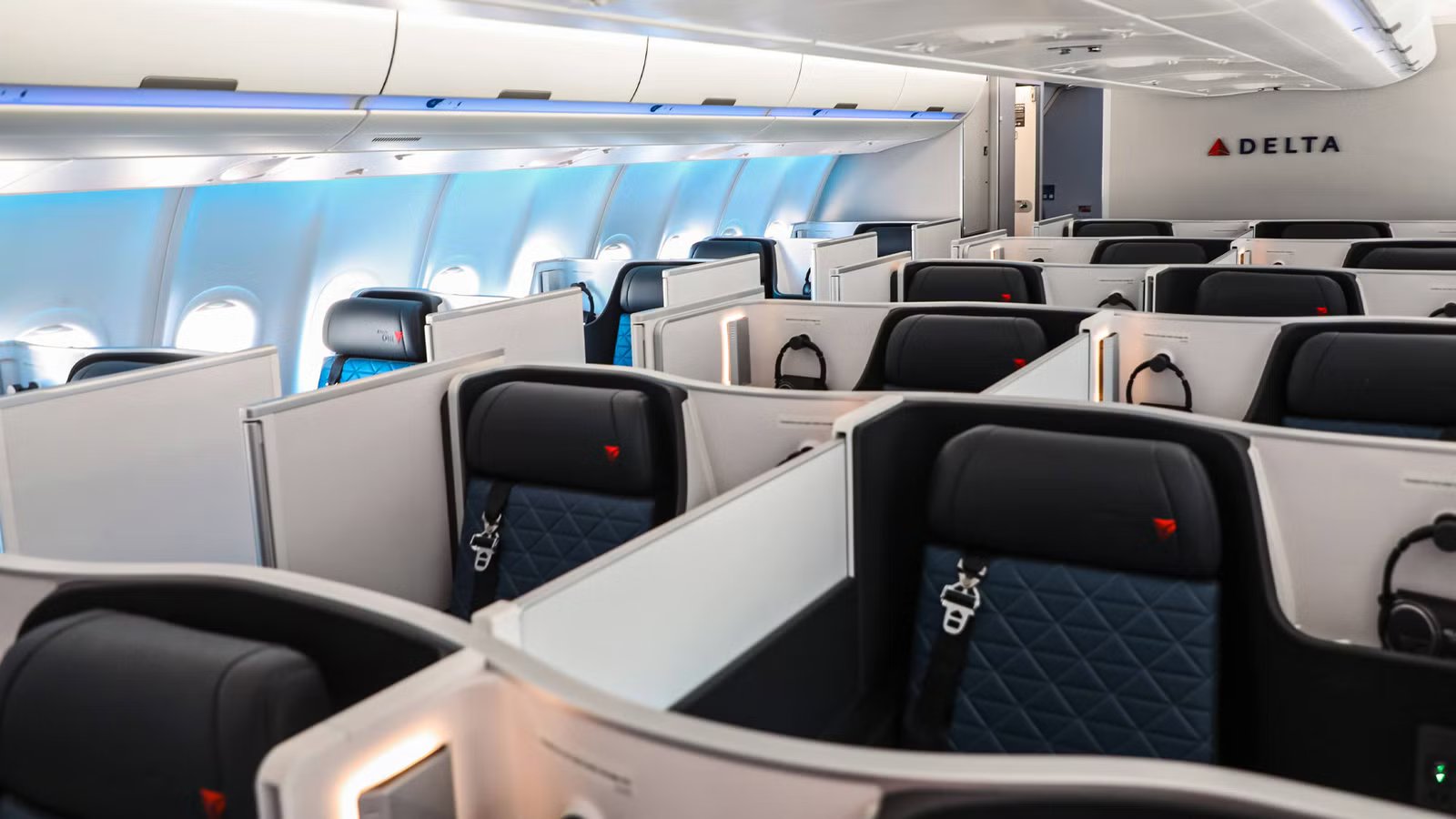
The Airbus A330 has long been one of the most adaptable widebodies in commercial aviation, but the arrival of the A330neo has given airlines a new platform to build better cabins, including a more sophisticated business class section. While the airframe retains the A330’s familiar widebody proportions, the A330neo combines new-generation engines, aerodynamic improvements, and Airbus’ Airspace cabin with the flexibility to install premium suites.
For this list, the focus is on published seat width, bed length, privacy, and, where available, additional floor space rather than subjective impressions, even though I always enjoy traveling on an A330, thanks to its typical 2-4-2 economy class layout and 2-2-2 or 1-2-1 business class, meaning that there is no middle seat next to the window anywhere on the plane.
The airplane configuration matters because “spacious” can mean several things in business class: a wide seat, a long bed, a large footwell, or an actual suite that provides usable room beyond the seat itself. Our ranking emphasizes measurable dimensions and distinctive space-enhancing features, with the Airbus A330neo as the common denominator.
Malaysia Airlines
A330neo business class brings all-suite privacy to the A330.

Malaysia Airlines‘ Airbus A330neo business class is the newest entry on this list, with the airline introducing a completely redesigned premium cabin on its latest widebody. Airbus says the carrier’s A330-900 is configured with 28 fully flat business class suites in a 297-seat, two-class configuration. Unlike the airline’s older A330-300 business class cabin, the new aircraft uses a 1-2-1 arrangement, giving every passenger direct aisle access.
The Collins Aerospace Elevation seat gives each passenger a private suite with a sliding door, while Malaysia Airlines says the seats convert into fully flat beds. The airline also highlights 4K entertainment, wireless charging, unlimited complimentary WiFi and individual storage. Independent measurements put the seat at approximately 19.7 inches wide, with Executive Traveller also measuring the cushion at around 50 cm, or 19.7 inches.
That does not make Malaysia Airlines the widest A330neo business class product here, but spaciousness is not solely about width. The all-suite configuration, direct aisle access, and privacy doors represent a substantial change from the carrier’s older A330 product. Malaysia Airlines itself describes the A330neo as an all-suite business class aircraft, while Airbus notes that the Airspace cabin provides more individual space and larger overhead storage than the previous-generation design.
To better understand this A330neo cabin, you can check Malaysia’s virtual cabin tour.
Condor
Four Prime Seats turn the front of the A330neo into a larger private space.

Condor‘s Airbus A330neo is particularly interesting because the airline has created two different interpretations of business class within the same cabin. The standard business class seat is already a fully flat product with a 78-inch (199-cm) bedding area and a published seat width of 19 inches (48 cm). However, four Prime Seats at the front of the business class cabin take the concept considerably further, according to Condor’s design fact sheet.
The Prime Seats retain the 19-inch width but extend the bedding area to up to 82 inches (209 cm). More importantly for this ranking, Condor gives the Prime Seats an enlarged footwell and enough additional room for an accompanying passenger to sit opposite. That makes the Prime Seat less about simply making the existing seat wider and more about increasing the usable floor area around it.
This distinction is important when comparing Condor with conventional staggered business class seats. A 19-inch seat would not normally challenge a 22-inch (55.8 cm) wide product on width alone, but the Prime Seat’s extended bed and opposite seating position give the passenger more usable space than the advertised seat-width number suggests. So, it is one of the clearest examples of an airline using the A330neo cabin to create a premium business class product within a relatively compact widebody footprint.
TAP Air Portugal
A 22.3-inch-wide seat gives TAP one of the A330neo’s broadest business class products.

TAP Air Portugal was the launch operator of the A330neo, taking delivery of the first A330-900 in 2018. The aircraft’s business class cabin introduced 34 full-flat seats in a 1-2-1 configuration, giving every passenger direct aisle access. More importantly for this comparison, TAP’s own published seating information lists the A330neo business class seat at 22.3 inches (55.9 cm) wide, with a 42-inch (106.7-cm) pitch and full-flat capability.
That published width puts TAP remarkably close to the largest seats on this list. The seat is based on the Recaro CL6710 platform and converts into a fully flat bed, as shown in The Points Guy review, although independent reviews have measured the sleeping surface at about 76 to 77 inches (193 to 195 cm). This means TAP’s strength is primarily the seat width and the 1-2-1 layout, rather than an exceptionally long sleeping surface.
TAP also illustrates why the A330neo is such an important platform for premium cabins. The aircraft retains the familiar A330 widebody fuselage but adds the Airspace interior, larger overhead bins, modern lighting, and improved cabin design. Airbus says the A330neo offers a quieter cabin and significantly improved efficiency, while the new cabin architecture gives airlines greater flexibility in how they use available space.
Delta Air Lines
Delta One combines a 22.5-inch seat with a closing-door suite.

 Delta Air Lines has one of the strongest conventional business class products on the A330neo. Its A330-900 features 29 Delta One suites, arranged in a 1-2-1 configuration, and Delta publishes a seat width of 22.5 inches (57 cm). The carrier also lists a lie-flat bed measuring about 79 to 80 inches (201-203 cm), putting both width and sleeping length firmly at the top of the A330neo market.
The privacy element adds another dimension to Delta’s use of space. Delta says its Delta One suite has full-height doors and privacy dividers on most A330-900 flights. The individual suite effectively separates the passenger from the aisle while retaining direct aisle access, meaning the published 22.5-inch seat width is complemented by a dedicated area around the seat rather than simply being a wide seat in an open cabin.
The A330neo also helped Delta refine its original Delta One suite concept. The airline added storage around the seat, including areas behind the headrest and at knee level, while the aircraft’s Airspace cabin offers larger overhead storage. The airline is also considering expanding its successful Delta One seats on this popular widebody.
Virgin Atlantic
The A330neo Retreat Suite turns business class into a genuine personal room.

Virgin Atlantic‘s Airbus A330neo takes the top spot in our comparison because its largest Upper Class product goes beyond a wider seat or longer bed. The airline’s standard A330neo Upper Class seat is already up to 22 inches wide, while the fully flat bed extends to 6 feet, 7 inches (200 cm). But selected A330neos now feature six Retreat Suites, which Virgin describes as its most spacious Upper Class suites.
The Retreat Suite’s extra floor area sets it apart from the other products. Virgin Atlantic says the suites have extra space for dining, working and relaxing, while central suites can accommodate quad dining. The design includes an ottoman that doubles as an extra seat, allowing up to four people to dine, chat, or spend time together in the suite. Virgin’s corporate material describes the Retreat Suite as providing a 6-feet-7-inches bed and an enlarged personal area designed for sharing.
The A330neo is particularly well suited to this type of cabin because its modern Airspace interior gives airlines more flexibility in how they allocate space. Airbus says the A330neo brings larger overhead bins, improved cabin lighting, unobstructed foot space and a quieter cabin, while the aircraft’s new engines and aerodynamic improvements substantially reduce fuel consumption. For passengers, however, the most visible difference is that the A330neo can turn the familiar A330 business class cabin into something resembling a compact private room.
Airline | A330neo business class product | Published seat width | Published/quoted bed length | Distinctive space feature |
Virgin Atlantic | Upper Class Retreat Suite | Up to 22 inches | Up to 79 inches (201 cm) | Extra suite floor space, ottoman and dual/quad dining |
Delta Air Lines | Delta One Suite | 22.5 inches (57 cm) | 79–80 inches (201-203 cm) | Full-height privacy door |
TAP Air Portugal | Executive Class | 22.3 inches (55.9 cm) | ~76–77 inches (193 to 195 cm) | Wide 1-2-1 full-flat seat |
Condor | Prime Seat | 19 inches (48 cm) | Up to 82 inches (209 cm) | Enlarged footwell and opposite passenger seat |
Malaysia Airlines | Business Class Suite | ~19.7 inches (50 cm) | Fully flat | Sliding-door suite and direct aisle access |
The comparison also highlights why the A330neo is more than an engine upgrade over the A330ceo. Airbus’ New Engine Option combines Rolls-Royce Trent 7000 engines, redesigned wings and aerodynamic improvements with the Airspace cabin. At equal seat counts, Airbus
says the A330neo provides a 12% fuel-per-trip improvement over the A330ceo, while the newer aircraft is around 6 dB quieter thanks in part to the Trent 7000.
The cabin itself is another important difference. The A330neo’s Airspace architecture incorporates larger overhead bins, full LED ambient lighting, newer lavatory designs and greater flexibility in how airlines use cabin space. The A330neo can also provide more individual passenger space, while the latest versions benefit from upgraded connectivity and entertainment systems.
For business class passengers, those changes create the platform on which airlines can install products such as Delta One, Virgin Atlantic’s Retreat Suite, Condor’s Prime Seat and Malaysia Airlines’ new all-suite cabin. The underlying A330 remains recognizable, but the neo generation has allowed carriers to extract considerably more from its widebody interior. In particular, Virgin Atlantic demonstrates how far the concept can go: rather than increasing seat dimensions, it has used the A330neo’s available space to create a business class suite that can function as a private dining and social area as well as a bed.