dailynewsnblog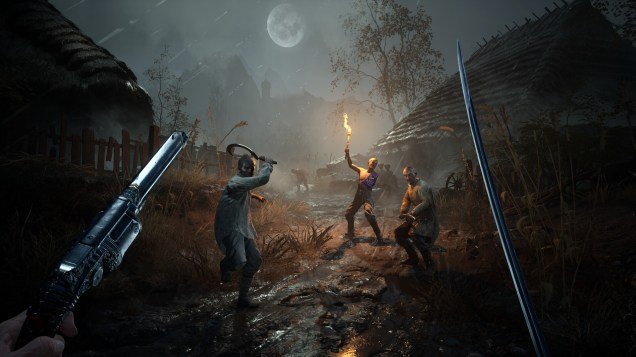
The soulslike genre has been around long enough now that it’s easy to pick out its most recognizable traits. Whether it’s managing stamina in combat, the risk of losing progression with each death, health items and enemies that respawn when you reach a bonfire, lantern, or some other recognizable checkpoint; all of the best in the genre adapt these in their own distinct ways.
Valor Mortis is no different, but attempts to stand out through its shift in perspective. By moving the action to a first-person view, Valor Mortis affords itself novelty, which works well with snappy and satisfying combat that rewards deft parries and patience in equal measure. But it’s also marred by a weak story and sluggishly paced opening hours that betray the more captivating moments in its second half, where Valor Mortis’ most interesting narrative beats and combat encounters finally deliver on some of the potential you can see being established in the hours prior.
You play as William Dowsett, a very British-sounding member of Napoleon’s army who returns from the dead only to find former allies taken over by corruption sweeping across Europe. The corruption has twisted people; large red boils replace the heads of riflemen, infantrymen have their spines snapped as they are transformed into grotesque and rabid attack dogs, and piles of bodies have become living masses of flesh that slowly crawl toward you when you least expect it. It’s a familiar world that has been transformed into a nightmare for William as he attempts to reconnect with missing comrades and understand how the war has found itself in this state, leading him to answers that will likely be far less surprising for you as a player.
Valor Mortis’ story is frustratingly straightforward, and wastes a setting so rarely used in action games. William’s slow realization that the war he’s been waging on behalf of the bloodthirsty Napoleon Bonaparte might not be as noble as he assumed is annoyingly drawn out for how predictable it is. It’s hard to get invested with a main character who has little more going for him than verbalizing his disgust over the consequences of a war he so recently was proud to be a part of, blissfully ignorant to the horrors he was unleashing on innocent citizens along the way. Conversations with the game’s supporting cast don’t help either, with none making a lasting impression.
Once Valor Mortis starts exploring the villages and cities besieged by Bonaparte and his corrupted forces, there are more compelling stories to discover. You’ll come across brief echoes that capture fleeting conversations from the past, distilling short but often heartbreaking stories. They effectively convey the desperation some civilians endured when faced with a foreign, oppressive force taking over their day-to-day lives. There’s an entire city filled with orphans who scurry around underground tunnels, and another nearly entirely underwater after a heinous war crime extinguished a rebellion without care for civilian casualties. They’re effective at contextualizing why so much of the world around you is desolate and broken without having to see those events play out, and they do a great job of making you hate an antagonist you’ll hardly ever see.
It’s frustrating that it takes a while to get here, however, with many of Valor Mortis’ opening hours taking place across battlefields that, while twisted by the corruption around them, ultimately blend together in forgettable ways. These areas are almost strictly linear, with clear paths from beginning to end and only slight detours to explore. Around the halfway mark, this monotonous world design flips around entirely–you move from abandoned villages to burning cities and down into labyrinthine catacombs beneath an eerily empty university. These spaces feel more like small hubs, with smart shortcuts back to resting points (represented here as lanterns, which restock your healing vials and respawn enemies as you might expect) that make them feel more carefully considered in comparison to the opening hours.
Valor Mortis’ combat is where it takes its biggest swings. Its shift to a first-person perspective is the most immediate and distinct change from typical soulslikes, but its split between melee and ranged combat and multiple weapon options are equally impactful. It is still all about crowd and stamina control, as well as a familiar reliance on parries, too. The tighter field of view makes it important to intelligently choose which enemies to engage and when, though off-screen markers help alleviate potential frustrations the perspective change would otherwise introduce. Melee combat is fast and responsive, with parries being especially satisfying to pull off given the tight windows that make many duels, especially those against bosses, exhilarating. I rarely tired of hearing the sound cues of a critical attack, be it from a stealth attack or through breaking their posture, accompanied by violent, contextual executions that varied based on the weapons I had equipped. Ranged combat is given a greater emphasis than most other soulslike games too, and you’ll routinely be challenged to pick off enemies from afar while juggling those within striking distance.
“By moving the action to a first-person view, Valor Mortis affords itself novelty, which works well with snappy and satisfying combat that rewards deft parries and patience in equal measure”
There is a range of offensive weapons and abilities on offer, each of which is introduced as you progress through the story. Included are three types of swords: a rapier that excels at parries and building posture damage, a two-handed claymore that forgoes parries entirely in favor of slow, powerful, and magically imbued attacks, and a well-rounded saber that balances damage and posture damage. Firearms are similarly varied, with a quick-firing pistol, a slow but powerful blunderbuss that’s devastating at close range, and a two-handed musket that’s great for picking off enemies from afar. You’re also granted three transmutations, or magical abilities, which allow you to hurl fire at enemies, freeze them with stasis, or absorb and reflect their damage back at them, as well as the ability to wall-run (which feels just as good as it did in developer One More Level’s Ghostrunner series).
Each of these weapons and abilities feature its own upgrade trees, with specific materials required to unlock each sequential node. I ended up finding enough materials to nearly max out each upgrade tree without specifically hunting for them, which allowed me the freedom to experiment with each one without having to commit to specific configurations. This seems by design, given that you’ll always have one sword equipped in your main hand and either a firearm or spell in your off hand, similar to Dishonored or BioShock 2, as well as the ability to swap either one at any time.
Despite the freedom of choice, I was surprised by how little I swapped between the various options, especially when it came to both swords and magical abilities. The saber, which is the first weapon you’re given, fulfilled my needs so perfectly that I only briefly dabbled with both the rapier and claymore before changing back. The rapier’s slightly additional posture damage never made up for its inability to block attacks without perfect parries, and the claymore is introduced so late and is incapable of performing parries entirely, stripping out one of the most satisfying elements of the entire combat loop.
The same goes for the three transmutations, as I found myself mostly sticking to fire given its effectiveness against most enemies. Building up enough stasis on enemies consumed more nephtoglobin, or mana, than it seemed worthwhile, and the act of absorbing and returning damage with the third ability always felt more clunky in practice and less effective than just sticking to the far more satisfying parrying mechanic. These two other abilities are utilized more often in environmental puzzles, though these are predominantly used to initially explain how the abilities work. They go mostly ignored afterward, annoyingly not building on the gameplay design introduced early on.
Enemy variety is partly to blame. Valor Mortis features a relatively shallow pool of foes and takes a long time to start combining them in ways that make you consider how to approach a fight in specific ways. You’ll be fighting the same slow-moving and weak infantryman in your first and last hours of the game, which saps some of the satisfaction out of the combat when you’re pulling off the same parries against the same attacks for hours on end. In a similar fashion to the level design, this starts resolving itself when you have the full complement of weapons and abilities at your disposal, at which point enemy combinations and slight variations start becoming more abundant. With the added benefit of more open spaces to explore and more opportunities to deliver surprises with enemy placements, Valor Mortis’ combat eventually starts to shine. It’s just a pity that it takes some time to get there.
That might be a blessing or a curse depending on what you’re coming to Valor Mortis for, but it has a noticeable knock-on effect that’s difficult to ignore. Runbacks after death were far less tense because of how familiar and, in many cases, sparse enemies were. Character progression, which is governed by an upgrade tree with no branching paths to commit to, didn’t drastically change the way I played, instead just giving me a means to buff my attributes to keep up with the escalating damage and health pools of enemies. I was rarely seeking out a specific upgrade to help deal with new foes because I had become accustomed to fighting the same ones over and over again. Thankfully boss fights offered some reprieve to this, as they tend to feature a good variety of enemies, large and lumbering to small and nimble, that inject the combat with a sense of challenge and tension.


There are many other elements outside of combat, too, that only start to really click closer to the game’s climax. Early stages are so preoccupied with introducing you to new weapons and abilities and providing you with spaces to learn each one of them that they feel disjointed and unfocused. At one point you’re taking out distant groups of enemies conveniently placed next to explosive barrels to showcase the effectiveness of your new musket, and at another you’re engaging in a long platforming sequence where you need to string together wall runs and grapples while maintaining pace with a moving cart through a mine shaft. Ultimately, all these issues stem from a lack of restraint; There are too many disparate ideas that feel at odds with the best aspect of Valor Mortis, making it feel directionless at times.
Valor Mortis betrays the heights it reaches in its second half. Its first-person combat is snappy and satisfying, but the limited enemy pool, underutilized weapons and abilities, and lack of consistent challenge ultimately prevent it from shining. And while this historical period is novel to explore with a dark, supernatural twist, it doesn’t play host to a wider, captivating story, and is only salvaged by smaller, emotionally charged vignettes that effectively convey the consequences of a war that its protagonist so naively comes to terms with. There are the bones of a great game here–one that would benefit from a tighter focus on its engaging first-person combat and a trimming of the superfluous mechanics that detract from the ones that work. Instead, it’s an uneven experience that delights as much as it disappoints.