dailynewsnblog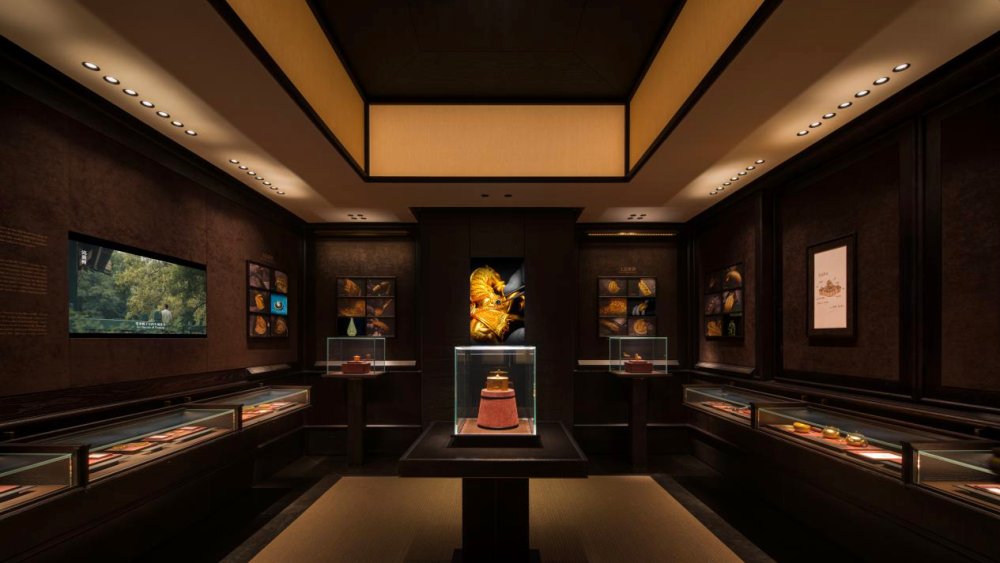
From an incense house in historic Hangzhou to a third-generation gold jeweler opening in Nanjing, there is a shift taking place in China, with aesthetics becoming not just a brand language, but a business strategy.
The business world remains consumed by the question of growth. But the story Chinese brands are telling has quietly changed its subject.
Around this year’s Mid-Autumn Festival, two scenes a thousand miles apart offered a glimpse of the changing dynamics.
One unfolded in Hangzhou. Chinese incense house Kongshan Shi, also known as CommonSense, and Liuxia 1129 staged “Thirty-Two Moons: An Aesthetic Journey” in an 800-year-old historic district. There were city walks, passages of literature copied by hand, guqin music in a classical garden, an incense gathering at a waterside pavilion and a banquet beneath the autumn moon.
There were no overt sales targets and little of the promotional machinery normally associated with a brand activation. The experience unfolded instead as a slow narrative inspired by classical Jiangnan life, running from September into November.
The other took place in Nanjing. On Sept. 25, Lamchiu, a gold jewelry house from Lanzhou, opened its first store outside its home city at Deji Plaza. Originally scheduled for July, the opening was delayed twice as the construction details were repeatedly refined. On the first day of its soft launch, attended by a small group of the mall’s top clients, sales surpassed 10 million yuan, or about $1.5 million.
One is an incense brand; the other is a gold and jewelry house that insists handmade jewelry is an art form. One operates in a historic Hangzhou neighborhood layered with centuries of cultural memory; the other has entered one of China’s most prominent luxury retail destinations.
Yet both point to the same emerging signal: for a growing group of Chinese brands, the pursuit of scale is no longer the only measure of success. Aesthetics, craftsmanship and cultural expression are moving closer to the center of the business.
In a Wealthy City, Commerce Is Rearranged
Liuxia 1129, where “Thirty-Two Moons” unfolded, is a historic neighborhood in Hangzhou’s Xihu district, built along the Liuxia River.

Liuxia 1129 takes its name from the words “let Xixi remain,” spoken in 1129, the third year of the Jianyan reign, and has grown into a Song-aesthetic lifestyle district rooted in the local cultural lineage. Courtesy image.
More than 800 years ago, Emperor Gaozong of the Southern Song crossed the Xixi wetlands as he fled south. The phrase “let Xixi remain” is said to have given the area its name. A single stream runs through the town, crossed by three bridges. The lane, less than 400 meters long, was once a water-and-land transport hub during the Southern Song, with markets for incense, tea and flowers developing along its banks.
Kongshan Shi, the co-organizer of the event, is a Chinese incense brand founded in Hangzhou in 2023. Its approach is not to reproduce traditional culture literally, but to trace specific cultural sources and translate them into contemporary experiences.
The brand drew, for example, on the lake boats described in Zhang Dai’s essays, the “faint trace of moon” in Lin Huiyin’s writing and the yuhua incense recorded in Gao Lian’s “Zunsheng Bajian.” Strolling, moon-watching, reading, writing, burning incense, listening to the guqin and sharing a simple banquet were then reconstructed as experiences that visitors could enter and feel for themselves.

Kongshan Shi, a Chinese incense brand founded in Hangzhou in 2023, builds its incense on the underlying logic of traditional Chinese aromatic therapy. Courtesy image
A single moon became “thirty-two moons” through the act of looking. A guqin player took the position where Emperor Huizong is depicted playing the instrument in “Listening to the Qin.” After dark, an incense gathering at the waterside pavilion moved through four rounds inspired by Song paintings, with a line left behind after each round. Read together, the four lines formed a poem to the moon.
Then came “Simple Fare of the Mountain Home: Banquet Under a Pale Moon,” a 13-course meal of “pure offerings” inspired by Song and Ming literati traditions. The dishes were prepared by the chef of plant-based restaurant Moyu, drawing on the seasonal vegetable methods described by Lin Hong in “Shanjia Qinggong.”
The Mid-Autumn moon-watching program ended at the Liuting Pavilion over the water. The moon — seen, walked toward and absorbed along the route — moved through paper, words and scent until it became something that could be mailed to someone far away or kept as a private memory.
The commercial proposition was deliberately indirect. The product was not always the point. The experience itself was the value.
Over the past two years, Kongshan Shi’s collaborations have rarely stopped at conventional co-branding. They have included a West Lake cultural study tour with Xizi Hotel, a literati gathering with Xinxin Hotel and a “Three Paths of Book Fragrance” collaboration with CITIC Press and its Wujie Library.
The common thread is the relationship between incense and a particular city, space or cultural text.
Liuxia 1129’s operator, West Lake Construction Investment Group, offers another increasingly scarce commodity: patience.
Under a philosophy of “micro-renovation, refined improvement,” the historic district was not demolished and rebuilt. Commercial returns were not the sole consideration in tenant selection. A community center recreates scenes from Song paintings; tea whisking, flower arranging and brewing become part of everyday heritage experiences; historic names, and owner-operated shops coexist along the same stretch of bluestone paving.
“The most extreme beauty in this world is kindness, and business is the same,” Huang Guiyue, a director and deputy general manager of Hangzhou West Lake Construction Investment Group, told WWD China. “Growth and revenue matter, of course. But we are willing to give patience and space, so in choosing tenants we have made the trade-offs we should.”
That patience is easier to understand in the context of Hangzhou’s economic strength.
In 2025, the city’s GDP surpassed 2.3 trillion yuan, or roughly $342 billion, keeping it eighth among Chinese cities. Per-capita GDP reached about $24,000.
In a city with that level of wealth, commerce does not necessarily have to move at maximum speed. Businesses can afford to experiment with slower, more considered models — ones in which cultural value and experience are not simply marketing tools but part of the proposition itself.
When growth is no longer the only yardstick, culture can become a surprisingly durable business asset.
Three Generations of Gold, One Slow Business
At almost the same moment, roughly a thousand miles to the northwest, a gold and jewelry house was answering the same question in a very different register.
Lamchiu began in a residential building on an old street in Lanzhou’s Jinchengguan district. An auto repair shop stood opposite; a pharmacy and a small supermarket were next door. There was no sign and no conventional storefront.
Inside that modest location, the family’s gold business developed over nearly two decades and reached its third generation.
The younger generation, after studying abroad, returned with a broader view of the business and a different ambition for its future: do not chase scale or turnover. Instead, operate the store the way you would make a gold vessel.
The approach has produced strong results.
The brand’s single store generated more than 500 million yuan, or about $74 million, in sales in 2025. About 99 percent of its products are original designs, while handwork accounts for more than 90 percent of production, using dozens of techniques including filigree, chasing and fine carving.
In 2024, the brand stopped taking orders twice because it could not keep up with demand. In 2025, despite the broader market environment, it raised prices by between 10 and 20 percent and extended lead times to as long as a year. Demand continued to exceed supply.
Its first expansion outside Lanzhou is in Nanjing’s Deji Plaza, built around the concept of “one city, one store, one design.” Pieces created for Nanjing draw on the city’s own cultural lineage, from Qinhuai lanterns to yuhua stones.
Shanghai and Shenzhen are next on the map.
The store itself makes the philosophy visible.
On B1 of Deji Plaza, the floor is paved in “gold brick,” using a Suzhou craft still executed by hand. Above it is a barrel-vaulted ceiling made of mother-of-pearl “dragon scales,” which took a year to assemble. The walls combine Quyang white marble and handmade Jingdezhen ceramics.
The result is a walkable miniature garden built around the experience of the classical garden stroll. And, once again, the aesthetic reference point is the Song Dynasty.
With the opening, Lamchiu joins Laopu Gold and Junpei under the same roof, adding another expression of Chinese fine gold jewelry to a high-end retail environment increasingly willing to give traditional craft a premium position.
Lamchiu has benefited from a broader market shift, of course.
Gold jewelry was not always positioned as it is today. As Laopu Gold helped bring traditional Chinese gold craftsmanship to a new level of commercial and consumer recognition, the category began moving from simply “selling gold” toward “making works.”
The wider market has followed. Baolan, a high-end gold jewelry brand in Hangzhou, recently closed a Series A financing round of more than 100 million yuan, led by Challenger Ventures with participation from Kering and Shunwei Capital. Lamchiu itself closed a strategic financing round of more than 100 million yuan at the end of 2025.
But the tailwind was never Lamchiu’s fundamental logic.
Waiting months for a store to be completed — just as customers may wait a year for an individual piece — is an anti-efficiency stance that looks uneconomic on paper but has become one of the brand’s strongest competitive advantages. A design can be copied. Three generations of a family making gold vessels in a residential building on an old Lanzhou street cannot.
Song Aesthetics: One Shared Signal
By coincidence, the Song aesthetic converges in both stories.
Liuxia 1129 sits in Hangzhou, where the Song Dynasty is part of the city’s cultural undertone. Its character grew organically from the location rather than being applied as a branding layer.
Lamchiu made a similar decision when developing its first Nanjing store.
In Chinese history, the Song was neither as expansive as the Tang nor as ornate as the Qing. Its aesthetic was more restrained, with refinement embedded in everyday life. In “Mengliang Lu,” Wu Zimu lists burning incense, whisking tea, hanging paintings and arranging flowers among the cultivated pursuits of the era — with incense coming first.
The Song aesthetic therefore occupies a distinctive place in the history of Chinese taste.
More importantly, neither brand is simply borrowing Song symbols. Neither is pasting historical motifs onto a contemporary product or using traditional culture as decorative packaging. Both are using specific cultural references as a source for creating something new. Culture here is not the wrapping. It is part of where the product comes from — and increasingly, part of why the product has value.
Kongshan Shi and Liuxia 1129 found that expression through the Song cultural landscape of Hangzhou. Lamchiu translated it into the architecture and experience of a Nanjing jewelry store. The convergence is revealing.
As Chinese brands become less concerned with proving themselves against a Western template, they are increasingly able to look inward for their own references and definitions of value. That is simultaneously an aesthetic decision and a commercial one. When the anchor of a brand shifts from scale to culture, and from speed to expression, it may become less vulnerable to the next turn of the economic cycle.
Looked at together — a censer of incense in Liuxia, a slab of gold brick in Deji — the two businesses are making a similar bet. Aesthetics comes first. Commerce follows.
With growth no longer the only story, Chinese brands are opening a different chapter. And this time, they may be choosing to move more slowly.
Editor’s Note: China Insight is a monthly column from WWD’s sister publication WWD China on developments and trends in that key market.