dailynewsnblog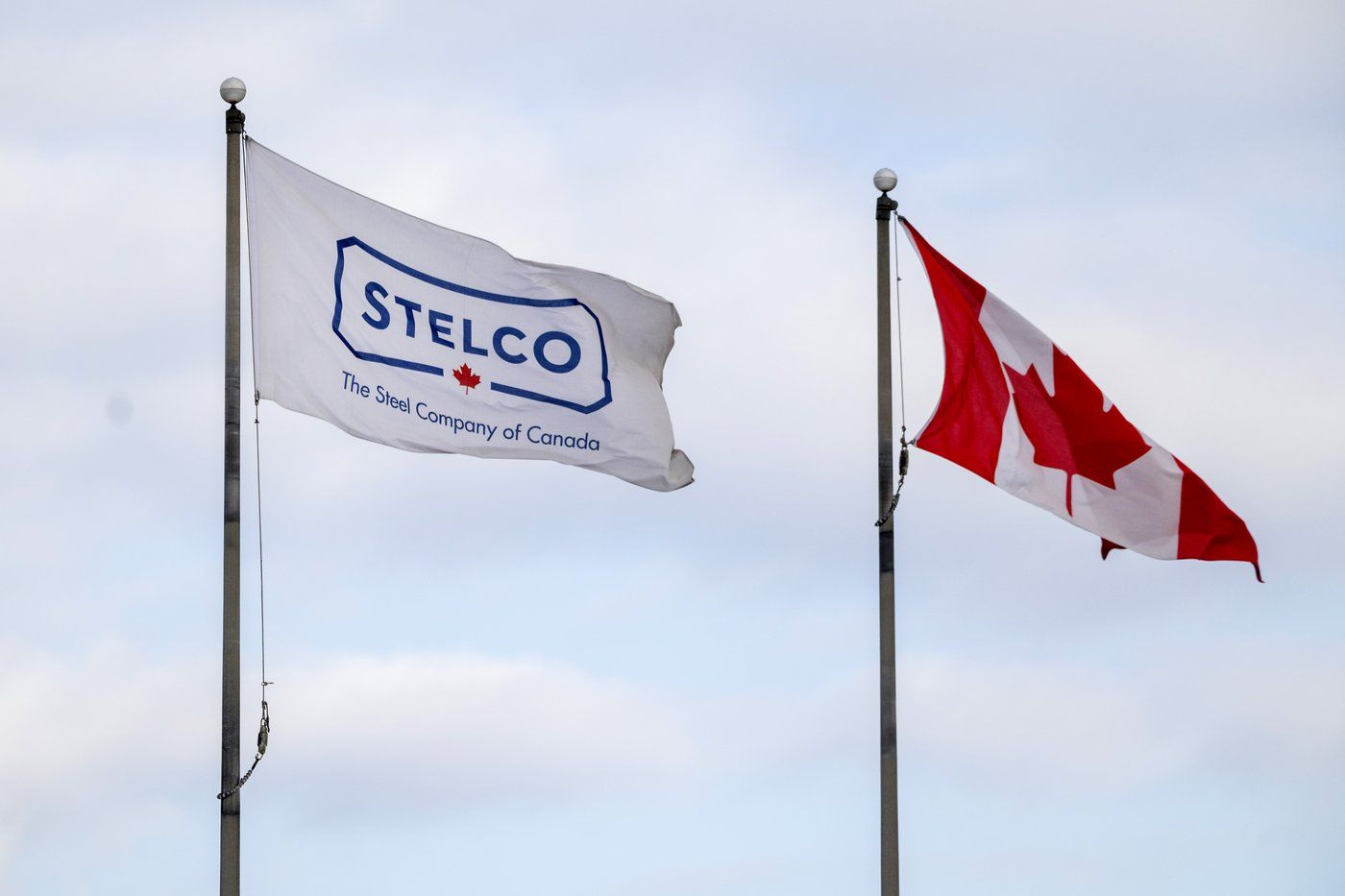
Industry Minister Mélanie Joly sent a letter to Stelco president Paul Simon on Monday demanding that Cleveland-Cliffs outline within five business days how it plans to meet its commitments, including maintaining employment levels, or face possible legal action.
Conservative Leader Pierre Poilievre is calling on Ottawa to sue Stelco’s American owner as part of a five-point plan aimed at protecting Canada’s struggling steel industry.
Poilievre was in Burlington, Ont. on Friday, speaking at a site overlooking Stelco’s operations across Hamilton Harbour. The steelmaker began issuing layoff notices this week after announcing plans to lay off up to 500 workers at its Hamilton and Lake Erie facilities.
He said the lawsuit should seek to bring back workers and restart idled operations at Stelco, or force its sale to a Canadian owner willing to resume production.
“The only thing that we would accept is these workers getting their paycheques, making Canadian steel to build our country,” Poilievre said.
Industry Minister Mélanie Joly sent a letter to Stelco president Paul Simon on Monday demanding that Cleveland-Cliffs outline within five business days how it plans to meet its commitments, including maintaining employment levels, or face possible legal action.
The deadline falls on Tuesday, as Monday is Thanksgiving.
“They need to comply,” Joly told reporters this week. “If not, we will use the full force of the law.”
Poilievre also accused Joly of failing to follow through on an earlier threat to sue Stellantis after the automaker announced last October that it was shifting planned Jeep Compass production from Brampton, Ont., to Illinois.
“The minister is threatening to sue, but she made the exact same threat to Stellantis a year ago, and she has not followed through on that threat,” Poilievre said. “Enough theatre; we need results.”
Ottawa launched a formal dispute-resolution process against Stellantis in November 2025 and issued a notice of default the following month.
Laid-off workers could be recalled if trade deal reached
The Conservative plan also calls for eliminating the industrial carbon tax, cracking down on Chinese steel imports, accelerating liquefied natural gas projects and negotiating a tariff-free trade agreement with the United States.
Poilievre pointed to comments Thursday by Cleveland-Cliffs CEO Lourenco Goncalves that laid-off workers could be recalled if Canada and the United States reach a trade deal.
“Get back to the negotiating table to get the deal you promised,” Poilievre said, addressing Prime Minister Mark Carney.
Poilievre called for stronger measures to stop steel dumping, a practice in which foreign producers sell steel in Canada below its normal price, putting Canadian steelmakers at a competitive disadvantage.
“We need to ensure that steel that is artificially cheap due to government subsidies no longer enters our country,” Poilievre said. “Canadian steel comes first for Canadian jobs.”
The Conservative leader called for fast-tracking LNG projects to boost demand for Canadian steel.
“I propose to create shovel-ready zones,” he said, arguing that faster approval of LNG export projects would create “massive demand for Canadian steel.”
Poilievre also named Conservative MP Michael Guglielmin, whom he dubbed his “man of steel,” as chair of the Conservative steel caucus.
Guglielmin, who represents the riding of Vaughan—Woodbridge in Ontario, spent 22 years working in the steel industry.
Viet Vu, manager of economic research at the Dais, a think tank at Toronto Metropolitan University, said Stelco’s layoffs and Stellantis’s planned three-week production shutdown in Windsor, Ont., later this month reflect the broader pressures on Canadian manufacturing.
“Both of these actions show you the economic impact of (U.S. President) Donald Trump’s tariff measures,” he said.
The fallout extends far beyond the factory floor, Vu said, with workers and their families bearing the brunt of the economic disruption.
“Those aren’t just jobs. Those are people,” he said. “The human cost of this is tremendous.”
This report by The Canadian Press was first published Oct. 9, 2026.