dailynewsnblog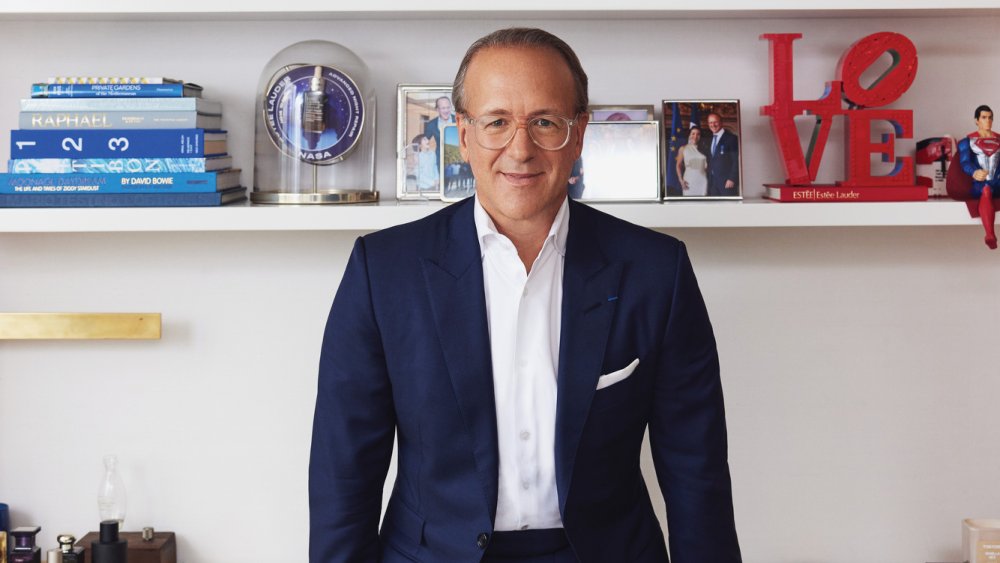
It’s late afternoon on a summer Friday in August, but Stéphane de La Faverie is giving Monday energy — upbeat, locked in and thrumming with excitement as he talks business.
As well he should be.
The president and chief executive officer of the Estée Lauder Cos. has just wrapped up one of the most significant weeks of his career, sharing the results of his first fiscal year as leader of the prestige beauty player.
After three straight years of organic sales losses, the company returned to the right side of the balance sheet, reporting increases in both net sales and profitability and clearly signaling a turning of the tides.
“We are growing again,” said de La Faverie.
The significance of the word “again” is not lost on de La Faverie or the Wall Street and industry analysts who have tracked the company’s precipitous drop since 2022. In early January of that year, Lauder’s stock reached an all-time high of $371.86. But as has been well documented, a perfect storm hit: The combination of a bear market with the steep decline of China and the travel retail channel — two of Lauder’s key growth engines at that time — coupled with a lack of product innovation across its portfolio sent the company’s stock price into a tailspin.
By the time de La Faverie took the reins as CEO on Jan. 1, 2025, Estée Lauder’s stock was trading at $73.98 and the company had lost its position as the largest prestige beauty manufacturer in the world to archrival L’Oréal.
But rather than be cowed by the circumstances under which he took the reins, de La Faverie made a crucial decision: Rather than restore Lauder to what it was, he and his team would use the opportunity to create the company of the future.

Stephane de la Faverie
Masato Onoda/WWD
“We were clear that we needed to transform the company to reignite growth,” said de La Faverie, noting that the turnaround plan first implemented under former CEO Fabrizio Freda evolved from the Profit Recovery Plan (PRP) to the Profit Recovery Growth Plan (PRGP).
“Now, we are focused on the G — growth,” said de La Faverie.
“Many companies go through a growth phase, and we went through that in the past and will in the future. And a lot of companies go through a transformation. Doing the two at the same time is an enormous challenge and a great ambition,” he continued. “What we’ve done is the biggest cultural, leadership and organizational transformation in the company’s history, and we are doing this on the 80th anniversary of the Estée Lauder Cos.”
To be sure, many of the changes are significant: Over 10,000 positions have been eliminated as de La Faverie and his team delayered the organization to streamline decision making, and for the first time in its history, there is not a Lauder family member as an operational executive. But the inspiration for the transformation goes back to the very beginnings: Estée Lauder herself.
“She was the original entrepreneur, and what our transformation is enabling us to do is put back the entrepreneurial spirit this company was built on,” said de La Faverie. “Yes, we are a large company, but there is no reason we can’t behave as an indie when you factor in the agility the transformation has given us. We have the insights, the processes, the teams and the brands to tap into this industry and consumer that is evolving and moving quickly.”
With one full year under his belt, the vision seems to be paying off. Lauder reported a 5 percent increase in net sales to $15 billion, with the company posting a net profit of $517 million, versus a net loss of $1.04 billion in fiscal 2025. For fiscal 2027, the company is forecasting a 3 to 5 percent increase in net sales, with an adjusted operating margin of 12.7 to 13.5 percent.
“We had high expectations of Stéphane when we promoted him and he has exceeded those hopes and expectations,” said Richard Zannino, the lead independent director of the Estée Lauder Cos. and the managing director of the private equity firm CCMP Capital Advisors. “An A+ so far — he’s moving with speed, intelligence and urgency, and he’s done it with the right touch, given some of the things we’ve had to do to rightsize and transform the company.
“Many on Wall Street didn’t like the choice of an internal candidate — they didn’t think he would be bold enough,” Zannino continued. “I knew it was going to be the opposite. He’s done everything we’ve asked him in this first phase, and we’re looking forward to moving to the second phase, where we can focus on driving growth across our portfolio.”
Seizing the Future
From strength in China to the reacceleration of the travel retail channel to double-digit growth in the fragrance category, Lauder’s fourth-quarter results bode well for the year ahead. “China is back and very, very strong,” de La Faverie said. “The U.S. has been very robust and you have a continuous acceleration of the emerging markets, despite the disruption in the Middle East.”
Moreover, demographic trends indicate that prestige beauty will continue to benefit from tailwinds that are expected to drive growth of at least 2 to 3 percent a year. By 2030, another 400 million people will enter the middle class, with half that number coming from China and India.

A MAC campaign for the Indian market
Courtesy of Mac Cosmetics
“Consumers are also getting into beauty at a much younger age, while lifespans are increasing,” said de La Faverie. “When you think about the emerging consumer, about lifespan and disposable income continuing to rise around the world, even though the consumer is under pressure at this moment in time, we see consumer confidence for the middle and upper-middle class as stable and picking up. We expect to see a continuous acceleration of beauty.”
The rise of new consumers has given rise to a new marketing mandate, one that is resolutely consumer-centric. “We’ve gone from what we used to call local relevance — how am I relevant to my community, to the Chinese consumer, the Indian consumer, etc. — to what we call cultural intimacy,” said de La Faverie. “Cultural intimacy is how do I understand your culture — not only how do I understand your face, but your values.”
He cited a recent MAC campaign timed for the Indian wedding season as an example. “It goes deeply into culture,” said de La Faverie. “MAC is becoming intimate with the Indian tradition, while understanding and respecting them. Combine that with how AI is transforming the way we operate, mine data, predict trends — you put all of this together and I’m very excited about what the future of beauty has to bring.”
Being consumer-centric is the backbone of de La Faverie’s Beauty Reimagined strategy that is designed to reignite Estée Lauder’s growth and profitability. “There was a time when we could dictate to the consumer with greater power what she should buy, but as her choices became greater, we have to adapt to what she wants,” said William P. Lauder, chair of the board of directors. “The analogy I use is we are running up the down escalator constantly. If you’re not coming up with something new, you are going to go backwards.

William Lauder
Weston Wells/WWD
“We’re like the painters on the George Washington Bridge. We do one end and go back again,” Lauder continued. “Why? Because consumer needs are always changing and the competition is always changing.”
Putting consumers at the very center of the decision-making process is a significant shift for Lauder, which has historically been much more brand and channel focused, hewing to a department-store centric model even as multispecialty chains like Sephora and Ulta Beauty gained dominance.
“That consumer-centric vision is one of the biggest changes under Stéphane,” said Jo Dancey, global brand president of Jo Malone London and Lifestyle Fragrance Brands. “I’ve been in region and brand in my career here. If I think about the reasons why we made decisions historically, it was because the brand needs this. Now, it’s because the consumer requires it.
“We haven’t lost our very strong brand identity,” she continued, “but that shift in mindset has allowed us a freer framework and consistency in which to operate off of.”
One such example is the decision to launch Jo Malone London in Boots in early August. “If you’d asked me three or four years ago if that would ever happen, I would have said no way,” said Dancey. “But the way we’ve done it has been beautifully executed with a clear strategy,” she continued, noting that about six out of the brand’s total portfolio of 30 fragrances are sold in the High Street retailer and that Jo Malone London continues to be the top-selling fragrance brand at Harrods.

Jo Malone London Boots Store
Courtesy of Jo Malone London
“We know that this is where the fragrance market is in the U.K., particularly for men,” Dancey said. “If we want to fulfill the ambition of reaching more consumers, particularly men, this is the channel for us. Previously, this would have been a conversation that would have taken several years. We didn’t rush the decision — it was very considered,” said Dancy. “But it wasn’t a decision we would have made a few years ago.”
“Historically, we’re a brand-led organization, and very often the product was in the middle of the discussion,” said de La Faverie. “Consumers today are in charge as much as the brand. I always tell the teams, the brand, the product, the function, the region is not at the top step of the pedestal. Only the consumer is.”
Culture Quest
That North Star has resulted in a significant change in the culture of the Estée Lauder Cos.
Although he could be considered the ultimate insider — de La Faverie joined in 2011 as senior vice president and general manager of Aramis & Designer Fragrances division, rising through the ranks to become global brand president of Estée Lauder and Aerin, then group president and executive group president before being named to the CEO role in October 2025 — he has approached the task of transformation with the unbiased eye of an outsider.
That means reassessing Lauder’s processes, workforce and asset allocations, and making the tough decisions about right-sizing its workforce. De La Faverie has brought in outside talent, assembling a leadership team where three-quarters of its members are either new to the company or to their roles, and many come from outside the world of beauty. Chief digital and marketing officer Aude Gandon was most recently global chief marketing officer of Nestlé, for example, while chief technology, data and analytics officer Brian Franz came from State Street.
Also new: The company is tapping into outside organizations to streamline processes. For example, media buying and production for all brands is now centralized through WPP; all brand dot.coms are platformed on Shopify, and Accenture has been hired to provide enterprise business services. In September, it announced a partnership with Profound to deploy its capabilities across the portfolio to operationalize GEO and AI search at scale.
“The organizational work that we’ve done was around delayering, creating efficiencies, creating greater role clarity, greater distinctiveness between roles and then driving efficiencies in how we use technologies and processes,” said Michael Bowes, executive vice president and chief people officer. “We knew we needed a faster, more agile organization that is able to pivot and redirect as consumer preferences change. We knew a more complicated operating system which we had in the past was not going to serve us in the future.”
The change is significant. “We are completely changing the operating model of the company,” said de La Faverie. “What is nonvisible to the consumer — the back of house — has been optimized for maximum efficiency. We want people to be empowered to make decisions that move the company forward.”
De La Faverie and Bowes coined the acronym BEAUTY to represent the new culture, standing for bold, entrepreneurial, agile, unified, transformation and yes — as in “say ‘yes.’” “We ended with optimism and a sense of positive belief in the future, because without that, you don’t have the other things,” said Bowes. “We want a company of people who say ‘yes’ to new ideas and new ways of working.”
In fact, de La Faverie even has a green novelty button on the desk of his 40th-floor office imprinted with a big YES that says, “YES! Yaaaasss! YesYesYes” every time it’s pressed.
Its inclusion in the corridors of power is characteristic of the 52-year-old executive, whom colleagues describe as committed, charismatic and down-to-earth. “The only way you can bring people through this level of change is with radical transparency and a tremendous amount of direct-to-employee communication,” said Bowes. “From the beginning, Stéphane spoke very transparently about what needed to change and why, then linked the strategy to successes we saw quarter by quarter. This kind of radical candor in communication was a big change for us as a company and a hallmark for why he was able to take the company through it.”

EL Holiday Outpost Nov 25 Xin Hai Gang Hainan
Courtesy of Estee Lauder
“There is a level of energy and transparency and passion for the business that is really refreshing — from Stéphane and the whole leadership team,” said Jennifer Tejada, the CEO and chair of PagerDuty, and chair of the nominating and ESG committee on the Estée Lauder board. “He’s someone who you can see is having fun, is embracing the challenges that come with the job. I see him as someone who sees opportunity in most of the challenges that present themselves and you see that attitude reflected in the team. There is an intellectual curiosity and a real competitiveness. He has the desire to win.”
De La Faverie, who keeps his energy up with 5 a.m. workouts six days a week, is also very hands-on. “What’s amazing is the easy access you have to him,” said Kilian Hennessy, the founder of Kilian Paris who has known de La Faverie since they were both young executives at L’Oréal in the ’80s. “He’s breaking the constraints and the barriers that existed before.”
Hennessy said he’ll often receive text messages when de La Faverie is traveling, with messages like “great momentum in China — need more storytelling,” and notes that kind of informal communication is a two-way street. When customers started direct messaging Hennessy on Instagram earlier this year noting that the most recent launch was out of stock at Sephora, he texted de La Faverie, who immediately sent a message back, “Don’t worry — I’m on it.”
“There used to be a lot of procedures, you had to follow a lot of steps to get something done,” said Hennessy. “Stéphane is opening everything up. Everything goes so much faster.”
Firing Up the Engines
Kilian, which Estée Lauder Cos. acquired in 2016, is one of the fastest-growing brands in the company’s portfolio. Indeed, fragrance has been a bright spot, posting a 10 percent increase for fiscal year 2026, and Tom Ford Beauty and Jo Malone London entering the pantheon of billion-dollar brands.
In skin care, the recovery of China in the East coupled with the dynamism of The Ordinary in the West helped the company post a 4 percent increase and offset the declines in luxury skin care sales in North America. “The beauty of our strategy in skin care is that it’s allowing us for the first time in our history to tap into three price tiers depending on the appetite of the consumer and the type of distribution and geographies,” said de La Faverie. “The Ordinary is flying at the entry point of prestige; a little higher than that, you have Clinique, which is off to a strong start this fiscal year with the launch of the Smart Clinical Repair Collagen + PDRN Face Cream, then at the luxury end you have Estée Lauder and La Mer.”
Makeup has been more challenged for the company, with sales up 2 percent for the year and 3 percent in the fourth quarter. The good news for Lauder is that MAC is back on track. A true pioneer when it launched 42 years ago as the original indie brand, more recently MAC had lost its cool factor. De La Faverie brought in a new team under the creative direction of Nicola Formichetti and the brand has quickly moved to reestablish relevance, tapping everyone from Chappell Roan to Kris Jenner as spokespeople.
“MAC has regained its ability to be in culture,” said de La Faverie.

Stephane de la Faverie and his team
Courtesy of Estee Lauder
As importantly, it has also entered Sephora for the first time in its history. “What was missing for MAC was MAC being in the right distribution where makeup consumption is happening. For a long time the strategy of MAC was to be a direct-to-consumer brand, but consumer behavior changes and specialty multistores like Sephora and Ulta have clearly diverted the consumption of makeup,” said de La Faverie.
De La Faverie has moved quickly to expand Lauder’s channel coverage across the entire brand portfolio to more closely mirror where consumers are shopping today. One of his first acts as CEO was to launch the Estée Lauder and Clinique brands on Amazon (with other brands quickly following suit), and he is actively pursuing social commerce. Thus far, MAC, TooFaced and Bobbi Brown have launched on TikTokShop, with more brands to come.
Elsewhere in the makeup category, after exiting most of its department store distribution and launching on social, de La Faverie said that Bobbi Brown is finally gaining market share. The future of TooFaced remains more uncertain though. Earlier this year it was reported that Lauder was looking to divest the brand, along with other underperformers like Smashbox and Dr. Jart. (De La Faverie declined to confirm that the brands were up for sale, noting that the company undertook a portfolio review.)
Regardless, TooFaced is staying with the company for now, but moving its operations from Los Angeles to New York, where it will fall under the aegis of Lisa Sequino, president of the makeup brand cluster. Despite its issues, de La Faverie points out that TooFaced is still a top-seller in mascara with Better Than Sex, lip with Lip Injection Lip Gloss and complexion with Born This Way in the U.S.
“The numbers show that we are capable not only to start growing again, but to bring back profitability,” he said of his strategy for color cosmetics. “If we use the playbook we used for skin care and fragrance, I have no doubt that makeup will accelerate.”
To do so, de La Faverie knows that he will need to rev up Lauder’s innovation engine and hit the right price points — a tricky balance that he says the company has not always nailed. Moving forward, he said Lauder has developed a tool that enables it to understand where growth is happening in the market, by product and by price point, and will only launch products in the sweet spot.
“Every single innovation needs to be accretive to the category where it belongs,” said de La Faverie. “Let’s say you have a new lip product and we know that 90 percent of the growth in lip is happening in the $15 to $25 price point, for example. The team needs to come with the right innovation at the right price. Now MAC can be closer to $15 and Estée Lauder $25, but no brand is allowed to position outside of this price.”
Hair care, the fastest-growing category in prestige beauty overall, has also lagged at Lauder. While the company’s performance is improving — from a sales decline of 10 percent in fiscal 2025 to negative 1 percent year-over-year, de La Faverie knows there is work to be done.
“Nobody cares if you go from minus 10 to minus 1. They care if you go from minus 1 to plus 5,” he said. “I’m very clear we need to reignite the wheel.”
There are other turnarounds to effect as well. Dr. Jart, for example, has not effectively capitalized on the boom in K-beauty, while Origins, a leader in green beauty when it launched three-and-a-half decades ago, has become stale. De La Faverie decided to relocate the brand’s operations to Deciem’s headquarters in Canada for a complete overhaul, a move endorsed by brand founder William Lauder. “The Deciem team is very imaginative and creative,” he said. “If you hang on too long, if you don’t let go of what’s behind you, you’re never going to reach what’s in front of you. I’m proud of what Origins has achieved, but maybe someone with a different point of view who doesn’t have the history with it can take a look and create something even better.”
Boldly Into the Future
While there is ample opportunity to continue to optimize Lauder’s current portfolio of 25 brands, there is also opportunity outside of it. White space opportunities like clinical skin care, clean makeup and designer fragrances are often cited by industry analysts as potential areas of growth, and there is considerable chatter about the company’s M&A strategy.
The decibel level rose to a roar in March, when Lauder confirmed that it was in talks with the Barcelona-based Puig for a potential merger. Talks broke down in late May, when the two were unable to come to financial terms after Charlotte Tilbury, majority-owned by Puig, decided to exercise an option in her contract that would have forced Puig to buy the remaining 21.5 percent of her brand “for several hundred million euros that Estée Lauder would not be willing to assume,” WWD reported at the time.
In announcing the breakdown of talks, de La Faverie reiterated his focus on the Beauty Reimagined strategy, a position he has doubled down on since. “Any transformational deal that is going to take our eyes off of our strategy is a nonstarter,” he said. “We will be part of the M&A conversation, and we are primarily interested in minority investments and single-brand deal investments.”
Over the past 12 months, de La Faverie has inked three such deals: Last November, it made a minority investment in the Mexican fragrance brand Xinu, followed by the full acquisition of the Indian Ayurvedic brand Forest Essentials in March and a minority stake in the London-based skin-care brand 111Skin in April.
“If we find great brands that allow us to diversify our growth — either by channel, geography, category or a combination of all three — those are needed conditions, but the most important one is price,” said the CEO. “You’re seeing a company that is much more financially disciplined when it comes to gross margin, profits, fixed costs. We will apply the same level of discipline to M&A, and will not go after brands that put the company at risk of impairment or not delivering our objective.”
Now with almost two years under de La Faverie’s belt, Zannino laid out the priorities for the year ahead as the enterprise readies itself for the future. The first is to continue to manage the massive amounts of change that the Estée Lauder Cos. has been through over the last 18 months. Second is to improve the innovation engine, third is to restore topline growth to the company’s historic rates and last, to continue to protect and enhance the brands.
“If we do that, we’re going to regain our position as the world’s leading prestige company,” said Zannino. “We do that by delighting customers, by creating growth opportunities for our employees and by rewarding our long-term shareholders.”
That vision animates de La Faverie as he strategizes a future based on the strengths which generations of the company’s founding family embedded in its DNA while not being beholden to the parts of the past that no longer suit it moving forward.
“There is a difference between values and culture. Our values haven’t changed over 80 years and will never change. We will always be the company that promotes women’s and girls’ advancement,” said de La Faverie.
“Our culture is to be bolder, more ambitious, reigniting the idea of being entrepreneurs as our founder showed us,” he continued. “We have one mission and we are unified: to create the most desirable prestige beauty company in the world.”