dailynewsnblog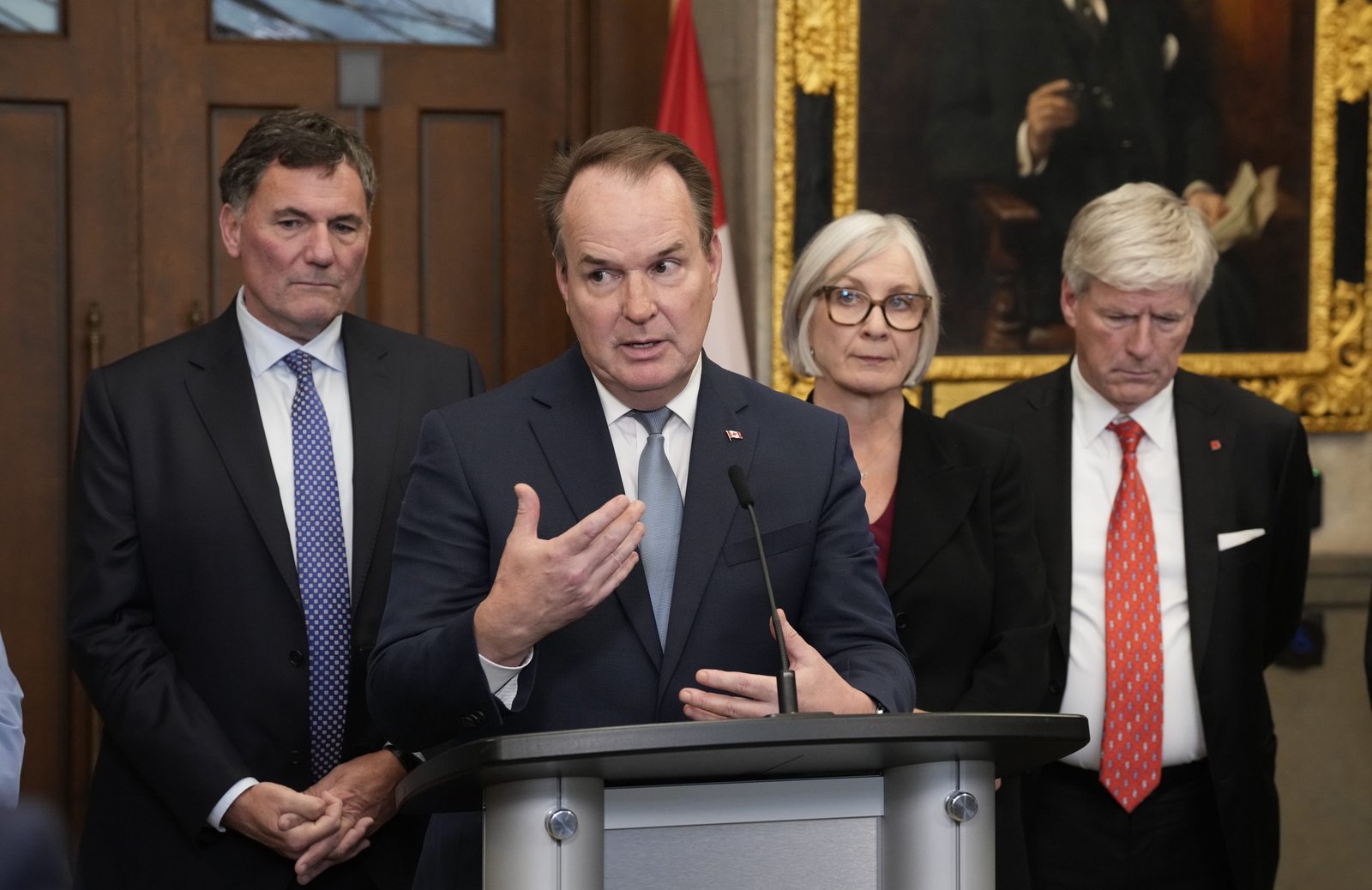
Speaking to reporters alongside NDP Leader Avi Lewis and representatives from labour, Indigenous and environmental organizations, Parliamentary Leader Don Davies said the bill threatens fundamental rights and protections.
Bill C-39, the Building Canada Strong Act, is heading to special committee for further study, after a second-reading vote Thursday which included support from the Conservatives. Those who were against included the Bloc, the NDP, and the Green Party.
Earlier Thursday the NDP, along with some labour and environmental groups, called on the federal government to scrap the major omnibus bill that seeks to fast-track development projects and change labour laws.
Parliamentary Leader Don Davies said the bill threatens fundamental rights and protections.
READ MORE: ‘Good for all parties’: Feds’ labour changes create more processes, delays intervention, says union head
“Together, we’re sending a clear message to the Liberal Government that you cannot build a stronger Canada, at the expense of workers’ rights, the rights of Indigenous communities, and crucial environmental protections,” Davies said.
The legislation seeks to accelerate major development projects while introducing changes to the Canada Labour Code, including new conditions governing federal intervention in labour disputes.
The proposed labour provision would introduce special mediators and a national interest test to determine when the labour minister can intervene in a strike or lockout. The government says the changes would establish greater transparency and accountability around the use of Section 107 of the Canada Labour Code, making intervention a measure of last resort.

Davies said he asked Government House leader Steven MacKinnon to include his party in the committee, but was turned down.
Davies pointed out that the last time the government had a special committee, it was for the electoral reform, which looked at “broad foundational change” on the committee, that included “appropriate representation for the different parties,” Davies said.
“We think that the Liberals know that if New Democrats are on the special committee, that we will be nominating witnesses, we will be asking questions, we will be moving amendments, we will be raising issues that you’ve heard mentioned here that they don’t want raised,” he said.
Under standard House protocols, members of parties that aren’t officially recognized are not allotted seats on committees. However, they can put forward amendments.
Concerns over scrutiny
The Canadian Labour Congress has also raised concerns about whether a special committee would allow sufficient time to scrutinize the legislation.
CLC Vice-President Siobhan Vipond said it’s important that the bill receives a legislative process so that “democracy can go through.”
“Sometimes, sending it to a special committee means that there’s not as many witnesses,” Vipond said in an interview with iPolitics.
She said the proposed changes to Section 107 are fundamentally flawed and should be removed rather than amended.
“There’s no tweaking right now to fix it,” Vipond said. “It’s fundamentally a problem when we’re trying to codify how 107 has been misused.”
This also comes after Liberal MP Patrick Weiler’s cautious comment made to the House on Tuesday.
While Weiler supports the direction of the legislation, he called to be more cautious in approaching the bill.
“Given that the powers in this bill would be permanent, it is important that where new flexibility or discretion is created, Parliament instils clear and transparent processes,” Weiler said in his remarks.

Following the NDP’s press conference, CLC President Bea Bruske said the possibility of a strike is what “creates incentive for both parties to compromise” and be “serious” at the bargaining table.
“It creates pressure and leverage that both sides need to find a collective agreement that they can live with,” Bruske said, citing a government stat that roughly 95 per cent of collective agreements are resolved without labour dispute in Canada.
“If the government instead chose to give employers the intervention powers that they’ve been asking for, we are going to have to draw a very different conclusion about what the legislation has been designed to accomplish,” Bruske said.
Employers seek stronger intervention powers
While unions argue the proposed changes would undermine workers’ constitutional right to strike, federally regulated employers say the legislation does not go far enough.
FETCO president and CEO Derrick Hynes said the organization supports the introduction of special mediators but wants the labour minister to have the power to intervene before a strike or lockout begins.
“The one area where we feel strongly the bill falls short is that it does not give the minister the option to act in a preemptive way before a work stoppage occurs,” Hynes said in an interview with iPolitics.
Hynes explained that once a special mediator has reported on stalled negotiations and the government has determined that a work stoppage would threaten the national public interest, the minister should be able to act before the disruption occurs.
He also rejected unions’ claims that the proposed changes would strip workers of their constitutional right to strike, arguing that the legislation would instead impose clearer limits on the government’s existing intervention powers.
“We believe that urgency is important here; that we are in the midst of a crisis, and that the government needs to respond and address some of these challenges in an accelerated time frame,” Hynes said.