dailynewsnblog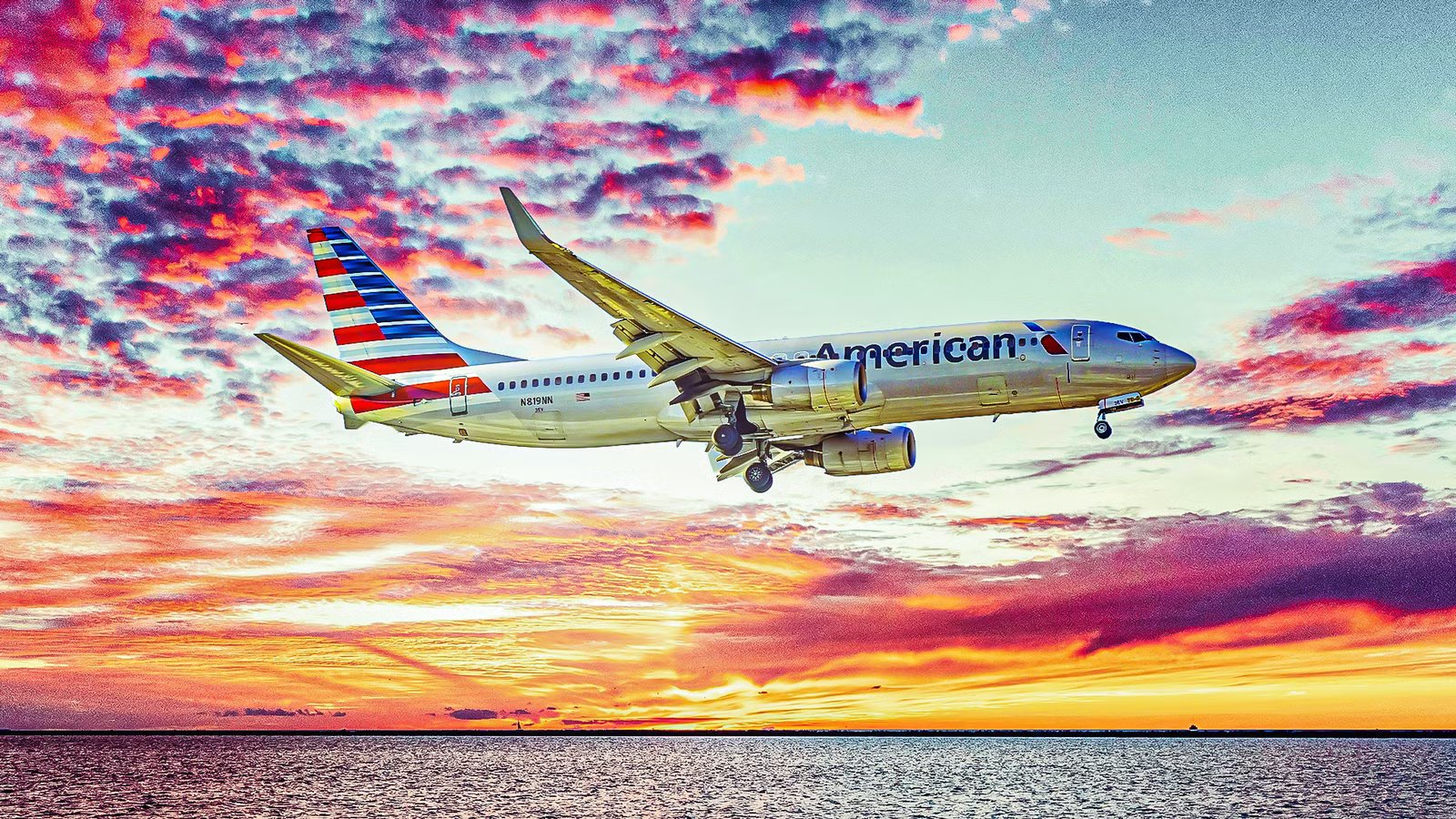
It has emerged that American Airlines’ flight AA-1239 suffered a serious incident on October 5. A Boeing 737-800 with the registration N812NN had reached 30,000 feet (9,140 m) on the flight from  Boston Logan International Airport (BOS) to Chicago O’Hare International Airport (ORD). The crew held position while troubleshooting an issue before safely returning to land in Boston.
160 people were onboard. American Airlines drafted in a replacement 737-800 (N344PP) to complete the flight. It landed safely in Chicago, although passengers suffered a delay of roughly 17:10 hours.
What Happened On Board Flight AA-1239?

When the  American Airlines 737-800 arrived at 30,000 feet (9,140 m), the pilots made contact with air traffic control. They asked to hold their position while they ran troubleshooting on an ongoing issue. After an unknown amount of time, they spoke with air traffic control again, this time reporting that their aircraft was suffering a suspected fuel leak on the right-hand engine. They declared an emergency and requested a return to Boston as quickly as possible.
N812NN made it back to Boston’s runway 22L roughly 45 minutes after departure. The crew requested emergency service attention after shutting down the affected engine. Passengers were then moved on to a replacement 737-800 with a substantial delay. Meanwhile, N812NN returned to service 24 hours later.
Simple Flying has contacted American Airlines for comment.
N812NN Is Over 17 Years Old

The aircraft involved in the incident is far from its prime, although certainly still within the age window in which American Airlines would expect to operate it safely. This jet has just hit 17 years old, according to Planespotters.net. This is roughly in line with American Airlines’ broader 737 fleet of 406 aircraft, which has an average age of 13.7 years. The 737-800 fleet of 303 jets has an average age of 16.9 years.
The aircraft was built at Renton with the manufacturer serial number 33520 and the line number 3070. The jet arrived in the American Airlines fleet in October 2009. It is powered by two CFM International CFM56-7B turbofan engines, as is the case for all 737-800s.
The table below details the American Airlines 737 fleet, past and present, according to Planespotters.net:
737 aircraft type | In service | Parked | Total | Average age | Historic |
|---|---|---|---|---|---|
-100 | N/A | 2 | |||
-200 | N/A | 21 | |||
-300 | N/A | 8 | |||
-400 | N/A | 14 | |||
-800 | 295 | 8 | 303 | 16.9 years | 2 |
MAX 8 | 100 | 3 | 103 | 4.2 years | |
Total | 395 | 11 | 406 | 13.7 years | 47 |
The jet drafted in as a replacement was another 737-800 built at Renton. However, it is substantially younger at 9.2 years, according to Planespotters.net. American Airlines received this jet in August 2017.
American Airlines Has Had Another 737-800 Incident Recently

On August 22, an American Airlines 737-800 burst its tire at ORD. This was the third time in a week that an aircraft’s tire failed at this airport. The incident occurred while the aircraft, which had arrived from  Phoenix Sky Harbor International Airport (PHX), was taxiing towards the gate. It was unknown what caused the tire to burst, and it was not thought to have had a relation to the other two tire burst incidents.
A fourth tire burst incident at ORD involving the airline came a few days later, as reported by CNN. This incident was highly unsettling because it occurred while the jet was taxiing for takeoff, with two tires bursting. Passengers described hearing a loud pop before the jet gently rolled to a stop. Customers were deplaned and transferred onto a replacement aircraft, no doubt relieved once they were finally in the skies.