dailynewsnblog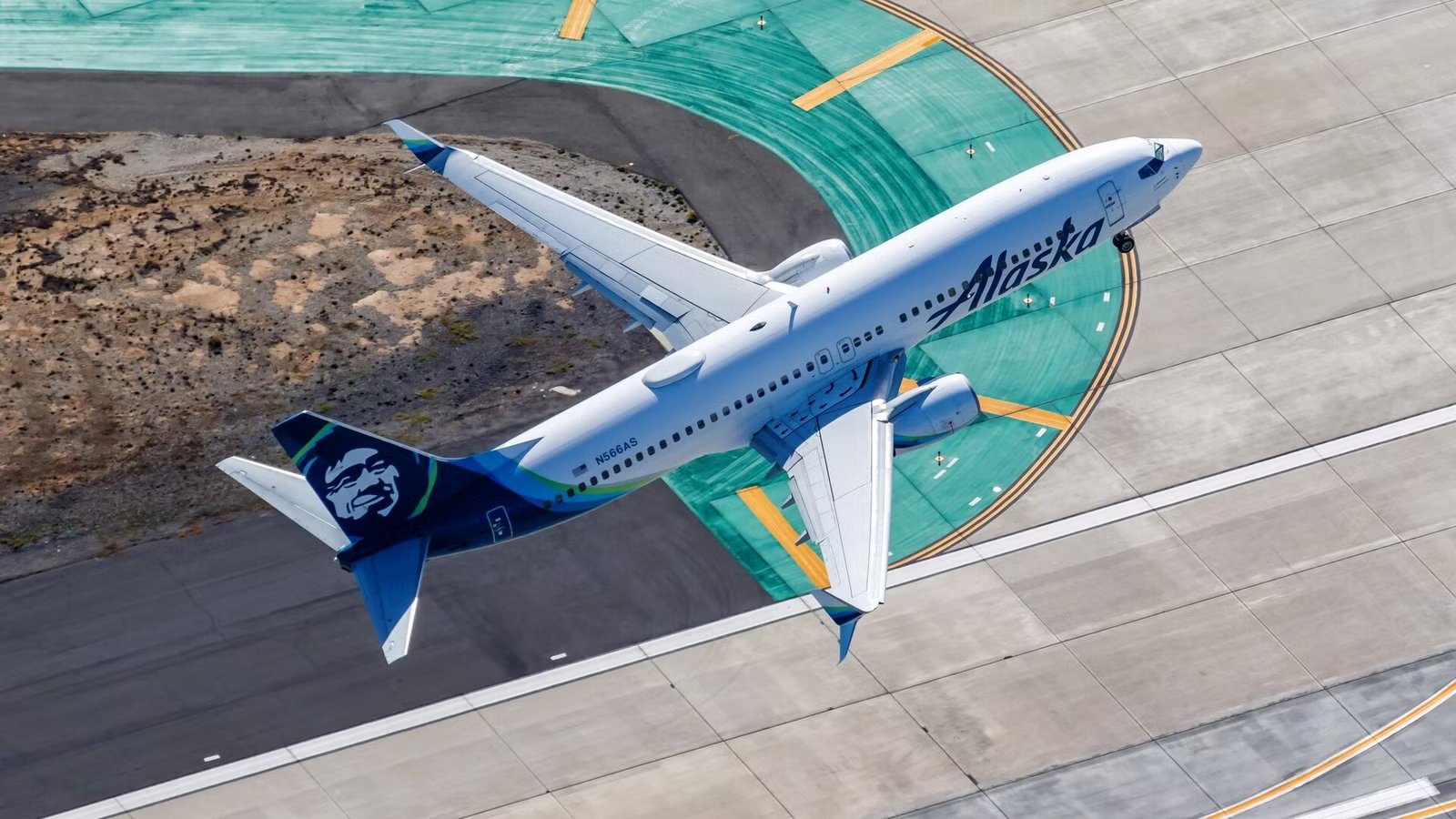
 Alaska Airlines has quietly begun selling selected Breeze Airways flights, an unusual tie-up that looks far more significant on a route map than it currently is in practice. Alaska has confirmed to Cranky Flier that it has an interline agreement with Breeze, but the initial test is limited to standalone Breeze itineraries touching Charleston, Las Vegas, and Raleigh-Durham. Customers booking those flights through Alaska can also earn Atmos Rewards points.
The experiment nevertheless addresses a real weakness for Alaska. The carrier says it operates more than 70 daily nonstops between six West Coast cities and 11 East Coast airports, but those flights overwhelmingly connect the two coasts rather than make Alaska relevant for journeys within the East. That matters as Alaska increasingly makes network breadth and loyalty central to its strategy, building beyond the West Coast concentration that has historically defined the airline.
Alaska Is Starting With A Very Small Breeze Airways Test

Alaska’s airline-partner page now explicitly says tickets issued directly by Alaska or Hawaiian Airlines, identified by ticket numbers beginning with 027, can earn Atmos Rewards points on Breeze. Cranky Flier found Breeze flights bookable through Alaska from Charleston, Las Vegas and Raleigh-Durham, but only to cities Alaska does not itself serve. Interestingly, Breeze does not appear to be reciprocally selling Alaska flights (yet).
The arrangement is much narrower than a conventional connecting partnership. Alaska and Breeze flights cannot currently be combined into one itinerary, Atmos points cannot be redeemed for Breeze flights, and there are no reciprocal elite benefits. Alaska’s own annual report notes that the value of its numerous interline agreements is being able to offer a single-fare itinerary involving multiple carriers; that functionality is not what customers are being offered in this test.
Feature | Current Alaska-Breeze Arrangement |
|---|---|
Breeze flights sold on Alaskaair.com | Yes, selected routes |
Atmos points earned | Yes, on eligible Alaska-issued tickets |
Atmos redemptions on Breeze | No |
Alaska-Breeze connecting itineraries | Not currently |
Reciprocal elite benefits | No |
Initial test airports | Charleston, Las Vegas, Raleigh-Durham |
Breeze sells Alaska flights | Not currently |
Therefore, for now, this looks more like a distribution and loyalty experiment than an attempt to build an East Coast feeder network. It is apparent that it is also still in its early days, as there are different prices and fare descriptions between Alaska and Breeze, while seat, baggage and cancellation treatment was not always obvious. Still, the test gives Alaska a cheap way to see whether Atmos members will buy flights outside its own network, while giving point-to-point specialist Breeze another sales channel.
The Problem Is That Alaska Still Points East Coast Customers West

As the name suggests, Alaska Airlines started out in the 49th state, before expanding south after deregulation in the late 1970s to become a leading carrier in the Pacific Northwest and California. Today, the airline also has an East Coast presence, but its own network still points those customers west. Its 11 East Coast airports all link to its large bases at the likes of  Seattle-Tacoma International Airport (SEA),
  Los Angeles International Airport (LAX),
  San Francisco International Airport (SFO), and
  San Diego International Airport (SAN), but don’t connect to each other or to secondary East Coast cities.
That makes Alaska useful for transcontinental flying, but a poor fit for East Coast travelers going anywhere other than the West Coast. Breeze fills precisely that sort of white space. The airline now advertises more than 90 cities within its network, and has built its model around nonstop, point-to-point flying between underserved markets rather than funneling passengers over a handful of megahubs. Its footprint includes Raleigh, Hartford, Providence, Norfolk, and Charleston, as well as numerous smaller airports where Alaska has little or no direct presence.
Alaska’s East Coast Strength | Breeze’s Complementary Strength |
|---|---|
Transcontinental flying | East Coast/Southeast point-to-point flying |
Major markets including New York, Boston and Washington | Numerous secondary and underserved cities |
More than 70 daily coast-to-coast nonstops | More than 90 cities across its wider network |
Large loyalty and partnership ecosystem | Markets Alaska does not need to operate itself |
American Airlines/oneworld connectivity | Additional domestic network breadth |
Raleigh–Durham International Airport (RDU) illustrates the potential synergy particularly well. Breeze arrived there in 2023 with eight destinations, had announced 32 by September 2025, and reached 40 by May of this year, more than any other airline at RDU. Alaska, meanwhile, serves Raleigh as part of its transcontinental network from Seattle and San Diego. In theory, that gives Alaska access to dozens of eastern markets without stationing its own aircraft there.
Why The Alaska-Breeze Partnership May Have A Low Ceiling

While the tie-up between two ‘challenger’ airlines is interesting, there are a number of issues with it beyond its (current) limited scope. The first constraint on a much broader Breeze relationship is that Alaska already has  American Airlines and
  oneworld. Alaska and American have reciprocal loyalty benefits and codesharing, while the carriers announced in September that Alaska intends to join American’s Atlantic and Pacific joint businesses. American already gives Alaska substantial East Coast connectivity via its hubs at Charlotte, Philadelphia, Miami and Washington National, so its questionable how much incremental value Breeze can add.
Breeze also has a frequency problem. Forty destinations from Raleigh sounds hub-like, but many Breeze routes are designed around local leisure demand rather than multiple daily connecting banks. Even its most recent additions from RDU operate only two or three times weekly. So while its destination breadth is valuable for nonstop leisure travelers, it is much less useful for interline connections, schedule flexibility, or re-accommodation after disruption.
If Alaska actually wants another substantial East Coast partner beyond American, JetBlue is the more obvious candidate on paper. Its strength in New York and Boston, its north-south network flow along the East Coast, and more conventional network-carrier proposition would complement Alaska more naturally. Indeed, the former American-JetBlue Northeast Alliance demonstrated that partnership logic. But JetBlue is now deeply tied to  United Airlines through Blue Sky, including reciprocal earning, redemption and elite benefits.
Breeze therefore looks most compelling today as an incremental sales channel to secondary cities. Until it becomes larger and, crucially, more frequent, its role in Alaska Airlines’ network is likely to remain limited.