dailynewsnblog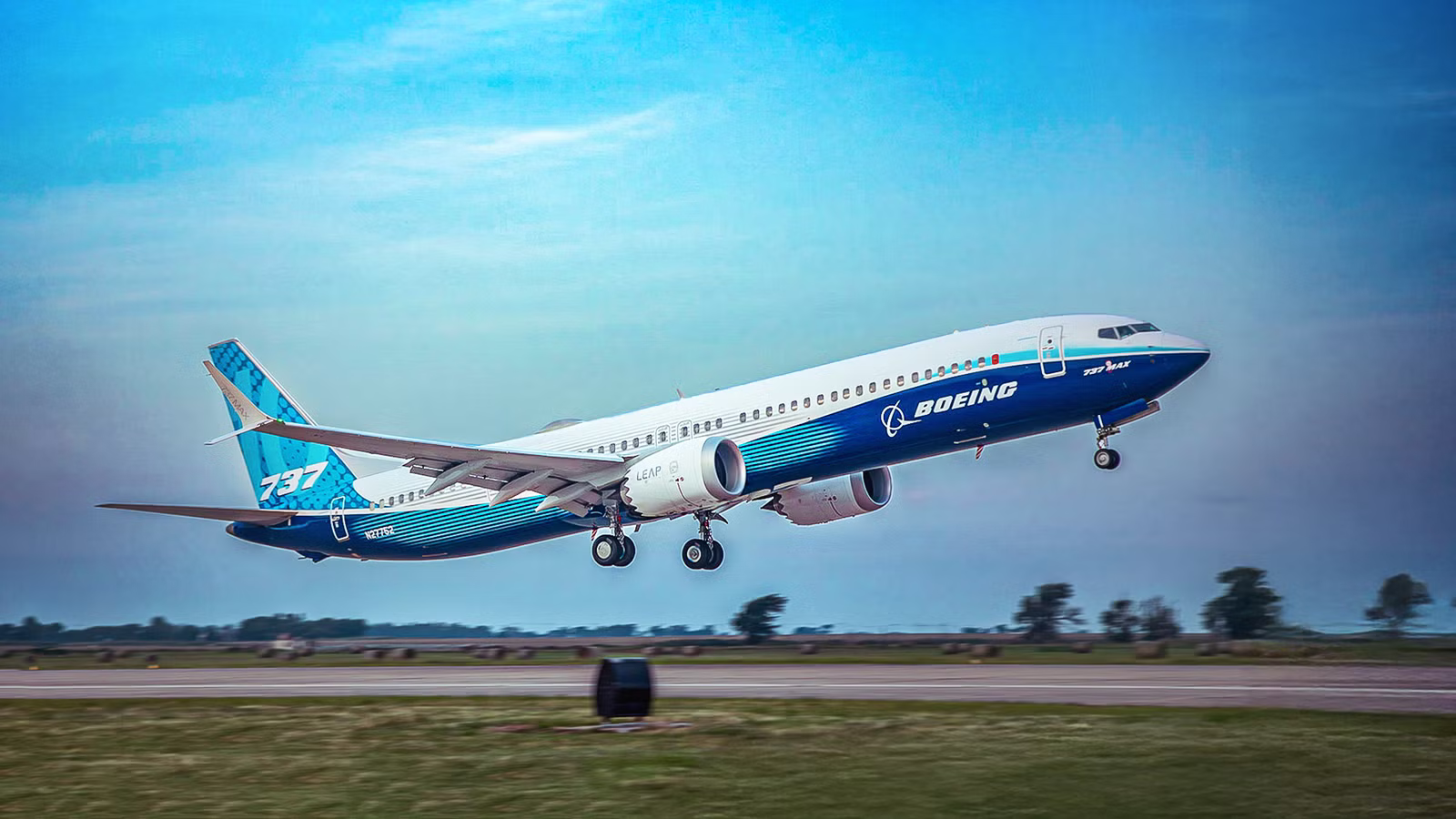
The Boeing 737 MAX 10 is approaching certification as the largest and most capable member of the MAX family, but it is arriving in a market that Airbus has reshaped around a different kind of narrowbody. The MAX 10 is optimized for capacity, seat economics, and high-frequency domestic or regional flying.
The Airbus A321XLR, by contrast, was engineered specifically to add fuel and structural capability for flights lasting up to about 11 hours. Airbus gives the XLR a range of 4,700 nautical miles (8,704 kilometers), while  Boeing lists the MAX 10 at 3,100 nautical miles (5,741 kilometers).
The range gap reflects the architecture of the 737 family. The MAX 10 is a slightly longer stretch of the MAX 9, retains the MAX wing and fuel capacity, and uses specialized landing gear to preserve commonality. It can carry up to 230 passengers, but lacks the fuel and structural margin to match the A321XLR. As of early October 2026, FAA certification had been delayed by a newly identified software issue, despite Boeing completing planned flight testing in July.
The MAX 10 Starts With A Different Airframe

The MAX 10 is not a clean-sheet response to the A321XLR. It is the largest derivative of an airframe whose basic architecture dates to the original 737 program, with a wing and undercarriage inherited from the family. The MAX 10 measures 143 feet, 8 inches (43.8 meters) long, compared with 138 feet, 2 inches (42.1 meters) for the MAX 9.
Boeing’s current specifications list the MAX 10 at up to 230 seats, a maximum takeoff weight of 197,900 pounds (89,760 kilograms), and 6,820 US gallons of usable fuel. Its listed range is up to 3,100 nautical miles. The smaller MAX 8, despite carrying fewer passengers, is listed at 3,500 nautical miles (6,480 kilometers) because it has less weight to move and therefore retains greater range capability.
That combination illustrates why adding seats does not create a long-range aircraft. The longer fuselage increases weight, while fuel volume remains constrained. More fuel would also require a structure capable of carrying the added weight efficiently. Boeing’s published specifications show that the MAX 10 has the same usable fuel capacity across its listed weight configurations. The result is a high-capacity aircraft optimized for sectors where airlines can add seats without carrying substantially more fuel.
Boeing describes it as offering the best per-seat economics of any single-aisle aircraft. The inherited geometry also explains why the MAX 10 should not be judged solely by a nominal range comparison. Airlines rarely operate every aircraft at its maximum advertised range. A carrier with a network dominated by 1,000- to 2,000-mile sectors can obtain more value from additional seats than from a larger fuel system that adds weight on every flight.
Landing Gear Reveals The Design Constraint

The MAX 10’s semi-levered main landing gear is one of the clearest indicators of how Boeing approached the stretch. Extending the fuselage increased the risk of a tail strike during rotation. Simply installing conventional, taller landing gear would have required a much larger redesign because the gear had to retract into the existing wheel-well area. Boeing therefore developed a modified main gear that becomes taller when the airplane is on the ground and uses a mechanism that allows it to fit into the existing retraction envelope.
The arrangement raises the aircraft enough to provide additional tail clearance without forcing a wholesale redesign of the lower fuselage and wing structure. Aviation Week reported that the wheel-well location and size make further fuselage extensions increasingly impractical without major changes to the wing and surrounding structure. The solution therefore addressed the immediate geometry without creating a foundation for a larger derivative.
For Boeing, the alternative would have been a much more extensive redesign. A new wing could provide additional lift and fuel volume, but it would also affect structures, engines, landing gear, systems, manufacturing, and certification. At that point, the project would begin to resemble a new aircraft rather than an incremental MAX variant.
Feature | 737 MAX 8 Landing Gear | 737 MAX 10 Landing Gear |
Type | Standard Oleo-Pneumatic | Trailing-Link Levered |
Ground Clearance | Standard | Increased by 9.5 inches (24 centimeters) |
Extension Mechanism | Fixed Length | Telescoping With Shrink Link |
Wheel Well Size | Standard | Standard (Same as MAX 8) |
That matters for transatlantic flying because longer missions require more fuel while preserving payload. Those requirements interact with the wing, landing gear, fuselage, and propulsion system. Boeing has strengthened the MAX 10’s landing gear and brakes for its higher weight. By July 2026, it had completed 976 certification flights totaling more than 2,060 flight hours, but testing does not change the dimensions inherited from the MAX family.

Airbus took a different approach with the A321XLR. It began with the A321neo, which was already larger than the 737 MAX 10, then made targeted structural and fuel-system changes to support substantially longer missions. The defining modification is a permanent rear center tank holding 3,408 US gallons (12,900 liters) of fuel.
Airbus also raised the maximum takeoff weight to 223,000 pounds (101.5 tonnes), reinforced the aircraft’s landing gear and structure, and made other changes needed to support the higher weight. The XLR can therefore carry enough fuel to reach a published maximum range of 4,700 nautical miles, or roughly 1,600 nautical miles (2,963 kilometers) more than the MAX 10’s published figure.
The XLR’s advantage is not merely a larger tank. The aircraft must lift that fuel while retaining useful payload, so Airbus developed fuel capacity, maximum weight, structure, and systems as a coordinated package. Airbus also benefited from starting with an A321 that already had the physical scale needed for the mission. The XLR program could concentrate engineering changes on fuel storage, weight, landing gear, and associated systems rather than solving the basic problem of making a much smaller aircraft perform a fundamentally different mission.
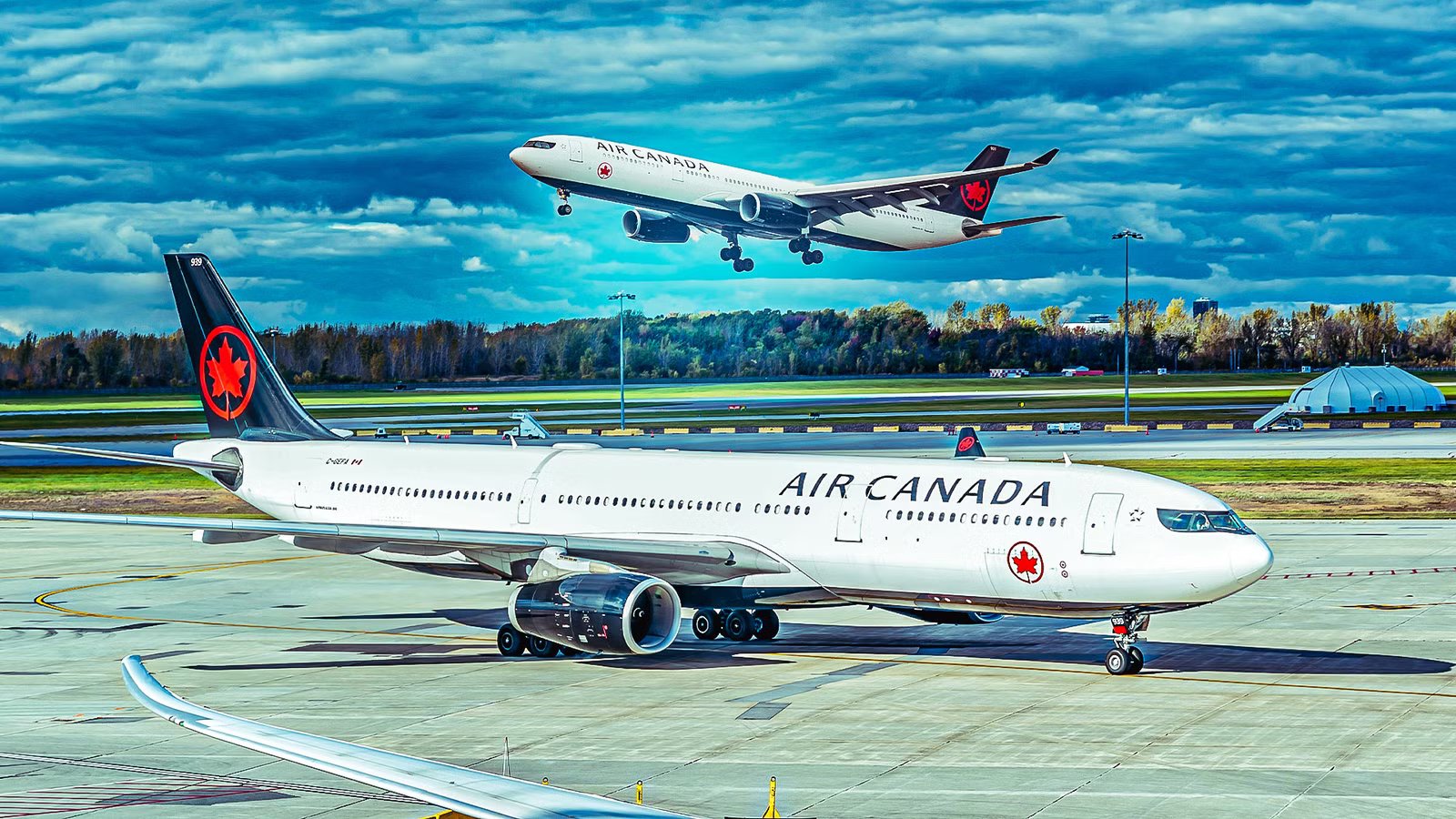
The A321XLR consequently occupies a different network role. Airbus says it can operate flights of up to 11 hours and specifically identifies transatlantic routes among the missions enabled by the aircraft. Air Canada, for example, has said its A321XLRs will support nonstop services from Montreal and Toronto to European cities including Berlin, Toulouse, and Edinburgh.
The XLR will not make every transatlantic route economical, and 4,700 nautical miles is a published maximum rather than a guarantee under every payload or weather condition. Still, long-range narrowbody flying is a core part of its design. Airbus specifically markets the aircraft as a route opener for long-haul point-to-point services, including transatlantic markets.
Boeing Can Still Win Where Range Matters Less

The MAX 10 can replace smaller aircraft with more seats while preserving commonality across a fleet. That can be useful at airports where gates, runway capacity, and departure slots constrain the number of flights an airline can operate. Alaska Airlines has made that strategy particularly visible. In January 2026, it ordered 105 MAX 10s and secured options for another 35. Alaska said the aircraft would support high-density routes and fleet renewal, while its five Boeing 787 orders would support longer-range expansion.
The split illustrates how the airline can use different aircraft for different network problems rather than asking one narrowbody to perform every mission. It can serve long domestic sectors within North America and dense European routes where its range is adequate. Boeing says the model can cover 99% of single-aisle routes, underscoring how large the conventional narrowbody market remains.
Economics can matter more than headline range. An airline may prefer more seats and lower cost per seat rather than paying for capacity it rarely uses. MAX commonality can also reduce complexity for operators already committed to the family. Boeing has repeatedly positioned the MAX 10 around high-capacity, high-demand markets rather than long-haul specialization.
Alaska’s order is particularly revealing because the airline paired the MAX 10 with 787 widebodies in the same January agreement. The carrier can use the narrowbody where density drives the economics and reserve the widebody fleet for international expansion. That is a network strategy built around aircraft specialization rather than forcing the largest 737 to duplicate the A321XLR’s mission.
Certification Delay Does Not Change The Market Position

The certification timetable is separate from the MAX 10’s basic market position. Boeing completed planned flight testing in July 2026, recording 976 flights and more than 2,060 flight hours, then moved toward final regulatory reviews. Alaska expected certification by the end of September and planned to receive its first aircraft in spring 2027.
That schedule changed when the FAA delayed certification after Boeing identified a software issue affecting certain MAX aircraft. The issue concerns automated flight guidance during a particular go-around scenario. The FAA said it would review the matter through a Corrective Action Review Board, while Transportation Secretary Sean Duffy said the government did not see a current need to ground the existing fleet.
The delay does not alter published performance. Once approved, the MAX 10 will remain a high-capacity derivative, while the A321XLR will remain the longer-range platform. Airbus has more than 500 A321XLR orders and has moved the aircraft into service. Boeing also has a substantial MAX 10 backlog, with Alaska alone committing to 105 firm aircraft and 35 options. Their strongest use cases are therefore different.
The certification delay is significant for Boeing because the MAX 10 represents a large portion of the undelivered 737 backlog. Aerospace Global News reported in September that the variant represented about 31% of Boeing’s undelivered 737 orders, making regulatory completion important for both Boeing and customers waiting for the aircraft.
A Role Defined By Its Limits

The 737 MAX 10 is unlikely to become a routine transatlantic aircraft because Boeing did not redesign the MAX platform for that mission. Its fuselage stretch, existing wing, constrained fuel capacity, and specialized landing gear produce a highly capable high-capacity narrowbody, but they do not provide the architecture needed to match the A321XLR’s range. That outcome is better understood as a strategic boundary.
Boeing extracted more capacity and lower seat costs from the existing 737 platform, while Airbus invested in changes that made the A321 a long-range route opener. Airlines can therefore select between two different forms of narrowbody efficiency. The more consequential question now moves beyond the MAX 10. As airlines increasingly want aircraft that can combine narrowbody economics with long-range flexibility, Boeing will eventually need a successor architecture rather than another stretch of the 737.
A future clean-sheet aircraft could address the range, payload, cabin, and airport requirements that the MAX 10 cannot reconcile within its inherited structure. Until then, the A321XLR will occupy the long-range end of the narrowbody market, while the MAX 10’s value will depend on how effectively airlines fill its additional seats on routes that do not require the extra fuel.