dailynewsnblog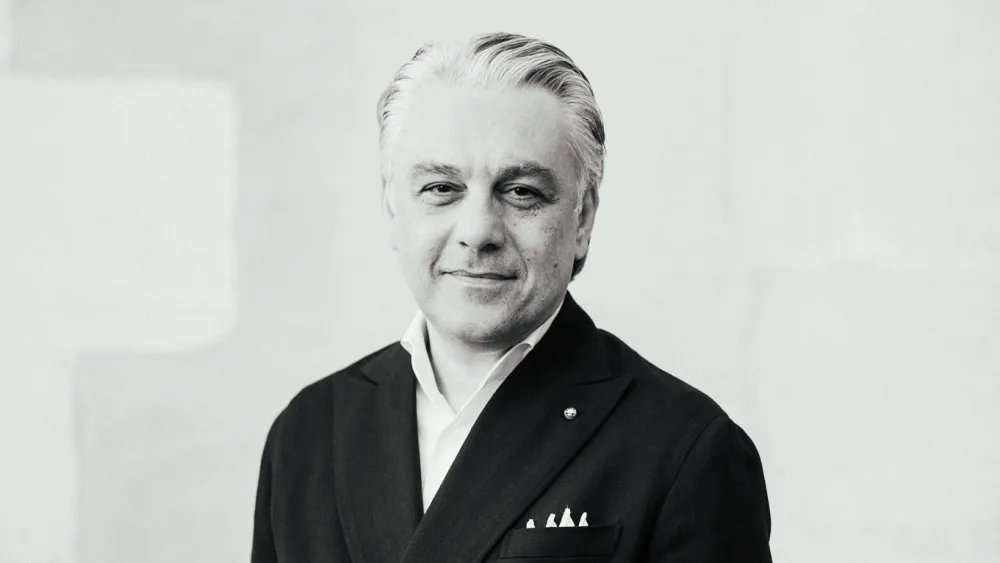
“The studio is the soul of a luxury house,” according to Luca de Meo, chief executive officer of Kering. “There’s an element of magic.”
That said, the former Renault Group boss, a little more than one year into his tenure leading the French luxury group, has an expansive and democratic vision of creativity that might surprise you – and also strong opinions about how it should be organized, governed and nurtured.
In an exclusive interview with WWD, the executive said he defines creativity within a luxury brand as “the product creation and product development stream,” rattling off such disparate components as the design studio, merchandising, purchasing, suppliers and visual merchandising.
“I’m looking at this horizontally and trying to analyze the process,” he said in his matter-of-fact way. “One of my priorities in the next six months is to re-engineer that.”
De Meo was interviewed in his sun-drenched office on Monday, near the tail end of a Paris Fashion Week dominated by talk of imminent creative director changes at Saint Laurent, led by Anthony Vaccarello for the past decade, and at Balenciaga, in the midst of a creative transition under Pierpaolo Piccioli that de Meo described as “pretty extreme.”
He declined to comment on Kering’s plans for those two marquee houses, and weighed his words carefully as he waded into the topic of creativity, which fascinates him and which he’s studied extensively.
“A Team Sport”
“In general, I think that business is a team sport,” he said, sounding relaxed and sipping an espresso. “So I feel like the coach of a team. That’s how I’ve always seen my job, not being behind a single individual, but actually bringing people together around an idea.
“Fashion and luxury has become a business – a big one. So I think it needs to be run by teams,” he continued. “Among academics, most of them will tell you that the creative process is collective.”
As he did often during an expansive, 75-minute conversation, de Meo drew an analogy.
“Do you still believe that you can put a crazy scientist alone in a room to invent a powerful new vaccine? Or do you think it’s teams of people that study, work together, confront things, observe what’s going on around in different disciplines and combine ideas?” he asked.
Dangling his iPhone from two fingers, he lauded the genius of Apple’s late founder, Steve Jobs, to combine various technologies – touchscreens, GPS capabilities and micro cameras among them – “in a way that was suddenly relevant for consumers.”
“I believe more in democracy and collective than idolatry,” he said with a grin. “You cannot put everything on the shoulders of very, very few people, especially at that size of the business.”
Not that creative directors are suddenly out of fashion at Kering.
“A creative director for me is like a captain, the playmaker of a team. He’s the one that has more talent, that kind of technical ability to solve the game in an unexpected way,” de Meo explained. “But without a (support) system around, I believe that we cannot run multi-billion, multi-category, multi-geography businesses, and ask them to do everything from store layout to marketing.
“So I will try to change the way the studio interacts with the rest of the organization in the spirit of finding a more collaborative way of handling the complexity,” he continued.
Without naming names, de Meo trumpeted that many “super successful” creative directors had solid runs at Kering, no doubt alluding to the designers currently helming Chanel (Matthieu Blazy, previously at Bottega Veneta), Louis Vuitton (Nicolas Ghesquière, creative director of Balenciaga from 1997 to 2012), Burberry (Daniel Lee, Blazy’s predecessor at Bottega) and Givenchy (Sarah Burton, who had worked her entire career at McQueen).
De Meo said his goal is to “get back to the point where creative people can express themselves here better than in any other group in this sector,” he said. “I want Kering to become the place where creative talent can flourish and blossom.”
The Italian executive said he has acclimated quickly to the fashion industry after spending his entire career at such automotive giants as Fiat, Alfa Romeo, Toyota, Volkswagen and Seat, earning a reputation as a turnaround expert and brand wiz. Still, several aspects puzzle him: First and foremost, the breakneck pace of collections today that often puts designers in hamster-on-a-wheel conditions.
Giving Designers Room
“If there is one thing you cannot plan, it’s creativity,” he said. “So I need to give (designers) room to actually concentrate on creativity, and we will do that from an organizational point of view… I’m going to leave people more and more free to do what they have to do, where they can really create value.”
De Meo said he shared his thinking on this topic a few weeks ago with Demna, creative director of Gucci.
“You know what he told me? ‘Of course, you’re right,’” de Meo related. “Because I come from the outside, I can actually see things that, maybe when you are in the middle of it, you don’t see them anymore.”

Luca de Meo with Francesca Bellettini and Demna.
Pierfrancesco Celada/Courtesy of Kering
Similarly, he’s studying the current fashion calendar, asking himself: “Does it make sense for consumers, really? Or is it some kind of a self-inflicted thing that we created for ourselves?”
Still, he is clearly enamored of the luxury sector, and detects signs of its vibrancy everywhere, from the people who approach him during his off hours in Paris to inquire about coming to work for Kering, to the latest statistics out of India, whose vibrant economy produces some 100 new millionaires every day.
For the record, de Meo prefers the descriptor “excellence” over luxury, and over the course of the interview referred to himself a “product guy” and a “brands guy,” although he is often typecast as an industrial guy.
Last September, he succeeded François-Henri Pinault at the helm of the family-controlled conglomerate, pledging to quickly get Kering’s “mojo” back.
At a Capital Markets Day in Florence last April, he unveiled his 360-degree strategic plan which involves three phases: completing a structural reset by the end of 2026, entering a rebuild phase of sustainable growth by the end of 2028, and reclaiming the group’s “leadership as the reference player in Next Luxury” by the end of 2030.
In a wide ranging conversation on Monday, the brainy, straight-talking executive weighed in on luxury’s long-term prospects, its fragmented production processes, and how he’s re-engineering Kering to meet a changing, and more challenging, luxury landscape:
WWD: You came into this job at a tough moment for luxury and fashion. How do you feel about that?
Luca de Meo: In Chinese, opportunity and crisis are roughly the same word. Let’s just say I see an opportunity to reengineer the whole system so that in five to 10 years’ time, Kering becomes one of the groups that in its architecture, in its business model, etc., is more coherent with what luxury will become.
It’s very comfortable psychologically for me because throughout my career, I always try to join companies where I had to redesign the model. These are the places where you’re forced to learn fast because the solution is not there.
If you just like to content yourself with the idea that you manage something, it’s a bit boring.
WWD: Are you optimistic about the future of the luxury sector?
L.d.M.: The market for luxury products and services is actually growing over-proportionate to the growth of the economy.
In general, the cake is getting bigger. Now the question is where is the money going, and in which categories. That’s the kind of question I have to ask myself, in order to be able to engineer a company. That’s why we created a jewelry division in house. That’s why we are investigating wellness and longevity services.
But I think more and more it will become a market share game. That means you’ve got to be better.
WWD: Do you already feel fully acclimated to the fashion industry?
L.d.M.: I’ve always been a customer of what you call luxury brands. I’ve always appreciated well-made products in many categories, and always been curious about it.
In my last job, I was handling a mass-market producer of cars. But I’ve sold cars for half a million, for a million. I did super cars. I worked for Alfa Romeo, Audi and Lamborghini, so this is the same customer. There is a luxury dimension also in the automotive industry.
I’m a product guy, and it’s beautiful to see the sense of excellence in luxury: the time it takes, the expertise it takes, the talent.
The people we are addressing are very sophisticated, very demanding connoisseurs, so for a marketeer like me, this is actually a very intriguing challenge. Professionally and intellectually, that is also very motivating for me, including the dimension of retail.
I think I have right now a sufficient level of understanding to not only operate the system, but also to understand where it has to be twisted.
WWD: You’re known for being a man with a plan, who wastes little time. What’s the value of tight deadlines and speed?
L.d.M.: It’s not a question only of speed. It’s a question of operational excellence, as it’s become a market-share and wallet-share battle. My obsession is to make sure that I can build a machine that works perfectly, and that is able to serve our customers wherever, whenever they want us, and with a level of execution that is up there. (He gestured towards the ceiling.)
Luxury and things well done need time. This is very clear to me. But there are a lot of things that we can do better. And the ability to execute quickly is the sign of efficiency of a system.
When I look at the calendar, and I see that between ideation and availability of the product in the stores takes six to eight months, I know that some our competitors are faster than us. I just want to make sure that we are as good as them.
WWD: How would you rate the fashion industry in terms of production logic and efficiency?
L.d.M.: It’s very externalized, fragmented, and the supply chain is very deep and multi-layered.
In Italy, where we produce more than 85 percent of our products (and up to 95 percent for brands like Gucci), you have about 600,000 people working in the industry, across 60,000 companies, so 10 people on average per company. That tells you that this is not consolidated at all, and there is not much vertical integration.
We need to make sure that the whole supply chain is solid, and less fragmented, so that we can ensure always more quality, traceability – and be secure that those companies can invest in people, in training, in technology.
WWD: I saw on your Instagram you recently visited Mexico, and came back very inspired. What’s your view on the most promising new frontiers for luxury?
L.d.M.: When you get out of some mature economies, there’s so much energy, so much enthusiasm. People think that tomorrow will be better than yesterday, and that changes everything. And that’s exactly the kind of environment for luxury brands.
Our mission is to make people dream, right? Is an Indian dreaming about the same thing as a guy from Brazil or Nigeria or someone in Southeast Asia? Absolutely not, and you have to understand them. So how do you engineer that organizationally, strategically.
WWD: How do you distinguish between fashion and art?
L.d.M.: Art has no limits, but the designer has constraints. Think about how many great designs we’ve seen across industry because of a constraint: it pushes you to innovate more.
The more constraints you have, the clearer you have to be. If a chef puts too many ingredients in a dish, it’s heavy, right?
WWD: How do you see the challenge of balancing heritage with newness at Kering?
L.d.M.: France and Italy are so dominant in this industry, I think we owe that to our ancestors. We are all guardians of a certain culture with our brands. On the other hand, if we only look backwards, we miss the idea that historically, luxury has always been the place where there was space for innovation.
We should not forget that it’s a balance between protecting the heritage and inventing and creating, pushing the boundaries for excellence and to make people dream.
WWD: You established centers of excellence around Industry and Client at the Kering level. Can you please elaborate on the rationale?
L.d.M.: Kering was imagined as a holding company with a collection of very powerful and extraordinary brands, and we gave the maisons full independence on many of their operational and strategic choices. It was very successful. The upside that François-Henri Pinault with the team created at that time, it’s unbelievable. We bought Bottega Veneta when it was doing $30 million in turnover. When we bought Yves Saint Laurent, it was $100 million.
Then there comes a moment when market share for a group is important, where you need to work on efficiencies, costs, and the whole back office. Imagine that I have to build an AI backbone for the houses. Do you want to do it 10 times, or do it once? There are hundreds of examples like this.
What I’m trying to do for the first time, and this was the mission that François-Henri gave me, is to build a fully integrated luxury group that can serve both high-net-worth individuals and aspirational consumers with the utmost level of excellence.
So for the first time we are giving the group the role of cooperating on the life of the brands, establishing a connection between the brands and the group.
For example, the person who is in charge of industry at Gucci will of course report to Francesca Bellettini because she’s the boss at Gucci, but this person will also report functionally to Stéphane Noël, the new chief industrial officer of Kering overseeing manufacturing, logistics, quality, R&D, purchasing, etc., establishing a standard and building a unique industrial backbone that stands behind the brand… engaging with the brand to support them, to help them do things better.
I’m bringing some people from industries where those kind of topics are much more advanced than in luxury. Of course, I pick people who are very, very competent and senior, and I also pick people that, in terms of mindset, are team players, integrators, people that are there not to impose a view but to actually help.

Gucci Spring 2027 Ready-to-Wear Collection
Stéphane Feugère/WWD
WWD: How is all this being received inside the group?
L.d.M.: There’s a vintage Gucci T-shirt by Alessandro Michele that reads: “Common sense is not that common.” I don’t play the genius. I’m just trying to focus on things that are common sense, and sometimes organizations and systems tend to lose that.
WWD: Gucci remains the pivotal brand for the group. What’s your latest prognosis?
L.d.M.: We have to do a very profound re-engineering of the whole system. I think we have a very clear view of what Gucci stands for.
We are realigning everything from distribution to marketing to product to collection, etc. I’m very optimistic, when I look at the reaction to the last Milan show. You will very rarely see me having an opinion on a creative director because that’s not my job.
But you could see that Demna showed all the possibilities that Gucci offers to consumers. Everybody could find something for themselves, including me. And that’s because Gucci is a mega brand – one of the few brands that can afford to do that credibly.
It will take some time, but honestly, I don’t think I’ve ever had a brand in my hands that is so powerful. Those kind of brands are immortal, and we see a lot of good signs that it’s coming back.
And Gucci Racing is an intelligent way of opening Gucci to maybe a larger public, beyond fashion. It will encompass products, communication, retail and events. I think it’s a smart project.