dailynewsnblog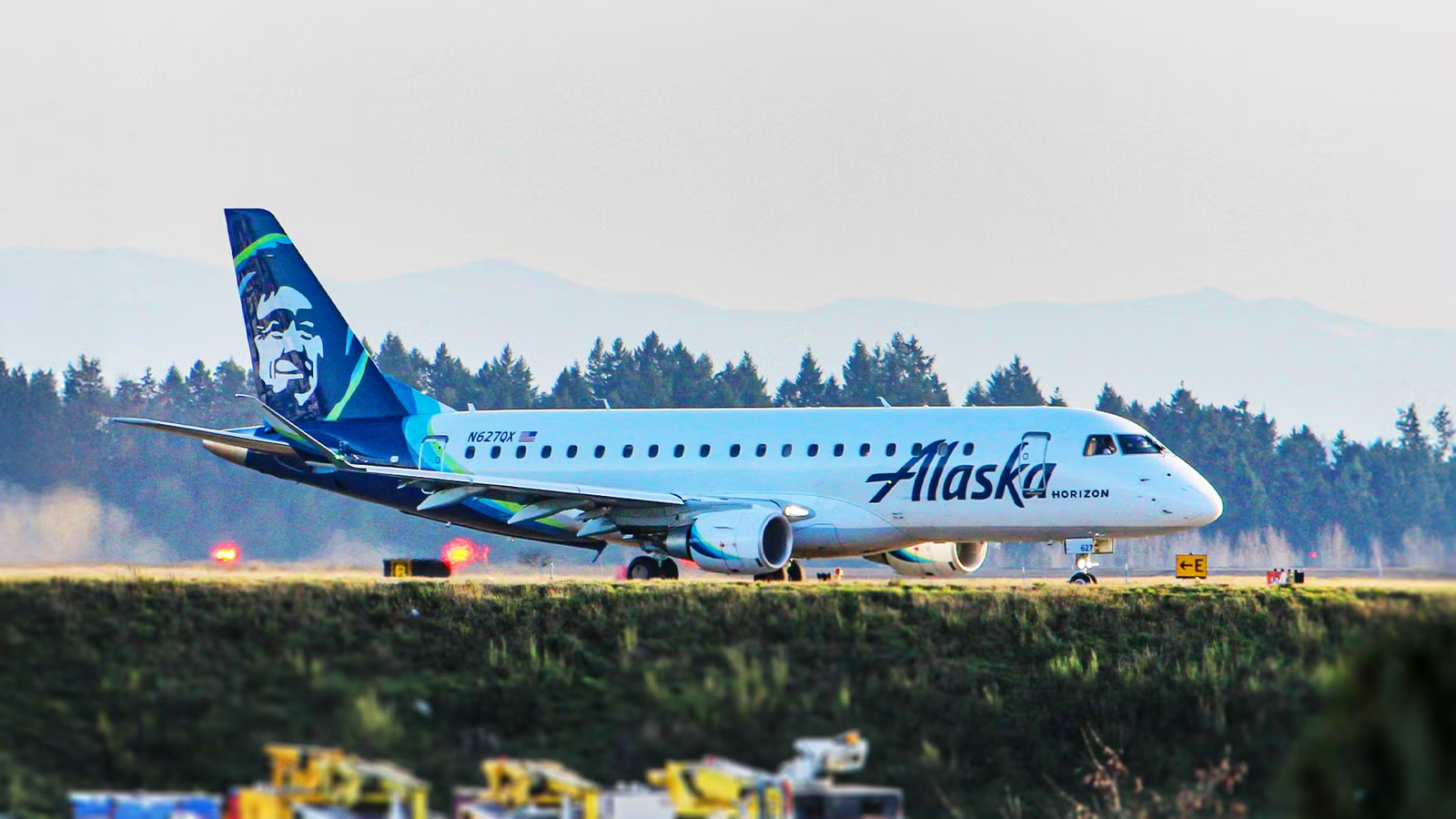
A battle is brewing in America’s finest city.  Alaska Airlines, which forged its reputation decades ago by building up a large hub in the Pacific Northwest, has been boosting its presence in Southern California by adding more and more flights at
  San Diego International Airport (SAN). Historically,
  Southwest Airlines has been the number one airline at SAN, and Alaska has been growing its route network out of SAN while relying heavily on its Horizon regional brand for its expansion, an asset that Southwest lacks.
Alaska and Southwest are two very different carriers; the former has traditionally focused on the PNW and built an exceptionally strong hub at Seattle-Tacoma International Airport (SEA), while also expanding more recently to California. Southwest, on the other hand, has set up a massive number of ‘operating bases’ primarily in smaller cities with less local competition where it can easily reign supreme. At SAN, Alaska is slowly coming for Southwest’s crown.
Alaska Airlines’ Route Network

SEA has long been Alaska’s largest hub, and the carrier also operates a sizable hub at Ted Stevens Anchorage International Airport (ANC), while its hub at Portland International Airport (PDX) is being increasingly used to supplement the SEA operations as the latter becomes constrained. When the airline merged with Virgin America in 2016, it also inherited hubs at Los Angeles International Airport (LAX) and San Francisco International Airport (SFO), although these operations have been relatively challenging.
Alaska has served SAN as a spoke for decades, but it began building up its SAN route network more recently in the 2010s. Initially, SAN was built up as a focus city, similar to its operations at Boise Airport (BOI), but the carrier has continued to grow SAN. In June 2026, the carrier opened a Boeing 737 pilot base there, while SAN has hosted a flight attendant domicile for over ten years. Meanwhile, the carrier’s regional operations have played a massive role in growing SAN into a true hub for Alaska.
Curiously, although the regional operations (branded as Alaska Horizon) make up a large percentage of the hub’s daily departures, Horizon Air (which is Alaska’s wholly owned regional airline subsidiary) does not operate either a pilot or flight attendant domicile in SAN. However, SkyWest Airlines does operate a SAN crew domicile, and it operates a significant number of Alaska Horizon flights out of SAN, even though Horizon is the primary carrier for Alaska’s regional operations network-wide.
Alaska’s Growth In SAN

Southwest Airlines remains the largest airline at SAN, carrying about 35% of all passengers, while Alaska Airlines carries about 21%, including SkyWest and Horizon Air flights. Between the two, Southwest is the incumbent with a long operating base at SAN and still carries more passengers, but Alaska has been growing rapidly. The carrier grew its San Diego operations by over 35% compared to 2025, and its 2025 schedule was over 40% larger than the year before.
Alaska’s regional jet operations have been particularly influential, since its low-cost Embraers can serve destinations that couldn’t be flown economically by a Boeing 737 with twice as many seats. Alaska Horizon uses the 76-seat Embraer E175 to open routes to lower-demand destinations while also serving higher-demand destinations with multiple flights. Multiple daily frequencies help protect yield integrity, while the Embraers have allowed Alaska to rapidly expand its network out of SAN.
Alaska Airlines Passenger Fleet | Number In Service | Capacity |
|---|---|---|
Boeing 737-700 | 14 aircraft | 124 seats |
Boeing 737-800 | 61 aircraft | 159 or 161 seats |
Boeing 737-900ER | 79 aircraft | 178 seats |
Boeing 737 MAX 8 | 20 aircraft | 159 or 161 seats |
Boeing 737 MAX 9 | 80 aircraft | 178 seats |
Boeing 787-9 | 5 aircraft | 300 seats |
Embraer E175 | 92 aircraft | 76 seats |
Although Southwest carries more passengers out of San Diego, Alaska Airlines serves more destinations. Naturally, all Southwest flights use 737s, which increases its overall capacity compared to Alaska, but the Seattle-based challenger is focusing on its network. Embraers let Alaska serve destinations that can’t sustain a comparatively massive 737, giving Alaska an edge in this battle. While Southwest is hardly giving up, Alaska also has another notable advantage out of San Diego.
Alaska, Southwest, And Hawaii

One of Southwest’s biggest expansions in the 2010s came when it began serving Hawaii in 2019. It began flying to multiple airports within the archipelago, operating inter-island flights to compete directly with Hawaiian Airlines, and flying to the islands from multiple US ports. However, the interisland operations have historically performed quite poorly, while the mainland routes were more successful. In both realms, however, Alaska Airlines holds the advantage.
Alaska acquired Hawaiian Airlines in 2024, and although the brands remain separate, they effectively run as one airline with one air operator’s certificate (AOC). This means Alaska Airlines is now a major force in the mainland-Hawaii market and the interisland market, with a large frequent flyer base and a well-regarded brand. While Southwest is larger in San Diego, Alaska is now the established incumbent in the Hawaii market through its Hawaiian Airlines brand.
This puts pressure on Southwest’s Hawaii flights out of San Diego in particular, since both carriers are going head-to-head there without significant competition from American Airlines, Delta Air Lines, or United Airlines. Historically, Southwest has found tremendous success by dominating markets like San Diego, which are fairly large but lack demand to sustain a legacy airline hub, and now Alaska is challenging its position.
Given that Alaska is already doubling down on San Diego with its extensive use of regional jets to grow its network while also heavily deploying its 737s, Southwest is now being put on the back foot. It’s being forced to respond from what was traditionally a position of strength, and this is where companies either pull back to cut losses or respond to maintain their market position. So far, Southwest has chosen the second option.
Southwest Airlines’ Growth In San Diego

Southwest Airlines has an interesting mix of operating bases. Some airports, including its largest base at Denver International Airport (DEN), come with heavy competition from legacy carriers (United Airlines in the case of DEN), while others are practically fortress hubs for Southwest. In recent years, as Southwest has generally pivoted its business model for better financial performance, it has adjusted its network to focus more on bases where it faces less competition, like Nashville International Airport (BNA).
SAN, however, is interesting because Southwest is still the market leader, but Alaska Airlines is biting at its heels. The legendary Dallas-based hybrid airline, in response, has also been growing its SAN network, adding 11 new routes for the 2026 summer season. It also operated up to 139 departures per day during the summer, while Alaska Airlines averaged under 100 daily departures. Increasingly, San Diego is hosting a two-way war between America’s most prominent hybrid airlines, and it’s especially unique because the legacy carriers aren’t major players.
San Diego is a rapidly growing market, and both airlines clearly see financial value in expanding operations from this base despite intensifying competition with each other. In part, this is because the legacy carriers serve SAN purely as a spoke, meaning that although the pond is smaller, both can act as big fish rather than little fish in a bigger pond. This gives Southwest and Alaska greater pricing power, while also giving Alaska Airlines an easier on-ramp to building a loyal customer base.
Alaska’s Network Pivots In California

San Diego as a hub has been grown organically by Alaska Airlines. During the Virgin America merger, meanwhile, the carrier inherited hubs in LAX and SFO. While it’s growing SEA, PDX, and SAN, Alaska has been slowly trimming its hubs at LAX and SFO, using cuts at those two airports to fuel growth at the others. The carrier won’t shut down the hubs entirely, but it’s running into the same problems that Virgin America experienced with its California-focused network.
LAX is home to hubs operated by American Airlines, Delta Air Lines, United Airlines, and Southwest Airlines. None of these four airlines dominates, but competition is intense, making it difficult to bring in large profits from this city. This holds for all four, but it’s particularly problematic for Alaska as it’s the number five airline in LAX. In SFO, meanwhile, Alaska faces an even bigger problem: the airport is a fortress hub for United Airlines, which operates a more extensive domestic network, a massive long-haul network, and has a large frequent flyer base.
It’s the classic case of being a little fish in a big pond. Alaska is being drowned out by larger competitors in these two hubs, so it hasn’t been able to sustain the former Virgin America operations. Instead, it’s pivoting and shifting the network away from these airports, while building SAN in particular. Although SAN has less local demand than SFO, Alaska can pull more local traffic because competition is less intense. As a result, LAX and SFO will remain relatively small hubs, while SAN is slowly becoming a key part of Alaska’s network strategy.
Catch what other trackers miss
Emergency squawks, holds, NOTAMs — live signals, no signup.
Open tracker
Catch what other trackers miss
Emergency squawks, holds, NOTAMs — live signals, no signup.
Open tracker