dailynewsnblog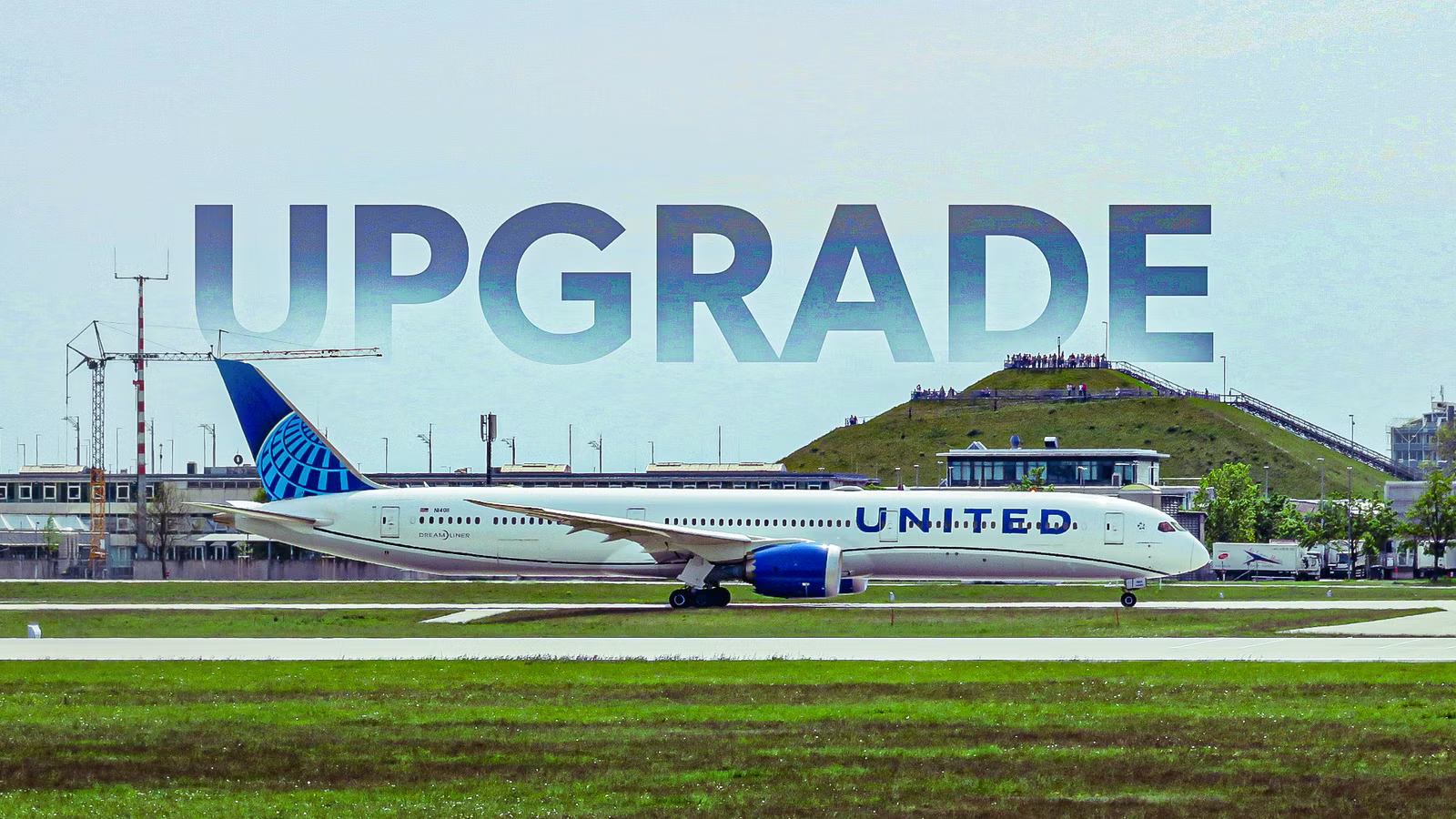
 United Airlines‘ largest Dreamliner has not necessarily been its most capable. The Boeing 787-10 offers more capacity than the Boeing 787-9, but its shorter range has historically limited where the airline can deploy it efficiently. Now, that constraint is beginning to ease. United Airlines is among the operators set to benefit from the 787-10’s increased Maximum Takeoff Weight (iMTOW), an FAA-certified upgrade that adds around 14,000 lb (6,350 kg) to the aircraft’s allowable takeoff weight. The change can translate into roughly five metric tonnes of additional payload or more than 400 nautical miles of extra range.
This is more than another number on the Boeing 787-10‘s specification sheet. The higher takeoff weight expands the operating envelope of an aircraft that has traditionally traded range for capacity, potentially making it viable on missions where the longer-legged Boeing 787-9 and Airbus A350 have been the more practical choice. For United, which uses both variants across its long-haul network, that raises a much bigger question: could the upgraded 787-10 change how the airline divides its long-haul flying between the 787-9 and 787-10?
Why Has The Boeing 787-10’s Range Been Its Biggest Limitation?

Michelangelo DeSantis | Simple Flying
The Boeing 787-10 was never designed to be the longest-legged member of the Dreamliner family. Instead, Boeing stretched the 787-9’s fuselage by around 18 feet (5.5 meters), ‘206 feet (62.8 meters), and ‘224 feet (68.3 meters). That created space for more passengers, with Boeing listing typical two-class capacity at 300 to 375 seats compared with 250 to 325 on the 787-9. However, the two variants share the same basic fuel capacity of approximately 223,646 lb (101,444 kg). The result is a deliberate trade-off: the 787-10 offers airlines greater capacity, but historically with less range flexibility than the smaller 787-9.
That difference becomes particularly important towards the edge of the aircraft’s operating envelope. Range is not simply determined by the distance between two airports. Passengers, baggage, belly cargo, and the fuel required for the journey all contribute to the aircraft’s weight, while winds, reserves, and operating conditions can further increase fuel requirements. United can therefore encounter missions where demand would support the larger 787-10, but the 787-9 provides greater operational flexibility. Boeing’s current figures illustrate the remaining difference: the higher-weight 787-9 offers up to 8,300 nautical miles of range, compared with up to 7,500 nautical miles for the 787-10.
That left Boeing with a challenge. The 787-10 already offered the additional cabin space airlines wanted, so developing another stretched Dreamliner was not necessarily the answer. Instead, Boeing needed to give the existing aircraft more room to carry fuel and payload before reaching its weight limit. The solution was to increase how heavy the 787-10 could be when it left the ground.
How Did Boeing Give The 787-10 Another 14,000 Pounds To Work With?

And that is exactly what Boeing did. Following feedback from its airline customers, the manufacturer developed an Increased Maximum Takeoff Weight (iMTOW) option for the 787-9 and 787-10, previously known as the Increased Gross Weight (IGW) program. The FAA approved the higher weights in March 2026, allowing the 787-10’s MTOW to rise by 14,000 lb (6,350 kg) to 574,000 lb (260.3 tonnes), while the 787-9 gained 10,000 lb (4,540 kg). The approval was particularly significant for Boeing, marking the first major certification of a commercial aircraft derivative by the FAA since the high-density 737 MAX 8-200 in 2021.
Crucially, Boeing did not have to fundamentally redesign the Dreamliner to achieve the increase. Instead, the program builds on structural margins already engineered into the aircraft while introducing targeted changes needed to support the higher operating weights. These include reinforcements to the main landing gear, composite wing structures and midbody, alongside Flight Management System (FMS) software optimizations designed to accommodate the wider performance envelope. Boeing said all 787-9s and 787-10s entering final assembly from December 2025 incorporate the structural provisions required for the higher weights, although certification can be activated on an individual aircraft basis. The result is not an entirely new Dreamliner, but an existing design engineered to safely use more of its potential.
For United, however, the most important figure may not be the additional 430 nautical miles. A higher MTOW does not mean every upgraded 787-10 will simply fly farther. Instead, it gives United additional weight to distribute between the competing demands of fuel and payload. Depending on the mission, that flexibility could make the additional payload capability considerably more valuable than the headline range increase.
Why Could Five Tonnes Of Payload Matter More Than 430 Miles Of Range?

An additional 430 nautical miles of range may be the headline figure, but United does not have to use the 787-10’s higher weight exclusively to fly farther. Aircraft range and payload are closely connected: the more fuel required for a longer flight, the less weight remains available for passengers, baggage and cargo once an aircraft approaches its maximum takeoff weight. By raising that limit, Boeing gives United more flexibility in how it uses that additional capacity. On some flights, that could mean carrying more fuel; on others, it could mean keeping more revenue-generating payload onboard.
United’s Chicago O’Hare (ORD) to Tokyo Haneda (HND) service provides a useful example. At approximately 6,300 miles, it is currently United’s longest regularly scheduled 787-10 route. Rather than using iMTOW to send the aircraft hundreds of miles farther, United could use the additional margin to carry more cargo on the existing service, particularly when stronger winds increase fuel requirements. Boeing estimates that the higher weight could provide the 787-10 with around five tonnes of additional payload capability, meaning the commercial benefit could be realized without adding a single passenger or launching a new route.
787-9 | 787-10 | |
|---|---|---|
MTOW increase | 10,000 lb | 14,000 lb |
New MTOW | 571,500 lb | 574,000 lb |
Potential extra payload | ~3 tonnes | ~5 tonnes |
Potential extra range | ~310 nm | ~430 nm |
The improvement is therefore evolutionary rather than revolutionary. The higher weight does not suddenly turn the 787-10 into an ultra-long-range aircraft, and some missions will remain better suited to the 787-9 or competing aircraft such as the Airbus A350. What changes is the point at which those alternatives become necessary. For United, that could gradually shift the boundary between where it deploys the 787-9 and where its higher-capacity 787-10 becomes the more practical option.
Could The 787-10 Take Over Missions Previously Better Suited To The 787-9?

The most interesting consequence of iMTOW is not simply that United’s existing 787-10 routes become easier to operate, but that the aircraft could become practical on longer routes where the 787-9 has traditionally been the safer choice. United is already pushing the -10 towards the longer end of its operating envelope between Chicago O’Hare (ORD) and Tokyo Haneda (HND), a route of approximately 6,300 miles. It also deploys the aircraft between Los Angeles (LAX) and Haneda, alongside long-haul services such as Newark (EWR) to Tel Aviv (TLV). The additional 430 nautical miles of potential range therefore pushes the -10 beyond an operating envelope United is already testing on services to Asia and the Middle East.
That could open the door to a broader selection of transpacific missions. Seoul is one of the most interesting possibilities: United currently uses the 787-9 on long-haul Asian flying, where the standard 787-10’s range and payload limitations make the larger variant less practical. The improvement could similarly make the -10 more attractive on selected longer services from United’s Pacific gateways, provided passenger and cargo demand justifies its additional capacity. It could also strengthen the aircraft’s suitability for longer South American missions and give United more flexibility when assigning the type from hubs such as Chicago and Newark. This does not mean United has announced the 787-10 for these routes, but iMTOW increases the number of markets that planners can realistically consider.
There are still clear limits. Routes such as San Francisco (SFO)–Singapore (SIN) and Houston (IAH)–Sydney (SYD) remain the territory where the 787-9’s greater range is particularly valuable; United already uses its new premium-heavy Elevated 787-9 on such ultra-long-haul flying. iMTOW therefore does not transform the 787-10 into a replacement for the -9. Instead, it expands the middle ground: routes that were previously just beyond the -10’s most comfortable operating envelope could now become realistic candidates for United’s largest Dreamliner.
A More Capable 787-10 Could Give United Greater Fleet Flexibility

United’s fleet shows why expanding the 787-10’s operating envelope matters. The carrier currently has 21 787-10s, compared with 59 787-9s and 12 787-8s in its fleet, according to Planespotters.net. Another nine 787-9s are listed on order, which would take that variant to 68 aircraft. The 787-9 therefore remains by far the dominant Dreamliner in United’s long-haul fleet, giving the airline considerably more flexibility to deploy it across routes where range is the priority.
The 787-10 nevertheless fills an important capacity role. With 21 aircraft averaging around 6.3 years old, United already has a sizable subfleet it can deploy on dense international markets. iMTOW effectively increases the number of missions those existing aircraft can perform, potentially allowing United to shift 787-10s onto longer high-demand routes while preserving its more numerous 787-9s for services where their additional range is genuinely required.
That flexibility could become increasingly important as United adjusts capacity between seasons and markets. Rather than changing the fundamental roles of its Dreamliner variants, iMTOW makes the boundary between them less rigid. The remaining question is how quickly Boeing can supply the aircraft needed to support United’s wider long-haul growth.
Boeing’s Next Challenge Is Delivering Enough Dreamliners

Boeing may have expanded what the 787 can do, but its next challenge is building and delivering enough aircraft. CEO Kelly Ortberg said on September 16 that 787 production had stabilized at eight aircraft per month, after Boeing temporarily paused the production line earlier in 2026 as it waited for engine deliveries. The manufacturer ultimately wants to increase output to 10 aircraft per month, although Ortberg said the engine-delivery performance needed to support that rate had not yet been achieved, and the increase was moving closer to the end of the year.
Even at eight aircraft per month, however, production does not translate directly into deliveries. Ortberg warned that 787 deliveries would remain “lumpy”, largely because of documentation and certification delays involving increasingly complex premium-seat configurations. Boeing can keep moving aircraft through production, but it cannot hand over some completed Dreamliners until their cabin products receive the necessary approvals. Engine supply therefore constrains how quickly Boeing can build aircraft, while seat certification can determine how quickly customers actually receive them.
That makes production and delivery performance the next test for the increasingly capable Dreamliner family. The iMTOW approval itself is encouraging for Boeing, coming as the manufacturer continues to work through a wider certification backlog. But the clearest measure of the upgrade’s significance will come once higher-weight aircraft accumulate operational experience. If United begins deploying the 787-10 on routes where payload or range constraints previously favored the 787-9, Boeing’s extra 14,000 lb will have changed considerably more than a figure on the Dreamliner’s specification sheet.