dailynewsnblog
 Alaska Airlines already carries more than half of all passengers at
  Seattle-Tacoma International Airport (SEA), but its dominance is considerably weaker internationally. In 2025, Alaska Air Group accounted for 50.7% of all passengers at SEA and 56.4% of domestic traffic, compared with just 14.7% of international passengers.
Alaska now wants to close this gap and, following the acquisition of Hawaiian Airlines, the carrier is rapidly expanding its long-haul network from Seattle, with seven intercontinental destinations scheduled by summer 2027 and at least 15 planned by 2030. Rather than trying to replicate Delta or United Airlines, Alaska’s strategy increasingly appears focused on keeping its already loyal Pacific Northwest customers within its own network when they travel intercontinentally.
Alaska Airlines Dominates In Seattle

The most important advantage behind Alaska’s international expansion is arguably not its new Boeing 787 Dreamliner fleet, but rather its already existing presence in Seattle. Approximately 70% of passengers traveling through SEA begin or end their journey in Seattle, while the airport offers nonstop flights to 96 domestic destinations. Alaska Air Group alone carried 56.4% of domestic passengers in 2025, compared with 24.0% for Delta.
This gives Alaska an unusually large pool of local and connecting passengers it can potentially redirect onto its own long-haul flights. A passenger from, for example, Spokane International Airport(GEG), Anchorage International Airport(ANC), Portland International Airport(PDX), or one of Alaska’s numerous smaller West Coast markets can connect through Seattle to Europe or Asia, while the strong local market reduces how much the airline needs to depend entirely on connecting traffic.
2025 SEA Passenger Market Share Alaska vs. Delta | ||
|---|---|---|
Alaska Air Group | Delta Air Lines | |
Domestic passengers | 56.4% | 24.0% |
International passengers | 14.7% | 24.8% |
All passengers | 50.7% | 24.1% |
Source: Port of Seattle | ||
Speaking at the J.P. Morgan Industrials Conference earlier this year, Alaska CEO Ben Minicucci explained that the airline historically had the loyalty of many Pacific Northwest customers when they traveled domestically, but lost them once they flew intercontinental:
“When they go international, they’re giving the loyalty to someone else.”
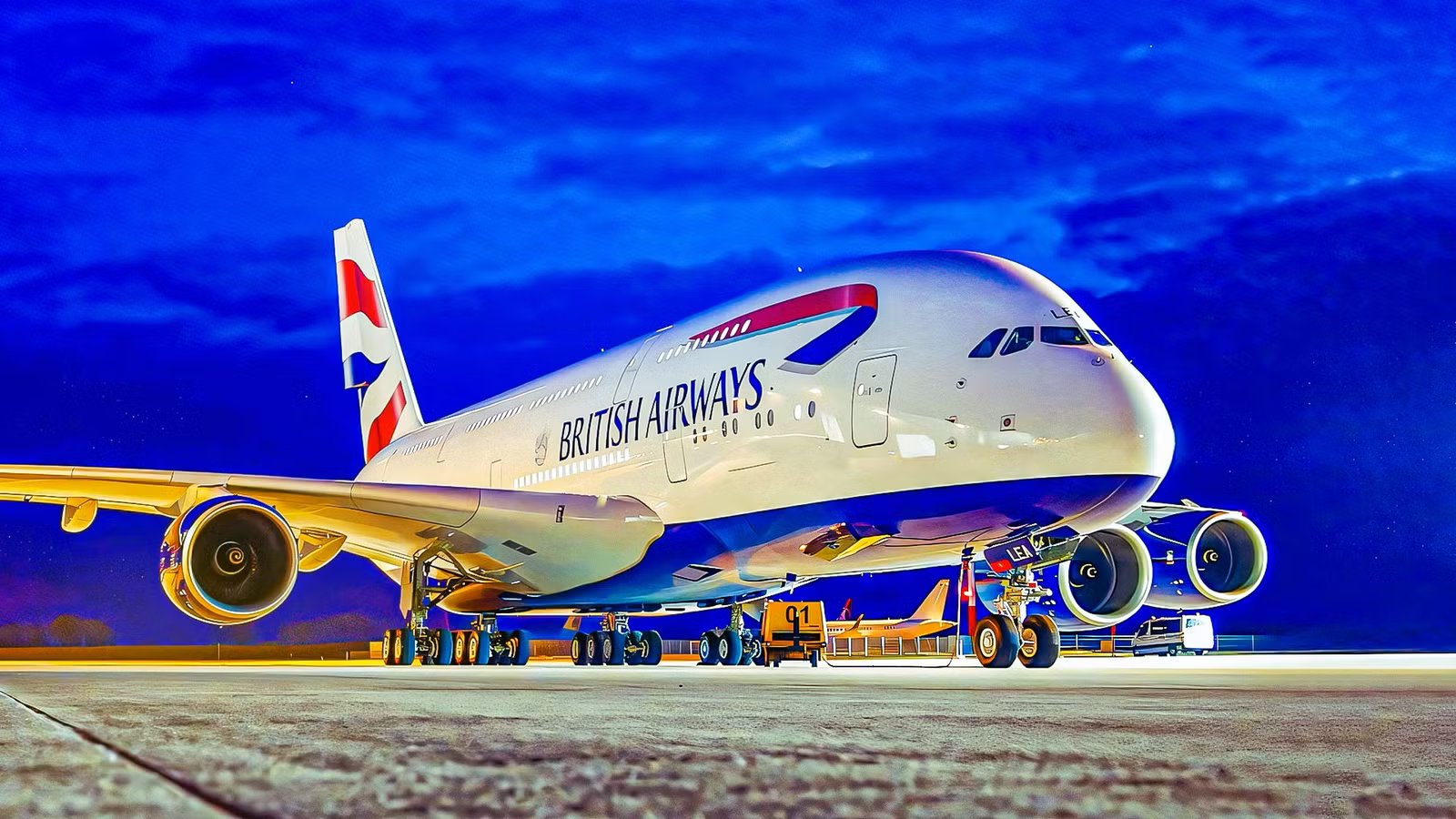
Alaska does not first need to convince local travelers to use the airline. Instead, it needs to extend an existing customer relationship into international markets where these passengers previously flew with  Delta Air Lines, British Airways, Korean Air, Lufthansa, or other competitors.
How Alaska Plans To Become A Global Airline

During Alaska’s Investor Day on September 29, the company said it had largely completed the foundation-building phase outlined in the 2024 Alaska Accelerate program. At the time, the aim was to build a “more global, premium and diversified airline.” Alaska now considers that transformation well underway, with roughly two-thirds of its $1 billion incremental profit target already captured. According to Alaska Air Group CEO Minicucci:
“Alaska Accelerate is about shaping our future and doing it in a way that builds on Alaska and Hawaiian’s 90+ year legacies while setting a new standard for what air travel should be. The acquisition of Hawaiian Airlines did not create a new strategy, it accelerated one we had already built. The heavy lifting is behind us, the value creation is in front of us, and we are entering the phase where the investments we have made in premium products, global connectivity, loyalty, cargo and Hawaii increasingly show up in our results.”
Under the updated Alaska Accelerate strategy, the long-haul segment is expected to increase from around 8% of group capacity today to approximately 15% by 2030. This also includes growing the Seattle long-haul network to 15, up three from the previous target.
Alaska expects premium revenue to exceed 40% of total revenue by 2030, compared with 35% today. To achieve this, the carrier is investing in new premium offerings branded as the Alaska Aurora and Hawaiian Leihōkū experience. This includes improvements to the onboard product, the overall passenger experience, as well as significant investments in its lounge offerings.
Alaska’s Boeing 787-9s are expected to have around 46% of its seats in premium cabins by 2030, up from 38% today. Part of this increase is also the introduction of a true premium economy product, Premium Reserve. In addition, at least 25 Boeing 737 MAX 10 aircraft are planned to be equipped with 12 lie-flat business class seats and the new premium economy as well.
“We believe premium is more than a seat. It’s how guests feel from the moment they book their trip to the moment they arrive at the airport to when they’re in the air with us. Aurora for Alaska and Leihōkū for Hawaiian bring that vision to life in ways that feel true to the Alaska and Hawaiian brands our guests love, while raising the standard for comfort, service, dining and care throughout the journey.”
Across the wider business, Alaska wants revenue generated outside the main cabin to rise from 53% today to 60% by 2030. Beyond the growth in premium revenue, cargo and loyalty are specifically targeted as growth drivers to achieve this diversification target. Alaska expects its Atmos Rewards program to generate nearly $4 billion in annual cash flow by 2030, while continuing double-digit annual growth in remuneration. Moreover, Alaska wants to more than double the cargo business and reach approximately $750 million in annual cargo revenue by 2030. Cargo revenue has already grown about 60% since 2024.
Hawaiian Airlines Gave Alaska A Shortcut Into Long-Haul Flying

Before acquiring Hawaiian Airlines in September 2024, Alaska was almost entirely a narrowbody airline. Building a long-haul operation itself would therefore have required considerably more than simply ordering some widebody aircraft. Alaska would have needed to overhaul its entire existing operation and bridge a significant knowledge gap to operate aircraft for more than ten hours at a time.
Catch what other flight trackers miss
Emergency squawks, holds, NOTAMs — live signals, no signup.
Open tracker
Catch what other flight trackers miss
Emergency squawks, holds, NOTAMs — live signals, no signup.
Open tracker
However, by acquiring Hawaiian, the Seattle-based carrier has access to many of these abilities immediately. At the time the acquisition closed, the combined group operated two Boeing 787s and 24 Airbus A330 passenger aircraft, alongside Hawaiian’s existing long-haul network across Asia and the South Pacific. At the time of the acquisition, Alaska specifically highlighted Hawaiian’s international flying and widebody operational expertise as important benefits of the combination.
Hawaiian’s A330s remain based primarily around Honolulu and will continue operating under the Hawaiian brand, while the growing 787 fleet is becoming the primary aircraft behind Alaska’s Seattle global hub. As of July 2026, the wider group operated five 787-9s and 24 passenger A330s, alongside ten A330-300 freighters. The group is also awaiting delivery of seven additional 787-9s and five 787-10s.
The first results provide some early support for this strategy. SEA –  Tokyo Narita Airport (NRT) became profitable in March 2026, less than one year after launching, while both Tokyo and
  Seoul (ICN) recorded load factors above 90% during the first quarter. Of course, this does not mean every future European or Asian route will automatically perform similarly, but it does suggest Alaska may be able to ramp up new long-haul markets relatively quickly when they overlap with the travel demand of its existing customer base.
Seattle Is Becoming Alaska’s Global Hub

By summer 2027, Alaska plans to serve seven intercontinental destinations nonstop from Seattle as of writing. These routes are not all built around the same type of demand, which should help the airline avoid relying exclusively on one segment of the long-haul market.
Alaska Airlines SS27 Long-Haul Network | |||
|---|---|---|---|
Destination | Frequency | Seasonality | Aircraft |
Tokyo Narita (NRT) | Daily | Year-round | Boeing 787-9 |
Seoul Incheon (ICN) | 5x weekly | Year-round | Boeing 787-9 |
Rome Fiumicino (FCO) | Daily | Summer seasonal | Boeing 787-9 |
| Daily | Year-round | Boeing 787-9 |
Reykjavík Keflavík (KEF) | Daily | Summer seasonal | Boeing 737-8 MAX |
Athens (ATH) | 3x weekly | Summer seasonal | Boeing 787-9 |
| 5x weekly | Summer seasonal | Boeing 787-9 |
Source: Alaska Airlines; Port of Seattle | |||
 London Heathrow Airport
London Heathrow (LHR) is perhaps the clearest example of a market where Alaska can combine Seattle’s local corporate demand with connections across its domestic network and onward connections through  oneworld partner
  British Airways. Rome (FCO) and Athens (ATH), meanwhile, allow the airline to deploy aircraft to capture the strong US – Europe leisure markets. Reykjavík is particularly interesting because Alaska can serve the market with a Boeing 737 MAX 8 rather than using one of its relatively scarce Dreamliners.
Athens and  Paris Charles De Gaulle Airport (CDG) will become the latest additions in May 2027. Athens will operate three times per week and become the longest route Alaska has ever operated, while Paris will receive five weekly flights through October. Since the carrier aims to grow to 15 long-haul destinations from Seattle in the coming years, at least eight destinations remain to be announced.
Simple Flying recently identified what these new potential destinations could be. This includes candidates such as: Tan Son Nhat International Airport (SGN) in Vietnam, oneworld hubs  Madrid Barajas Airport (MAD) and
  Sydney Kingsford Smith Airport (SYD), or even India, a market American Airlines once actively explored.
Alaska Does Not Need To Become Another Delta Or United

Alaska’s strategy suggests that becoming a global airline does not necessarily require building a network comparable in size to Delta or  United Airlines. Instead, the carrier is attempting to expand selectively beyond North America while preserving the advantages that made its domestic business successful in the first place. If this works, Alaska could occupy a relatively unusual position among US airlines: a carrier with strong regional dominance, but enough international reach to retain customers across a much larger share of their travel.
The more difficult part will be turning that ambition into consistently profitable growth. Alaska is simultaneously integrating Hawaiian, expanding its widebody operation, introducing new premium products, and entering markets dominated by far more established international competitors. The next several years will therefore determine whether Alaska Accelerate creates a genuinely different type of global US airline, or whether the complexity of expanding beyond its traditional strengths ultimately proves harder to manage than expected.