dailynewsnblog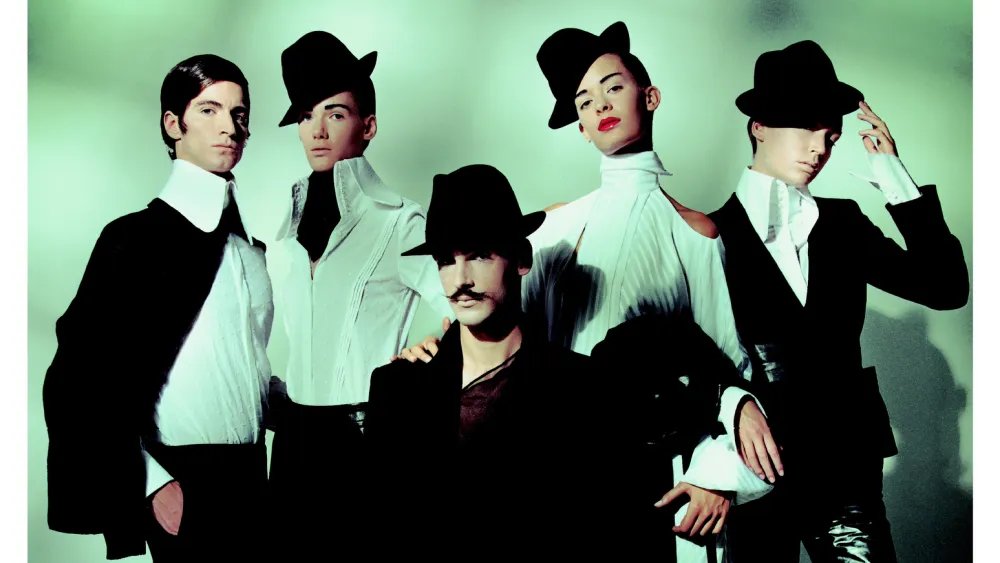
BUENOS AIRES — At this year’s Tango BA Festival y Mundial, the evolution of tango could be seen not only on the dance floor but hanging on the walls.
“Tango Argentino: Un espectáculo de leyenda,” an exhibition of costumes, photographs and artifacts from Claudio Segovia’s and Héctor Orezzoli’s landmark production, offered a rare look at the clothes behind the show that helped propel Argentine tango onto the international stage in the ’80s.

The costumes of “Tango Argentino”
Courtesy of Tango Argentino
Satin, velvet, lace. Black dresses constructed to move with the leg. Sharp tailoring. Clothes designed not simply to be seen, but to dance. They also complicate perhaps the most persistent image of tango fashion: the woman in red, slit to the thigh. “There is no prototype for a tango dress,” said Hilda Curletto, the costume designer whose work became intertwined with tango’s theatrical history.
For Curletto, the dress begins not with a silhouette but with movement and fabric. Its weight and quality determine how a skirt responds to a dancer, allowing the legs freedom while retaining the elegance she considers fundamental to tango. Historically, she said, the leg was not simply put on display. “It wasn’t evident, it was suggested,” Curletto said.
Among the garments Curletto remembers are an elegant black dress worn by María Nieves, a sophisticated velvet dress from the 1950s and vintage pieces restored and adapted for individual performers. They offer a different visual history from the ubiquitous red dress: tango as silhouette, fabric and controlled revelation. “For me, tango is great when it is sophisticated, glamorous,” Curletto said. “Far away from vulgarity.”
Red itself has a complicated history. Curletto traces “tango red,” a red-orange hue, to the commercial frenzy surrounding tango in the early 20th century, as the dance swept through Paris and tango became not merely a dance but a marketable idea attached to fashion and consumer goods.

The costumes of “Tango Argentino.”
Courtesy of Tango Argentino
Jean Luc Don Vito, whose hair and makeup work helped establish the visual identity of “Tango Argentino,” sees the red dress as an international stereotype rather than a universal tango tradition. “The concept of the red tango dress is very American,” Don Vito said. “There isn’t as much of that stereotype in other parts of the world.”
Today, he added, “‘tango’ red” appears more often in fashion accessories than in actual dresses. The distinction is important. The tango dress has never simply reflected what women in Buenos Aires wore, it has also reflected how the outside world imagined tango.
Few productions shaped that imagination more powerfully than “Tango Argentino.” Created by Segovia and Orezzoli, the production premiered in Paris in 1983 and reached Broadway in 1985. Its costumes, beauty, music and choreography presented international audiences with a highly refined visual world: black and red, polished glamour, elegant dresses and sharply dressed men.

The costumes of “Tango Argentino.”
Courtesy of Tango Argentino
Don Vito remembers its woman as “very elegant, very strong and beautiful, not vulgar” — possessing “an edge of strength, but not sexuality.”
That aesthetic outlived the production. One of the clearest examples came from Pablo Ramírez, one of Argentina’s best-known fashion designers. Ramírez launched his label with “Casta” in 2000. His second collection, presented in 2001, was called simply “Tango.”

A Pablo Ramírez dress.
Courtesy of Pablo Ramírez
Ramírez translated the dance into rigorous black silhouettes, tailoring, restraint and the tension between masculine and feminine. “For me, tango has mystery and sensuality,” he said. “It also has elegance, and tango has a sophistication in its music and its dance that is very important to me.
“I am interested in something that initially appears closed or restrained and then suddenly allows the skin or a fragment of color to appear. The sensuality comes from revelation, rather than from showing everything,” Ramírez said.
Movement was equally important. “The clothes I make, when people put them on, invite movement,” he said. “Black is pure silhouette. There is no distraction; it emphasizes the person wearing it.”
Two decades later, the tango dress is metamorphosing again. “There is no single style of tango dress today,” said Lucila Segura, a professional dancer for 27 years who has designed through Lucila Segura Indumentaria for more than 15 years.
Segura sees contemporary costume increasingly constructed around what a dancer wants to communicate. An older tango might inspire a 1940s silhouette, a romantic skirt with greater volume and movement; Piazzolla might be interpreted in trousers or a catsuit. “What we are looking for today is what we want to tell,” she said, “and from there the costume idea is developed.”
The fabric has changed with the dancing. Stretch materials accommodate increasingly demanding movement. Slits release the leg. Backs have opened. Necklines have dropped. And as leader and follower roles become more fluid, women dancing the leader role may appear in suits and tailoring once reserved for men.
Color has broken free, too. “It is no longer limited to the classic black, or black and red,” said Carla Guasti, founder and designer of Carla Tango.

A Lucila Segura tango dress.
Courtesy of Lucila Segura
Guasti sees contemporary tango fashion embracing prints, new textures and changing fashion colors while preserving one nonnegotiable requirement: the clothes must work for two bodies moving together. “Tango fashion today is influenced by the trends of the moment while still preserving the characteristics necessary for dancing,” she said. “I design silhouettes and cuts that visually represent tango, which, for me, means sensuality and femininity.”
That individualized approach brings contemporary tango fashion unexpectedly close to Curletto’s original proposition: there never was one tango dress – what has changed is the vocabulary.
For designers, that freedom also opens tango fashion to life beyond the milonga. Segura creates seasonal pieces intended to move from dancing to a party or cocktail setting. Guasti says women who don’t dance tango are increasingly attracted to her clothes for their prints, colors, comfort and sensuality. “Through fashion, they begin to talk about tango,” Guasti said, “and this becomes another way of transmitting and sharing the culture.”

A Lucila Segura tango dress.
Courtesy of Lucila Segura