dailynewsnblog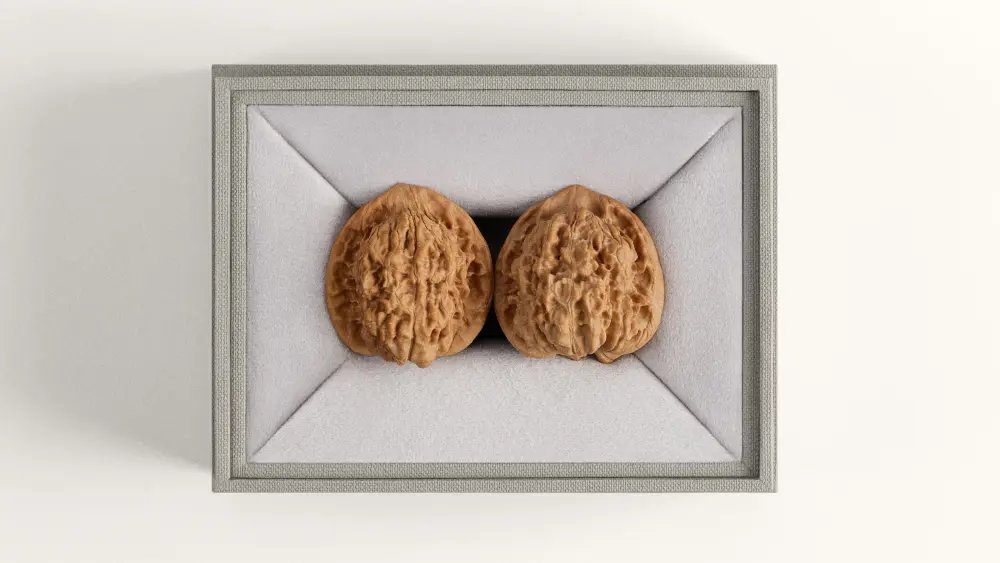
PARIS — Gone are the days when a printed fashion show invitation was enough to set hearts aflutter. These days, the golden ticket might take the shape of an inflatable lobster claw, a cassette player or a loaf of bread.
Designers have long used objects as teasers for their collections — think John Galliano’s leopard print purse filled with lipstick, crumpled bills and confetti for his fall 1998 collection. But in the age of social media, these conversation pieces have become part of a well-oiled marketing strategy.
“When you create an invitation that’s so spectacular that everyone is photographing it and posting it on Instagram, that helps to drive engagement,” said Sarah Andelman, founder of consulting agency Just an Idea. “It gives brands an additional communication tool to play with.”
These collectible show invites make even more of an impact because many labels now simply send a QR code, she noted.
Among the masters of the genre, Andelman singled out the late Virgil Abloh, whose show invitations for Louis Vuitton included a wall clock, now listed on the Sotheby’s website for $5,500.
She also cited her longtime friend and collaborator Pharrell Williams, whose debut show invitation for Vuitton was a miniature stained-glass window, and Jonathan Anderson, who has perfected the art with his invites for Dior.

The invitation for Dior’s spring 2026 women’s ready-to-wear show.
Courtesy of Dior
Since taking over as creative director of the brand last year, he has sent out a porcelain plate with trompe-l’oeil eggs, a black disco ball, a fan and a pair of miniature park chairs, all delivered in a beribboned gray case with white relief patterns.
“It’s a way for our house to offer a visual gift before the show — a new art of teasing, expressed not only in the virtual world, through images, but through the experience of discovering a new object to decipher,” said Olivier Bialobos, deputy managing director in charge of global communication and image at Dior.
Each object is designed both as a clue and a memento, carrying echoes of Christian Dior’s first boutique, Colifichets, which opened in 1947 and sold all kinds of trinkets and accessories, he said.
“Each invitation contributes to the storytelling around the show,” Bialobos added. “Like scattered clues, signs to interpret, they spark the imagination in a poetic, sometimes humorous way, carrying multiple layers of meaning. They are therefore priceless, and our guests enjoy keeping and collecting them all the more.”
The online reveal of the show invite has become part of the ritual. “The ‘unboxing’ videos of show invitations on social media fuel a new sense of desire, mystery and anticipation, which makes the audience eager to discover the show and Jonathan Anderson’s new creative vision,” Bialobos said.
Everything but the Clothes
For his upcoming spring 2027 show, the designer sent two Wenwan walnuts, meant to be rolled around in one hand. “We chose objects that bring good luck, in tribute to Mr. Dior’s superstitious nature and his deep attachment to charms and talismans,” Bialobos explained.

The invitation for Jonathan Anderson’s debut spring 2026 menswear show for Dior.
Courtesy of Dior
In addition to setting the stage for Tuesday’s show, the choice of this ancient Chinese fidget tool can be read as signaling Anderson’s growing focus on Asia as he prepares to show his cruise collection in Shanghai next May.
The egg plate that was sent to some 600 guests for his spring 2026 men’s show was inspired by a 1975 archive piece, as well as Dior’s love of 18th-century decor, tableware and food, with a predilection for jellied or soft-boiled eggs. It also served as a metaphor for new beginnings, Bialobos noted.
It has spawned a spinoff line of decorative plates that retail for upward of $700 in Dior stores. In addition to the eggs, there are croissant, fried egg and pretzel plates on offer.
But most of the time, the value of show invitations lies precisely in the fact that they’re not for sale.
Iain R. Webb, writer, curator and professor of fashion and design at Kingston School of Art, has amassed several hundred, featured in his book “Invitation Strictly Personal” and the exhibition “The Fashion Show: Everything but the Clothes,” which he curated at the V&A Dundee in Scotland in 2023.
Dating from his career as fashion editor of publications including Blitz, The Times and Elle U.K., they include personalized items, like his treasured hand-embroidered handkerchief from a 1997 Clements Ribeiro show.

Iain R. Webb’s invitation to the Moschino fall 2003 fashion show.
Courtesy of Iain R. Webb
He traces the current inflation in show invitations to the coronavirus pandemic, when Anderson created a “show-in-a-box” for Loewe, complete with fabric swatches and a pop-up of an imaginary set, while brands like Gucci, Prada and Fendi sent care packages containing food.
“Certainly that kickstarted the bigger picture, but I think designers have always used objects,” Webb said. “The idea of Galliano’s rusty key, the books that he used to send out with a flower pressed in them, the leopard handbag with all the little paraphernalia: They told stories in themselves, and I think that’s something that designers are always keen to do.”
Those thrifted objects have largely given way to glossy collectibles that guests compete to unbox online.
“It does seem to be that the experience around the clothes has become more important than the clothes themselves,” Webb remarked. “Since the ‘90s, the whole accent of showtime changed radically. It became much more about big business, and social media has just sped that up, and there is that element of showmanship and one-upmanship on behalf of the attendees.”
Museum Conundrum
From a curatorial perspective, the new generation of invitations comes with both challenges and opportunities, as fashion exhibitions place a growing emphasis on show ephemera.
“Some of them are clues. Some of them are distractions. Some of them are just a bigger, better prize than somebody else is giving, but from a museum point of view, definitely they will be included in the future, because they do capture a moment in time,” Webb said.

A Balenciaga fall 2022 show invitation from the Palais Galliera archives.
Courtesy of Paris Musées, Palais Galliera
“Catwalk: The Art of the Fashion Show,” currently on show at V&A Dundee after making its debut last year at the Vitra Design Museum in Germany, features 27 invitations on loan from the Palais Galliera fashion museum in Paris, which has seen growing interest in its collection of objects.
Emilie Hammen, the director of the French museum, noted that since the pandemic, it has had to rethink how to classify show invites, which are beginning to stretch its limited storage capacities.
“Traditionally, show invitations were considered as documentation that accompanied the clothes, so they didn’t have the same value. But we’re having to reconsider that, firstly because they no longer fit on library shelves. They need to be kept more like shoes or hats,” she said.
“They’re three-dimensional objects made from materials whose aging needs to be monitored to ensure they’re properly preserved. It strikes me that, as museums, we can no longer ignore the emergence of these new objects, because it raises a host of entirely new issues,” Hammen added.
While Palais Galliera has yet to acquire invitations, instead relying on donations from showgoers, it recognizes their growing value.
“Although they are mass-produced objects, they come in extremely limited editions and exist outside of any commercial context. I’m sure some invitations are resold on eBay, Vinted or elsewhere, but originally, they were never intended as merchandise. That gives them even more value and it must pique collectors’ interest,” she said.

An extract from Meyabe’s book “Not Invited.”
Louis Victorin Michel ® Imprimerie du Marais/Courtesy of Meyabe
But it turns out that even when it comes to the humble card invite, one person’s trash is another’s treasure. French photographer Meyabe, who documents Paris Fashion Week, has spent the last decade collecting discarded invitations and show notes, which he recently published in a book called “Not Invited.”
Printed by Imprimerie du Marais, which makes many of the paper invitations sent out by fashion houses, it goes on sale this week at the Smith & Son, Yvon Lambert and 7L bookstores to coincide with the spring shows. Ironically, the book itself comes in a limited edition of 100.