dailynewsnblog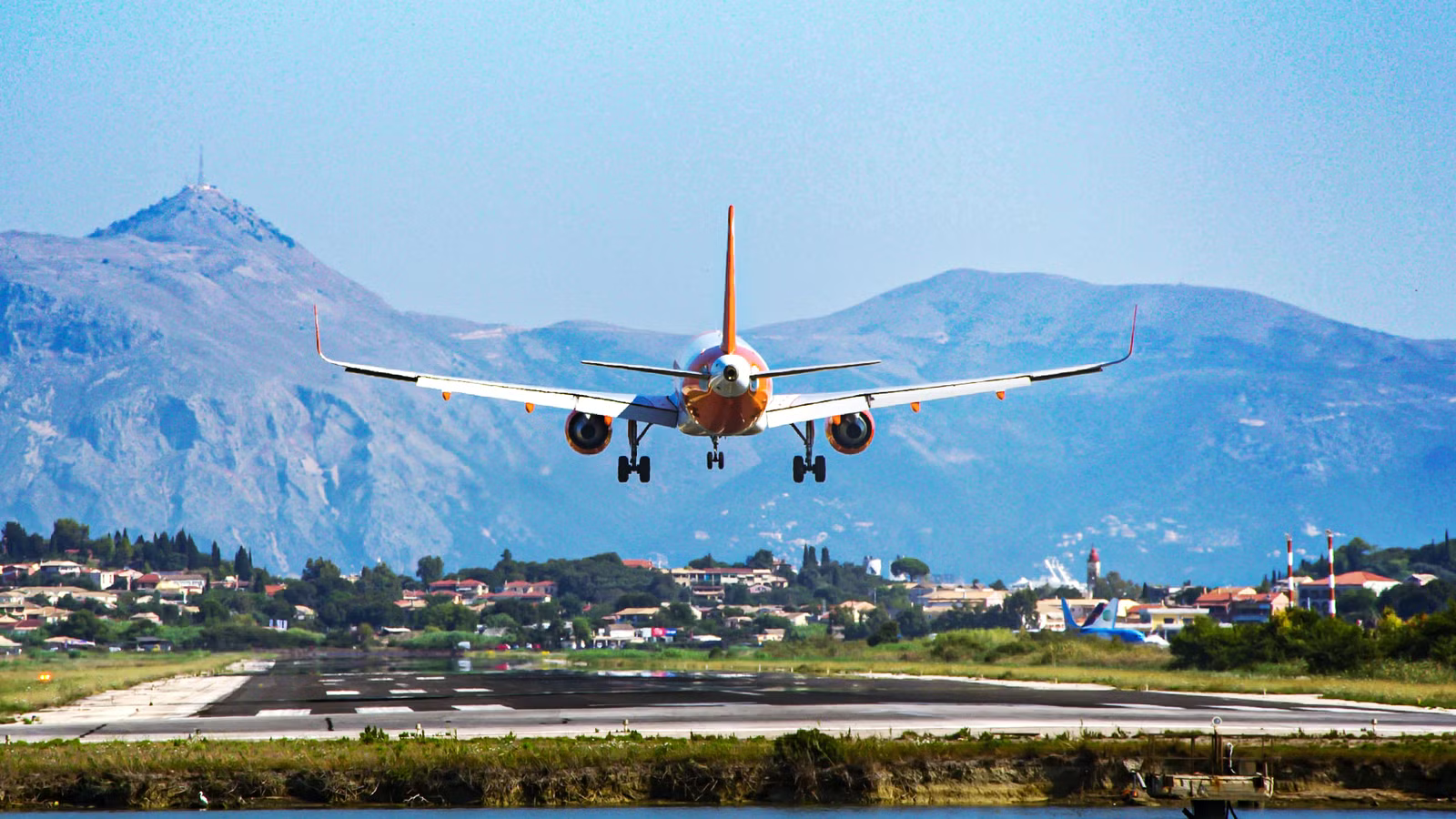
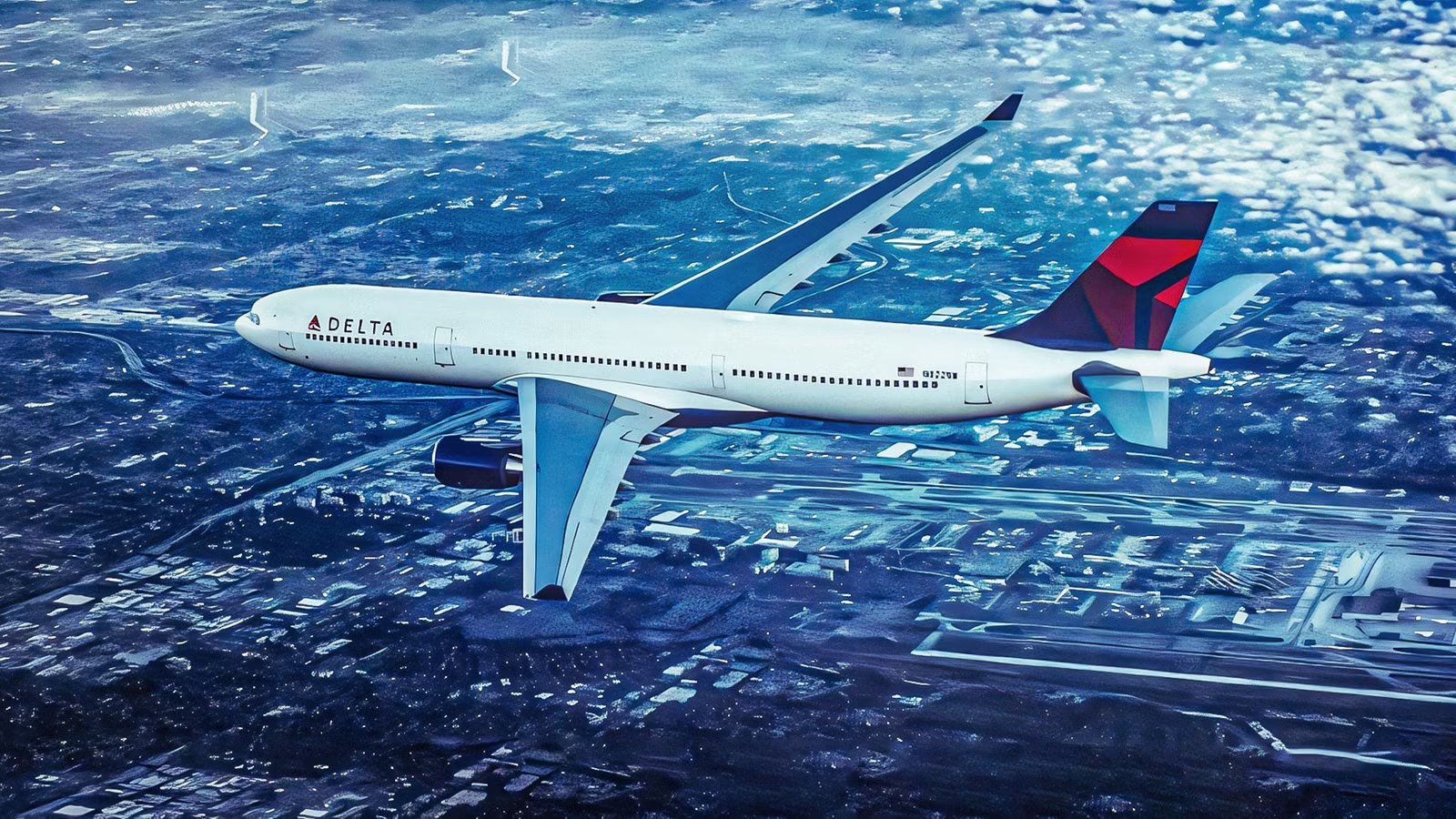
Glancing out an oval window during the final descent, passengers occasionally notice a familiar river, coastline, or highway passing beneath the wing for a second time. The aircraft tilts gently into a bank, tracing a wide loop in the sky and the runway remains nowhere in sight. For uninitiated travelers, this unexpected maneuver can spark a brief wave of anxiety. In reality, these deliberate loops are a routine component of modern air traffic management designed to keep flights safely separated.
Air Traffic Control (ATC) places aircraft into predetermined holding patterns or tactical loops for a variety of practical reasons. Instead of improvising on the fly, pilots follow strict procedures to park their aircraft in three-dimensional airspace until a landing slot opens up. This article explains why this happens and what circumstances can lead to it.
A Racetrack In The Sky?

A common misconception among passengers is that a holding aircraft circles directly above the airport terminal like a soaring bird. In practice, Federal Aviation Administration(FAA), as well as other global authorities’ holding procedures, mandate a precise, oval-shaped circuit flown around a specific navigational reference point. Known as a holding fix, this point can be a ground-based radio beacon, a radio intersection, or a designated satellite waypoint located miles away from the airfield boundary.
The holding pattern functions almost like a racetrack in the sky, consisting of four distinct segments: an inbound leg, a 180-degree turn, an outbound leg, and a second 180-degree turn. Unless controllers issue specific non-standard instructions, all turns within the pattern are made to the right. Flight crews rely on flight management computers and autopilot guidance to track these bounds with exact precision, all with the aim of keeping the aircraft within protected airspace boundaries designed to keep it clear of surrounding traffic and terrain.
Timing within the pattern depends heavily on altitude. As noted by Pilot Institute, at or below 14,000 feet (4,267 meters), the standard inbound leg is flown for exactly one minute. Above 14,000 feet (4,267 meters), where higher true airspeeds cover greater ground distance, the inbound leg expands to one and a half minutes. When distance measuring equipment or global positioning systems define the fix, controllers may instead instruct pilots to fly specific leg lengths, such as four nautical miles (7.4 km).
Why Does ATC Order A Hold?

Air Traffic Control uses holding patterns as a dynamic buffer when air traffic demand exceeds airport capacity, as Simple Flying reports . Major hubs operating near peak throughput frequently experience minor operational delays that move into arrival corridors, such as  London Heathrow Airport(LHR). If an unexpected runway closure, emergency landing, or taxiway blockage halts operations on the ground, controllers place incoming traffic into holding stacks to prevent airspace saturation. What this does is allow controllers to manage arrival rates systematically, maintaining safety while ground crews work to restore normal runway flow.
Adverse environmental conditions are another common driver behind mandatory holding instructions. Passing thunderstorms, severe low-level wind shear, or sudden drops in surface visibility can temporarily render a runway unsafe for landing. Rather than initiating an immediate diversion to an alternate airport miles away, flight crews enter a designated hold to evaluate shifting weather patterns and calculate remaining fuel reserves. Controllers keep incoming aircraft holding at safe altitudes above five nautical miles (9.3 kilometers) out while waiting for severe weather cells to clear the approach corridor.
Typically, holding patterns near the destination last only a few minutes, though more serious airspace closures can cause extreme en-route delays. A prominent example occurred when a Garuda Indonesia Airbus A330neo was forced to perform 24 holding patterns over four hours while waiting for restricted airspace over the Bay of Bengal to clear, as reported by Simple Flying.
Extending The Downwind Leg

Not every airborne delay needs an aircraft to enter a full racetrack holding pattern. When air traffic controllers need to adjust spacing by just one or two minutes, forcing an airliner into a published hold adds unnecessary complexity to the arrival corridor. Instead, controllers use tactical micro-delays, with dynamic radar vectoring to gently alter an aircraft’s flight path and absorb small timing discrepancies before final approach.
The most common maneuver is extending the downwind leg of the traffic pattern. When an aircraft flies parallel to the landing runway in the opposite direction, controllers may instruct the crew to fly past the normal turning point, pushing the downwind leg out by three to five miles (4.8 to 8.0 kilometers). In other situations, controllers issue radar vectors for S-turns or assign a single 360-degree orbit while in the terminal area. Combining these path-stretching maneuvers with speed reductions allows controllers to slot arriving flights into a tight, continuous stream.
For flight crews, working within a tactical micro-delay requires precise energy management. Extending a downwind leg or flying a delaying orbit keeps the aircraft closer to the ground, usually between 2,000 feet (610 meters) and 5,000 feet (1,524 meters) above field elevation. Pilots must carefully balance engine thrust, flap configuration, and airspeed to keep the aircraft fully stabilized before descending onto the glide path.
The Circling Approach

A sharp distinction needs to be drawn between airborne holding and a published circling approach. While holding is a delay tactic, a circling approach is a specific instrument procedure where an aircraft descends toward one runway using radio or satellite guidance before visually maneuvering to land on a different runway, as detailed by Learn ATC. Flight crews perform this procedure when the runway aligned with the prevailing wind lacks a direct instrument approach, or when local terrain restricts straight-in arrivals from certain directions.
Granada Airport (GRX) in Spain offers a clear real-world example of this visual maneuver in daily operation. As shown in aerodrome data, the airfield has a single runway designated Runway 09/27, with precision instrument landing system guidance installed only for Runway 09. Runway 27 faces steep mountain terrain and shares tight airspace with neighboring Armilla Air Base, preventing a direct instrument approach setup. When shifting winds require a landing on Runway 27, pilots fly the instrument path toward Runway 09, then break away to visually circle the airport and align with Runway 27.
Performing a circling approach requires high airmanship and strict adherence to safety margins. Because these visual maneuvers occur at low altitudes, pilots fly close to terrain and obstacles while configuring the aircraft for landing. If ambient weather deteriorates and crews lose visual contact with the runway at any point during the loop, they must immediately abort the landing and execute a missed-approach climb.
When To Dump Fuel

Sometimes the decision to circle originates on the flight deck rather than from air traffic controllers. When pilots encounter an unexpected instrument caution, such as a landing gear disagreeing light or a minor hydraulic system anomaly, they frequently request a temporary hold. Entering a holding pattern at a safe altitude of 5,000 ft (1,524 m) buys vital time for the crew to open flight manuals, analyze sensor data, and run non-normal checklists without the pressing time constraints of a final approach.
Commercial airliners are designed with a maximum takeoff weight that can exceed their maximum landing weight by tens of thousands of pounds. If an aircraft suffers a bird strike or system fault shortly after departure and must return to the field, touching down immediately can damage the landing gear structure or cause catastrophic tire failures. In such scenarios, landing heavy also drastically increases the required stopping distance on the runway.
To reach a safe operating weight, pilots orbit in a designated holding area to burn off excess aviation fuel. As detailed in Simple Flying coverage, flying loops at low altitudes where air density is higher increases fuel burn, helping the aircraft shed weight steadily over 20 to 30 minutes. If the aircraft is equipped with a fuel jettison system, the crew may circle while dumping fuel over designated body-of-water zones or unpopulated terrain, simultaneously recalculating landing performance figures to ensure the aircraft touches down well within safety limits.
The Final Option Of A Go-Around

A final reason an aircraft might circle an airfield involves an aborted landing, known in aviation as a go-around or missed approach. As an airliner descends through the final few hundred feet, flight crews constantly evaluate stabilized approach criteria, including airspeed, descent rate, and touchdown alignment. If a sudden gust of wind shifts the airframe off the centerline, if a preceding jet fails to clear the active runway in time, or if an unexpected vehicle enters the movement area, pilots immediately apply takeoff thrust, pitch up into a climb, and retract landing gear and flaps.
Once a go-around is initiated, the aircraft transitions from a landing descent back into a climb, following a published missed approach procedure or direct radar vectors from controllers. The flight crew climbs to a safe altitude, typically between 1,000 feet (305 meters) and 3,000 feet (914 meters) above field elevation, and navigates clear of surrounding terrain. Air traffic control then integrates the flight back into the arrival queue, guiding the airframe through a wide circular loop around the airport to rejoin the downwind leg or final approach corridor.
Performing a go-around and circling back for a second attempt is a standard, highly practiced safety maneuver rather than an emergency or operational failure. Airlines train flight crews to treat go-arounds as routine decisions whenever approach parameters fall outside strict tolerances, removing any pressure to force a compromised touchdown. Of course, circling the airfield one more time adds ten to 15 minutes to the total flight time, but that extra loop ensures the aircraft lands under ideal, fully stabilized conditions.