dailynewsnblog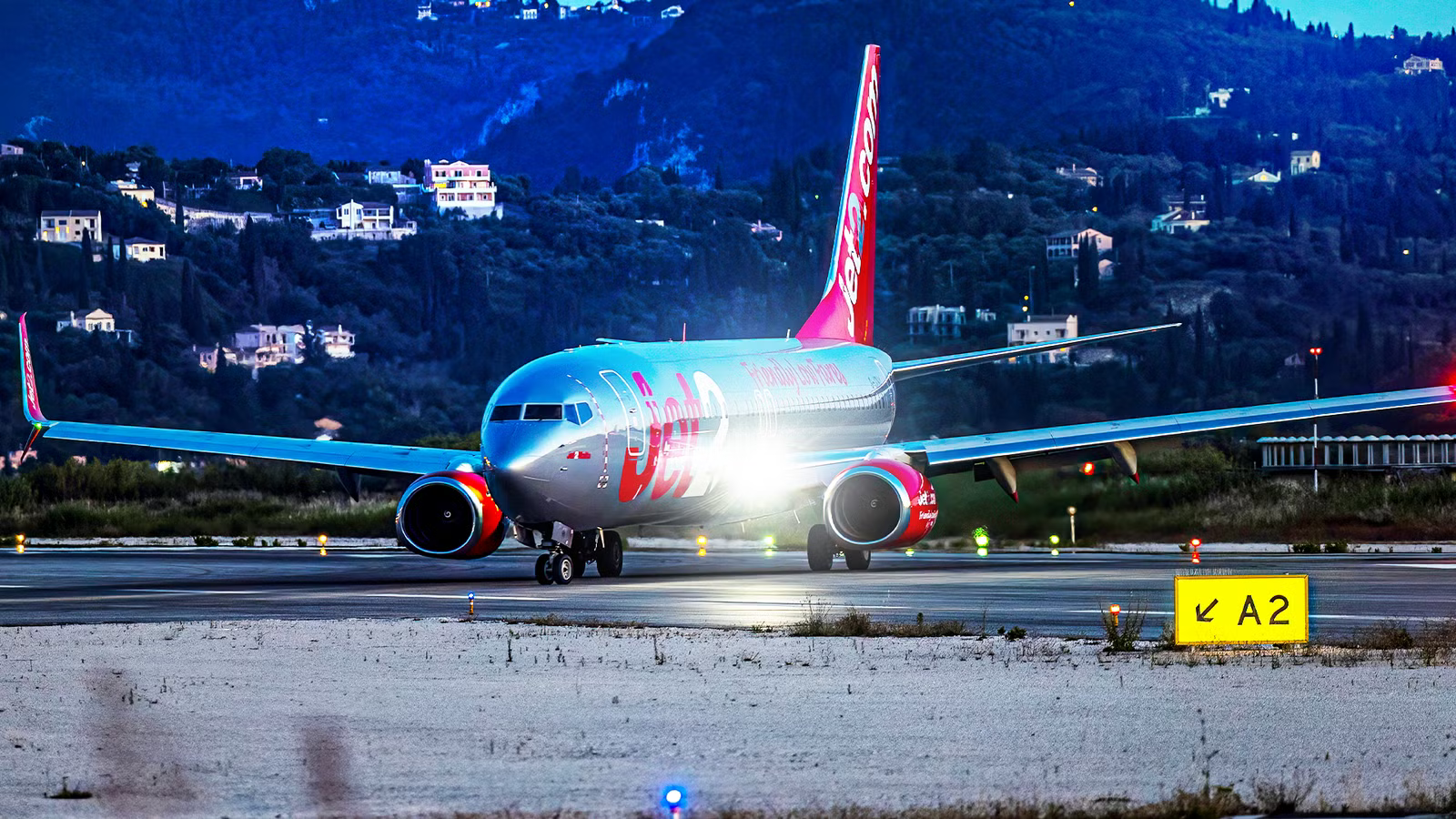
As is common with commercial aircraft, the Boeing 737 carries landing lights. These are designed to switch on at a low enough altitude to improve an aircraft’s visibility and illuminate the runway. The lights cannot be on the landing gear, as is the case with the taxiing lights, because the landing gear stays up for far longer.
Older 737 aircraft have retractable landing lights. Stowing the lights within the fuselage saves on drag and fuel. Yet, the system has been scrapped in later iterations of the Boeing 737 Next Generation, and for all 737 MAX aircraft.
Why The 737 Originally Had Retractable Landing Lights

Boeing designed an outboard landing light system when it introduced the Boeing 737 Original. These lights mechanically extended below the outboard flap track bearings. The same system was used for the Boeing 737 Classic.
Retractable landing lights were still in use when Boeing introduced the 737 Next Generation. However, Boeing moved these to the bottom of the fuselage belly. These lights can be found underneath the engine ram air intakes. In the cockpit, the pilot operates these lights with a three-position switch. It has ‘RETRACT’, ‘EXTEND’ and ‘ON’ options. Pilots would first extend them before waiting to pass through low clouds or fog. They would then switch them on, avoiding being hit by dazzling light from the reflection.
Even the small landing lights on a 737 can create a significant amount of drag, and an aircraft has to burn additional fuel to push through this additional air. Airline Pilot Performance on Instagram says that the fuel burn reduction is 2%, a quantity that becomes significant across an entire flight. Furthermore, keeping them fully extended from takeoff to 10,000 feet (3,050 meters) burns an additional 26.5 lb (12 kg) of fuel, justifying the need to retract them as soon as possible.
Boeing Dropped The Feature In 2015

Although the initial 737 Next Generation aircraft featured retractable landing lights, they were dropped in 2015. A fleet bulletin announced a new LED Landing, Taxi, and Runway Turnoff Lights (LTRTL) system in September 2015. The retractable taxi light, landing lights and runway turnoff lights were ditched, replaced by LED light arrays in the wing roots. The light arrays are now housed behind glass blended into the wing, as is the case with your car’s headlights. This location removes the aerodynamic issues caused by lighting that sticks out. The change began with aircraft 3,846. It has also been incorporated into the new 737 MAX.
Saving on maintenance costs was the main motivation for the change. The retractable lights previously used Parabolic Aluminized Reflector (PAR) lamps. This technology has a short life of around 70 hours of operation. LEDs offer enhanced performance and an operational life of around 10,000 hours. Wheel well lights were also upgraded to LEDs to further the maintenance savings.
Another maintenance saving was made by the change because of how fragile the retractable system was. It was vulnerable to foreign object damage (FOD). It was also exposed to extreme elements, as well as shock and vibration. Now, the lights are protected by the outer housing, reducing their exposure. Finally, the fleet bulletin estimates that the change saves 16 lb (7.3 kg). This weight difference is minimal, but becomes significant across a plane’s entire life.
The Alteration Changed How Pilots Operate 737 Landing Lights

The flight bulletin guidance states that retractable landing lights must be turned off when the aircraft passes through 10,000 feet (3,050 meters) of altitude at the latest. Fixed landing lights can be extinguished much later, with the limit being 18,000 feet (5,500 meters) of altitude. Pilots can fly their aircraft more safely and flexibly as a result.
Catch what other flight trackers miss
Emergency squawks, holds, NOTAMs — live signals, no signup.
Open tracker
Catch what other flight trackers miss
Emergency squawks, holds, NOTAMs — live signals, no signup.
Open tracker
The use of fixed landing lights also changes the controls that pilots use and removes the need to extend and retract the lights. 737 pilots have three sets of controls. The first is the taxi light control on the far right of the lighting panel. This has a single switch with ‘OFF’ and ‘AUTO’ settings. The taxi light uses 10% of the power of the landing lights. Next to the left is the ‘Runway Turnoff’ controls, which have a left and a right switch. These switches can be either ‘OFF’ or ‘ON’. These switches are duplicated with the landing light controls immediately to the left. Turning these lights on gives pilots 100% of the available power for the LED lighting array.
The change required a significant amount of structural and wiring changes to be incorporated. For this reason, Boeing decided not to offer the new lights as a retrofit. As a result, you may still see some of the oldest 737 jets still in service flying with retractable landing lights.
The 737 Next Generation’s Glass Cockpit Was A Substantial Change

Other areas of the 737 beyond the landing lights system have substantially changed over the decades and several iterations. An example is the cockpit. Early 737s had analog cockpits. The 737-100 and -200 all had mechanical, two-crew flight decks. However, advancements were already being made by the -200, with pilots given access to enhanced autopilot and early flight computer technology. Further advances came with the 737-200Adv, which had HSI course selectors and more. Yet, the analog nature of the cockpit remained consistent. The same can be said of the 737-300, introducing a Flight Management System (FMS) and auto-throttle.
Things changed with the introduction of the 737 Next Generation. Glass LCD screens replaced the mechanical gauges. The Common Display System (CDS) featured two Display Electronics Units (DEU) to power Display Units (DUs). These DUs provided flight instruments, navigation, engine, and some system displays, with one being available for both the captain and first officer.
The 737 MAX stuck to the glass cockpit. It evolved the system with four new 15.1-inch (38.3-cm) LCD cockpit display screens in landscape orientation. These are the same screens used by the Boeing 787 and 777X. However, the MAX’s cockpit system has been heavily criticized because of issues with its Maneuvering Characteristics Augmentation System (MCAS). This system was found to have played a role in the 737 MAX crashes.
Much Remains Unchanged With The 737

The 737 MAX is a wildly different aircraft from the 737 Original and the 737 Classic, yet some design features remain the same. An example is the manual trim wheel. This spinning wheel sits next to the pilot’s knees. It is directly connected to a cable system for trim adjustment, as it has been since 1967. Most other modern aircraft use a small thumb switch which connects the pilot to the trim of the jet’s control surfaces via a computer. Pilots have no direct and uninterrupted connection to trim.
The manual trim wheel is the most extreme way that the 737 is stuck in the past, but there are many other areas in which the aircraft remains fundamentally unchanged. The table below compares some of these systems with the Airbus A320:
Feature | 737 family | A320 family |
|---|---|---|
Flight Control System | Mechanical with hydraulic assist | Full fly-by-wire |
Landing Gear Design | Short, fixed geometry | Taller, redesigned gear |
Engine Installation | Flattened nacelles, forward-mounted | Circular nacelles |
Pilot Control Interface | Yoke, manual trim wheel | Sidestick, electronic trim |
737 MAX pilots also have access to electronic trim. The wheel acts as a fallback in case other systems fail. It reflects Boeing and the 737’s manual-first philosophy, with the manufacturer wanting pilots to be as physically connected to their plane’s systems as is possible and safe.
Some 737 Consistencies Have Caused Engineering Challenges

The 737 is distinctive among narrowbody aircraft because of how low it sits to the ground. This feature helps crews to load luggage quickly. Mechanics are also able to conduct much of their work by hand and without specialized equipment. The feature was made possible in early 737 jets because of how thin their engines were.
In recent years, the design has caused issues. Modern turbofans use high bypass ratios to maximize efficiency. A higher fan diameter is needed to achieve this, which is incompatible with the space available under a 737’s wing. Boeing’s response has been to demand flat-bottomed engine nacelles from its engine manufacturers. The company has also moved 737 engines further forward and upward on the wing. This change in engine positions leads to the aircraft having a different center of gravity, which the 737 MAX has dealt with through software-based solutions.
Boeing is pushing the 737 airframe as far as is possible within the constraints of modern aviation. One answer would be to create more space under the wing by redesigning the landing gear so that the wings sit higher above the tarmac. Yet, many of Boeing’s customers continue to value the 737’s low height. In developing markets, it provides quick turnarounds at airports that suffer infrastructure limitations. With aircraft engines getting ever wider, it will be fascinating to see if the next 737 reaches a breaking point and has to ditch its low-slung concept.