dailynewsnblog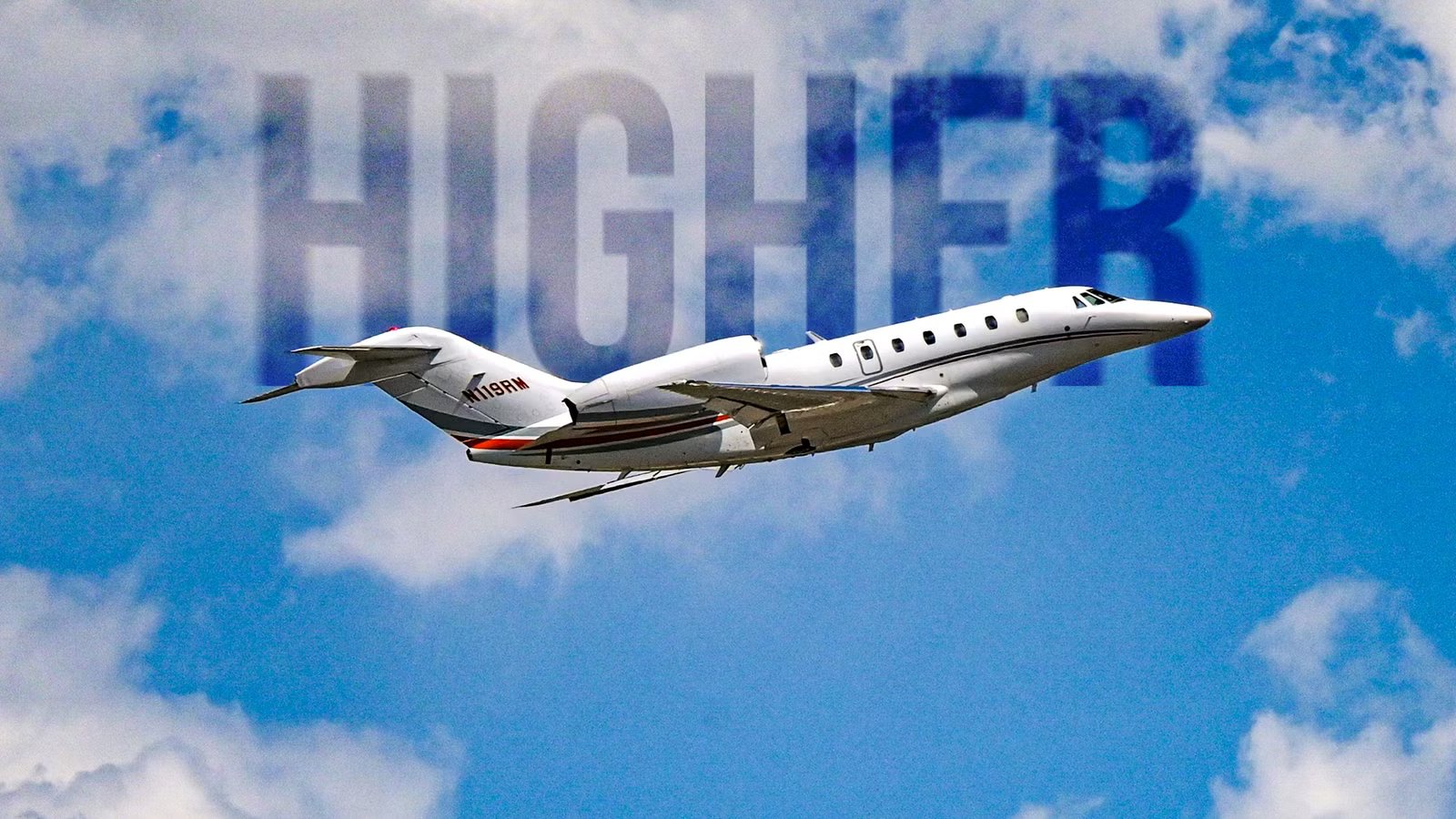
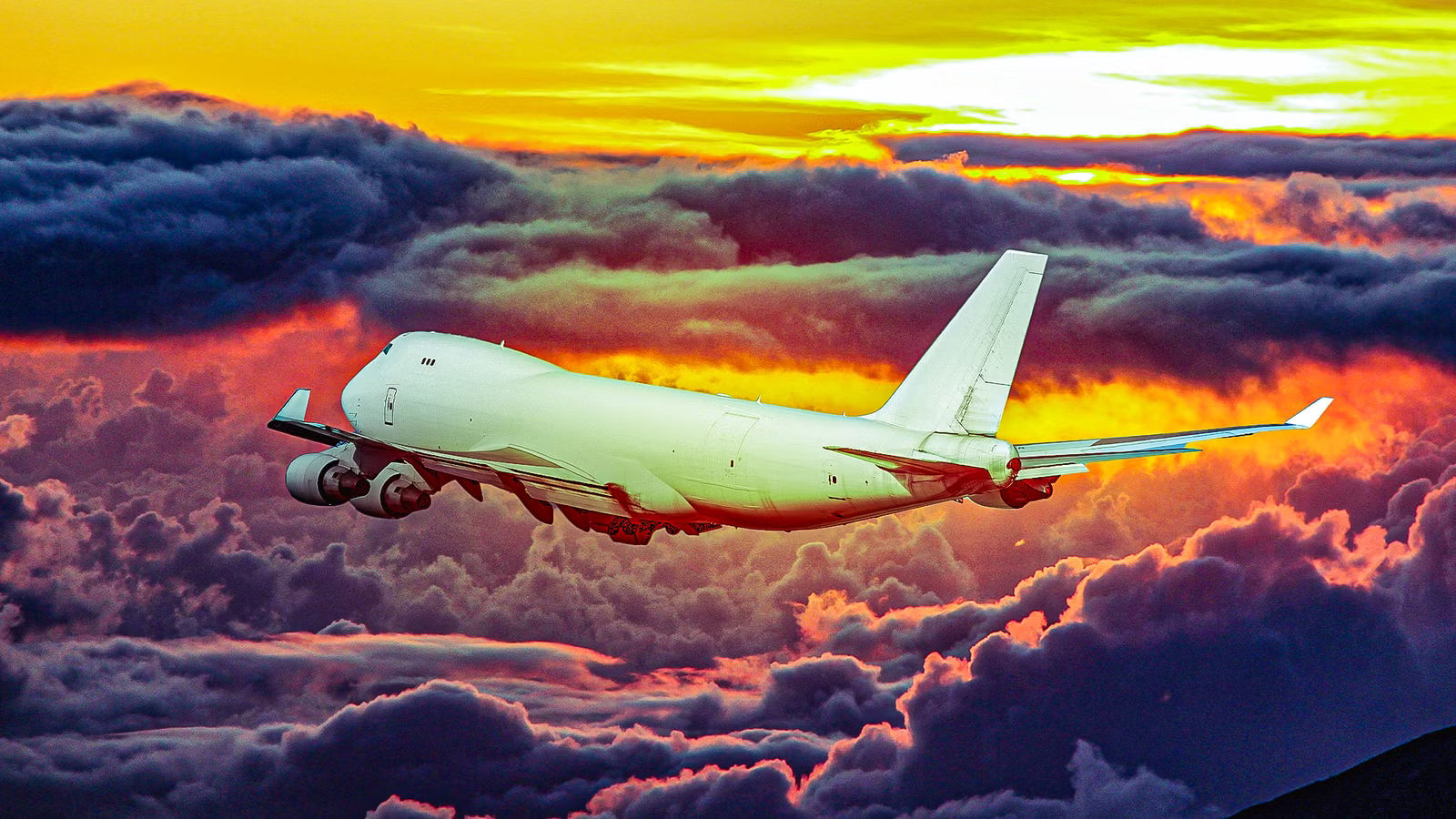
Modern commercial airliners typically cruise between 30,000 feet and 43,000 feet. The Boeing 747 was certified with a service ceiling of 45,100 feet, but it rarely flew at this altitude, and newer types have been certified with a service ceiling of 43,100 feet or even less. This altitude range has been determined to be the optimal band for airliners to operate in for fuel efficiency. Above this range, however, you still find substantial civilian air traffic, but it consists of private jets.
Most business jet types fly at the same altitudes as commercial airliners, but some types (including the largest and most expensive types) are certified to fly as high as 51,000 feet. Flying so high offers real performance advantages, but it doesn’t always save fuel. Business jets burn less fuel per mile at higher altitudes, but mainly because they’re optimized for these operations. Instead, the main reason they cruise at such high altitudes relates to the primary reason people fly private in the first place: time and convenience.
The Aerodynamics And Economics Of Flying High

As altitude increases, air density decreases, reducing aerodynamic drag because fewer air particles push against the plane. This means less thrust is required to maintain the same speed, which significantly cuts fuel burn. However, this only works to a point, since jet engines require oxygen to function properly, and lower air density at high altitudes can reduce the engine’s power output. The current altitude range where airliners typically fly is considered the sweet spot for fuel efficiency and performance.
The optimal cruising altitude changes depending on the aircraft type and the plane’s weight. When heavy, aircraft start at lower altitudes before progressively ‘step climbing‘ as they burn fuel and can economically cruise higher. It’s not unusual for widebodies like the Boeing 777-300ER to start in the low 30s during a long-haul flight before reaching almost 40,000 feet by the end of the flight, while newer widebodies like the Airbus A350 can often start at 35,000 feet or higher due to their advanced wings.
While fuel efficiency and performance are the primary reasons airliners fly at these altitudes, weather is another benefit. Even when cruising at 30,000 feet, aircraft fly above most hazardous weather systems, which not only provides a better ride for passengers but also results in fewer deviations and reroutes, allowing more direct flights. As such, airliners today more or less cruise at the same altitudes they did at the beginning of the Jet Age, and they essentially never climb above 43,000 feet.
Private Jets And Flying High

Most business jets cruise at roughly the same altitude as commercial airliners. The corporate jet types currently in production with a service ceiling above 45,000 feet include the Gulfstream GVI, GVII, Bombardier Global line, and certain members of the Dassault Falcon family. The maximum altitude that you’ll see these planes certified for is 51,000 feet, which is significantly higher than what commercial airliners cruise at. While these aircraft might not always cruise at 51,000 feet, they rarely cruise lower than 41,000 feet.
These corporate aircraft, most of which are large long-range jets, are optimized for cruising at higher altitudes than airliners. Economics matter less than with airliners, so manufacturers like Gulfstream intentionally design their aircraft to perform well at high altitudes, even if they aren’t as fuel-efficient as possible. The main benefit of these planes’ high-altitude performance is reduced congestion, which results in faster real-world cruising speeds and shorter flight times.
Flying this high saves time, but these planes are overall less efficient than airliners optimized for lower cruise altitudes, given the size difference. However, fuel efficiency isn’t a priority for private planes. Instead, speed and performance take priority, as business jets are generally designed to cruise much faster than airliners, with cruising speeds ranging from Mach 0.85 to Mach 0.95 in the latest models. Because traffic is light at these altitudes, business jets gain a significant time advantage.
Why Private Jet Passengers Avoid The Airlines

Private jets are largely seen as ultra-luxury products that are as opulent as you could possibly imagine, but this isn’t necessarily true. Modern international first class suites feature large seats that convert into beds and sliding doors for greater privacy, along with elaborate catering and luxurious airport lounges. Apart from the largest and most expensive jets, it’s hard to argue that a private jet is even as comfortable as first class, let alone more luxurious.
However, if you’re flying first class with an airline, you are beholden to the carrier’s schedule. Delays and cancellations are always possible, and the ground experience still requires you to pass through security. This adds two or three hours to the overall travel time, while international travel requires passengers to clear customs upon arrival, adding even more time. First class makes the experience more comfortable, but it remains long and stressful. This is the true advantage of flying private.
When you’re traveling on a private jet, the aircraft leaves on your schedule. Because there’s no airport terminal, the time from the car to the plane is measured in minutes rather than hours, and once you’re onboard, the doors shut behind you. The main reason why people pay the massive premium to fly private is the convenience and time savings. Cruising higher further cuts down on flight time, making the business jet even more appealing. The features and luxury of a business jet are secondary benefits rather than the selling point.
The Design Elements Of Private Jets That Favor High Altitude Cruising

Because cruising above 45,000 feet supports a private jet’s mission, manufacturers design these planes differently from airliners. For one, long-range jets tend to have massive wings relative to their overall size and weight. A Gulfstream G700, while similar in length and wingspan to an Airbus A319, is a much lighter aircraft than the Airbus, yet the G700’s wing is nearly the same area as the A319’s. This allows the wing to perform efficiently even at 50,000 feet.
In addition to the wing, most business jets are equipped with powerful turbofan engines and therefore have excellent power-to-weight ratios. Using the G700 as an example, it has a power-to-weight ratio of 0.339, almost as much as a 757. This means the aircraft can still maintain a steady climb rate up to its service ceiling, while the specific engines that business jets use (such as the G700’s Rolls-Royce Pearls) have relatively modest bypass ratios, which improve performance at these high altitudes.
Engine Model | Aircraft | Bypass Ratio |
|---|---|---|
General Electric Passport | Bombardier Global 7500/8000 | 5.6:1 |
Rolls-Royce Pearl 700 | Gulfstream G700/G800 | 6.5:1 |
CFM LEAP-1B | Boeing 737 MAX | 9:1 |
Rolls-Royce Trent XWB | Airbus A350 | 9.6:1 |
Another element to keep in mind is that private jets often don’t depart at their maximum gross weight. You might only find one or a handful of people onboard a typical private flight, and these aircraft rarely go out with their fuel tanks filled to the brim. While most airliners also don’t typically go out fully loaded, it’s much more common in the commercial world. This means business jets often perform even better in real-world operations because they’re often lightly loaded.
The Constraints Stopping Airliners From Cruising Higher

The design elements that make a business jet go faster and higher also make it more fuel-thirsty than if it were optimized for lower altitudes like an airliner. Commercial jets are designed to routinely carry heavy payloads across several hours, multiple times per day, in the most cost-effective way possible. Time matters only if it significantly reduces costs; otherwise, airlines fly at the most fuel-efficient speed possible along whateverroute is available.
Beyond the difference in design goals between these two types of aircraft, regulators require commercial airliners to execute an emergency descent from their service ceiling to a breathable altitude in case of rapid depressurization. This is a major component in certifying an aircraft’s service ceiling, and we see how this impacted the 747-8, which is only certified to reach 43,100 feet rather than 45,100 feet like all other 747 variants. This was because the plane’s maximum descent rate was slower than its predecessors’.
Ultimately, cruising altitudes for commercial jetliners have remained static since the 1950s because there’s no benefit for this type of aircraft to fly any higher. Large private jets, meanwhile, exist in a market where time and convenience outweigh operating cost, so they’re optimized to perform best at high altitudes even if that isn’t necessarily the most cost-efficient approach.