dailynewsnblog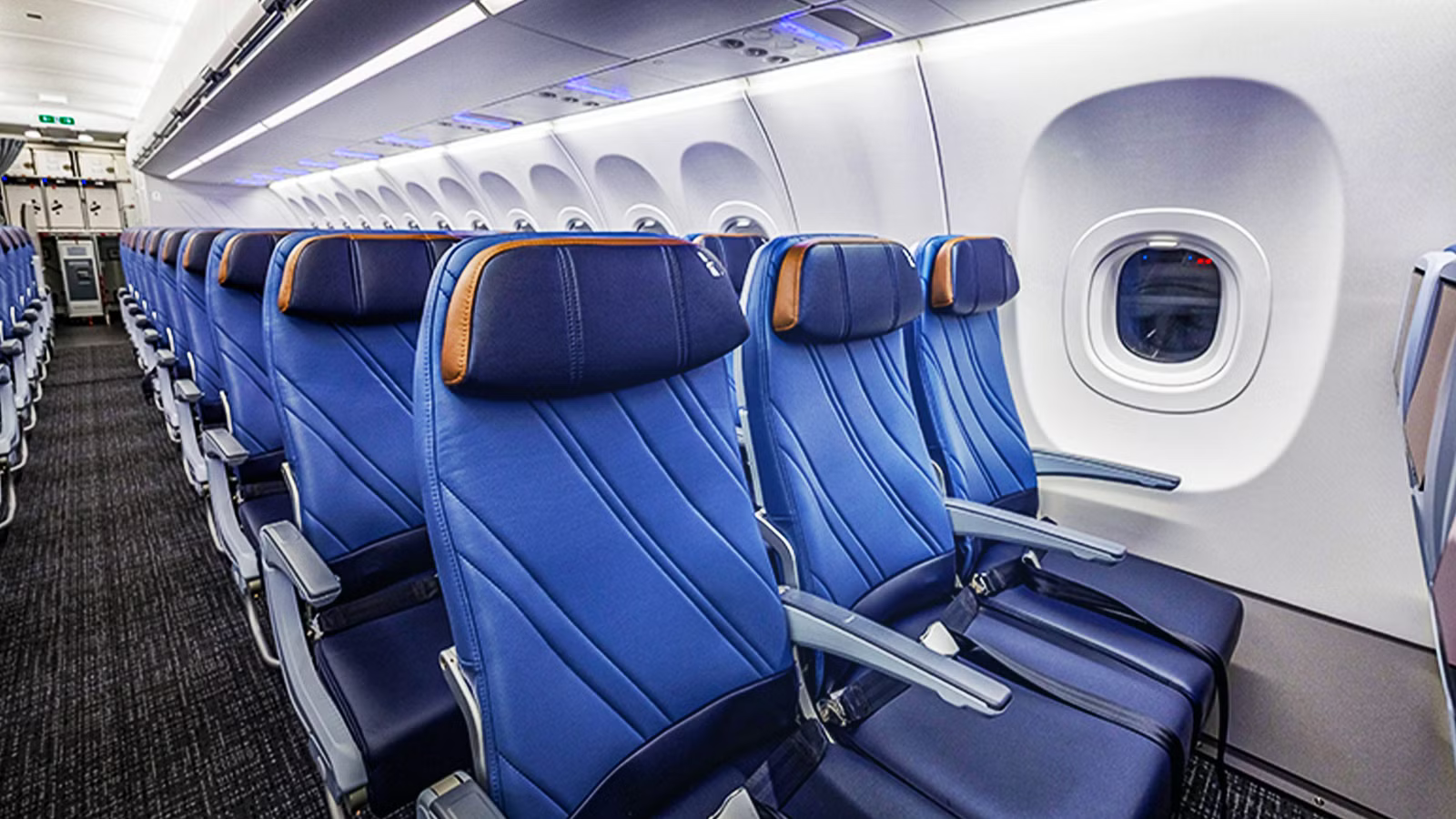
Travelers who want more comfort than Economy generally face a straightforward choice: accept a standard seat or pay considerably more for Premium Economy. However, one travel hack we’ll cover in this article can help you save money. As Premium Economy fares often move away from standard Economy pricing, an extra-legroom seat can sometimes provide the improvement passengers notice most without requiring them to pay for an entirely different cabin.
But is extra-legroom Economy really the smarter buy in all situations? It depends. The case for paying for additional legroom has strengthened because passengers can often get several extra inches for a relatively modest surcharge, while Premium Economy may cost substantially more. Yet Premium Economy remains a fundamentally different product, especially on long-haul flights, where seat width, recline, footrests, service, and a dedicated cabin can matter as much as the space between rows.

The growing appeal of extra-legroom Economy is fundamentally about value. A passenger who mainly wants to avoid a cramped seat does not necessarily need upgraded catering, priority services, or a separate cabin. In that situation, paying specifically for additional pitch can be a more targeted purchase than moving all the way into Premium Economy. Our comparison of Premium Economy and Economy examines how the price gap between the two cabins has developed.
Clear evidence shows travelers are willing to pay for more space. Upgraded Points analyzed more than 5,000 flights across America’s 10 busiest domestic routes during a week in May 2026. It found average fares of $188 for flights with 28–29.9 inches of pitch, $225 for those with 30–30.9 inches, and $276 for those with 31–33 inches. That represents an average difference of $88 between the lowest and highest legroom categories.
The same study also shows why airlines have a market for these products. Some 46% of surveyed frequent travelers said legroom was “very” or “extremely” important when booking an Economy flight, while 39% said they had already paid extra for additional legroom. Another 39% had never paid for it but would consider doing so. The numbers suggest that passengers increasingly see legroom as something worth purchasing separately rather than automatically moving into the next cabin.
What Actually Determines Whether The Upgrade Is Worth It?

The first question is what passengers actually want from the upgrade. Extra-legroom Economy is primarily a space upgrade, while Premium Economy is intended to be a broader improvement to the onboard experience. Premium Economy seats are generally wider and offer greater pitch and recline, while airlines may also provide footrests, upgraded meals, amenity kits, priority services, and a separate cabin. Our comparison of Economy and Premium Economy seats shows the difference goes beyond legroom alone.
The second factor is the actual surcharge. There is no universal price for an extra-legroom seat because most airlines use dynamic pricing, and the amount can change based on route, aircraft, demand, and availability.  Southwest Airlines provides an extreme example: a September 2026 analysis found that the airline was charging as much as $319 for five additional inches of legroom on some itineraries. On short flights, that can make the economics particularly difficult to justify.
The third factor is flight duration. An $80 seat fee represents a very different proposition on a 90-minute flight than on a nine-hour international journey. Passengers should compare the surcharge with the time they will actually spend in the seat, rather than treating a dollar amount as automatically cheap or expensive.
A fourth factor is also easy to overlook: the aircraft itself. Airlines can operate multiple configurations of the same aircraft type, meaning a Boeing 777-300ER or Airbus A350 does not necessarily offer the same seat regardless of the flight number. The seat map can be more useful than the aircraft type when determining whether an upgrade is worthwhile. You can check the aircraft type using our flight tracker, and see seat arrangements for various airlines using our seat maps.
Qatar Airways Shows How The Lines Can Blur

Perhaps the clearest illustration of the changing value proposition comes from  Qatar Airways. The airline operates six former Cathay Pacific Boeing 777-300ERs and three former Virgin Australia 777-300ERs, all of which retained significant elements of their previous operators’ cabin interiors. Current fleet information confirms the nine-aircraft group, while seat-map data identifies the former Cathay aircraft as Qatar’s 7D3 configuration and the former Virgin Australia aircraft as its 7D1 configuration. One Mile at a Time and AeroLOPA’s Qatar 777-300ER seat maps confirm these configurations in detail.
Catch what other flight trackers miss
Emergency squawks, holds, NOTAMs — live signals, no signup.
Open tracker
Catch what other flight trackers miss
Emergency squawks, holds, NOTAMs — live signals, no signup.
Open tracker
The unusual part is what happened to the former Premium Economy seats. On the former Cathay aircraft, Qatar Airways retained the former Premium Economy section, selling the seats within the Economy cabin rather than as a conventional Premium Economy product. Former Cathay aircraft retain their original interiors, including seats that were originally configured as Premium Economy. Executive Traveller similarly reports that Qatar sells the former Cathay Premium Economy seats as Comfort+, with 38 inches of pitch compared with approximately 32 inches in standard Economy, alongside a wider seat and greater recline.
The former Virgin Australia aircraft provide an even clearer example. Executive Traveller reports that their original 24-seat Premium Economy cabins were retained and offered by Qatar Airways as Comfort+ upgrades. Those seats have approximately 41 inches of pitch, 19.5 inches of width, footrests, and greater recline, while Qatar provides the same meals, drinks, and service as Economy rather than a separate Premium Economy soft product. AeroLOPA’s current seat map independently confirms that rows 15–17 on the ex-Virgin aircraft correspond to the former Premium Economy section and are sold as Economy.
That makes Qatar Airways an unusually strong example of the distinction between the seat and the cabin service. On the right aircraft, a passenger can get a seat originally designed for Premium Economy while paying an Economy-seat surcharge for Qatar’s Comfort+ product. It is not the same as buying a full Premium Economy ticket, since the service remains Economy, but it can still offer many of the features travelers pay considerably more for elsewhere. For passengers focused primarily on legroom, seat width, and recline, the difference demonstrates why checking the exact aircraft and seat map can be just as important as comparing fare families.
When Does Premium Economy Still Make More Sense?

The argument for extra-legroom Economy becomes considerably weaker when the flight is long enough for the complete Premium Economy experience to become an obvious choice. A seat with several extra inches of pitch can make Economy more comfortable, but it does not necessarily provide the same width, recline, or support as a genuine Premium Economy recliner. On an overnight flight, those differences can become much more noticeable.
The distinction is especially important on sectors of eight hours or more. Spending that long in an Economy-width seat, even with additional pitch, feels different from spending the same period in a wider Premium Economy seat with a footrest and greater recline. For travelers trying to sleep, the seat’s physical design can be as important as the legroom available.
Premium Economy can also offer benefits that simply moving to a better Economy seat can’t replicate. Depending on the airline, passengers may receive upgraded meals, priority check-in or boarding, additional baggage allowance, and an amenity kit. The exact package varies considerably, but it means the passenger is buying a broader product rather than simply paying to move their knees farther from the seat in front.
Flight situation | Extra-Legroom Economy | Premium Economy |
Under 2 hours | Usually difficult to justify a large surcharge | Generally unnecessary unless the fare gap is unusually small |
2–4 hours | Can offer meaningful value for a modest fee | Compare total price carefully |
4–8 hours | Attractive if legroom is the main priority | More compelling if width and recline matter |
8+ hours | Useful, but still an Economy seat | Greater justification for the wider seat and enhanced recline |
Overnight long-haul | Additional pitch helps | Wider seat, footrest and recline become particularly valuable |
Very large Economy surcharge | Check Premium Economy price | May provide better overall value |
This is why Premium Economy should not be dismissed simply because extra-legroom Economy is cheaper. A cheaper seat is not automatically better value if it lacks the features the passenger actually needs. On a daytime four-hour flight, extra pitch might be enough; on a 10-hour overnight journey, the difference between an Economy seat and a genuine Premium Economy recliner can become significant.
The calculation also depends on the traveler. A six-foot-five (two-meter) passenger may value pitch far more than someone of average height, while a passenger who prioritizes sleep may care more about recline and foot support. Likewise, someone who does not care about food or priority services may reasonably prefer to spend the money on a better seat rather than a broader Premium Economy package.
What Are The Biggest Exceptions And Risks?

The biggest mistake is assuming that extra legroom automatically equals good value. Southwest’s 2026 pricing illustrates why. One September analysis from the Mighty Travels found prices reaching $319 for five additional inches, while another examination found that the economics become considerably less attractive on shorter sectors. A passenger could pay a substantial amount without receiving anything beyond additional pitch.
The other problem is that “preferred” and “extra-legroom” seats are not interchangeable terms. Some airlines sell seats toward the front of Economy as a location upgrade without necessarily providing more pitch. Travelers need to check the seat specifications on the airline website. On Southwest’s 2026 aircraft, for example, the airline distinguishes Extra Legroom seats from Preferred seats, with the latter primarily providing a better location rather than the same physical benefit.
Aircraft substitutions can create another complication and, often, frustration. A passenger may select a particular seat expecting a certain configuration, only for the airline to change the aircraft before departure. This is particularly relevant on large fleets containing multiple configurations of the same aircraft type. Check the seat map again closer to departure, especially when paying a substantial amount for a premium seat.
Finally, passengers should compare the total fare difference, not just the seat surcharge. If Economy costs $500, an extra-legroom seat costs an additional $70, and Premium Economy costs $150 more, the middle option may be attractive. But if the extra-legroom seat costs $200 while Premium Economy is only $250 more, the relatively small additional payment for the separate cabin could change the calculation entirely.

So, is extra-legroom Economy the smarter buy in 2026? It can be, particularly when the passenger’s priority is pitch, and the surcharge is modest. Premium Economy pricing has created a wider middle ground, letting travelers target the aspect of the Economy experience they find most frustrating without necessarily paying for a full cabin upgrade.
The strongest argument comes from what travelers say they value, as Upgraded Points found: almost half of frequent travelers consider legroom very or extremely important when booking Economy. The typical respondent was willing to spend about $45 for extra space, suggesting passengers see enough value in legroom to pay for it separately—but not enough to justify the much higher price of Premium Economy.
However, Premium Economy remains firmly relevant. On an eight, 10- or 12-hour flight, the wider seat, additional recline, footrest, and separate cabin can make a much greater difference than a few extra inches of pitch alone. The smartest approach in 2026 is not to automatically choose extra-legroom Economy over Premium Economy, but to compare route length, the actual aircraft, seat dimensions, and the total price difference before booking.
In other words, airlines may not deliberately be making extra-legroom Economy the new Premium Economy. Instead, the growing price gap between cabins has made the middle option increasingly interesting. For a passenger who simply wants more room, that can be exactly what is needed; for someone seeking a genuine upgrade to the long-haul experience, Premium Economy still has plenty of reasons to command its higher fare.