dailynewsnblog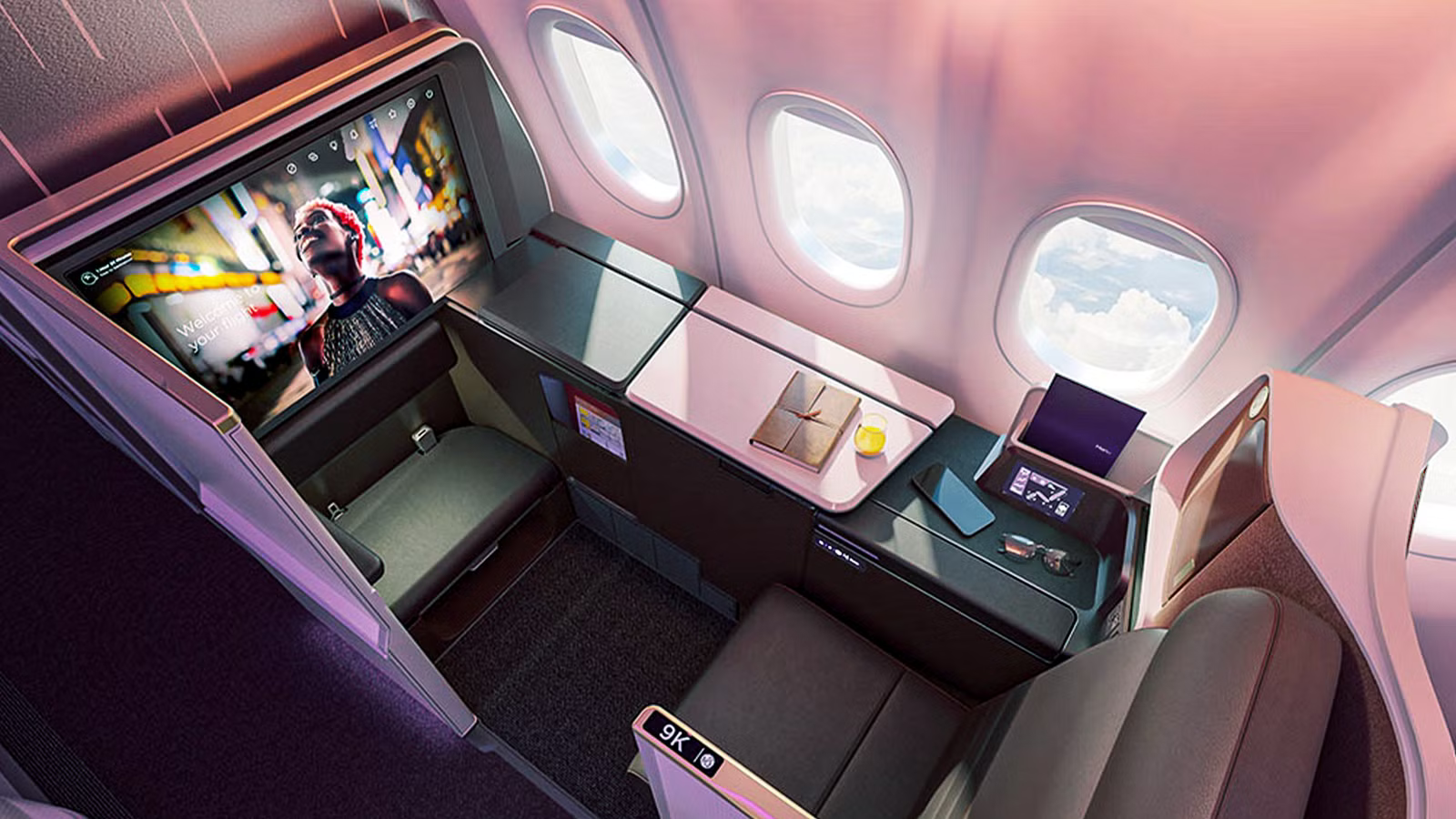
Virgin Atlantic is going all in on premium revenue density across eight US and leisure transatlantic gateways through March 25, 2027. Now concentrating its newest Airbus A330-900neo aircraft on targeted routes, the British carrier is weaponizing hard-product consistency against its US-based counterparts, which rely heavily on mixed widebody fleets. The strategy is aimed at making Virgin Atlantic’s most advanced Upper Class suites and exclusive front-row Retreat Suites land precisely where high-yield passenger demand is highest.
However, real-world flight operations show that booking a flight out of a designated gateway does not guarantee access to the newest cabin. Current public schedules highlight eight deployment channels, though in reality, daily aircraft rotations divide these routes into three distinct operational tiers. Depending on aircraft assignment, departure time, and equipment swaps, travelers crossing the North Atlantic will either experience a next-generation suite or an older cabin configuration that may lead to a bit of disappointment.
The Three Tier System

Virgin Atlantic’s deployment strategy for its A330-900neo fleet establishes a clear three-tier hierarchy across its North American network. Rather than operating static daily aircraft assignments on every route, the carrier balances dedicated A330neo corridors with mixed-fleet rotations. As noted in Simple Flying coverage, operating an aircraft that delivers a 13% reduction in fuel burn over retiring Airbus A330-300 frames allows Virgin Atlantic to maximize seat yield, but fleet constraints require strategic allocation across high-volume hubs and seasonal routes.
The first tier consists of key A330neo routes like  Boston Logan International Airport(BOS) and Tampa International Airport(TPA), where the aircraft operates on a reliable daily schedule to
  London Heathrow Airport(LHR). In these markets, passenger demand aligns closely with the 32-suite Upper Class layout, giving travelers high confidence of securing the newest hard product. The second tier covers high-density flagship gateways like
  New York JFK Airport (JFK) and
  Miami International Airport(MIA). On these routes, scheduled A330neo flights operate alongside larger Airbus A350-1000s and Boeing 787-9s, with Miami primarily served by the A350-1000 rather than dedicated A330neo frames.
Catch what other flight trackers miss
Emergency squawks, holds, NOTAMs — live signals, no signup.
Open tracker
Catch what other flight trackers miss
Emergency squawks, holds, NOTAMs — live signals, no signup.
Open tracker
The third tier encompasses low-frequency and leisure rotations designed to capture targeted premium demand. Washington Dulles International Airport(IAD) receives four weekly flights on Tuesdays, Wednesdays, Thursdays, and Sundays. Meanwhile, weekly seasonal rotations connect  Hartsfield-Jackson Atlanta International Airport(ATL) to Manchester Airport(MAN) on Fridays,
  Orlando International Airport(MCO) to LHR on Saturdays, and MCO to MAN on Sundays. Now distributing these modern widebodies across distinct operational tiers, Virgin Atlantic targets high-yield travelers while navigating the practical limits of an expanding fleet.
Increasing The Premium Factor

The A330-900neo brings with it a major leap in passenger comfort over legacy widebodies, establishing the benchmark for Virgin Atlantic’s long-haul fleet. As per Simple Flying reporting, the standard Upper Class cabin is now being upped to 48 suites arranged in a 1-2-1 layout. Every seat measures 22 in (56 cm) in width and extends into a 6 ft 7 in (201 cm) fully flat bed. Standard hardware upgrades include fully closing sliding privacy doors, passenger-controlled ambient lighting, integrated Qi wireless charging pads, Bluetooth audio pairing, and 17.3 in (43.9 cm) 4K touchscreens.
At the front of the cabin, Virgin Atlantic introduced two exclusive bulkhead seats known as the Retreat Suite. Positioned in the center pair of row one, these suites provide the largest personal space ever offered by the carrier. According to a cabin analysis from Head for Points, each Retreat Suite expands the IFE monitor to a 27 in (68.6 cm) touchscreen and replaces the restrictive footwell with an open ottoman. This design allows the ottoman to double up as a companion seat, enabling up to four passengers to sit together for shared dining or meetings inside a private enclosure.
Providing high-end hard products across key gateways drives passenger preference and increases yields. However, operating only two Retreat Suites per aircraft does restrict availability on high-demand corporate routes by quite a lot, prompting Virgin Atlantic to evaluate how future aircraft orders can further maximize premium capacity.
How The Added Premium Seating Can Be Included

Upcoming Airbus A330-900neo deliveries mark a major expansion in Virgin Atlantic’s long-haul strategy, especially with the increase in premium seating. The expanded layout also triples the footprint of the flagship front row, increasing the number of Retreat Suites from two to six per frame. To accommodate this expanded premium footprint, Virgin Atlantic is reducing economy seating, really doubling down on the high-yield strategy focused on corporate and premium leisure travelers.
This aggressive cabin shift is enabled by the operational efficiency of the airframe itself. While it may not be a full composite airframe like the Airbus A350, it offers a 25% reduction in fuel burn per seat when compared with previous-generation aircraft, according to Airbus. Lower fuel burn allows the carrier to devote a larger proportion of onboard floor space to premium suites without inflating operating costs per seat mile. Having ordered seven additional aircraft in 2024, the airline is building toward a total fleet of 19 A330neos by 2028, embedding high-density premium seating across its core North American network.
Legacy competitors often alter seat capacity by swapping between different aircraft models, whereas Virgin Atlantic is standardizing premium revenue density within a single widebody type. Concentrating 104 premium seats, combining Upper Class and premium economy, into a 232-seat aircraft allows the airline to capture peak transatlantic corporate demand. This focused approach contrasts sharply with major US legacy carriers, which manage varying premium seat densities across mixed fleets of Boeing 767, 777, 787, and Airbus widebodies.
Challenging US Carriers

Virgin Atlantic’s targeted cabin allocation is a fundamentally different commercial strategy than those of its biggest transatlantic rivals. United Airlines and Delta Air Lines rely on massive schedule depth out of hubs like  Newark Liberty International Airport(EWR),
  Chicago O’Hare International Airport(ORD), and Hartsfield-Jackson Atlanta International Airport(ATL), using multi-fleet rosters that mix Boeing 767, 777, 787, and Airbus A330 widebodies. The approach gives corporate travel managers high schedule flexibility, but it also leads to significant hard-product variance. A passenger flying United on the same transatlantic city pair might board an upgraded Polaris suite on a Boeing 787-10 or an older, narrow-aisle configuration on a Boeing 767-300ER.
The joint-venture partnership between Virgin Atlantic and Delta Air Lines solves this commercial tension by dividing network roles. Delta provides raw frequency and domestic feed across its US hubs, while Virgin Atlantic holds specific high-yield slots with its newest widebodies. What this does is allow the joint venture to market both high frequency and guaranteed product parity on key LHR flights, cutting down United’s schedule dominance through targeted cabin quality rather than seat volume.
Through positioning a door-equipped suite against legacy open-aisle layouts, Virgin Atlantic now pushes competitors to justify charging equivalent business class fares on older aircraft. However, maintaining this hard-product advantage needs constant network realignments as seasonal travel patterns evolve across the North Atlantic, something that is not ideal with recent changes to the airline industry.
An Ever-Changing Schedule

Network schedule updates published by AeroRoutes reveal how Virgin Atlantic dynamically rotates its widebody fleet to balance seasonal transatlantic demand across North American gateways. On high-volume corridors like JFK, aircraft assignments shift on a flight-by-flight basis. Flight VS137/138 transitions to daily A330-900neo service, replacing the A350-1000, and flight VS009/010 sees the larger 397-seat A350-1000 take over from the A330neo. These targeted adjustments demonstrate how the carrier shifts its newest cabin products across gateways to match passenger volume spikes.
On LHR to BOS, 787-9s replace the A330-900neo on flight VS011/012 for a portion of the season, maintaining an even daily split between the two aircraft types. Meanwhile, IAD receives periodic A330-900neo service on three of its seven weekly flights during early spring. Demonstrating an aggressive approach to seasonal yield management, Virgin Atlantic is suspending its daily LHR to  Seattle-Tacoma International Airport(SEA) route entirely for the winter season between October 25, 2026, and March 27, 2027. Removing 787-9 frames from lower-yield winter markets allows the airline to concentrate widebody capacity on core East Coast and leisure gateways.
With the concentration of next-generation suites on specific gateways while servicing others with older cabin configurations, Virgin Atlantic risks creating a stark contrast in passenger experience across its network. What will be interesting to see is if customers paying premium fares will actively select routes based on cabin hardware or if schedule convenience will ultimately dictate booking behavior, as this may lead the airline to make further changes to its scheduling.
The Standout Star Of The Atlantic?

Virgin Atlantic’s deployment of the A330-900neo across its North American network is something to keep a close eye on, as it is a big step forward for the carrier toward a new era of focused premium offerings. Rather than relying solely on flight frequency or sweeping hub-and-spoke networks, the airline is using its cabin design as its primary competitive edge. Delivering fully closing privacy doors, wireless charging, and the exclusive front-row Retreat Suite, Virgin Atlantic has raised the baseline expectation for business class travel between the United States and Heathrow.
The operational reality across the Atlantic remains complex. As fleet constraints, seasonal schedule shifts, and equipment swaps dictate daily aircraft availability, passengers cannot assume that every flight from a major gateway delivers the newest hard product. The division between dedicated A330neo routes, mixed-fleet flagships, and seasonal rotations means that booking the latest suite means travelers need to examine specific flight numbers and aircraft assignments rather than relying on destination maps alone.
Virgin Atlantic will now build toward its planned fleet of 19 A330-900neos by 2028 and transition toward a high-density 48-seat Upper Class cabin layout. What is certain is that its strategy presents a clear challenge to legacy rivals like United Airlines and Delta Air Lines. In a transatlantic market crowded with varied widebody interiors, Virgin is seeking to stand out as the airline on the European side of the Atlantic that brings the best mix of reliability and premium experience.