dailynewsnblog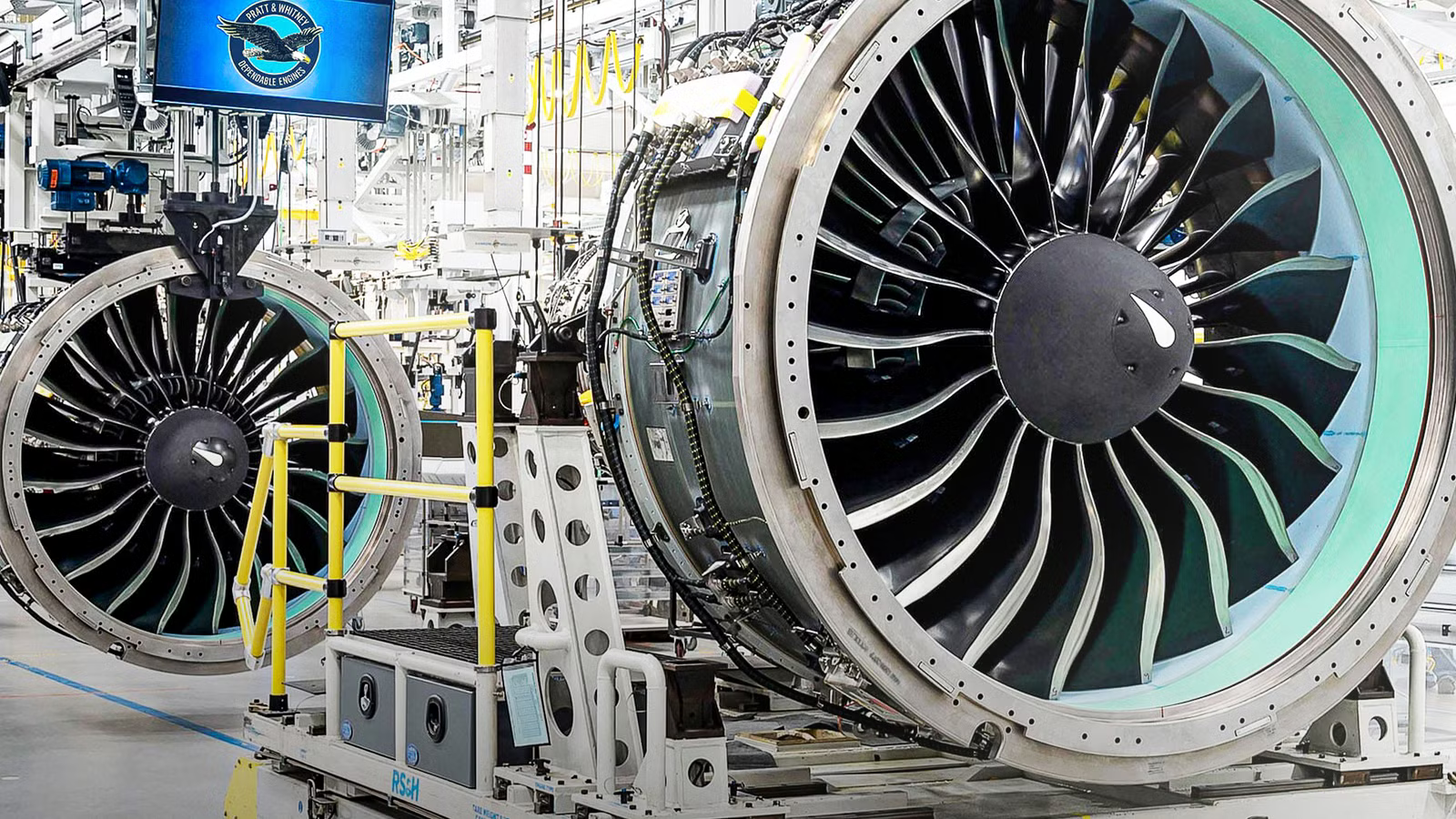
Pratt & Whitney just posted the strongest year its geared turbofan repair network has ever had. It successfully overhauled the highest number of engines through its maintenance shops (MRO) in 2025 since the program began. That would normally be the moment an engine maker declares victory over a recall.
Instead, Pratt spent the same year certifying and rolling out an entirely redesigned version of that engine, one built around a reworked core. That is because much of the Airbus A320 fleet around the world continues to struggle with availability due to power plant problems or simply a lack of engines available at all.
The new variant of the P&W GTF, engineered to address durability issues, is the GTF Advantage. This upgraded engine core has already earned certification from aviation regulators like the FAA and EASA. The rapid pace of retrofits and repairs means the company is finally transitioning from crisis mode to stable production and sustainment.
Pratt’s Record Year For Clearing Backlog

Pratt’s 2025 financial data for investors shows significant operational gains pointing toward full recovery on the near horizon. Over the course of the year, maintenance throughput for the PW1100G, particularly the geared turbofan model that powers most A320neo families, increased by 26%. According to Leeham News and Analysis, this comeback was marked by a 39% gain in just the fourth quarter.
To achieve these metrics, the global repair network expanded to include 21 operational facilities. That growth includes integrating new service locations from Spain’s ITP Aero and the United Arab Emirates’ Sanad Group. This is largely due to the decrease in parked aircraft tallies. As detailed by Aerospace Global News, grounded jets fell from a peak of 650 in early 2024 to just under 550 by late 2025.
The high volume of shop visits reflects an active drawdown of defective inventory rather than a permanent fix that lowers required maintenance intervals. Even though these figures show operational improvement, the actual scope of the issue must be taken into account. The industry is still actively working to address the significant maintenance bottleneck caused by this enormous surge of faulty powerplants.
The distinction underscores that record production numbers stem from a manufacturing error rather than an inherently reliable product. According to Airways Magazine, the repair network has only slowed its growth pace, not removed this barrier, despite two years of intense infrastructure construction. For airlines waiting for powerplants, a declining backlog still creates an operational constraint.
Numbers In The Shop Versus Results On the Ramp

In the third quarter of 2025, Pratt reported to investors that roughly 80% of GTF maintenance tasks achieved an average completion time of 110 days. However, this measurement only tracks the timeframe from when an engine enters the maintenance bay and leaves it. It excludes the extensive waiting queue required to secure an open bay before work can even begin.
Subsequent delays brought on by limited replacement parts are also not taken into consideration by this MRO metric. Independent industry trackers continue to report total downtime ranging from 250 to 360 days. That tracking accounts for the complete operational cycle from wing removal to final return to service. This disparity stems directly from ongoing material shortages and limited regional repair capacity.
This statistical gap explains why commercial airlines remain far less optimistic than Pratt’s official investor materials indicate. As far back as 2023, JetBlue claimed that individual engine removals could require up to 360 days ‘off wing.’ Wizz Air, a carrier heavily impacted by the engine recall, told Reuters last year that while engine availability was showing positive signs, total turnaround timelines had shown little improvement.
Wizz Air also noted it had managed this operational disruption for over two years without a reliable conclusion date. This disconnect between internal calculations and the reality experienced on the airport ramp highlights an industry-wide problem. However, the solution to this problem is meant to be delivered with the GTF Advantage upgrade.
Upgrades and Retrofits: Inside the GTF’s Overhaul

The GTF Advantage is a comprehensive overhaul, not a minor update to the existing PW1100G powerplant. Pratt engineered it with redesigned internal components to address issues that go beyond the basic recall problems. It also has an expanded core airflow path to lower overall operating temperatures. According to FlightGlobal’s coverage, these modifications directly target thermal management throughout the engine’s critical hot section.
Rather than forcing airlines to wait for new aircraft deliveries, Pratt introduced the Hot Section Plus retrofit kit for the existing fleet. This upgrade package installs 35 components derived from the Advantage program into operational engines during scheduled maintenance. Pratt Vice President of Sales and Marketing Nick Tomassetti noted the kit backports up to 95% of the durability improvements.
The retrofit nearly doubles the time on the wing for powerplants currently in service. Engineering an extensive kit to upgrade an older engine with unreleased technology indicates that the baseline PW1100G required immediate mechanical intervention. Commercial operators are now closely monitoring whether these modifications will replicate their test-bench reliability success during sustained, real-world flight operations.
To combat the severe oxidation driving the baseline engine’s durability issues, the GTF Advantage eliminates the defective material but also introduces new blade coatings into the high-pressure turbine. Both the turbine and combustor also feature optimized cooling hole configurations. P&W Commercial Engines President Rick Deurloo said these enhancements would effectively double the engine’s time on wing in harsh operating environments, such as Sandy and hot airfields.
FlightGlobal reported that off-wing maintenance intervals should be extended by approximately two years in demanding regions like the Middle East, and up to five years under milder conditions. The upgraded engine also delivers 4 to 8% more takeoff thrust for operators that frequently fly in hot and high environments.
The Path To Fleet Stability

Early operational data for the redesigned powerplant indicate positive initial progress. Commercial Engines President Rick Deurloo confirmed that the updated components are already operating successfully with IndiGo. Following this rollout, European aviation regulators validated the Advantage variant, clearing the pathway for large-scale deliveries and full-rate fleet upgrades across the region.
Pratt projects that the GTF Advantage will become the standard production configuration for assembly lines by 2028. In the interim, the new powerplant remains fully interchangeable with the older model. This allows commercial airlines to seamlessly mix both engine versions within their existing fleets without disrupting established maintenance protocols or requiring separate parts inventory systems.
Despite these promising technical milestones, commercial carriers remain cautious rather than celebratory. Wizz Air’s recent operational outlook predicts that the airline does not expect its grounded fleet count to reach zero until late 2027. That does align with Pratt’s own projections for the comprehensive program to be completed across the industry.
The new engine core design cannot retroactively fix in-service powerplants currently fitted with contaminated metal fan blades and other components. The maintenance backlog and the underlying durability flaws represent separate operational challenges running on parallel timelines until approximately 2027 or 2028.
Airlines managing this complex fleet-management choreography have become increasingly vocal about Pratt’s allocation of limited manufacturing output. Although the company has provided financial compensation to many carriers, some have continued to push for additional penalties. This production tension has recently escalated from isolated airline complaints into a legal, high-stakes dispute with some of Pratt’s best customers.
Evolving The GTF For The Future

The ultimate tipping point of whether 2025 marked a genuine recovery or a temporary drawdown will not be determined by short-term output figures. Instead, the true test will occur next year. This will be the critical window that aligns with Wizz Air’s target of zero grounded aircraft and Pratt’s projected full-rate tempo for its global inspection program.
During this same period, the GTF Advantage is scheduled to become the default production configuration on the assembly line for new orders. This will also prevent the updated variant from creating the need to compete for scarce MRO bays against the older model still under recall.
Forced to park virtually complete airplanes on the ramp outside its factories, Airbus has continuously adjusted its long-term strategy to account for these ongoing output constraints. The planemaker delayed its targeted production ramp-up of 70 to 75 A320neo family aircraft per month from this year to late 2027. This postponement represents a significant delay in ramp-up as Boeing’s assembly lines begin to spool up to much greater capacity.
Airbus is counting on recovery in the near future in order to avoid losing ground to its rival across the Atlantic. After claiming the title of most produced jetliner in history, the A320 family could still end up in second place again after the 737 MAX factory reaches full rate.
As certification of the last two variants of the four-model family is expected this year, those assembly lines are being tooled for maximum tempo right now. The worldwide industry of narrowbody aviation is relying on P&W to finally achieve the full potential of its GTF engine line to keep the global aerospace industry on track.