dailynewsnblog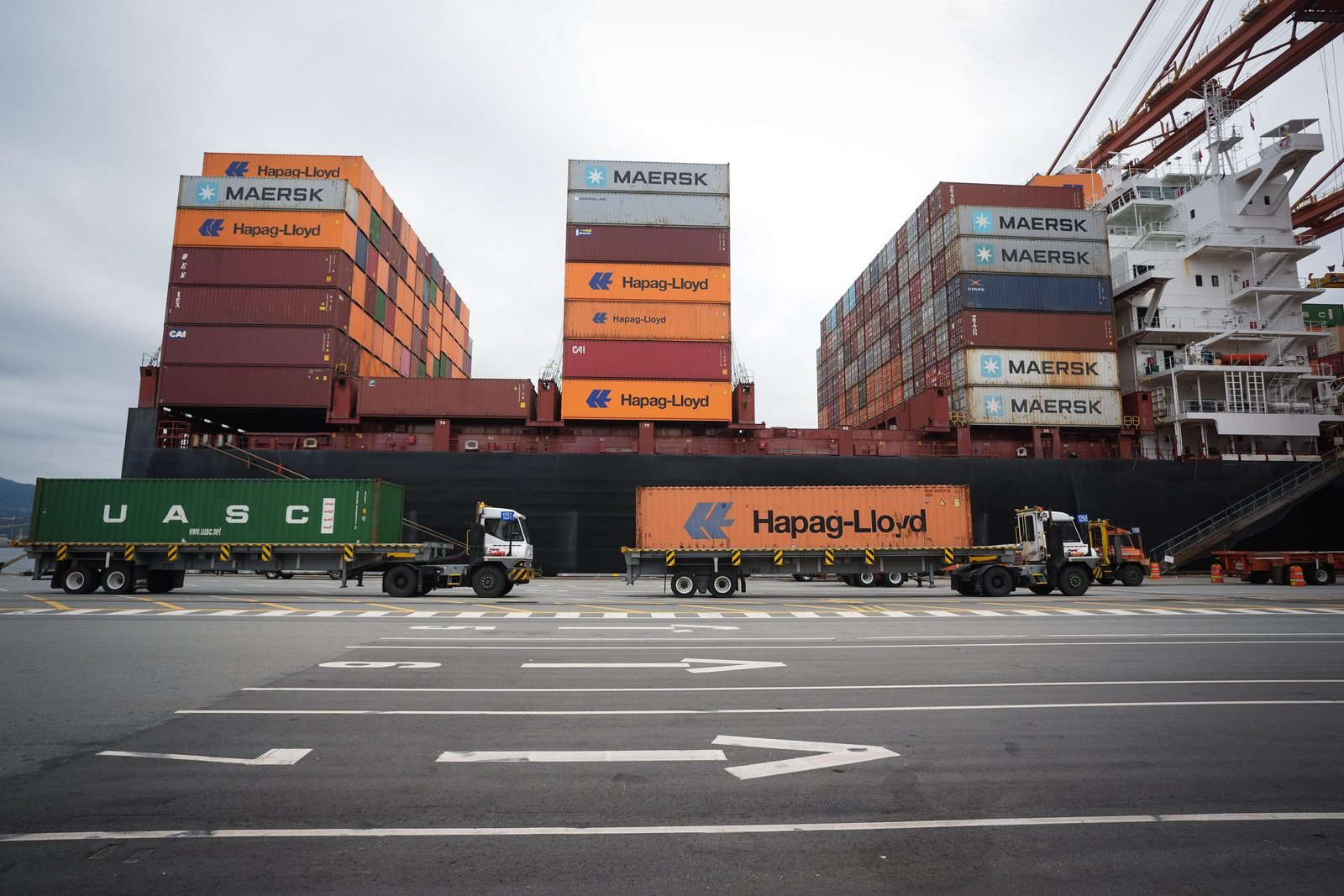
As the Rolling Stones put it, you can’t always get what you want. But when it comes to trade infrastructure, Canada should at least get what it needs: timely decisions, predictable approvals and the capacity to move products to market.
Prime Minister Carney has set an ambitious goal: double non-U.S. exports by 2035. Recent activity at Western Canada’s ports shows that progress is already being made and Canada has an opportunity to build on this momentum.
The Port of Vancouver handled a record 88.1 million tonnes of cargo during the first half of 2026. Bulk grain exports rose 14 per cent to a record 17.4 million tonnes, while crude-oil exports reached a mid-year record of 12 million tonnes. Nearly 80 per cent of that crude was bound for Indo-Pacific markets, led by China and South Korea.
Prince Rupert is also moving more Canadian products to international markets. Through July 2026, loaded container exports were up 26 per cent, grain volumes were up 18 per cent and propane exports through the Ridley Island terminal were up 11 per cent compared with the same period in 2025.
These results show what trade diversification looks like in practice and the additional demands it will place on Canada’s trade corridors. If exports continue to grow at the pace required to meet the 2035 goal, ports, railways, terminals and connecting infrastructure must be able to expand alongside them.
As the Rolling Stones put it, you can’t always get what you want. But when it comes to trade infrastructure, Canada should at least get what it needs: timely decisions, predictable approvals and the capacity to move products to market.
The proposed Productivity Mega Deduction and Bill C-39, the Building Canada Strong Act, support this objective. Together, they address two longstanding barriers to investment in Canada: the cost of investing in productive assets and the time and uncertainty of project approvals.
The Productivity Mega Deduction would allow businesses to immediately expense a broad range of eligible capital investments. This should encourage companies to invest sooner in the equipment, technology and infrastructure needed to expand capacity and improve productivity.
A June 2026 analysis prepared for the Railway Association of Canada estimated that full immediate expensing could increase annual rail investment by about $167 million, or 5.2 per cent.
For railways, that could mean additional locomotives, railcars, track and signals. Farmers, mines, energy producers and manufacturers would benefit from more dependable service, fewer costly delays and greater capacity to move products to domestic and international markets. Similar investment could occur across trucking, marine transportation, terminals and warehousing.
Bill C-39 complements this incentive by proposing a faster, more coordinated federal approval system. Its “one project, one decision, in one year” framework would bring federal assessments, permits and Crown consultation together under a lead authority. This is a significant improvement over a system where assessments and permits can take five to 12 years before construction even begins.
The objective is not to eliminate scrutiny or weaken environmental standards, but to replace duplication and uncertainty with a process that is rigorous, coordinated and timely. Canada can protect the public interest while recognizing that delays carry economic costs. Capital moves elsewhere, supply chains remain constrained, and export opportunities are lost.
The proposed Transportation Projects Office within Transport Canada is another welcome measure. Many projects essential to supply-chain performance—a rail siding, grade separation, terminal improvement, bridge upgrade or first- and last-mile connection—may not qualify for support from the Major Projects Office. Collectively, however, these projects determine whether entire trade corridors function efficiently.
A dedicated office that coordinates federal requirements and helps move transportation projects through approvals will strengthen the connection between national economic policy and the practical needs of Canada’s freight system. It will also reinforce the central message of Building Canada Strong: Canada must build the infrastructure needed to compete.
Bill C-39 also recognizes that competitiveness depends on more than individual projects. Designating National Trade Corridors and establishing corridor-level performance indicators should support better planning, collaboration and decision-making across transportation modes and jurisdictions.
The legislation’s “Tell Us Once, Tell Us Digitally” approach and recognition of electronic transferable records is equally significant. Businesses should not have to submit the same information repeatedly to different federal departments. Making trade documentation easier to exchange can reduce administrative costs and delays while helping Canada advance toward paperless trade.
Taken together, these measures represent a coherent approach to strengthening Canada’s economy. The Productivity Mega Deduction improves the business case for private investment. Bill C-39 creates a clearer, faster path for projects, strengthens corridor planning and modernizes the systems through which goods and information flow.
Canada’s ability to diversify its trade will ultimately depend on whether businesses can invest confidently and whether the transportation system can deliver Canadian products to customers reliably and competitively. We cannot always get everything we want. But with the right policies, Canada can get what it needs: the investment, infrastructure and timely decisions required to build a stronger economy and compete in the world.
Lisa Baratta is Vice President of the Western Transportation Advisory Council (WESTAC).
The views, opinions and positions expressed by all iPolitics columnists and contributors are the author’s alone. They do not inherently or expressly reflect the views, opinions and/or positions of iPolitics.