dailynewsnblog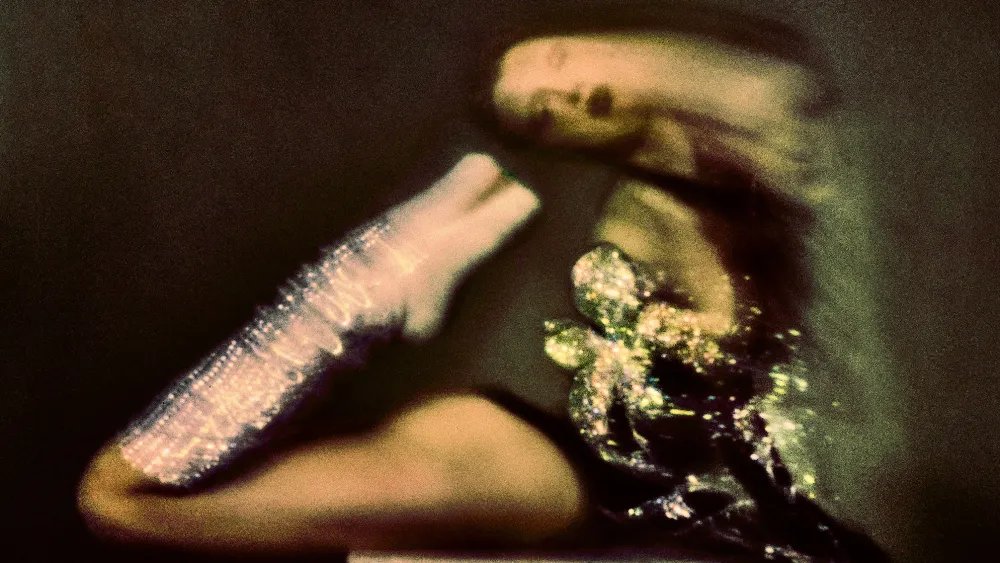
PARIS — It’s 4:30 a.m. in New York City on a mid-September morning when a wide-awake Elizaveta Porodina signs in to Zoom.
She has logged on to discuss the making of her debut monograph, “Found Dreams,” due to be published by Prestel on Oct. 6. It’s not just the jet lag: the Munich-based photographer is an early-to-bed, early-to-rise type.
“I wake up, I journal, I edit and I work out. Then at some point I get to food, and then, you know, actual people start waking up. Here is even better because instead of 5, I wake up at 3, which is magical: I get two hours more of work,” she says cheerfully.
It feels appropriate that she’s often putting the finishing touches on her Surrealist images while others are deep in the land of Morpheus.
In recent years, Porodina has brought her darkly romantic lens to campaigns for the likes of Dior, Hermès, Skims and Giorgio Armani, and editorials for Vogue, Pop and GQ, among others. At 39, she feels her body of work is finally worthy of a compilation.
“The drive is always towards something printed, something physical,” she says. “But I would never allow myself to put anything together in a book as long as I feel that it’s not ripe yet, and that what I was trying to say, what I was obsessing about, is just on the surface level.”

Model: Jessie Buckley
Featured in: Pop Magazine, March 2026
Courtesy of © Elizaveta Porodina, 2026
Notwithstanding her concerns, Porodina’s work is anything but superficial. With their translucent textures and richly saturated hues, her painterly photographs of celebrities like Ariana Grande, Brad Pitt and Sydney Sweeney stretch the conventions of the genre toward something best described as psychological portraiture.
Call it a byproduct of her initial training as a clinical psychologist.
“I studied psychology for seven years, and knowledge was pumped into me about Adler and Jung and Lacan and all of that. I cannot avoid using this language, and I cannot avoid seeing certain things in a certain light,” she says.
Chapter titles like “The Dreaming Body” and “The Magical Dream” reflect her preoccupation with the shadow mind and the subjectivity of perception. Porodina is fascinated with hypnagogia, the threshold state between sleep and wakefulness.
“I always experience the thin veil and something that is behind it, and I really wanted to share this with as many people as possible,” she says.
“Every time I meet people who I don’t know, I always feel the need to take them by the shoulders, look them deep in the eyes, and be like, ‘Do you know that this is just your perception? Do you know that suffering is optional? Do you know that you could be looking at this differently?’ And that’s what I wanted to put in the book,” she adds.

“The Shadow Dreams”
Model: Colin Jones
Featured in: Aleï Journal, November 2024
Courtesy of © Elizaveta Porodina, 2026
It’s why she approaches even the world’s biggest stars with a desire to excavate their psyche.
“These people deserve to be met on a level that is human and not this ‘blah-blah-blah’ pedestal, because it’s not helpful to anyone: it’s not helpful for them to create true art that is playful, that is effortless and vulnerable, and it’s not helpful to me because I spend way too much time kissing ass, instead of doing the work,” she says with a laugh.
‘Frenetic Chaos’
Her shoots are meticulously planned with set designers, stylists, hair and makeup artists, and her husband and lighting director Josef Beyer, in order to keep post-production to a minimum. But once on set, she likes to keep things fluid.
“It’s like frenetic chaos. Everyone is moving, things are being thrown around. It’s a lot of shouting from my side — ‘Awesome! Amazing!’ — and there is choreography, but there is a lot of freedom in the movement of the person,” she says excitedly.
“I want them to explore different emotions, and I want them to do things differently each single time. I want them to surprise themselves, I want them to surprise me — and it sounds like pressure but it actually is the opposite of it, because I just want to find something that we all didn’t know is there,” she adds.
Over time, she’s developed special relationships with some of her sitters, like Grande, who penned the foreword to the book. “Elizaveta is a once-in-a-lifetime visual storyteller,” the “Wicked” star writes. “She paints with her camera as Seurat did with his paintbrush.”

“The Dreaming Body”
Model: Ariana Grande
Featured in: Vogue Italia, March 2025
Courtesy of © Elizaveta Porodina, 2026
Their “Pure Fantasy” shoot for Vogue Italia last year was a game-changer for Porodina.
“Meeting her definitely affected me and changed me on some level that I thought was very profound,” she explains. “Good art, to me, only happens in a room full of trust, safety, comfort, and everyone feeling seen and somehow reflected, and I saw her doing that the first time I met her, and I was so inspired. I was like, ‘I want to be this person.’”
Porodina’s urge to dig below the surface is evident in her work, which is dense with symbolism, from the recurring use of red to the presence of veils, broken mirrors and botanical elements. Bodies are by turns ethereal and disjointed, glazed and bloodied.
A case in point: the cover of her book. Taken from a project called “Sanguine Bride,” it features model Zoe Fang in a dress by Tokyo-based designer Hana Yagi, who makes outfits from discarded or damaged rental wedding gowns and soaks them in dye, challenging the notion of bridal purity.
The arresting image is a metaphor for the feminine condition, Porodina says.
“You are supposed to be effortless. You are supposed to be elegant. You are supposed to be light as a feather. You are supposed not to take up space. You are supposed to abide by traditions, and there are so many of them, and you’re always doing wrong somehow,” she remarks.

“Elizaveta Porodina: Found Dreams,” edited by Nadine Barth and Elizaveta Porodina.
© 2026 Prestel Publishing
“Someone wrote on Instagram when I posted this image, ‘It looks like a bloody tampon.’ They meant it as an offense,” she continues. “I thought it was fantastic, because the pain and the resilience that people who identify with femininity go through is unspeakable, and if it was the other way around, the world would look different. But I just wanted to put the beauty of it on the cover of the book.”
Feminine Energy
Porodina refracts feminine energy in all her subjects, whether casting Pitt as a psychedelic Ophelia for the cover of GQ, or capturing Ukrainian model Yura Romaniuk’s fluid beauty for Vogue Adria.
“I love female energy. That’s what I’m interested in. I’m not interested in male energy — period. I think that we’ve seen enough male energy over the years,” she bluntly states.
Growing up, she was drawn to performers like David Bowie, Annie Lennox and Warhol superstar Candy Darling. Her visual universe was shaped by Roxy Music album covers, and photographers ranging from Josef Koudelka to Irving Penn. More surprisingly, perhaps, she also loves the work of Helmut Newton.
“Yes, he photographed nude women, but he photographed them in a way that I feel like he really, truly believed — and I think that’s also important — that he’s depicting a world without men,” she muses. “Sometimes in the pictures, it came off in a different way, but I see the intention, and the intention is what is inspiring to me — and obviously the mastery of the photography.”
Porodina has always used images as a form of self-expression, and a reflection of her restless mind. Her family fled to Germany from Russia when she was 12, and she’s been feeling somewhat displaced ever since.

Self-portrait by Elizaveta Porodina. Courtesy of the artist.
Courtesy of © Elizaveta Porodina, 2026
“I’m always on the move. Every single moment, I feel a change, I feel a transformation within myself, so I guess I just want to capture that,” she says.
Her next step will be film directing. “The process of photographic work is really not different: it’s basically a moving image that I capture as a still,” she reasons. “Therefore I think that I’m going to make a movie eventually. I just need to sit down and write.”
It’s tempting to see her aesthetic as an antidote to AI slop, but it’s an interpretation she’s not keen to dwell on.
“I don’t want it to be the title of my life that I’m some sort of Joan of Arc of anti-AI, or anything like that, because it’s just not how I feel,” she says. “This is going to sound so mundane and so childish, but you know, I always wanted to play with my friends and do a cool project. That’s what it always was about.”