dailynewsnblog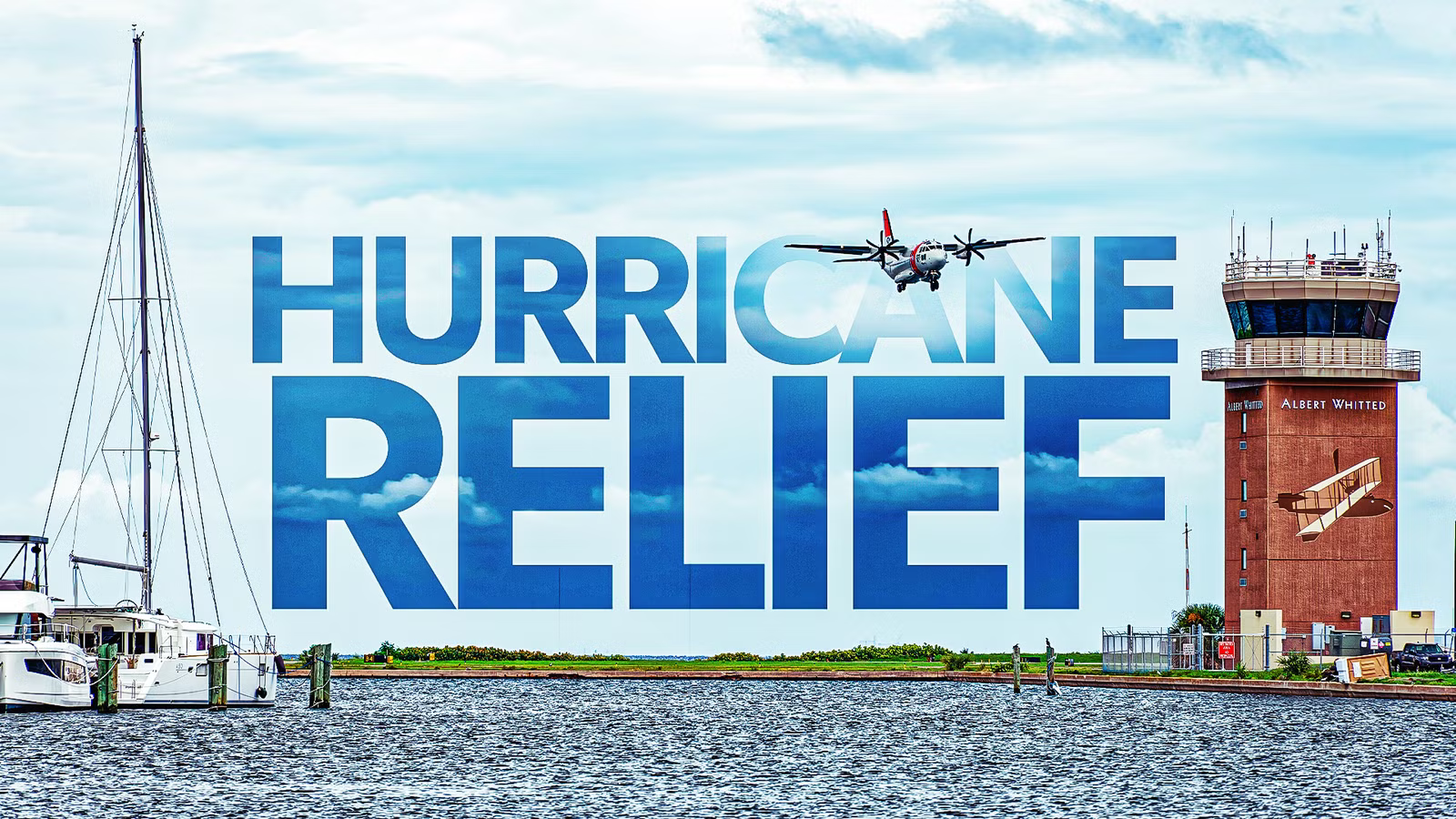
A small 3,676-foot (1,120-meter) runway beside downtown St. Petersburg in Florida might seem an unlikely place to launch hurricane-relief missions across the state and the Caribbean. But when roads flood, bridges close, and conventional logistics networks begin to fail — which, unfortunately, can often happen in that region of the world — Albert Whitted Airport can become one of the fastest ways to move people and critical supplies into affected communities.
The airport has not suddenly transformed into a major cargo facility. Instead, its general aviation infrastructure has been combined with an incredibly sophisticated relief network built around Sol Relief, a nonprofit that emerged from the devastating 2017 hurricane season. So, what makes this small airport so useful when much larger transportation facilities are struggling? Let’s take a closer look!
Why Albert Whitted Airport Is So Valuable After A Hurricane

The first answer is geography. Albert Whitted Airport (SPG) sits immediately southeast of downtown St. Petersburg, giving it unusually direct access to the Tampa Bay metropolitan area while also providing a launch point toward Florida and the Caribbean. Florida’s Department of Transportation classifies it as a regional general aviation reliever airport due to its relatively short runway, which is not suitable for an airline-focused facility.
Its physical characteristics also explain why it is useful for aviation used for disaster response. The primary Runway 07/25 measures only 3,676 feet (1,120 meters), while Runway 18/36 is 2,864 feet (873 meters) long. Those dimensions rule out large commercial and cargo aircraft, but they are perfectly suited to the smaller turboprops and general aviation aircraft used for emergency missions.
That limitation is actually part of the airport’s advantage. A relief operation does not always need a 100-ton freighter; it needs smaller, agile aircraft and helicopters capable of delivering medical equipment, emergency personnel, food, communications equipment, or other high-priority supplies close to the people who need them. According to the Friends of Albert Whitted Airport, aircraft based at the airport can reach most of Florida within hours and many Caribbean destinations with one fuel stop.
This airport occupies an important space between large-scale logistics and local emergency response. But geography alone cannot explain why SPG has developed such a prominent role in disaster relief.

The organization at the center of the story is Sol Relief, which grew out of the response to Hurricanes Irma and Maria in 2017. St. Petersburg pilot Jennifer Lockwood founded the organization after witnessing the enormous difficulty of delivering assistance to Caribbean communities following those storms. A local account of the organization’s early work described how St. Petersburg-area pilots used their aircraft to transport aid to devastated areas.
The operation has since developed far beyond a handful of volunteer pilots. The Friends of Albert Whitted Airport reports that the airport community has helped Sol Relief raise more than $2 million and support more than 100 emergency relief flights. The organization has also moved beyond immediate disaster response into reconstruction, including more than 160 roof repairs, four homes, and two community centers.
Albert Whitted Airport: Key Specifications & Aircraft
Airport / Aircraft | Key Details |
Airport code | SPG (Albert Whitted Airport) |
Location | St. Petersburg, Florida |
Primary runway | 3,676 feet × 75 feet (1,120 m × 23 meters) |
Secondary runway | 2,864 feet × 75 feet (873 m × 23 meters) |
Airport type | General aviation / reliever, helicopters |
Typical aircraft | Single- and twin-engine general aviation aircraft, turboprops and business aircraft |
Relief aircraft | Pilatus PC-12 and similar utility turboprops |
PC-12 role | Passenger, personnel and cargo transport |
Other airport users | Flight training, corporate aviation, recreational flying and medical aviation |
Runway advantage | Suitable for smaller aircraft while remaining close to downtown St. Petersburg |
The aircraft involved illustrate why general aviation is so valuable. Friends of Albert Whitted highlights Pilatus PC-12 turboprops operating from the airport with approximately 1,800 pounds of cargo. A PC-12 cannot match the payload of a commercial freighter, but its combination of speed, range, and relatively modest runway requirements makes it particularly useful when airports closer to disaster zones have limited infrastructure.
The crucial development was mostly organizational and not physical. Albert Whitted already had aircraft, pilots, and aviation businesses; Sol Relief created a structure that could turn those resources into a coordinated emergency response.
Why Small Aircraft Can Beat Roads After A Hurricane

The advantage becomes most obvious when surface transportation breaks down. After a major hurricane, airports may remain usable even when roads are flooded, bridges are closed, and fuel or communications networks are disrupted. A small aircraft or helicopter can bypass those obstacles entirely, landing near an affected community rather than waiting for the road network to be restored.
Hurricane Ian provided a particularly clear example. Sol Relief used Albert Whitted as a staging point for aircraft and personnel heading toward Southwest Florida after the storm. According to St. Pete Catalyst, Sol Relief conducted 38 flights carrying firefighters during the first week following Ian.
The time advantage could be enormous. Sol Relief’s Harris Ambush told St. Pete Catalyst that when Interstate 75 was closed, a road trip from St. Petersburg to Fort Myers could take seven or eight hours, while the same journey by aircraft could take about 40 minutes. That difference is not simply a matter of convenience when emergency personnel and supplies are urgently required.
The organization has also demonstrated that the model works beyond a single Florida disaster. Sol Relief’s 2023 annual report documents humanitarian operations in Fort Myers, Florida; the Big Bend region; and Abaco, Bahamas. This makes the small turboprop more of an emergency connector. The question then becomes what allows Albert Whitted to mobilize so quickly when disaster strikes.
The Airport’s Greatest Asset May Be Its People

The airport‘s most important disaster-response asset may not be its runway at all. It is the established community surrounding it. Pilots, mechanics, aircraft owners, flight schools, an FBO, and other aviation businesses already operate from Albert Whitted, creating a pool of people and equipment that can be mobilized without having to build a new organization after every hurricane.
The airport’s normal role supports this network. FDOT identifies SPG as a general aviation facility serving recreational flying, business and corporate aviation, aerial sightseeing, flight training, and other aviation activities.
As a result, Sol Relief has been able to build its disaster operations around existing aviation infrastructure. Friends of Albert Whitted says the organization can expand from a core group of roughly 30 people to more than 400 participants during a major response. That flexibility is crucial because disaster relief requires far more than pilots: aircraft have to be loaded, supplies sorted, missions coordinated, and recipients identified.
Funding is equally important. Sol Relief raises money before disasters occur so that it can act rapidly afterward. The organization says advance preparation lets relief flights begin within about 24 to 48 hours after a disaster. Its annual report also documents fundraising and humanitarian operations throughout the year.
That preparation turns Albert Whitted from an ordinary GA airport into a potential emergency logistics node. But the system faces one obvious vulnerability: the airport itself sits in a hurricane-prone coastal city.
What Happens When The Relief Hub Gets Hit Too?

Albert Whitted’s own experience with Hurricanes Helene and Milton in 2024 demonstrated the problem. Two major hurricanes affected the St. Petersburg area within roughly two weeks, causing widespread flooding and damage. The airport itself was not immune, with hangars and aircraft sustaining damage, as shown in an article on its official website covering hurricane damage.
Yet Sol Relief continued operating. Its 2024 annual report records more than $140,000 in essential supplies distributed during the response, along with a $46,400 microgrant program supporting 21 families in crisis.
Catch what other flight trackers miss
Emergency squawks, holds, NOTAMs — live signals, no signup.
Open tracker
Catch what other flight trackers miss
Emergency squawks, holds, NOTAMs — live signals, no signup.
Open tracker
This illustrates both the model’s strengths and weaknesses. Albert Whitted cannot replace a major seaport, restore a highway, or move hundreds of tons of commodities. Its role is much more targeted: move relatively small quantities of urgently needed equipment and personnel during the period when conventional logistics are at their weakest.
That is why calling Albert Whitted a “major hurricane hub” requires some qualifications. It is not major in terms of passenger numbers, cargo tonnage, or runway size. Its importance comes from what it can accomplish with limited infrastructure and a highly organized aviation community.
The Future Of Small Airports In Disaster Response

This small airport has been developing its disaster-response role since 2017, while Sol Relief has turned volunteer aviation into an established network that can respond across Florida and the Caribbean.
The figures show how the model has matured. More than 100 emergency relief flights, over $2 million raised, and extensive reconstruction work demonstrate that the operation is no longer simply a collection of pilots volunteering after a storm.
The broader lesson could become more relevant as coastal disasters repeatedly disrupt roads, ports, and communications. Large airports will remain essential for moving bulk supplies, but smaller GA airports can provide the final-mile aviation link that gets people and critical equipment where they are needed fastest.
The question for the future is whether more communities will recognize that capability before the next hurricane arrives. For Albert Whitted, the runway was already there; the real transformation came from building a network around it that knows how to use it when the roads stop working.