dailynewsnblog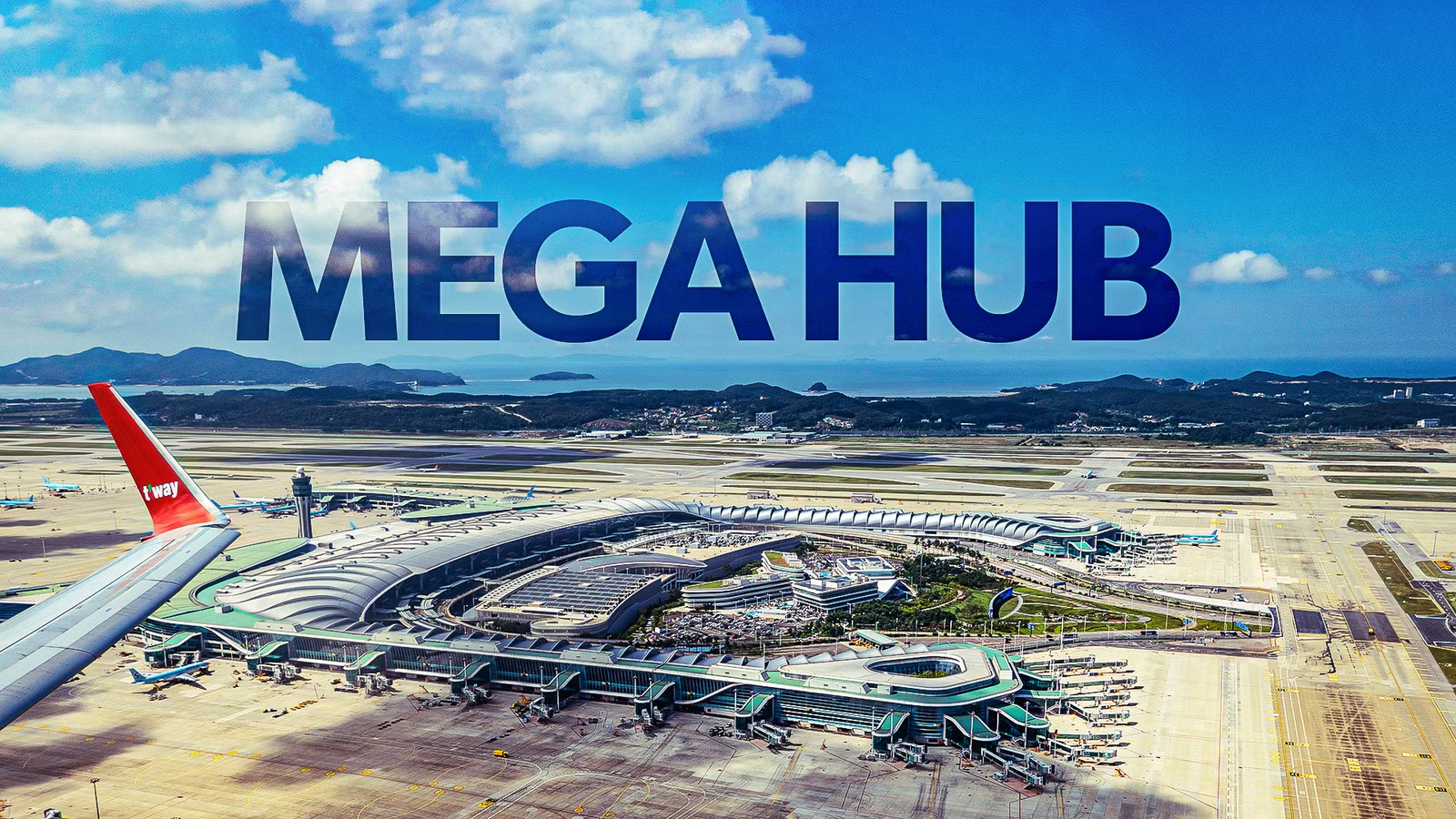
 Hartsfield-Jackson Atlanta International Airport (ATL) has long held the title of the world’s busiest airport by passenger traffic. When it comes to international traffic, however,
  Dubai International Airport (DXB) has dominated the rankings for more than a decade. The Dubai hub had ranked as the world’s busiest international airport for around 12 consecutive years and continued to hold the position in 2025, according to Airports Council International (ACI).
DXB handled more than 95 million passengers in 2025, making it the world’s second-busiest airport overall. The picture changed in the first half of 2026 (H1 26), when the Dubai airport recorded 31.5 million passengers between January and June, a 31.3% decline from the same period a year earlier.  Seoul Incheon International Airport (ICN) has taken the title as the world’s busiest international airport.
Incheon Takes Top Spot As Dubai Traffic Falls Amid The Middle East Conflict

The airport handled 38.4 million international passengers during the first six months of 2026. That put the South Korean airport ahead of the other major international hubs in the ranking. Notably, this was the first time Incheon had taken the top spot since it opened in 2001. London Heathrow and Singapore Changi ranked behind it during the period.
Last year, Incheon ranked third for international passenger traffic, behind Dubai and Heathrow. Singapore Changi followed in fourth place, ahead of Amsterdam Schiphol and Istanbul Airport. One of the reasons ICN was able to take the top spot in the first half of 2026 was a sharp fall in Dubai’s international passenger traffic after the Iran conflict began in late February.
ACI data showed that Dubai’s international passenger traffic fell from 7.4 million passengers in February to 2.5 million in March. Emirates resumed flights within days, but passenger volumes did not return to their previous levels. Dubai recorded around 4.7 million international passengers in June, which was still well below the figure from February.
The decline was particularly severe in the second quarter. DXB handled 13 million passengers between April and June, compared with 22.5 million during the same period in 2025. International passenger traffic was therefore 42% lower year-on-year in the quarter. Indeed, this drop had a major effect on Dubai’s first-half result and helped Incheon move ahead in the international ranking.
Conflict Has Changed Europe-Asia Travel Patterns

Furthermore, the ongoing conflict has also affected travel patterns between Europe and Asia. More passengers have been flying directly between the two regions instead of taking connecting flights through the Middle East. That matters because Gulf carriers, especially  Emirates,
  Qatar Airways, and
  Etihad Airways, have traditionally handled a large share of the traffic between these markets. An aviation analytics provider, Cirium, found in April that the UAE flag carrier carried more than 13% of passengers traveling between Europe and Asia.
Its share was even higher on routes between Europe and Australasia, where it carried more than 31% of passengers. Qatar Airways and Etihad also account for a sizable share of the traffic on these long-haul routes. In fact, last year, according to the International Air Transport Association (IATA), around 417 million passengers made connecting journeys worldwide last year, and 16% of them transited through the Middle East.
However, that pattern changed after the conflict began. Several flights were suspended or rerouted during the peak of the disruption, and some governments advised their citizens against traveling through the region. As reported by The New York Times, Middle Eastern transfer traffic on routes between Asia and Western Europe had nearly halved since the war began, with traffic falling 47% year over year in April.
Incheon And Other Asian Hubs Recorded Higher Transfer Traffic

Indeed, the change in travel patterns has benefited several Asian hubs, including Incheon. Incheon Airport said transfer traffic increased by 18% year over year during the first half of 2026. Transfer traffic on European routes rose by 63% during the same period. The number of transfer passengers traveling onward to Europe increased to 210,000. This helped the airport become the world’s busiest international airport for the first half of 2026.
Incheon Airport said, “As the transfer function of Middle Eastern airports such as Dubai was weakened by the US-Iran conflict, existing air travel demand centered on Dubai — including routes between Dubai and Europe — shifted toward direct and connecting services through Incheon Airport.” Furthermore, the increase was not limited to South Korea. Several other Asian airports also recorded strong international traffic during the first six months of the year.
For instance, international passenger traffic at  Hong Kong International Airport increased by more than 11% year over year. Taiwan Taoyuan International Airport recorded growth of almost 10%. Singapore Changi Airport also saw stronger demand on key long-haul routes. The airport said airlines added more than 800 flights between Singapore and cities such as London, Munich, Paris and Sydney between March and July.
Incheon’s Growth Is Also Supported By South Korea’s Tourism Boom

Furthermore, the change in travel patterns is not the only reason for Incheon’s growth. South Korea has also been experiencing a tourism boom, driven by the growing popularity of Korean culture, including K-pop and films such as K-Pop Demon Hunters, as well as the country’s technology and beauty industries. This has also driven growth in passenger traffic at Incheon, particularly on routes to China and Japan. According to schedule data from Cirium, airlines offered around 5.74 million seats on Incheon’s routes to Japan during the first six months of 2026, up approximately 10% from the same period last year.
On routes to China, airlines offered 4.06 million seats, nearly 12% more than during the same period last year. Incheon initially opened in March 2001 to replace the older Gimpo International Airport, which now serves mostly domestic destinations, along with shuttle flights to several major East Asian cities, including Shanghai–Hongqiao, Taipei–Songshan and Tokyo–Haneda. Since then, Incheon has built a much broader international network and now serves 183 cities in 53 countries through 101 airlines.
Seoul Incheon Top 5 Destinations In September | ||
|---|---|---|
Destination | Total Flights | Total Seats |
Tokyo Narita (NRT) | 1,213 | 275,358 |
Osaka–Kansai (KIX) | 1,146 | 230,783 |
Fukuoka (FUK) | 791 | 166,880 |
Hong Kong (HKG) | 578 | 136,695 |
Qingdao (TAO) | 544 | 98,833 |
The airport recently passed one billion cumulative passengers, reaching the figure just over 25 years after opening, faster than any other major international airport. It has also expanded its capacity through four phases of development, the latest of which was completed in November 2024. The fourth phase expanded Terminal 2 and increased Incheon’s annual capacity to 106 million international passengers. The project also increased slot capacity to support more flights.
Catch what other flight trackers miss
Emergency squawks, holds, NOTAMs — live signals, no signup.
Open tracker
Catch what other flight trackers miss
Emergency squawks, holds, NOTAMs — live signals, no signup.
Open tracker
Airlines are set to operate more than 193,100 flights from Incheon and offer around 44.7 million seats in 2026. In September alone, airlines have scheduled 16,362 flights and around 3.78 million seats. Japan remains Incheon’s busiest international market by scheduled service. Airlines are operating as many as 42 flights a day to destinations in Japan this September.
Dubai Is Still Confident About Regaining The Top Spot

It is unlikely that Dubai will remain behind Incheon for long. The airport’s international traffic had grown steadily before the disruption in the first half of 2026. Dubai’s status as a major tourism destination and connecting hub has continued to support that growth. DXB handled 95.2 million international passengers in 2025, up 3.1% from the previous year and 10.3% from 2019. The first-half figures do not necessarily show where the two airports will stand at the end of the year.
Airlines have continued to restore their schedules at DXB, and several international carriers are expected to resume services from October. The airport had recovered to around 86% of its capacity by late August. Emirates and  flydubai are also restoring their route networks, and Dubai Airports expects the airport to return to a full schedule in the third quarter. Paul Griffiths, Chief Executive of Dubai Airports, remains confident that DXB can reclaim the top spot.
He told the local media outlet The National, “You can’t take the first six months as an indicator of long-term strength. Our network, our position in the globe, and our importance in global air traffic means that, no doubt, we’ll close this year still as number one…We’ve been 12 years as No 1 and I’m not going to lose that crown to anyone else.” Whether that will happen remains to be seen.
Dubai Airports currently expects DXB to handle around 70 million passengers in 2026. That would be significantly below the 95.2 million passengers recorded last year. The airport has also delayed its target of reaching 100 million passengers by a year, from 2026 to 2027. The second half of the year will therefore be crucial. Dubai has historically benefited from stronger travel demand during the winter months, and the return of international airlines could help narrow the gap with Incheon.
Dubai Leads The September International Capacity Ranking

For now, the South Korean airport has the advantage, but Dubai still has several months to recover its traffic and reclaim the crown. In fact, according to OAG, DXB retained its position as the world’s busiest international airport by scheduled capacity in September, with 4.34 million seats. However, its capacity remained 15% below the level recorded in September 2025. London Heathrow ranked second with 4.07 million seats, down 2% year over year.
Incheon ranked third with 3.78 million seats, although its capacity increased by 9% from a year earlier. There is no doubt that the geopolitical tensions in the Middle East have affected air travel across the region. Several airlines temporarily suspended some services to the region during the disruption, and passengers who previously relied on Middle Eastern hubs for long-haul connections had to consider alternative routes.
That change has benefited airports in other parts of Asia, particularly those that already have large networks across Europe and East Asia. Incheon had the infrastructure and route network to absorb some of the demand that shifted away from Middle Eastern hubs. Stronger tourism demand in South Korea and higher traffic on routes to China and Japan added further support. In January 2026, shortly after reporting its record 74.07 million passengers in 2025, Incheon International Airport Corporation projected 2% to 6% growth in passenger traffic for the year.
That would have put the airport at approximately 75.54 million to 78.55 million passengers in 2026. By April, however, the airport had lowered its forecast to a more modest 2% increase amid higher oil prices and route pressures linked to the Middle East conflict. The revised forecast pointed to around 75.07 million passengers for the year. It will be interesting to see which airport takes the crown by the end of 2026.