dailynewsnblog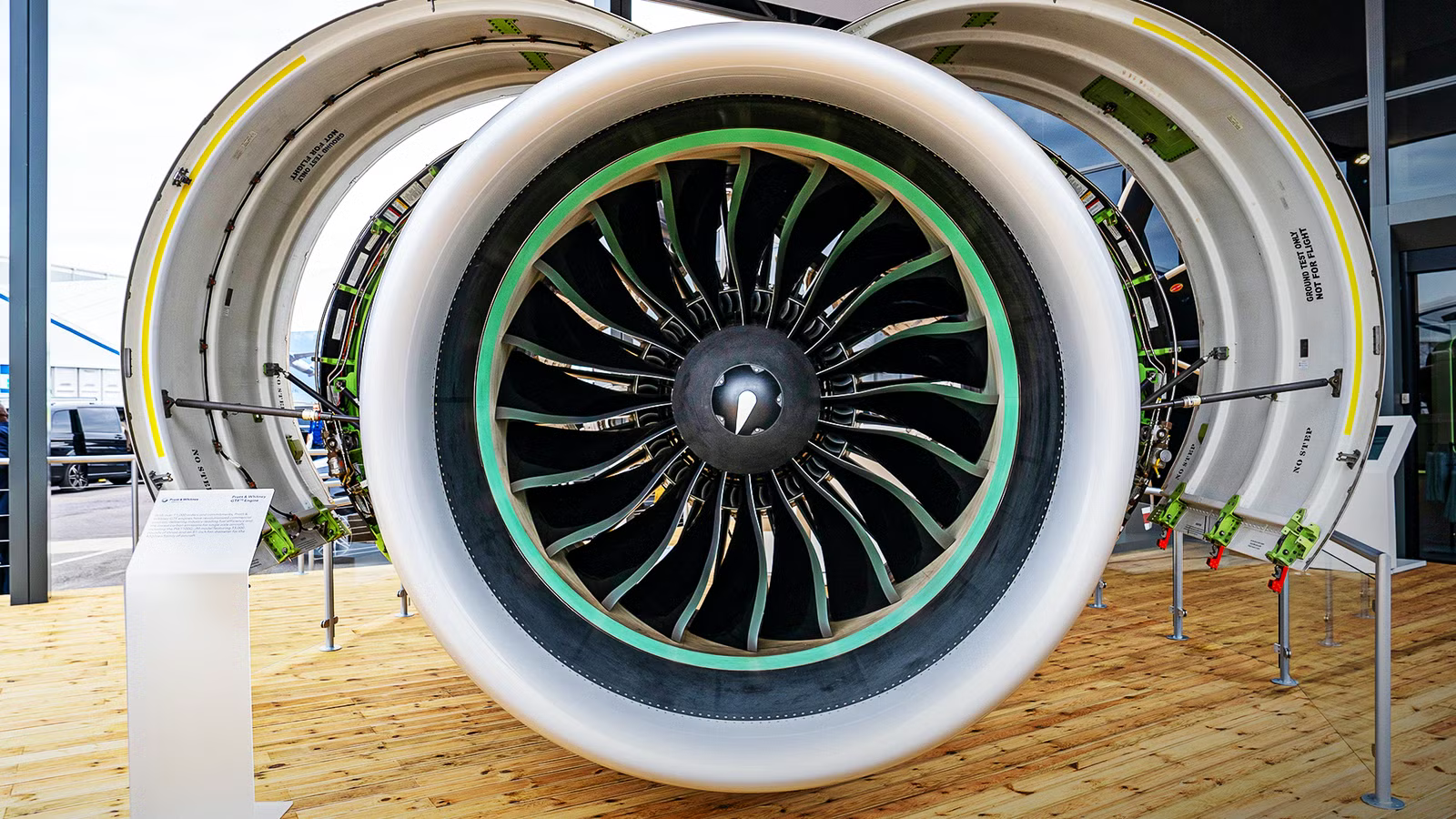
While modern engines offer significant fuel efficiency savings compared with their predecessors, some of those savings are being offset by higher maintenance costs, increasing the cost of ownership compared with what airlines had expected. IATA recently released a new report that examines how engine durability issues, spare parts shortages, limited spare engine availability, and constrained aftermarket access are disrupting airline operations. One of the biggest issues is that so much engine manufacturing capacity was lost during COVID-19, and this is just difficult to recover.
The Pratt & Whitney GTF and Rolls-Royce Trent 1000 turbofans made it worse, especially when those companies lacked the capacity to service the aircraft in a timely manner on the scale that became needed. IATA is also expecting airline net profits to fall from $45 billion in 2025 to $23 billion in 2026, with net margins contracting from 4.2% to 2.0%. Much of this impact is from the higher fuel prices from the conflicts in the Middle East rather than increased engine pressure.
The Airline & Engine Manufacturer Disconnect

IATA CEO Willie Walsh said there was a disconnect between the financial performance of engine manufacturers and airlines, which have incurred around $11 billion in additional costs due to supply-chain disruptions. Walsh said, “They’ve done extremely well at a time of major disruption for the airlines. And I think that paradox really does need to be called out.”
In June, Reuters reported that airline CEOs warned that grounded aircraft and higher repair costs could last for years. At the International Air Transport Association’s annual meeting in Rio de Janeiro, various airline executives noted that engine problems remain one of the industry’s biggest constraints despite signs of improvement. LATAM Brasil Jerome Cadier was quoted as saying, “Obviously there is dissatisfaction, and the way to measure that dissatisfaction is how many aircraft I have grounded today.”
Rolls-Royce reached a low in market capitalization of around $7.5 billion in mid 2022, but has since risen to around $160 billion. Other aerospace manufacturers have also seen their stock markets boom in recent years. But not all of this is driven by commercial engines; other significant factors include the rising military budgets in Europe as the continent moves to rearm.
Dual Issues Of Supply Chain & Reliability

The issues that have hit the airliner engine market in recent years are a mixture of supply chain issues and durability problems. The durability problems have been particularly impactful on Pratt & Whitney’s GTF series of engines powering narrowbody A220, A320 series, and Embraer E-Jet aircraft. The Rolls-Royce issues have been the most pronounced with the Trent 1000 powering the Boeing 787 Dreamliner.
In recent years, there has been progress on both accounts. The number of grounded Pratt & Whitney GTF-powered aircraft peaked in March 2025 when 648, or 28% of the GTF fleet, weren’t flying. These aircraft were left sitting awaiting engine shop visits, spare engines, and parts. The worst of these groundings may be behind the industry, but they continue to linger and will persist into next year.
Pratt & Whitney has produced the improved GTF Advantage, while Rolls-Royce is delivering the Trent 1000 XE, which is said to offer triple on-wing durability compared with the predecessor. The GTF issues led to hundreds of A320neo aircraft being grounded, while Rolls-Royce saw its share of Dreamliner sales collapse. The CEO of Azul, John Rodgerson, remarked on the durability issues of new engines, saying that they’re just “not lasting as long.”
Some Signs Of Improvement

Talking of supply chain engine issues, lessor Avolon CEO Andy Cronin said, “Year-on-year we’re certainly seeing incremental improvement.” However, he added that the overall engine fleet in the world continues to be very tight. The strain on the market is expected to continue for at least another couple of years. Engine manufacturers say they are investing heavily to increase their production capacity as well as repair capacity for aeroengines.
United Airlines CEO Scott Kirby said that he thinks engines will continue to be the biggest constraint on the industry for the next five years at least. He also added, “GE is working hard. I’ll put them at the top of the list. Pratt has had well-publicized challenges, but is sincere and genuine in their desire to fix them and to work with us. … The truth is the only one that I sort of have in my doghouse is Rolls.”
Evolution of CFM engine fuel burn (per CFM International) | Fuel burn improvement | Approx. cumulative improvement compared with CFM56 |
|---|---|---|
CFM56 | Baseline | 0% |
CFM LEAP | 15-20% lower | Approx. 15-20% |
CFM LEAP incremental improvements | 1-2% | Approx. 16-22% |
CFM RISE (planned) | 20% lower than LEAP | 32-36% |
The fundamental issues of the supply chain are industrial capacity and recovery issues that began with COVID-19, which were compounded by unusually strong aircraft demand, supplier attrition, and engine durability, paired with shortages of specialized manufacturing capacity. Trump’s trade policies, issues with important titanium from Russia, and China’s control of rare earth processing are also issues, but not the core issues. The industry remains vulnerable, and a hypothetical future US and China conflict could be devastating.
The Turnaround Of RR Trent 1000

Some industry analysts had assessed that it was too late for Rolls-Royce to regain lost market share and that its Trent 1000 series would go out of production by around 2030. However, this may have been too soon. Rolls-Royce claims the Trent 1000 XE offers dramatically increased durability and significant investment in expanding maintenance. Importantly, Rolls-Royce has announced it has attracted new sales for its improved engine.
For now, the Trent 1000 XE is becoming one of the more notable commercial aviation turnaround stories. Rolls-Royce is once again winning competitive 787 campaigns against GE Aerospace and its GEnx. Rolls-Royce is upgrading aircraft already in service, with around half of the high-pressure turbine (HPT) blades upgraded to the new standard. So far, three airlines have selected the engine for new Boeing 787 purchases. These include LATAM (three aircraft), Somon Air (two aircraft), and an unidentified customer.
LATAM in particular is important as it experienced the original Trent 1000 issues firsthand and then diversified its fleet. Its decision to return to Trent could be a measure of high confidence in returning. It is unclear how much of its former new-order market share Rolls-Royce can recover, but it does allow it to maintain the existing fleet and repair its overall reputation.
The New Pratt & Whitney GTF Advantage

The Pratt & Whitney GTF Advantage also suggests that Pratt & Whitney is turning a corner with durability. A major difference is that the GTF Advantage enters service from a much stronger commercial position, as Pratt never lost the single-aisle market. The improved variant comes with up to double the amount of time on the wing, a 4-8% higher take-off thrust, and a slight improvement in fuel burn. The improved thrust is particularly useful for heavier A321neo/XLR variants.
Pratt’s retrofit strategy is introducing the Hot Section Plus (HS+) upgrade that provides airlines with 90–95% of the durability benefit of the Advantage upgrade. Pratt says, “GTF engines already offer the lowest fuel consumption for single-aisle aircraft, and the GTF Advantage engine extends that lead. Compared to the current GTF engine, the GTF Advantage offers better fuel efficiency.“
The GTF Advantage is specifically an upgrade for the PW1100G-JM, which powers A320neo aircraft and not the PW1500G on the A220s or the PW1900G on the Embraer E2s. While Boeing, Airbus, and the major engine manufacturers are focused on improving today’s platforms—from the 777X and 737 MAX to the GTF Advantage and Trent 1000 XE—they cannot lose sight of the next generation. For GTF, worrying developments include CFM’s new open fan RISE program and Rolls-Royce’s intention to return to the market.
Exhaustion With New Engines

The durability and supply chain problems affecting several new-generation engines have made manufacturers and airlines more cautious about introducing all-new propulsion systems. Aircraft such as the Boeing 787, A220 and A320neo delivered substantial fuel savings over their predecessors, but durability problems, aircraft groundings and supply chain constraints reduced much of the expected economic benefit.
For now, it appears Airbus is somewhat more advanced in its efforts to develop a cleansheet replacement of the A320 series than Boeing is with the 737 series. CFM International is working to develop revolutionary open-fan turbines, while Rolls-Royce is seeking to re-enter the narrowbody market with a scaled derivative of its UltraFan demonstrator. Time will tell whether the durability problems of the 2020s reshape how the industry approaches the engines of the 2030s.
CFM International’s RISE open-fan program promises one of the largest efficiency leaps in decades and is being developed by the experienced GE Aerospace–Safran partnership. Yet airlines may also be more cautious about adopting another radically new propulsion architecture after the operational disruptions of recent years. If that proves true, more evolutionary geared turbofan designs—such as a future Rolls-Royce narrowbody engine or Pratt & Whitney’s next-generation GTF family—could enjoy a lower perceived technical risk.