dailynewsnblog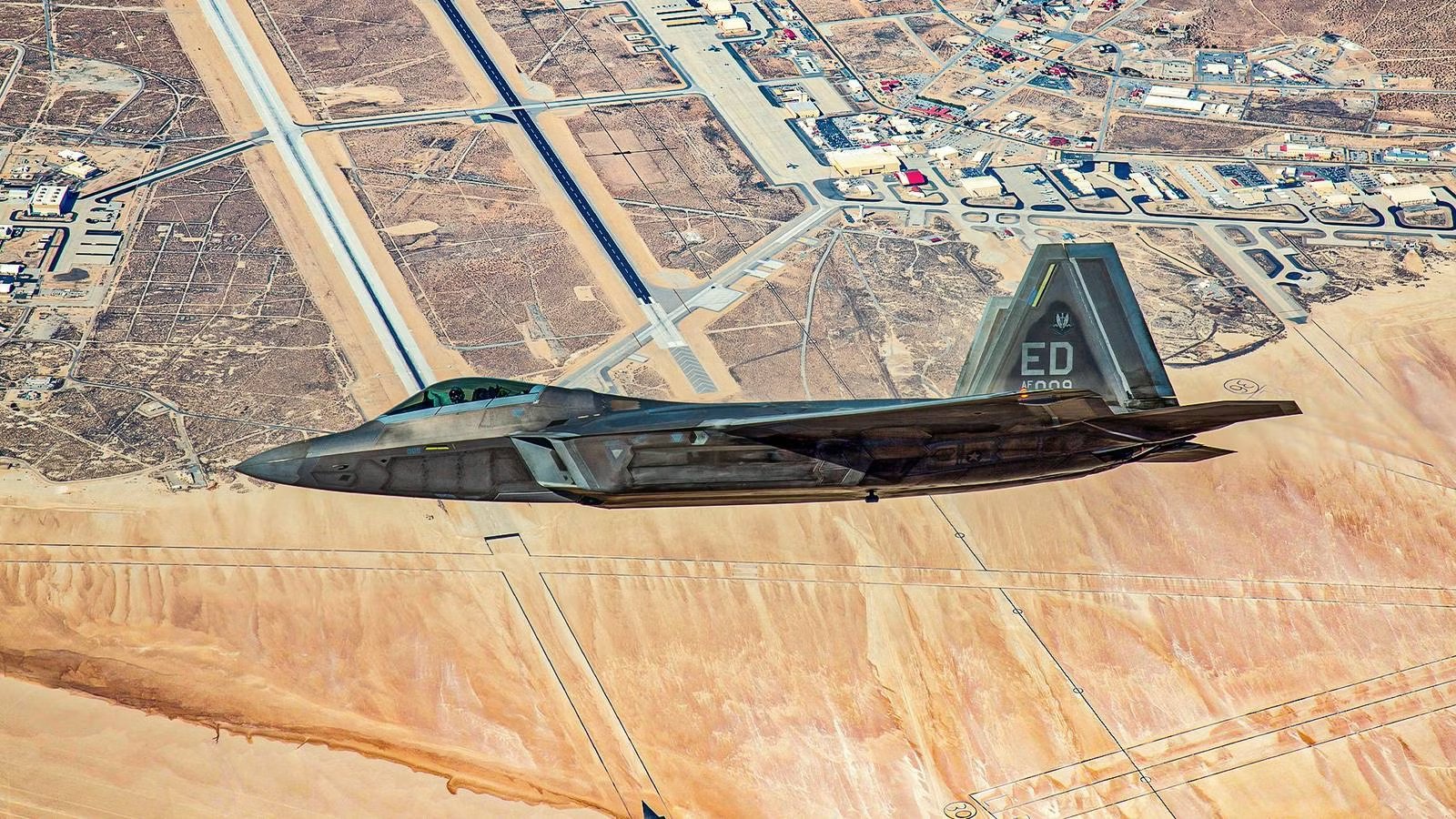
Edwards Air Force Base boasts the longest single runway in the US Air Force (USAF) at just over 15,000 feet long, but it is not the base with the most total runway pavement overall. That title, on a strict count of paved operational runways at the primary airfield, belongs to a base most civilians have never heard of. Perhaps surprisingly, it is a pilot-training field in North Texas that shares its taxiways with turboprop and jet trainers rather than fighters or bombers.
The gap between longest single runway and most combined runway length can be a more nuanced question than it seems on the surface when you consider the definition of what a runway is to begin with. Air Force Manual 32-1084 defines airfield pavement broadly as “differentiated from other surfaces on the airfield by being the only surface an aircraft (other than a helicopter) either lands on or takes off from.” So let’s break down the list of the USAF’s most sprawling airstrips across the nation.
Nellis Air Force Base
Exercise tempo and why Nellis falls short

If pilot-training bases dominate a combined-length ranking, it is worth asking why the base most people picture when they think of ‘big’ Air Force Bases. Nellis AFB is home to the Red Flag and the Weapons School, but it doesn’t come close to having the most tarmac. Nellis operates two parallel runways, 10,051 feet and 10,120 feet. The two lie 1,000 feet apart to support simultaneous fighter launch and recoveries during large-force exercises.
Red Flag and Weapons School syllabi routinely launch and recover large mixed-aircraft packages at once, and separating the runways by a wide gap lets controllers run parallel departures and arrivals much more efficiently. Each runway individually ranks among the longest military strips in the country, and the combined total of 20,171 feet is still a big number.
A large-force exercise mission needs enough parallel pavement to move a strike package at once, not the constant, separate day-to-day traffic of a pilot-training pipeline. Nellis was built around exercise tempo and runway capacity for surge operations, not around the sustained, multi-cohort student flow that drives bases like Sheppard toward four runways. The future of Nellis is also taking shape now with the Boeing F-47 Beddown program kicking off. Because Nellis serves as the USAF’s premier testing and training hub, the military is investing heavily in preparing the base for next-generation aircraft. Phase I of this project explicitly targets airfield apron construction.
While Nellis is largely expanding its parking and hangar footprints, its close partner base just down the road, Creech AFB, is planning an actual runway extension. Military plans include adding an extra 3,000 feet to Creech’s existing 5,476 feet (1,625 meters) to support more drone operations and next-generation unmanned aerial vehicles like the Collaborative Combat Aircraft.
Andersen Air Force Base
Andersen’s long but limited tarmac real estate

Andersen AFB is the strategically vital forward hub of the USAF on Guam. Yet, even with its high traffic of ‘heavies,’ it falls short of the combined-length leaderboard. Its two runways measure 11,200 feet and 10,528 feet. Each was built to recover a heavily loaded Boeing B-52 Stratofortress on a single very long strip rather than to run several shorter parallel ones. Together, they total roughly 22,028 feet.
The base’s entire design points toward runway length, not runway count. A forward bomber and tanker base needs enough single-strip length to recover fully loaded, long-range aircraft safely, not multiple parallel lanes for simultaneous student sorties. That says something about how the Air Force actually spends its payment budget. It doesn’t overinvest in making single runways longer than aircraft performance requires.
At the same time, the USAF is adding 20 acres of new concrete airfield pavement to the North Ramp area. This project is part of a massive $11 billion military construction buildup taking place across the island over several years. Instead of building a brand-new separate runway, the military is expanding the existing footprint by adding open aircraft parking aprons and taxiways on the Northwest side.
This massive concrete slab allows the base to safely park, maintain, and refuel a much larger rotation of heavy aircraft. That includes the incoming Northrop Grumman B-21 Raider as well as Lockheed C-5 Galaxy, Boeing KC-135 Stratotankers, and fighter jets. Military planners are intentionally leaving this new apron open instead of building permanent hardened hangars. The Air Force’s current strategy of Agile Combat Employment favors having plenty of open concrete to quickly move, disperse, and refuel aircraft.
Altus Air Force Base
The home of the heavies in the heartland

Altus Air Force Base trains the pilots and crews who fly the Air Force’s ‘heavies.’ It’s home to formal training units for the Boeing C-17 Globemaster III cargo plane, and for the KC-135 Stratotanker and KC-46 Pegasus tankers. The mission of these jets, to move cargo and gas around the world, is less glamorous than dropping bombs or dogfighting but equally vital. That mission demands massive payloads and high operational tempos, which also shape its runways.
The base has two standard runways, according to AirNav. One is 9,001 feet long; the other is 13,440 feet. Together, that’s 22,441 feet of runway, good enough for sixth place on this list. Altus also has a third landing strip called an Assault Landing Zone. It is a short, deliberately rough 3,500-foot strip where C-17 crews practice landing in austere conditions like at a forward airfield in a combat theater. It’s a real, functioning runway, but it only exists for that one training purpose.
If you counted the assault strip toward Altus’ total, the base would jump to nearly 26,000 feet and leapfrog two bases above it. That would be misleading, since that strip isn’t part of Altus’s everyday flying operations. It’s the same condition that keeps Edwards’ dry lakebeds out of its total. Some runways serve the base’s real mission, and some exist for infrequent training exercises.
Edwards Air Force Base
Where the iconic airfield fits in, and why the answer depends on the question

Edwards AFB in California takes second place, but it is not really one airfield. It has a number of ‘Hard Surface Landing Areas’ spread across three operating locations under one installation. Main Base, North Base, and South Base. Main Base alone carries two paved runways: the 15,024-foot 04R/22L, the longest concrete runway in the USAF.
Main Base also has a 12,000-foot paved strip in 2008 as a temporary substitute while the primary runway was resurfaced. Those two give it a total of 27,024 feet, which is enough on its own to place Edwards ahead of every base except Sheppard.
Rank | Base | Runways | Total Length (feet) | Total Length (meters) |
|---|---|---|---|---|
1 | Sheppard AFB | 4 | 36,125 | 11,011 |
2 | Edwards AFB (Main Base) | 2 | 27,024 | 8,237 |
3 | Columbus AFB | 3 | 26,325 | 8,024 |
4 | Vance AFB | 3 | 23,458 | 7,150 |
5 | Laughlin AFB | 3 | 23,400 | 7,132 |
6 | Altus AFB | 2 | 22,441 | 6,840 |
7 | Andersen AFB | 2 | 22,028 | 6,714 |
8 | Nellis AFB | 2 | 20,171 | 6,148 |
North Base adds a 5,998-foot runway, and South Base adds an 8,000-foot runway. Both support drone operations and U-2 flights, along with light aircraft. Add those in and Edwards’ full paved-runway network reaches roughly 41,000 feet, more than Sheppard. North and South Base are technically distinct landing areas serving different missions.
Instead of adding raw acreage for new ramp parking or brand-new runways in the next phase of work at Edwards, crews completely rebuilt a 75-foot-wide, 9,800-foot-long runway that had been left completely unused. The 412th Civil Engineer Squadron recently completed a heavy-duty repair of its Inside Runway.
The airfield construction was incredibly thick to support heavy bombers like the sixth-generation Northrop Grumman B-21 Raider that is now in testing. This massive paving operation required 83 truckloads of asphalt per day. Contractors also recently replaced and upgraded the base’s taxi and parking ramp alongside the expanding four bomber hangars.
Sheppard Air Force Base
The training bases nobody expects

Several bases with exceptionally long combined pavement owe much of their footprint to taxiways and overruns rather than declared runways. Then there are assault landing strips built for short-field currency training, and dry-lakebed ‘runways’ that exist only as painted lines on soil. By a reasonable definition, Sheppard Air Force Base in Wichita Falls, Texas, takes the top spot, with four separate paved runways at its main airfield.
The colossal airbase is home to Air Education and Training Command’s undergraduate pilot training bases. One is a 6,000-foot runway, one comes in at 10,003 feet, another at 13,101 feet, and finally a 7,021-foot strip, as AirNav data shows. The last is even shared with civilian traffic under a joint-use agreement with Wichita Falls Municipal Airport. Added together, that is 36,125 feet of paved runway on one flying-training base, more than six and a half miles of pavement, split across four physically separate strips rather than one long one.
Sheppard’s total is not an anomaly among AETC bases either. Columbus Air Force Base in Mississippi runs three parallel runways, including one 12,004-foot, an 8,001-foot, and a 6,320-foot runway, for a combined 26,325 feet. Vance Air Force Base in Oklahoma follows that layout almost exactly. It has two 9,217-foot parallel runways plus a shorter 5,024-foot inside runway, totaling 23,458 feet.
Laughlin Air Force Base in Texas, which the Air Force describes as its largest pilot-training installation by sortie count, operates a similar three-runway layout totaling roughly 23,400 feet. The pattern across all four bases is the same. Undergraduate pilot training requires simultaneous, separate traffic patterns for formation flights, solo students, and instrument approaches, and the Air Force has answered that requirement not with one enormous runway but with two, three, or four parallel ones of varying length.