dailynewsnblog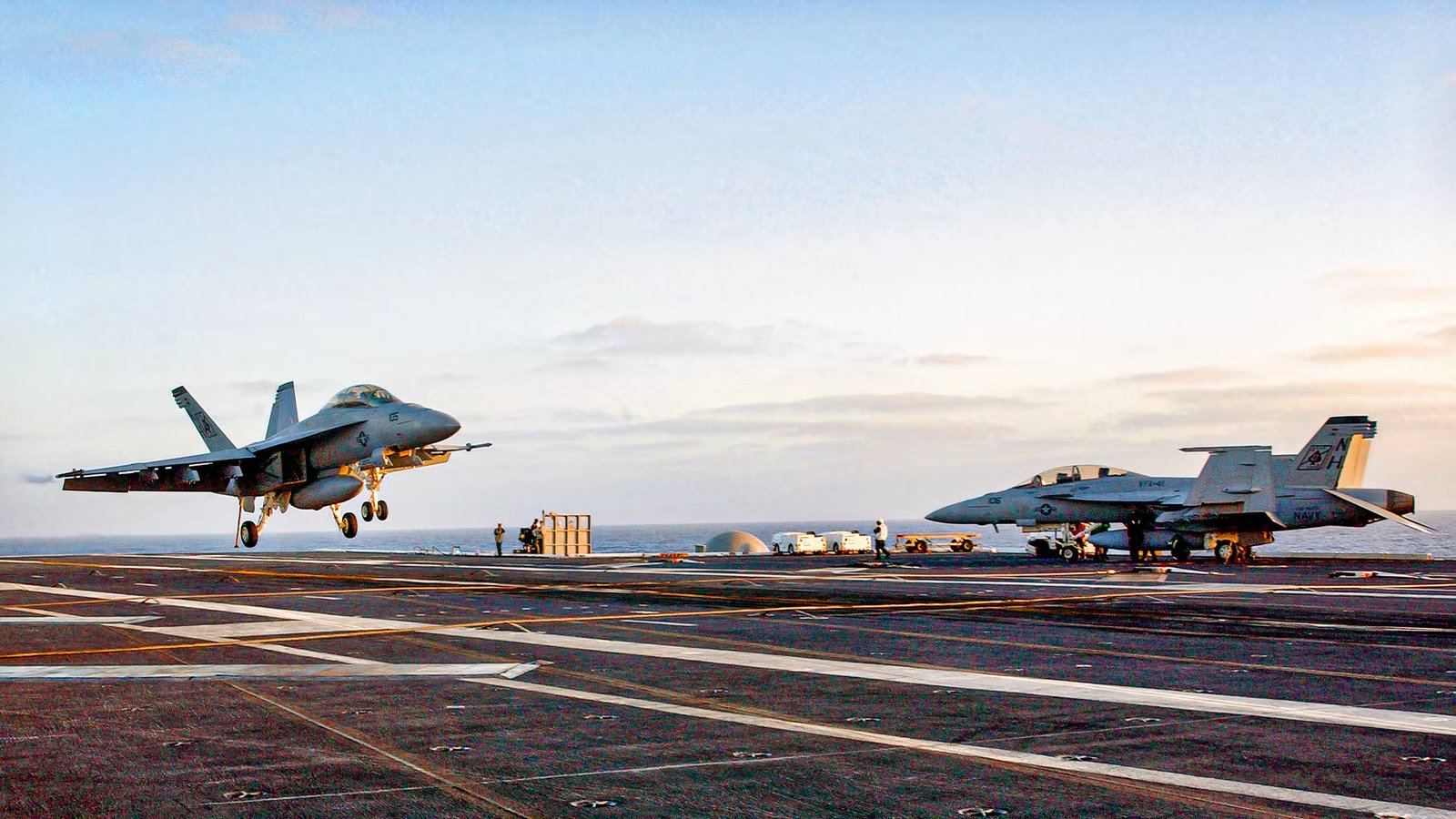
When one makes the important decision to serve in the United States (US) military, they are making a choice that can have potentially life-threatening consequences. While the four military branches go to great lengths to make service member safety a top priority and build it into every billet and duty station, the risk remains an ever-present reality.
Some of the most visible examples of the risks inherent in national service are found within the aviation communities of the four branches. When a military aircraft crashes, it is often presented on major news networks in under an hour. There are numerous reasons why these tragic events occur, and to mitigate the risk, Auto-GCAS, a life-saving technology that briefly takes control of a fighter, was developed.
Initially deployed with the United States Air Force (USAF) in its Lockheed Martin F-16 Fighting Falcon fleet, the United States Navy is only now installing the system in its Northrop Grumman F/A-18 Hornets. The reasoning behind its late installation of the technology, which has been saving lives in the USAF for over a decade, is due to mechanical limitations of the aircraft.
The Military Is An Acronym-Rich Environment, So What Is “Auto-GCAS”?

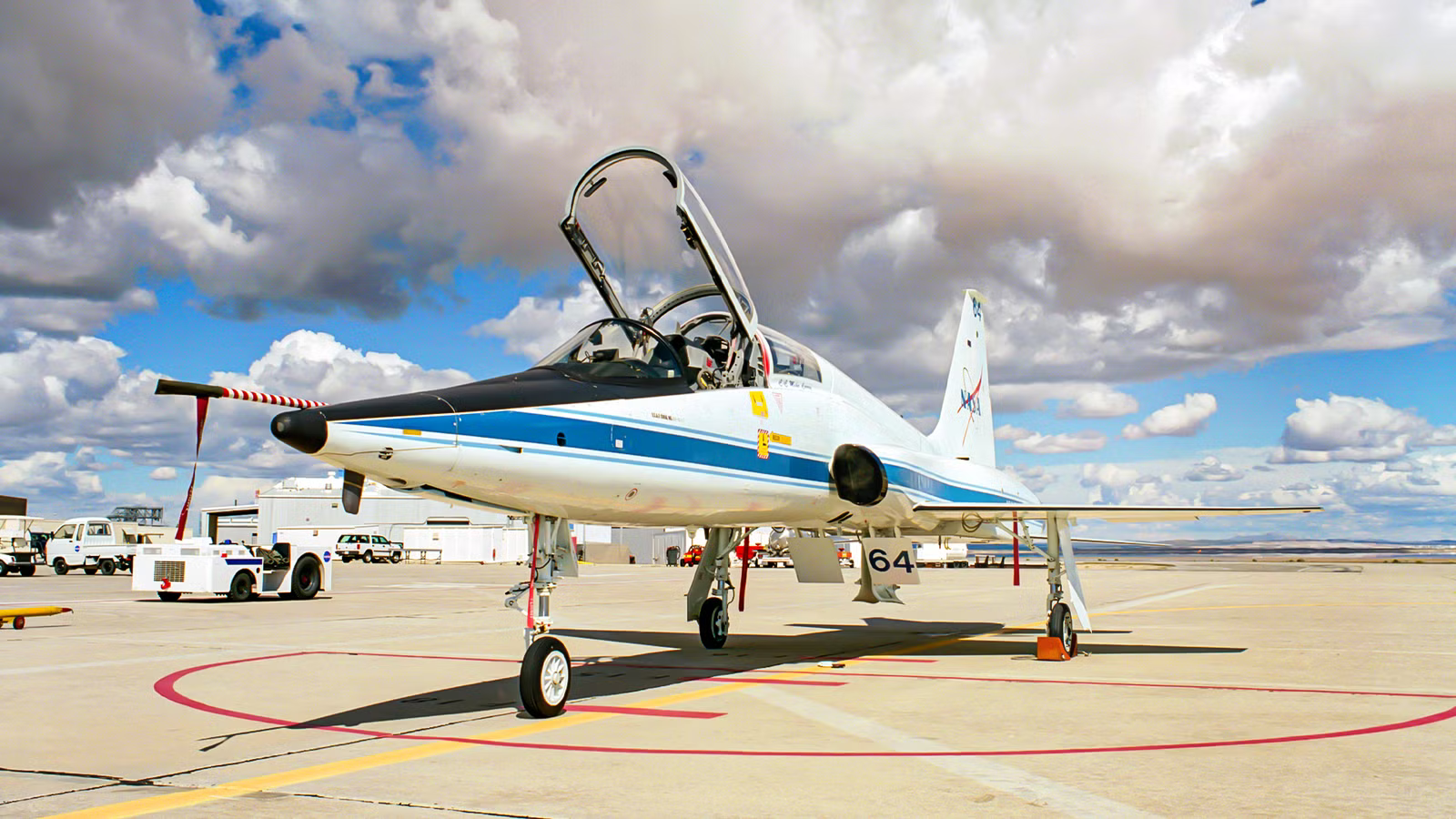
The program that led to the development of the Automatic Ground Collision Avoidance System (Auto-GCAS) was jointly developed by Lockheed Martin Skunk Works®, the Air Force Research Laboratory, and the National Aeronautics and Space Administration (NASA). Auto-GCAS ultimately fielded through several programs beginning in the 1980s. The intent behind the development of this technology was to enhance the safety of US fighter pilots, specifically regarding what is known as Controlled Flight Into Terrain, or CFIT.
According to the Federal Aviation Administration (FAA), “CFIT is defined as an unintentional collision with terrain (the ground, a mountain, a body of water, or an obstacle) while an aircraft is under positive control. Most often, the pilot or crew is unaware of the looming disaster until it is too late.” A primary contributing factor of CFIT incidents is the pilot’s loss of situational awareness, which the FAA describes as “failing to know at all times what the aircraft’s position is, how that position relates to the altitude of the surface immediately below and ahead, and how both relate to the course being flown.”
For the Air Force, the need for the system was without question, as, according to its own statistics, by 2014, CFIT incidents accounted for 26% of aircraft losses and a tragic 75% of all Lockheed Martin F-16 pilot fatalities. To counter this, Ed Griffin, the Lockheed Martin Skunk Works’ program manager for the Automatic Collision Avoidance Technologies (ACAT) Fighter Risk Reduction Program, was confident in Auto-GCAS’ ability to enhance pilot safety.
According to Griffin, Auto-GCAS combines collision-avoidance and autonomous decision-making software with the aircraft’s navigation data, flight-performance information, and digital terrain database. Using these inputs, the system continuously assesses the aircraft’s flight path to determine whether it is on course for a ground collision. If an impact is deemed imminent, the system can take control and initiate an automatic recovery maneuver, rolling the aircraft to wing-level before commanding a +5G pull to clear the terrain.
The US Navy Is On Track To Install The Lifesaving System On Its F/A-18E/Fs And EA-18s

Auto-GCAS will enter the fleet with installation on the Navy’s F/A-18 Super Hornets in 2027, while the EA-18G Growlers will receive the system in 2028. The move comes as the sea service began installing a similar system, the Automatic Terrain Awareness and Warning System, on its legacy F/A-18C/D Hornets earlier this year, according to Naval Air Systems Command.
The Navy’s public disclosure of the installation dates lays a concrete timeline for the essential safety upgrades that Congress, safety advocates, and the Navy’s budget documents have pushed for over the better part of a decade. The result is an $18 million (£13.3 million) investment in the 2026 budget, even though the system could have prevented multiple fatal F/A-18 mishaps over the last two decades.
For its part, Congress directed the Navy to provide realistic benchmarks for the installation of the system in the FY2026 House bill H.R. 3838. The document stated: “…the committee directs the Secretary of the Navy to submit a report to the congressional defense committees not later than March 16, 2026, that explains the plans of the Secretary to integrate Auto GCAS capability into the F/A-18E/F and EA-18G aircraft.”
F/A-18E/F Super Hornet General Specifications | Related Data |
|---|---|
Propulsion | Two F414-GE-400 turbofan engines. 22,000 pounds (9,977 kg) static thrust per engine |
Length | 60.3 feet (18.5 meters) |
Height | 16 feet (4.87 meters) |
Wingspan | 44.9 feet (13.68 meters) |
Weight | Maximum Takeoff Gross Weight is 66,000 pounds (29,932 kg) |
Airspeed | Mach 1.8+ |
Ceiling | 50,000+ feet |
Combat Range | 1,275 nautical miles (2,346 kilometers), clean, plus two AIM-9s |
The Navy’s ongoing aviation mishaps underscore the need for systems such as Auto-GCAS. Class A is the most severe classification of an unplanned operational incident and results in a fatality, permanent disability, total property damage of 2.5 million (£1.84 million) or more, or the complete destruction of an aircraft.
Through May 19, 2026, the service recorded four Class A flight mishaps involving manned aircraft, compared with seven during the same period in 2025. The figure was also below the 11 Class A flight mishaps recorded during all of FY2025 and the 10-year average of 8.2. The Navy’s Class A flight mishap rate stood at 0.88 per 100,000 flight hours through May 19, compared with 1.48 during the same period in 2025 and a 10-year average of 1.00. The figure encompasses the Navy’s manned aircraft fleet as a whole and is not specific to the F/A-18 fleet.
Auto-GCAS Has Been Deployed For Years, Why Is the Navy Late To Install It?

As early as late 2014, Auto-GCAS began to be installed across the US Air Force’s F-16 fleet, and six years later, the system had already saved 13 pilots, 12 of whom were flying F-16s. By around 2020, the air service had the system operational on more than 600 of its global F-16 Block 40/50 aircraft, providing an additional layer of protection against ground collisions during flight.
By 2018, Lockheed Martin and the F-35 Lightning II Joint Program Office hadcompleted F-35 Auto-GCAS integration and flight testing, with plans to begin fielding the system by June 2019. Additionally, Lockheed Martin projected that the life-saving system would ultimately be installed in more than 3,200 Lightnings, potentially providing the same protection to thousands of additional pilots.
One of the primary reasons Auto-GCAS was not initially installed across the Navy and Marine Corps fleet of F/A-18 Hornets was the lack of an electronic throttle, which led the two branches to pursue a different approach for the fighters. Unlike aircraft with electronic throttle controls, the F/A-18A-D could not have its engine power automatically controlled by Auto-GCAS during an emergency recovery. This meant the legacy Hornet required a different solution from the one used on aircraft such as the F-16.
Instead, the proposed solution would rely on automatic flight-control inputs to maneuver the aircraft away from the ground if the pilot became incapacitated. Capt. David Kindley, then the F/A-18 and EA-18G program manager, explained in 2018 that the legacy Hornet’s throttle configuration meant its Auto-GCAS solution would have to work differently.
The Navy Is Finally Closing The Auto-GCAS Safety Gap

Auto-GCAS has already demonstrated its value across the US military, providing fighter pilots with a final layer of protection when human error, disorientation, or incapacitation could otherwise result in a catastrophic ground collision. The system’s ability to autonomously recognize an imminent impact and recover the aircraft represents a significant advancement in aviation safety.
For the Navy, however, bringing this capability to its F/A-18 fleet has taken much longer. While the legacy Hornet required a different technical approach, the service is now moving forward with Auto-GCAS for its Super Hornets and Growlers, alongside ATAWS for its older F/A-18C/Ds.
With installation scheduled to begin in 2027, the Navy is finally closing a significant gap in fighter safety technology. As the service continues operating the F/A-18, Auto-GCAS could ultimately prevent future accidents and, most importantly, save the lives of pilots who might otherwise have no chance of recovery.