dailynewsnblog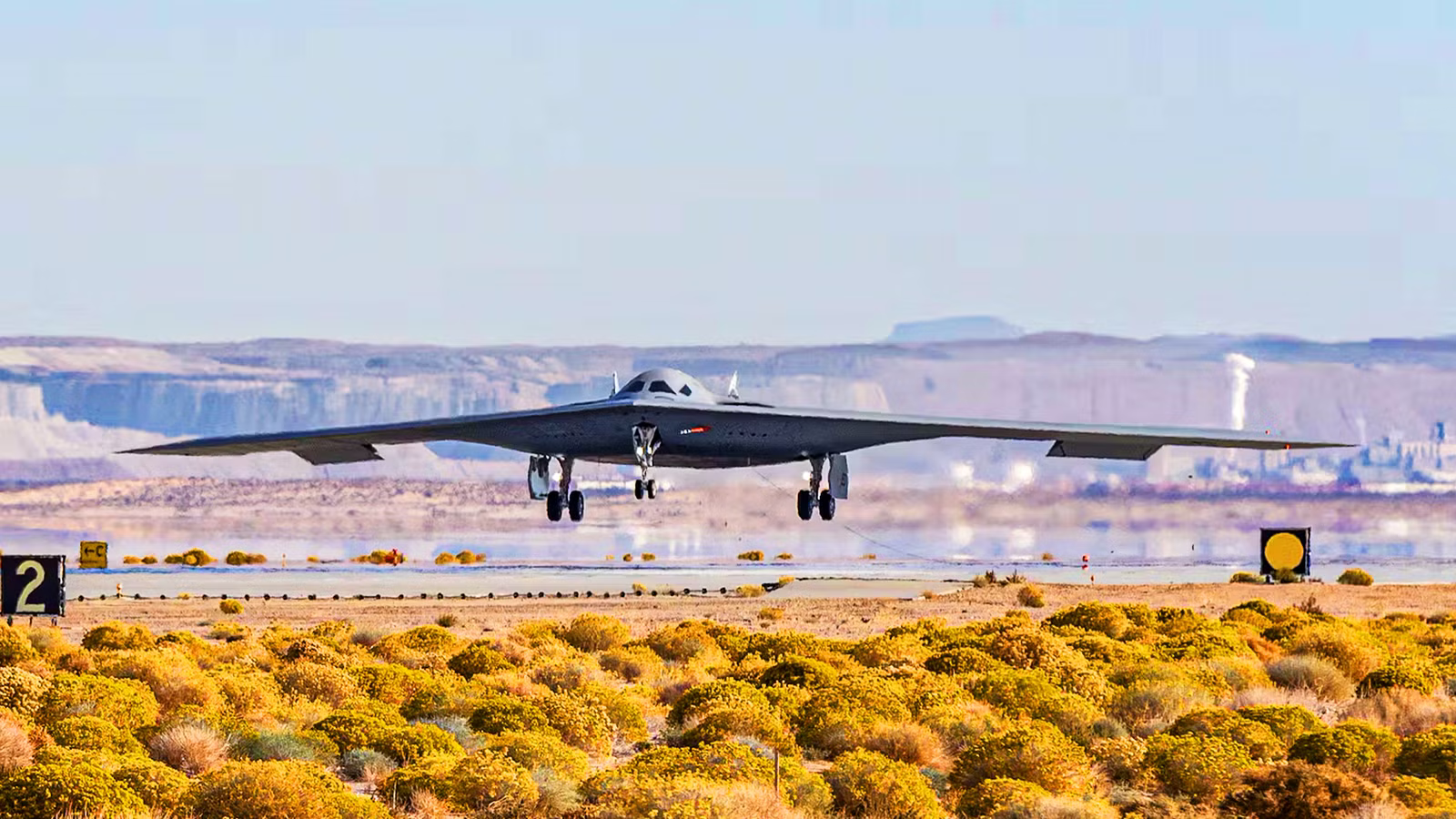
The Northrop Grumman B-21 Raider is shaping up to be the most expensive military construction story in the United States Air Force’s history, and the aircraft itself is only part of the bill. Fielding America’s newest stealth bombers means rebuilding the runways, hangars, fuel systems, and security infrastructure of the bases that will fly, maintain, and test it, several of which are still built around a bomber design decades old. Billions of taxpayer dollars are already flowing into five installations across four states, each racing against its own construction deadline before the Raider actually arrives on the ramp. Together, the projects amount to one of the largest peacetime military construction pushes the Air Force has undertaken in decades, touching everything from runways and fuel farms to housing and classified weapons storage.
This list ranks the five bases by how central each is to the B-21 program, moving from the smallest supporting role to the installation carrying the heaviest share of the mission and the money. The ranking weighs each base’s assigned job, whether that is flight testing, depot-level repair, or full-time operational basing, against the scale of the construction dollars already committed, as confirmed by Air Force officials, congressional offices, and defense-industry reporting. As the list climbs toward number one, the price tags grow into the billions, and so does what is riding on getting the work done on schedule.
Edwards Air Force Base
A test hub, not a future bed-down site

Edwards Air Force Base, tucked into California’s Mojave Desert, will likely never operate a squadron of Raiders full-time, but no B-21 reaches any of the other four bases on this list without first passing through it. Edwards hosts the B-21 Combined Test Force, the organization responsible for running every test flight-milestone the bomber completes before the Air Force clears it for operational service, part of an effort Simple Flying has documented as the Air Force works to grow its stealth bomber fleet from 19 B-2 Spirits to as many as 145 B-21 Raiders.
That test mission belongs to the 420th Flight Test Squadron, a unit reactivated in 2019 specifically to support the Raider after years spent evaluating the B-2. Flight testing has been underway at Edwards since 2023, and, as detailed by Defense One, the Air Force publicly confirmed in early 2024 that B-21 flight testing was underway, even though most details of the aircraft’s performance remain classified. The base’s remote location and adjacent restricted airspace have made it the Air Force’s default proving ground for sensitive aircraft since the earliest days of the jet age, and the same ranges that once hosted the B-2 Spirit’s early trials are now the testing ground for its eventual successor.
Edwards ranks fifth not because its job is the least important, but because it isn’t a bed-down base. There is no new hangar wing, fuel farm, or permanent maintenance campus being built here for a long-term B-21 presence. Its infrastructure bill is a rounding error compared with what is being spent on the program’s three main operating bases, which is exactly why it sits at the bottom of this list.
Tinker Air Force Base
A four-dock depot hangar for two generations of bombers

Tinker Air Force Base in Oklahoma isn’t one of the B-21’s three main operating bases, but it will be the aircraft’s depot maintenance and sustainment home, the place where Raiders go for the heavy, scheduled overhauls no flightline crew can perform. The centerpiece of that mission is a four-dock depot maintenance hangar built to service both B-21s and the Air Force’s  Boeing B-52 fleet side by side, a pairing that reflects how long the Pentagon expects both bombers to remain in service together, since the B-52 fleet is slated to keep flying into the 2050s even as B-21s replace the B-1B and B-2 around it.
Land acquisition at Tinker has run well ahead of the actual construction. The Oklahoma Industry Authority bought 220 acres (89 hectares) east of Douglas Boulevard in 2021 to make room for the expansion, and members of Oklahoma’s congressional delegation, including Rep. Stephanie Bice, later pushed $30 million into the FY2023 budget request for an additional 133-acre (54-hectare) parcel adjacent to the base. Robins Air Force Base in Georgia and Hill Air Force Base in Utah round out the depot network that will keep the Raider fleet flying.
Tinker ranks fourth because its role, while essential to keeping the fleet airworthy for years, is a maintenance function rather than an operational one. The base won’t fly a single B-21 sortie on its own, and its funding, while real, doesn’t come close to the multibillion-dollar rebuilds underway at the bases that will actually operate the bomber day to day, as reported by VeloCIty OKC.
Whiteman Air Force Base
Thirty years of B-2 infrastructure just paid for itself

Whiteman Air Force Base in Missouri was designated the B21’s second main operating base, and it is, by a wide margin, the cheapest of the three to convert. The reason is straightforward: Whiteman hosted the Northrop GrummanB-2 Spirit Bomber for more than 30 years, and the specialized, climate-controlled hangars, radar-absorbent coating facilities, and security infrastructure built for that stealth bomber translate directly to the Raider’s needs. Whiteman also already hosts the 509th Bomb Wing, the same unit that flew the atomic bomb missions in World War II, giving the base years of experience managing the kind of dual-capable nuclear and conventional mission the B-21 is designed to carry.
Whiteman needs only 16 new facilities or additions, compared with the 24 required at Dyess, a gap that Simple Flying has reported saves the Air Force up to roughly $1 billion. That figure lines up with the previous reporting on why Whiteman’s bill runs so far below its sister bases. Funded work already underway includes a new weapons release storage system and a radio-frequency hangar, the latter awarded to a contractor for more than $70 million in September 2026 to test how well the Raider’s stealth coatings hold up, according to Aerotime.
Whiteman ranks third because, savings aside, it is still a full main operating base that will fly and maintain the Raider on a daily basis alongside its current B-2 fleet. It ranks behind Dyess and Ellsworth simply because its dollar figure and its construction footprint are both smaller than what those two bases require.
Dyess Air Force Base
$1.6 billion, 24 projects, and a possible return of the nuclear mission

Dyess Air Force Base in Texas was named the B-21’s third main operating base and is currently home to the Rockwell B-1 Lancer, which will continue flying throughout the transition. Base leadership has laid out 24 military construction projects totaling roughly $1.6 billion, work that KTXS has covered extensively as it has moved from environmental review to groundbreaking, describing it as “part of a massive $1.6 billion effort to upgrade the base ahead of the B-21 Raider.”
Col. Ryan Stallsworth, the base’s deputy wing commander, has said the new aircraft carries different requirements than the B-1B, from modernized runways to new maintenance buildings and fueling areas.
Individual projects include a $102.7 million mission planning facility and a $26.7 million fuel lab and refueling truck yard, which broke ground in December 2025 on 37 acres (15 hectares), according to KTXS. Base leadership has also flagged a larger security forces campus and significantly increased covered maintenance requirements, and has noted publicly that the work could support a return of the nuclear mission to Dyess, a possibility Texas lawmakers have highlighted as they push for continued federal funding, including a record $160 million in the FY2027 defense authorization bill.
Dyess ranks second because its price tag and project count now rival Ellsworth’s, and its potential to reclaim a nuclear mission raises its strategic weight further still. It sits just behind Ellsworth on this list because it is the last of the three main operating bases scheduled to receive the aircraft, not the first.
Ellsworth Air Force Base
The nearly $2 billion base that gets the Raider first

Ellsworth Air Force Base in South Dakota is the B-21 program’s first main operating base and the home of its Formal Training Unit, the schoolhouse that will qualify every future Raider pilot and maintainer the Air Force produces, aviators whose pay Simple Flying has compared with what F-35 pilots earn. The base currently flies the B-1B Lancer, and roughly $1.5 to $2 billion is going into more than 60 facilities, some up to 70 years old and originally built for the B-52, a scale of rebuild that we have previously described as the steepest infrastructure bill of the three main operating bases.
Completed and awarded work already includes a $129.5 million runway rebuild finished on December 3, 2025, using 106,000 tons (96,000 metric tons) of concrete, 105 miles (169 km) of joint sealing, and 83 miles (134 km) of electrical conduit; a $135.5 million, 95,000 square-foot (8,826 square meters) Phase Maintenance Hangar, and a $44 million contract awarded in June 2026, reported by Defence Blog, for five Environmental Protection Shelters of about 20,000 square feet (1,858 square meters) each, due for completion by October 2028. In June 2026, Secretary of the Air Force Troy Meink toured the base to formally accept the first two finished B-21 buildings, a $161 million Low Observable Restoration Facility built to preserve the bomber’s radar-absorbent coatings and an $81 million wash rack and general maintenance hangar, calling the milestone a step toward fielding advanced capabilities at scale. At least one of the program’s two flying test aircraft is expected to arrive at Ellsworth in 2027.
Ellsworth tops this list because it is doing all of it at once: flying the outgoing B-1B, training every incoming Raider crew, and absorbing the largest and earliest wave of construction dollars of any base on the program. That investment grew again in November 2025, when a government shutdown funding deal, reported by Defense One, added roughly $850 million in additional B-21 and Sentinel military construction spread across Ellsworth, Whiteman, Dyess, and Tinker, with Ellsworth positioned to draw the largest share as the program’s flagship base.
Catch what other trackers miss
Emergency squawks, holds, NOTAMs — live signals, no signup.
Open tracker
Catch what other trackers miss
Emergency squawks, holds, NOTAMs — live signals, no signup.
Open tracker