dailynewsnblog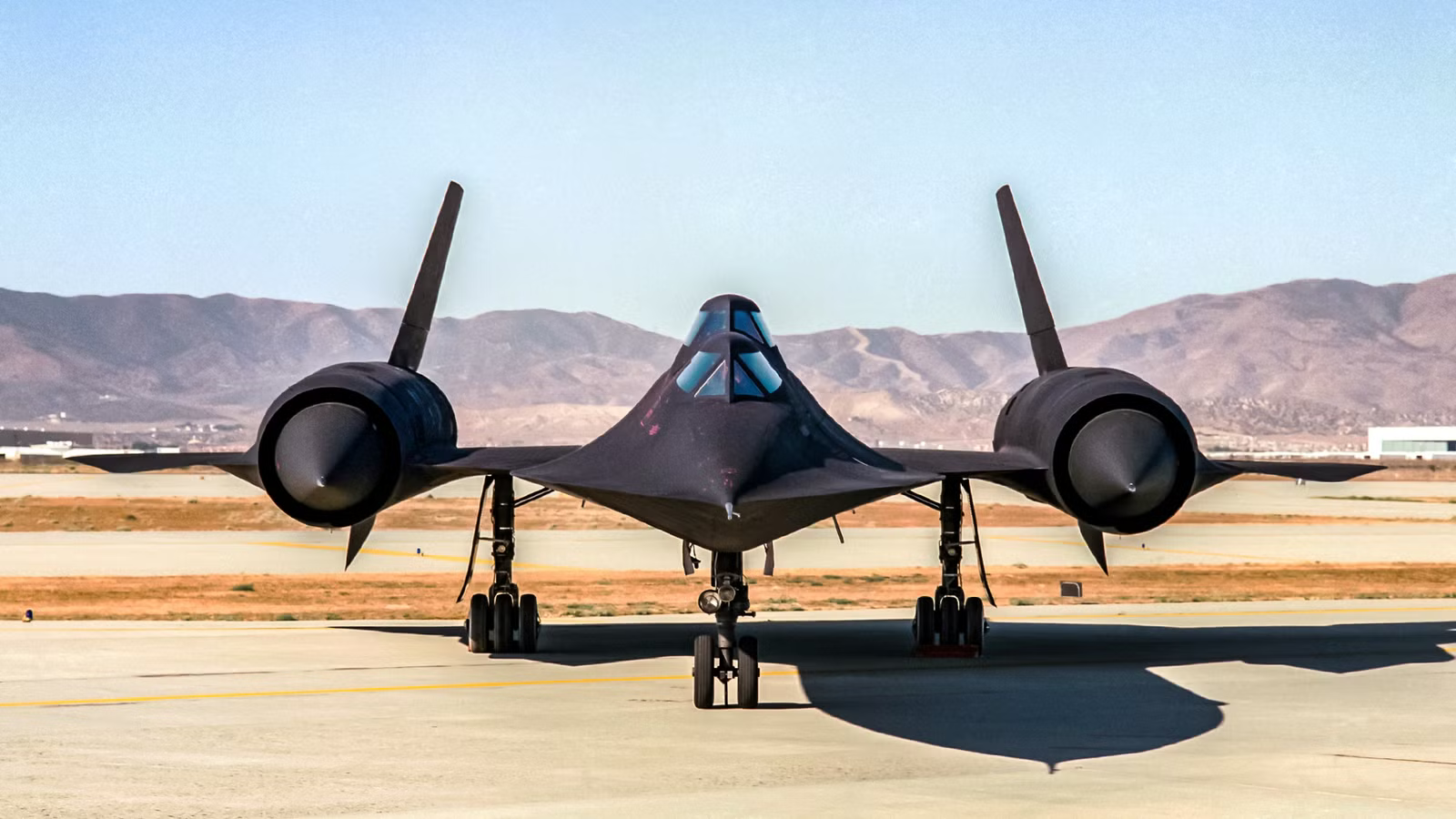
The SR-71 Blackbird was designed to survive an environment that would destroy most conventional aircraft. Its titanium structure had to withstand the aerodynamic heating generated by sustained Mach 3 flight, but one of the most perplexing structural problems encountered during the Blackbird program originated not in the Soviet Union, nor was it an engine failure or an exotic new weapon that hit the aircraft: it was in a simple tap water supply serving Lockheed‘s factory in Burbank, California. Kelly Johnson’s own historical account and later CIA material document the unusual episode.
The mystery initially seemed like a manufacturing problem. Engineers at Lockheed’s Skunk Works discovered that titanium wing panels spot-welded during the summer were failing early, while apparently identical panels manufactured during the winter could last indefinitely. The key question was not simply why the titanium was cracking, but what changed between summer and winter—and how an engineering team building one of the world’s most advanced aircraft could trace that difference to something as ordinary as municipal water.
Why Were Summer-Built Titanium Panels Failing?

The starting point was titanium itself. The Blackbird program depended heavily on titanium because the aircraft’s extraordinary speed created temperatures that made conventional aluminum unsuitable for much of the structure. Lockheed Martin‘s own history records that the Skunk Works team built the Blackbird around titanium sheets and achieved sustained Mach 3 flight at 78,000 feet during testing.
The material, scarce in the US and, ironically, imported from the USSR via third countries, created a new set of manufacturing problems. According to Popular Mechanics, Skunk Works produced more than 13 million titanium parts and maintained records that let engineers trace almost all of them back to their original mill pour, while also recording the grain direction for roughly the last 10 million parts. That extraordinary level of documentation became crucial because it allowed engineers to search for patterns in failures that initially appeared random.
One such pattern was impossible to ignore. Wing panels spot-welded in summer failed early, while those produced in winter survived indefinitely. The difference eventually pointed away from the welding equipment and toward what happened to the panels after they had been manufactured.
How Did Burbank’s Water Become The Suspect?

The breakthrough came when engineers examined the cleaning process. Titanium panels were acid-treated during manufacturing, then washed, and the water used in that process turned out to contain the missing variable. The Burbank water system used heavier chlorination during summer to control algae growth, while that additional chlorination was absent during winter.
That explained the otherwise baffling seasonal pattern. The titanium itself had not suddenly become defective when temperatures rose outside the factory; rather, the parts were being exposed to chlorinated water during a critical stage of production. Johnson’s account specifically states that the team eventually traced the problem to the Burbank water system and that changing to distilled water for washing the parts solved it.
The scale of the problem made the discovery especially important. According to the historical account, the summer-made spot-welded panels could fail within roughly six or seven weeks, whereas winter-produced panels did not exhibit the same premature failure. The Aviation Geek Club’s historical reconstruction likewise records the six-to-seven-week failure period and the switch to distilled water following the investigation.
The water mystery solved one problem, but it also demonstrated just how sensitive the Blackbird’s titanium manufacturing process was to contamination. That realization would soon expose another apparently unrelated hazard inside the factory itself.

The second discovery involved workshop tools rather than water. Mechanics working on the aircraft used cadmium-plated wrenches, a conventional choice for tools in many industrial environments. But cadmium was particularly problematic when it came into contact with the titanium used by the Blackbird program, causing embrittlement under tensile stress.
Johnson’s account describes how enough cadmium from the plated wrenches remained in contact with the tightened bolt heads that, once the components heated above 600°F (315°C), the bolt heads could simply drop off. The discovery forced Skunk Works to clean out hundreds of toolboxes and remove cadmium-plated tools from the production environment.
Other historical accounts describe the same problem as titanium contamination and corrosion. The Aviation Geek Club reports that trace cadmium left by plated tools contributed to corrosion problems and that the discovery resulted in cadmium tools being removed from the workshop entirely.
The lesson was becoming clear: building a Mach 3 aircraft from titanium required controlling far more than the aircraft’s design. The water, tools, cutting fluids, and even apparently insignificant sources of contamination could all become part of the structural engineering problem.
Why Was Titanium So Difficult To Build Into A Mach 3 Aircraft?

The fundamental reason was heat. Lockheed Martin records that the Blackbird achieved sustained Mach 3 flight at 78,000 feet during testing, and that the aircraft’s titanium structure was specifically selected to withstand the extreme thermal environment at that speed.
The material was exceptionally useful, but difficult to manufacture. Johnson’s account says that drilling and machining high-strength titanium alloys such as B-120 required a dedicated research program to determine appropriate cutters, cutting fluids, speeds, and feeds. Skunk Works even discovered that commercial cutting fluids could accelerate stress corrosion in hot titanium and consequently developed its own.
The program’s documentation was unusually extensive and proved extremely useful. As noted previously, more than 13 million titanium parts could be traced back to the mill pour, with grain direction documented for approximately the last 10 million. Such records provided the forensic trail that allowed engineers to identify the seasonal manufacturing pattern.
The result was an aircraft-production process unlike almost anything that had come before it. Titanium was not simply selected as a material and then incorporated into a conventional factory workflow; the workflow itself had to be redesigned around titanium’s vulnerabilities.
What Did The Water Mystery Reveal About The Blackbird Program?

The most important consequence was a change in how Skunk Works approached manufacturing risk. The summer-water problem demonstrated that a component could appear correctly manufactured yet still contain a hidden vulnerability introduced during cleaning. That meant production records and environmental controls were just as important as the dimensions and tolerances of the finished component.
The distilled-water solution sounds like a simple workshop adjustment, but it drastically improved the aircraft‘s robustness. It removed chlorine from one of the processes through which titanium components were exposed to their environment. The fact that the change stopped the recurring summer failures demonstrated how a seemingly insignificant chemical contaminant could have consequences for an aircraft operating at the edge of the known performance envelope.
SR-71 List Of Problems and Solutions:
SR-71 Program Problem | Skunk Works Solution |
Extreme heat at Mach 3 | Built the airframe largely from titanium alloys |
Titanium was difficult to machine | Developed specialized tools, cutting speeds, and fluids |
Summer-made titanium panels cracked | Traced the issue to chlorinated Burbank tap water |
Chlorine caused stress-corrosion problems | Switched to distilled water for rinsing titanium |
Cadmium from plated tools contaminated fasteners | Banned cadmium-plated tools from the workshop |
Thermal expansion caused fuel leakage on the ground | Designed the aircraft to seal as it heated during flight |
J58 engines faced extreme airflow conditions | Used variable inlets and automatic inlet controls |
Conventional fuel was unsuitable | Developed specialized JP-7 fuel |
Engine starts were difficult | Used external AG330 starter carts |
Crew faced extreme altitude and decompression risks | Equipped crews with full-pressure flight suits |
Soviet air defenses threatened the aircraft | Relied on Mach 3 speed, extreme altitude and mission planning |
Manufacturing defects were difficult to trace | Maintained extensive titanium part and material records |
The episode also shows why the Blackbird program generated so many unusual manufacturing procedures. Chlorine, cadmium, and certain cutting fluids all had to be treated as potential threats to titanium. By the time the program matured, Skunk Works had accumulated an enormous body of empirical knowledge about how to manufacture and protect the material that could be used for other projects.
That makes the Burbank water discovery particularly revealing. The aircraft’s greatest engineering challenges were not always dramatic problems involving engines, missiles, aerodynamics, or its secrecy. Sometimes, they were microscopic chemical interactions occurring on a factory floor.
A Mach 3 Aircraft Could Not Tolerate Ordinary Manufacturing

The SR-71’s extraordinary performance, which broke many world records, forced Skunk Works to redefine what counted as an aircraft-production problem. The titanium that allowed the Blackbird to withstand its extreme flight environment also created vulnerabilities that conventional manufacturing practices could not accommodate. Johnson’s own account makes clear that the team often had to discover these vulnerabilities through testing, failures, and painstaking investigation.
The Burbank water mystery is perhaps the most memorable example because of its sheer improbability. A machine designed to fly at Mach 3 and at extreme altitude could be undermined by chlorine added to a municipal water supply during summer. Once Skunk Works understood the connection, the solution was comparatively simple: stop washing the critical titanium components with tap water and use distilled water instead.
The story also captures the essence of Kelly Johnson’s Skunk Works. The team did not accept unexplained failures as inevitable; it maintained enough documentation to identify patterns and then followed those patterns wherever they led, even if the trail ended at the local water-treatment system. For an aircraft built to outrun threats at Mach 3, one of its most important production lessons came from something far slower and much closer to home: the water flowing through Burbank’s pipes.