dailynewsnblog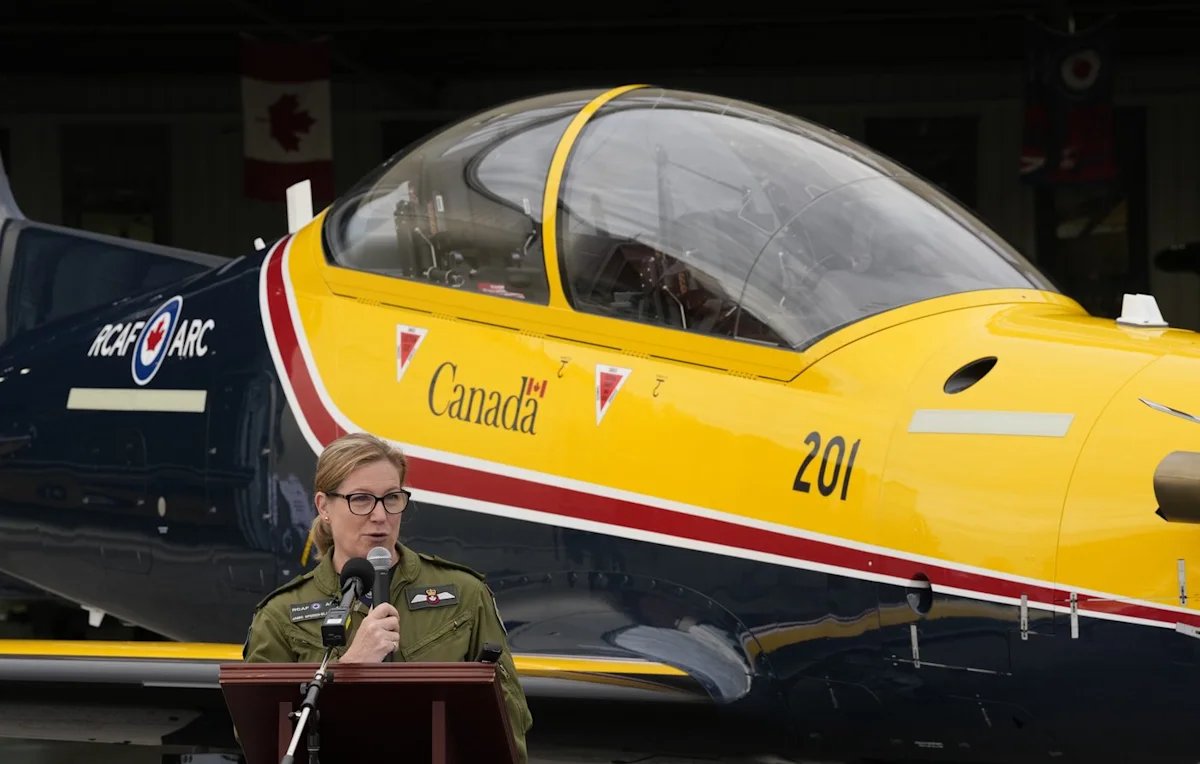

GATINEAU — The Royal Canadian Air Force welcomed on Thursday the first two of its new trainer aircraft, the CT-157 Siskin II — the same planes that will replace the old Tutor jets flown by the Snowbirds aerial demonstration team.
The turboprop planes will soon be headed to 15 Wing Moose Jaw, where the air force eventually will station 19 of them to serve as its main training fleet.
Acquiring the Siskin II, also known as the Pilatus PC-21, is part of the RCAF’s plan to modernize its fleets and overhaul its training.
RCAF Commander Lt.-Gen. Jamie Speiser-Blanchet said the modern aircraft are well suited both to aerial acrobatics and to preparing pilots for the more advanced aircraft the air force is bringing online.
“It has an advanced cockpit and capabilities and the design is just a very contemporary one that is used by other allies as well. We’re very excited that we’re able to bring this on board,” she said.
The commander made the comments just after one of the new planes buzzed overhead in a ceremonial first flypast at the airport in Gatineau, Que.
The current Snowbirds will hold their last show in the National Capital Region in Gatineau, Que., this weekend. After their final flight at the Grey Cup in Calgary in November, the Snowbird team will start a hiatus that could last until 2030.
As the RCAF brings in the new planes for pilot training, the federal government is still working on procuring extra Siskins for the Snowbirds team.
Speiser-Blanchet said these are “excellent” stunt planes that shouldn’t be underestimated — even though some have questioned whether a propeller aircraft is a suitable replacement for jets.
“It is extremely manoeuverable and capable, and powerful, actually. More so than perhaps people’s understanding of other propeller aircraft from the past,” she said.
While the Siskin II has a slower top speed than the CT-114 Tutor and is not as loud as a jet, Speiser-Blanchet said “it’s not a quiet aircraft” and it will “really wow Canadians” once the shows are up and running.
The federal government announced this spring it would replace the roughly 60-year-old Tutor jets, which have encountered various problems with upgrades meant to extend their lifespans out to 2030. Costs, timelines and the growing scarcity of replacement parts threw a wrench into plans to keep them in the air longer.
The Swiss Air Force has been training its pilots on the Pilatus aircraft since about 2008, and Australia’s Roulettes aerial demonstration team also flies the same planes.