dailynewsnblog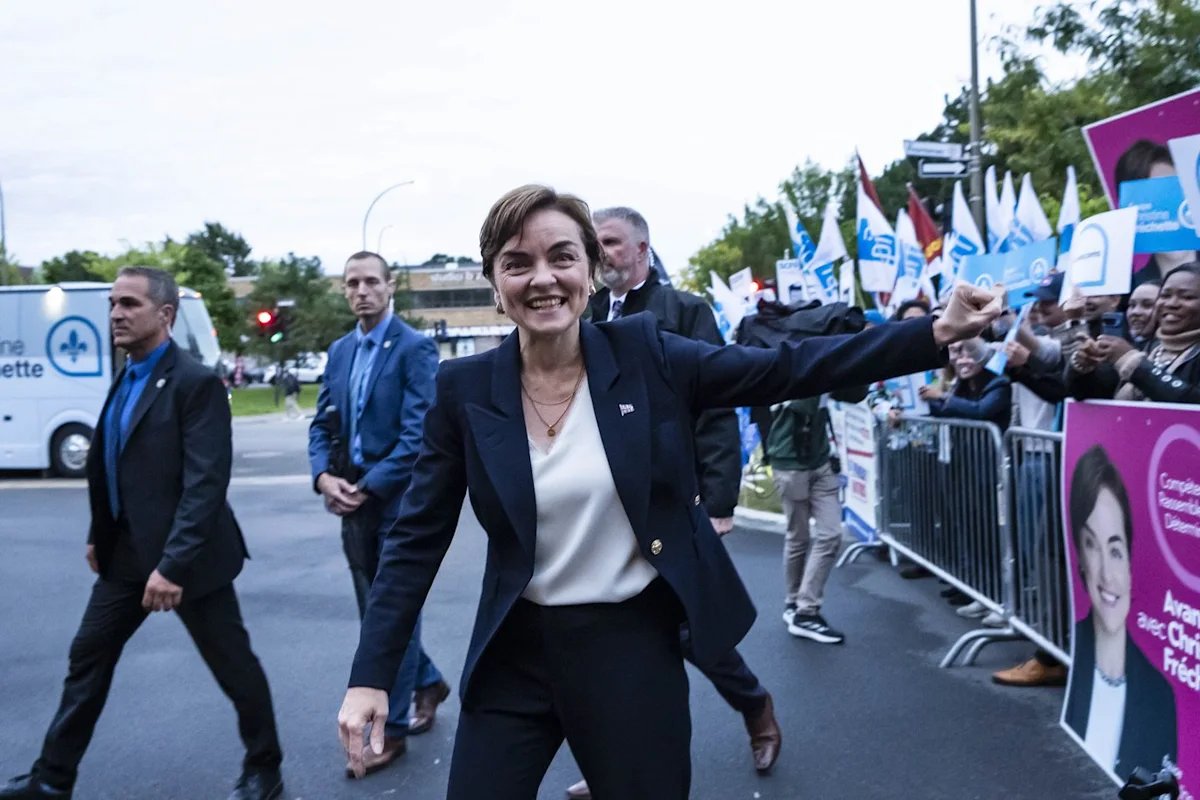

MONTREAL — Coalition Avenir Québec Leader Christine Fréchette came under early attack in the first debate of the provincial election campaign as her rivals criticized the last eight years of her party’s governance.
In opening statements, Parti Québécois Paul St-Pierre Plamondon said his party would end years of “CAQ waste,” while Quebec Liberal Leader Charles Milliard said Fréchette’s party hadn’t taken care of the economy and businesses and “doesn’t in any way represent the changes Quebecers need.”
Fréchette, for her part, took no time in distancing herself from her predecessor, the former premier.
“I am not François Legault, I am Christine Fréchette, and I come with my own way of doing things,” she said.
Conservative Leader Éric Duhaime and Québec solidaire’s Ruba Ghazal were also on the stage for the debate, hosted by Quebec’s TVA television network.
Host Paul Larocque urged the leaders to stay respectful as the debate got underway.
The debate focused on three main themes: the economy, taxes and public services, and the future of Quebec.
It also featured a head-to-head format, with two leaders being paired off to debate most of the questions.
In one testy exchange, Fréchette said Duhaime’s plan to cut $47 billion in state spending over the next five years would hurt working mothers.
“It seems that for Mr. Duhaime, financial independence stops at women, because he doesn’t actually want to increase the number of spots in (daycares),” she said.
Duhaime shot back, saying he was only proposing what amounted to a five per cent spending cut.
“Five per cent, people who are listening at home do that every week.”
Earlier in the week, the party leaders had slowed down their announcements and public appearances to prepare for the debate, followed by another one the next day.
A few hours before the debate got underway, the Parti Québécois promised to balance the province’s budget by 2028-29 as it became the final party to unveil its financial framework.
The PQ’s plan includes $6.5 billion in new spending over the next five years, as well as reducing government spending by $6.6 billion.
Quebec voters go to the polls Oct. 5.
This report by The Canadian Press was first published Sept. 15, 2026.
The Canadian Press