dailynewsnblog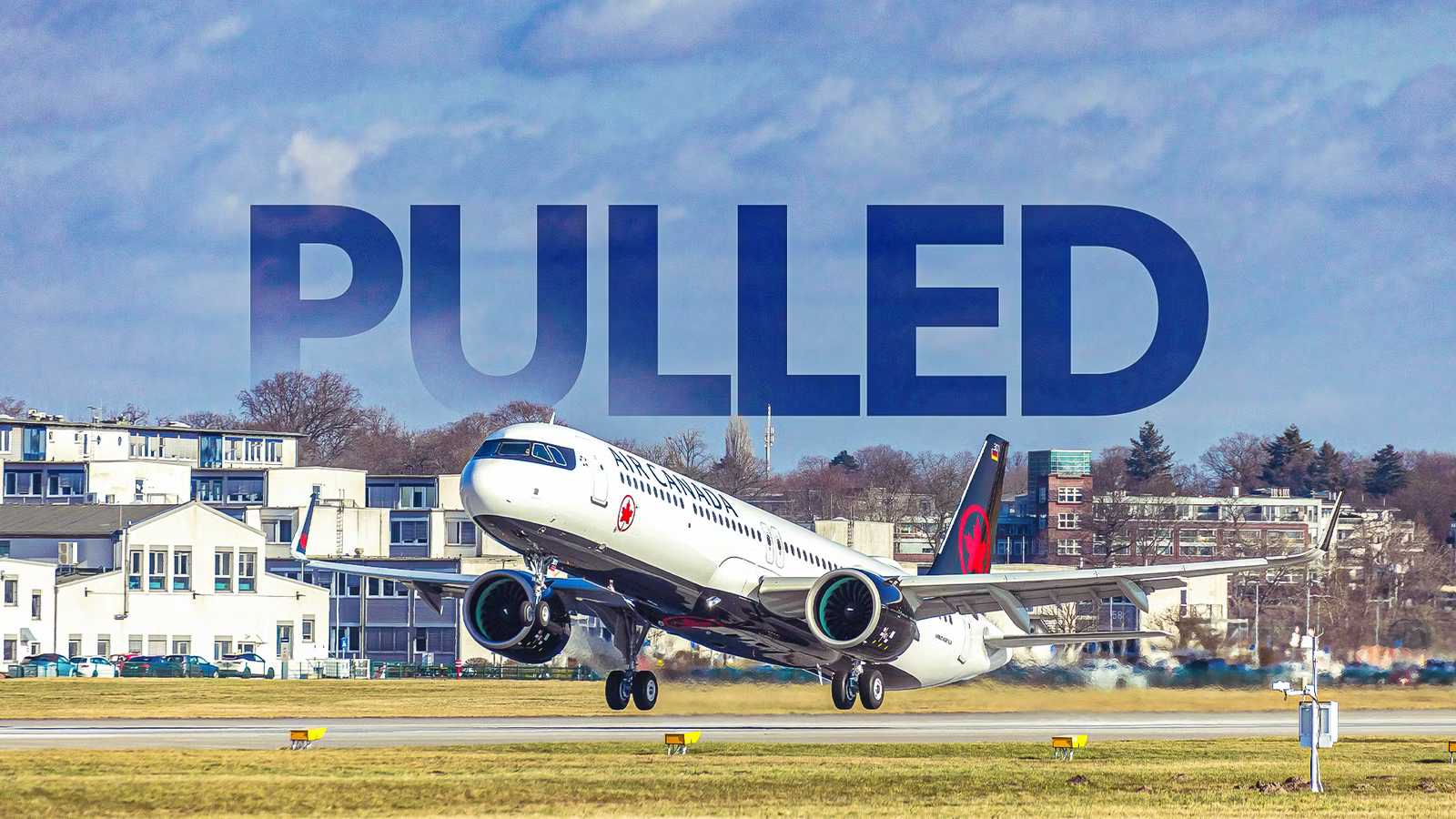
 Air Canada became the first Canadian operator of the Airbus A321XLR in April 2026, taking delivery of the first of 30 aircraft configured with 182 seats in two classes. The airline launched the type on its first international route from Montreal to Toulouse on June 15 and had 12 routes planned for the year, nine of them serving secondary European destinations that no widebody in Air Canada’s fleet could operate profitably. Schedule filings also showed the A321XLR assigned to
  Toronto Pearson International Airport (YYZ) to London Heathrow (LHR) from August 31 through October 22. Before the first flight operated, Air Canada pulled the aircraft off the route and restored widebody service.
The reversal exposed a structural limitation of the A321XLR that the range headline does not capture. The Rear Center Tank that gives the aircraft its 4,700 nautical mile (8,704 km) range occupies the lower-deck volume that widebodies use for palletized belly cargo. On a trunk route like Toronto to London where freight revenue contributes meaningfully to the route’s economics, the A321XLR cannot replicate the revenue a 777 or 787 generates below the cabin floor. Air Canada Cargo produced C$1.033 billion in revenue in 2025, and routes where that revenue depends on widebody belly capacity are routes the A321XLR cannot serve regardless of its range.
What Air Canada Planned For Toronto-Heathrow And What Happened

Air Canada’s schedule filings for summer 2026 initially showed the airline’s brand-new Airbus A321XLR assigned to AC852 between Toronto Pearson International Airport (YYZ) and London Heathrow (LHR), operating from August 31 through October 22. The assignment would have made Air Canada the first long-haul operator of the A321XLR at Heathrow and placed a narrowbody on one of the busiest transatlantic corridors in North America. Before the first flight operated, Air Canada removed all A321XLR service from the route and restored Boeing 777 and 787 widebody equipment.
The Toronto to London reversal was not an isolated schedule adjustment. Air Canada also pulled the A321XLR from its planned Montreal to Los Angeles (LAX) assignment during the same round of changes. The airline had taken delivery of its first A321XLR in April 2026, put it into domestic revenue service on June 9 with a Montreal to Toronto flight, and launched its first international A321XLR service on June 15 from Montreal to Toulouse (TLS). The Toulouse route operated as planned. The London route did not. The aircraft that Airbus delivered to open secondary transatlantic markets was pulled off a trunk route before it ever flew the sector.
Air Canada did not publicly explain the decision in detail. The Aviation A2Z report described it as “part of broader XLR schedule changes across Air Canada’s network.” The Simple Flying analysis attributed the reversal to the need to protect premium seat inventory and belly-freight revenue on a high-yield corridor where widebody capacity serves both the passenger and cargo sides of the business. The Toronto to London route carries a mix of business travelers, visiting friends and relatives traffic, and connecting passengers that fills a 777 or 787 with 300+ seats. It also generates significant belly cargo revenue from palletized freight in the lower hold. The A321XLR’s 182 seats and cargo-limited lower deck could not replicate either the passenger capacity or the freight contribution the widebody provides.
The Rear Center Tank Trade-Off That Airlines Cannot Avoid

The A321XLR’s range comes from a permanently integrated Rear Center Tank built into the fuselage structure behind the main landing gear well. The RCT holds 3,400 gallons (12,900 liters) of fuel, which is what extends the aircraft’s range from the A321neo’s approximately 4,000 nautical miles (7,400 km) to the XLR’s 4,700 nautical miles (8,704 km). The tank is not removable. It is a structural component of the airframe, present on every A321XLR regardless of whether the route it flies on a given day requires the full fuel capacity. A Montreal to Toulouse flight at approximately 3,100 nautical miles (5,741 km) does not need 4,700 nautical miles of fuel, but the tank and the lower-deck volume it consumes are there on every sector.
The volume the RCT occupies is the volume that would otherwise be available for commercial belly cargo. On a widebody like the Boeing 787-9, the lower hold accommodates LD3 containers and palletized freight alongside checked passenger luggage, with substantial remaining space to generate meaningful cargo revenue on every long-haul flight. The A321XLR’s lower hold, compressed by the RCT, is essentially consumed by the checked baggage of 182 passengers. There is capacity for loose bags and a small amount of expedited freight. There is no room for palletized commercial cargo in LD3 containers.
Every A321XLR departure operates with the same cargo limitation regardless of distance flown. On a thin secondary route where belly cargo is not a significant revenue factor, the trade-off is irrelevant. On a trunk route like Toronto to London where widebody belly cargo generates millions in annual supplemental revenue, the lost cargo capacity changes the financial profile of the route enough to make the aircraft uncompetitive against the widebody it was supposed to replace.
Where Air Canada Is Flying The A321XLR Instead

The routes where Air Canada is operating the A321XLR are the routes the aircraft was designed for. The first international A321XLR service departed Montreal-Trudeau International Airport (YUL) for Toulouse-Blagnac Airport (TLS) on June 15, 2026. Toulouse is the kind of market that justifies the A321XLR’s existence: a city with direct demand from Montreal’s French-speaking population that cannot support a widebody aircraft on a daily basis. A 787 at 280 seats would fly half empty. The A321XLR at 182 seats fills at fare levels that make the route viable.
Air Canada has 12 A321XLR routes planned for 2026, nine of them serving European destinations. From Montreal, the aircraft will fly to Toulouse, Edinburgh (EDI), Barcelona (BCN), and Copenhagen (CPH), among others. From Toronto, the aircraft will serve additional European markets where demand exists but not at widebody scale. Palma de Mallorca (PMI) was announced as the first new route specifically enabled by the A321XLR, a leisure destination in the Balearic Islands that Air Canada could not have served nonstop with any other aircraft in its fleet. The domestic routes, Montreal to Toronto and Montreal to Calgary (YYC), serve as operational familiarization sectors where Air Canada’s crews build experience on the type before the transatlantic services begin.
The common characteristic across every confirmed A321XLR route is that belly cargo is not a meaningful contributor to the route’s economics. Toulouse, Edinburgh, Palma de Mallorca, and Barcelona are not freight corridors. They are passenger markets where the demand is driven by tourism, visiting friends and relatives, and point-to-point leisure travel. The A321XLR’s 45% lower trip cost compared to a widebody makes these routes profitable at load factors and fare levels that a 787 or 777 could not sustain.
182 Seats, No Premium Economy, And The Cabin Strategy

Air Canada configured its A321XLR with 182 seats in two classes: 14 lie-flat Signature Class suites at the front and 168 economy seats behind them. There is no premium economy cabin. The omission is deliberate. Air Canada operates premium economy on its widebody transatlantic fleet, where the cabin class generates incremental revenue on trunk routes with sufficient demand to fill three or four cabins. Air Canada believes that two classes, a small lie-flat cabin and a large economy cabin, are enough to capture the available demand without the complexity and floor space cost of a third product.
The 14 Signature Class suites use the Collins Aerospace Aurora platform in a 1-1 inward-facing herringbone layout across seven rows. Every suite has direct aisle access, a fully lie-flat bed, a 19-inch (48 cm) 4K OLED screen with Bluetooth audio connectivity, and AC, USB-C, and USB-A power outlets. The suites do not have doors, a deliberate design decision by Air Canada and Collins that prioritized bed length and aisle width over the enclosed privacy that American Airlines’ version of the same Aurora platform provides on its A321XLR. The A321XLR Signature Class is a new product that debuted with the aircraft as the first expression of Air Canada’s “Glowing Hearted Standard,” distinct from the Signature Class seat installed on the airline’s existing widebody fleet. The 168 economy seats are Collins Meridian+ units in a 3-3 layout with larger seatback entertainment screens, Bluetooth connectivity, personal device power at every seat, and free WiFi for Aeroplan loyalty members.
The two-class configuration, with only 182 total seats, is a fraction of what Air Canada carries on its widebody transatlantic flights. A 777-300ER at 400 seats or a 787-9 at 298 seats generates far more revenue per departure on a route with the demand to fill them. On a route without that demand, the 182-seat A321XLR at 45% lower trip cost generates higher margins at lower load factors than a widebody would achieve at the same passenger count. The configuration is built for routes where 182 seats is the right number, not a compromise forced by the aircraft’s size.