dailynewsnblog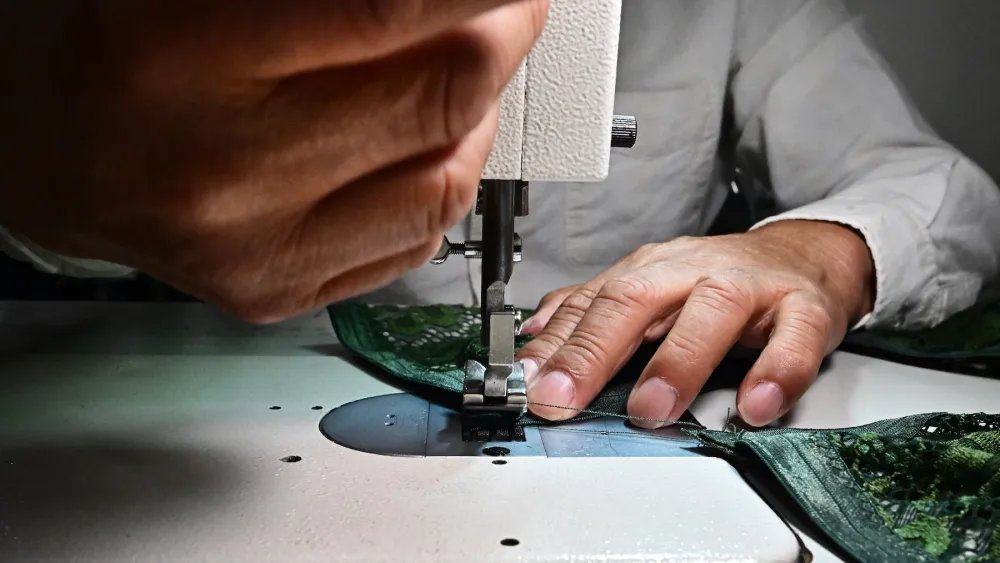
The FABRIC Act is back with twice the proposed money for domestic garment factories and the same effort to push responsibility for wage violations beyond sewing contractors and up to the brands placing the orders.
Rep. Jerrold Nadler and Sen. Kirsten Gillibrand reintroduced the Fashioning Accountability and Building Real Institutional Change Act on Monday amid New York Fashion Week. The New York Democrats said the legislation would protect more than 75,000 U.S. garment workers while encouraging apparel production to return from overseas.
The latest draft would authorize $100 million for domestic manufacturing grants, twice the $50 million proposed in the previous version.
The reshoring package is larger than its 2023 counterpart but narrower than the original 2022 House measure in one respect. That bill paired a $40 million grant program with a 30 percent tax credit for eligible expenses associated with moving garment operations from overseas to a Historically Underutilized Business Zone, or HUBZone, or a low-income U.S. community. The tax credit disappeared from the 2023 House bill and does not return in the latest draft.
This is the FABRIC Act’s third trip through Congress. Gillibrand and Nadler brought it back in September 2023 after the inaugural 2022 bills died with the end of the 117th Congress. Neither the House nor the Senate version advanced beyond committee.
The legislation again targets what the lawmakers previously described as the “misuse” of piece-rate pay, which can dole out pennies for every hem sewn or button stitched rather than providing a consistent hourly wage.
Under the bill, garment workers covered by the Fair Labor Standards Act could no longer receive piece-rate or per-unit base pay. Employers could still offer productivity bonuses calculated according to output, but those payments would have to sit on top of an hourly wage.
A limited exception would apply to workers covered by collective bargaining agreements that meet specified wage, overtime and dispute-resolution requirements.
The statutory floor, however, would be the federal minimum wage, currently $7.25 an hour and unchanged since 2009. The FABRIC Act would change the pay structure for covered garment workers rather than raise that rate; employers would still have to comply with higher state or local minimums where applicable.
The 2026 draft also clarifies that productivity bonuses may themselves be calculated by production, piece or unit. The 2023 version permitted incentive-based bonuses without expressly spelling out that distinction.
“America’s garment workers have been undervalued and subjected to unfair labor practices for far too long, due to weak regulations across the fashion industry and the rise of fast fashion,” Nadler said in a statement.
“With more than 100,000 New Yorkers contributing their labor to a billion-dollar garment industry, it is time to protect these workers and others across our nation and make historic investments in domestic manufacturing by passing the FABRIC Act,” he added.
The proposal would also make a “brand guarantor” jointly and severally liable with an employer for Fair Labor Standards Act violations involving workers producing its goods. That liability could extend through multiple tiers of subcontracting and allow workers to recover unpaid wages plus an equal amount in liquidated damages.
California already has both provisions on the books. Since Jan. 1, 2022, its Garment Worker Protection Act has barred piece-rate pay as a base wage and made brands share liability for unpaid wages with manufacturers and contractors. The FABRIC Act would take that approach nationally.
The bill defines a brand guarantor broadly as anyone contracting for garment manufacturing, including through a brand or name-licensing arrangement. Despite the announcement’s reference to “major retailers,” the draft does not contain a revenue or company-size threshold.
Brands would, however, have an affirmative defense if they could demonstrate that they had no knowledge of the alleged violation. The text does not further define what would constitute knowledge.
“Garment workers are the backbone of a multibillion-dollar industry, yet for far too long, their labor has been undervalued and exploited,” Gillibrand said in a statement. “We cannot champion American innovation while turning a blind eye to abusive labor practices in our own backyard. It’s time to take bold action at the federal level to change the fabric of the American garment industry.”
“The United States was once home to a booming apparel manufacturing industry; it’s time to reexamine how this industry has evolved over the past 50 years and change how we treat our workers,” Gillibrand continued. “With the FABRIC Act, we can curb wage theft, protect our workers and revitalize domestic manufacturing so that ‘Made in America’ also means ethically made.”
The bill’s definition of “garment” reaches beyond clothing to accessories including handbags, hats, gloves, hosiery, ties, scarves and belts. Covered manufacturing activities include sewing, cutting, processing, repairing, finishing, assembling, pressing, dyeing and altering designs.
The measure is focused on U.S. production. It would not impose new due diligence requirements covering the treatment of workers at overseas factories.
Another section would require domestic garment manufacturers and contractors to register annually with the Department of Labor beginning six months after enactment. Applicants would pay a fee of at least $200 and provide information about their employees, owners, officers, major shareholders, subcontracting practices, workers’ compensation coverage and recent Fair Labor Standards Act violations.
The labor secretary could suspend or revoke a registration for misrepresentations or noncompliance. Registration violations could draw civil penalties of as much as $50 million, with the amount based on factors including company size, the gravity of the violation and the registrant’s compliance history.
The bill would establish an Office of the Garment Industry within the Labor Department, led by a new undersecretary. It would authorize $10 million to establish and operate the office in fiscal 2027, followed by $3 million annually from fiscal 2028 through 2032.
Its $100 million National Domestic Garment Manufacturing Support Program would offer competitive grants of up to $5 million apiece to U.S. manufacturers and nonprofits providing workforce-development services.
Recipients could use the money for employee training, machinery, factory improvements, workplace safety and worker-rights education. The Labor Department would give priority to unionized operations, state-certified minority-, women- or veteran-owned businesses and manufacturers that have operated in the United States for more than five years.
The bill is endorsed by the AFL-CIO, UNITE HERE, Workers United and the Retail, Wholesale and Department Store Union. All the lawmakers named as supporters are Democrats except independent Sen. Bernie Sanders. The sponsors did not announce any Republican cosponsors.
The draft circulated by Nadler’s office did not yet carry an assigned House bill number. If enacted, its wage and liability provisions would take effect six months later. Congress would still have to appropriate the proposed $100 million before any manufacturing grants could be awarded.