dailynewsnblog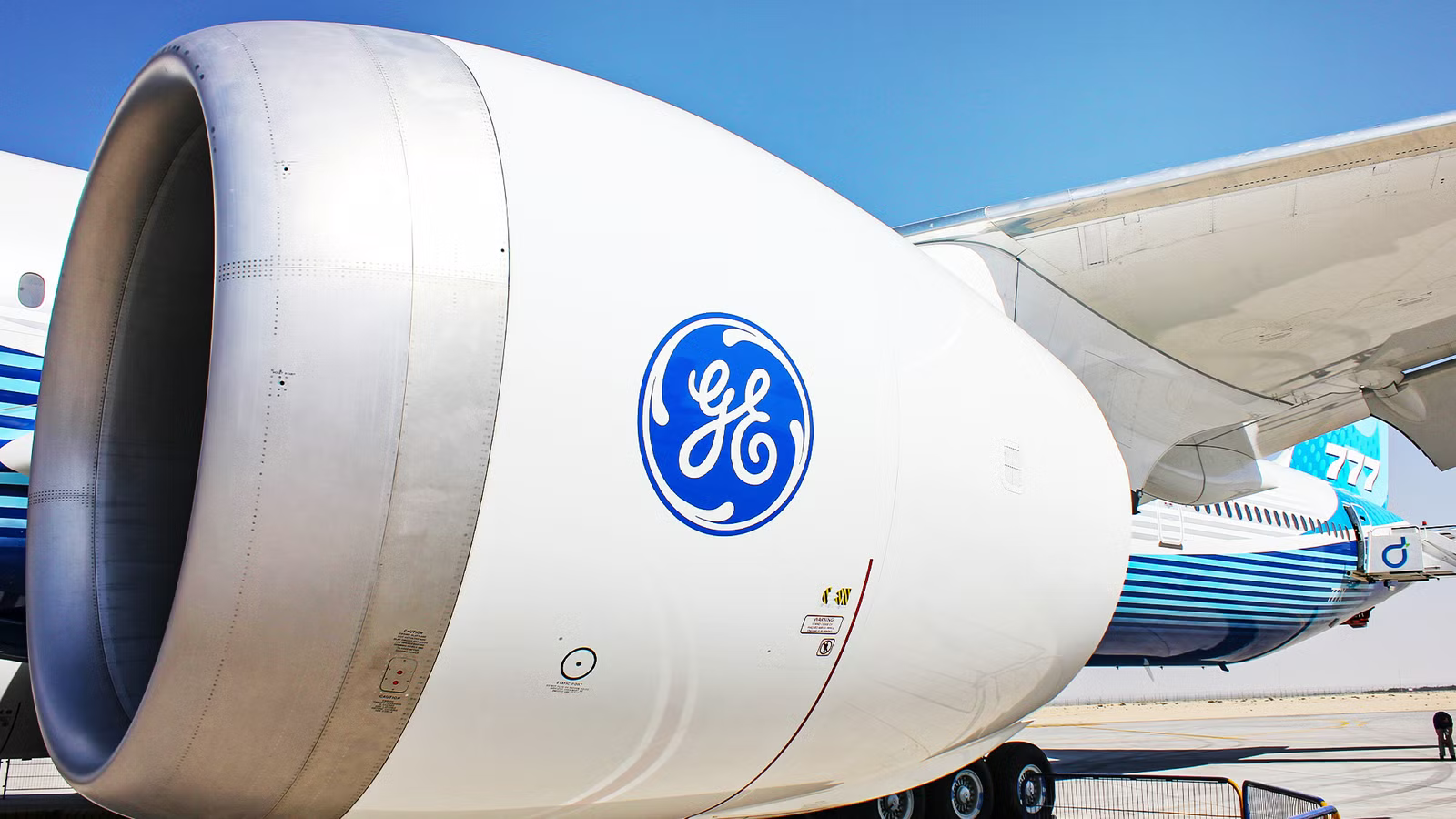
The all-new Boeing 777X is known in the aviation community for a few keystone features not seen on its predecessors in the Boeing 777-300ER or -200 variants. The folding wingtips, the composite span, and Boeing’s certification backlog have made headlines regularly with respect to the changes to the 777 program. While these characteristics have their own set of engineering challenges, there is a key component inside the prescribed engine, the appropriately named General Electric GE9X, that has been changing the certification timeline upon testing completion.
A redesigned turbine seal: a component balancing temperature and pressure between stages, has been the main antagonist in the 777X program’s success and on-time delivery performance in 2026.  Boeing, the Federal Aviation Administration(FAA), and General Electric (GE) have come together to force a resolution on the problematic mid-seal. The specific mid-seal part number is not public, as the engine program is still in development.
Why the Mid‑Seal Matters More Than It Seems

According to ePlane, GE has reportedly addressed a crack that was uncovered during a shop visit for the GE9X engine. The crack presented itself on a flight-test engine, and final modifications are underway. Further, GE is updating its tooling and increasing supplier readiness for the revised component. Official GE9X technical manuals, including the Illustrated Parts Catalog (IPC), Engine Manual (EM), and Service Bulletins (SB), are likely also in revision.
Per GE’s official product page, the GE9X engine is the world’s largest turbofan, with a 134‑inch fan and extreme pressure ratios. The mid‑seal sits between turbine stages where temperatures exceed 1,000 degrees Celsius. A redesign means tooling changes, supplier ramp‑ups, and integration into future production engines, all part of a broader supply chain adjustment, all while Boeing maintains a 2027 delivery target. The GE9X engine is an exclusive powerplant built for the Boeing 777X program.
However, with a full supply chain review and adjustment, as well as mandatory review from all constituents in Boeing and the FAA, how can GE guarantee it won’t affect certification? This follows a similar trend at Airbus, which has remained optimistic about delivery targets despite powerplant-related technical and engineering surprises.
How GE Can Redesign a Seal Without Delaying Certification

GE documented that the crack was isolated to a specific design tolerance issue, not a systemic failure. As of February, GE began on-wing inspections of the legacy mid-seal components and evaluated the severity of each seal. GE then performed a corrective action, overseen by the FAA, for each instance. GE’s compliance with the corrective actions gives Boeing the liberty to continue flight tests as planned. Further, GE continued deliveries when the crack presented itself, albeit with fewer completed deliveries than anticipated.
GE’s Q1 and Q2 earnings calls confirm that tooling changes are underway, suppliers are ramping up, and the modification is already in finalization, according to the engine maker. Boeing’s own statements reinforce that flight testing has continued uninterrupted, as reported further by ePlane. With confirmation that GE and Boeing are on schedule with the mid-seal updates, the FAA’s certification timeline remains intact.
GE’s confidence comes from the fact that the affected seal was found during a shop visit on a flight‑test engine, not a production unit. This reassures customers that the crack was found in an extreme testing environment, potentially characterized by extreme operating conditions such as temperature and weight. Certification engines already incorporate earlier revisions, and the redesign can be validated as a result. However, given GE’s vigilance and timeliness in correcting the issue, a key question is raised: If certification stays on track, how will the redesign flow into production engines and future overhauls?
What The Redesign Means For Production Engines

General Electric, Simple Flying
How will GE integrate the redesigned mid‑seal into the engines airlines actually receive? The answer lies in the reliability of GE’s supply chain team and how efficiently they can incorporate new tooling and FAA guidance. Engines delivered to Boeing for early 777‑9 customer aircraft will incorporate the new part. Existing engines, however, will require a retrofit.
Earlier this year, Boeing struggled to offer 20 already-built 777Xs to companies with existing commitments to the type; rejections from Emirates, Lufthansa, and United werereportedly due to the high cost of the retrofit. The mid-seal replacement was not the only retrofit requirement: extensive patchwork for structural modifications due to age, and the fact that these airframes sat idle for eight years. This skyrocketed the costs that would ultimately fall back onto the customer, hence the lack of interest from three global carriers.
While not economical, retrofits are possible for the engine, including structural repairs and the crack-inducing mid-seal. If retrofits are possible, what does this mean for long‑term GE9X maintenance economics?
Maintenance and Life Cycle Implications

How does a redesigned mid‑seal affect GE9X life cycle cost, reliability, and airline operations? The answer is similar to any preventive maintenance, especially work done during an airline’s heavy checks. The mid‑seal influences thermal balance, turbine efficiency, and long‑term wear. A redesigned seal may improve durability, reduce hot‑section stress, and lower maintenance costs over the engine’s first decade of service. However, time will tell whether the redesigned subcomponent truly provides enhanced durability, or whether the engine’s design leads to cracking regardless, now deferred to a later date.
GE’s Flight Plan reports indicate GE9X shop visits are expected at 10,000–12,000 cycles. According to Forecast International Flight Plan, a more robust mid‑seal could extend intervals or reduce unscheduled removals.
While Boeing is slowly returning to its pre-COVID-19 stability, prior to delays associated with the 737 MAX and 777X, airlines are putting their trust back into Boeing’s manufacturing, by association with GE. If the redesign of the GE9X improves lifecycle economics, what does this mean for the 777‑9’s competitiveness against the A350‑1000?
The 777‑X’s Market Position

A stable GE9X with improved durability strengthens Boeing’s case that the 777X will deliver lower operating costs at high seat counts because engine reliability is the single largest determinant of widebody economics once an aircraft crosses the 380–420‑seat threshold. When an airline like  Emirates or
  Lufthansa deploys a 400‑plus‑seat aircraft on 14‑ to 17‑hour missions, the cost of an unscheduled engine removal doesn’t just show up in the maintenance ledger, but it also cascades into crew repositioning, passenger reaccommodation, and lost utilization on a frame designed to fly long‑haul every day. A more durable GE9X reduces those disruptions, allowing Boeing to argue that the 777X’s scale advantage only works if the propulsion system can stay on‑wing long enough to amortize its seat count over more block hours than the A350‑1000.
For example, Emirates’ 777‑9 deployment on  Dubai International Airport–
  Los Angeles International Airport (LAX) or DXB –
  San Francisco International Airport (SFO) could demonstrate the aircraft’s economics at scale. A more durable GE9X reduces maintenance downtime, improving fleet availability on ultra‑long‑haul routes. This allows Emirates to deploy this aircraft on the 14-16 hour flight with confidence.
Will the redesigned mid‑seal be validated quickly enough to support Boeing’s 2027 delivery promise? Boeing and GE will need to ensure that further disruptions or surprises do not heavily impact production to the point of causing further delivery delays. Some airlines have already opted out of the 777X program in favor of Airbus’ A350 program, such as Air Canada: The Canadian flag carrier “bypassed Boeing’s delayed 777X program” and chose the A350‑1000 for “delivery certainty.” While no airline has officially backed away from the 777X program due to the specific GE engine supply chain adjustments, broader uncertainty was the main concern with Air Canada and was also flagged by Emirates.
The Final Implication

The mid‑seal redesign is now the quiet hinge on which the 777‑9’s entry‑into‑service swings. The broader picture depends not on Boeing’s airframe, but on GE’s ability to finalize, validate, and scale a single component. What might traditionally be seen as a single, easily swapped subcomponent is, in reality, 134 inches in diameter. It is a truly massive component inside of the engine that, on paper, can be considered a simple packing or O-ring. In reality, it plays a significant role in the engine’s operation.
The real test will come when GE delivers the first batch of production GE9X engines in late 2026 to early 2027. If those engines incorporate the redesigned seal and pass FAA conformity inspections without issue, Boeing’s 2027 delivery target holds. If not, Boeing will need to address further delays and possibly new or further loss of faith from program customers.
Analysts at Leeham News note that propulsion issues are now the priority for the 777X’s development, rather than airframe certification. GE’s next earnings call and FAA certification updates will be a good indicator of whether the redesign is tracking toward service entry, or if additional setbacks will occur. As with the 787’s manufacturing delays and certification setbacks, the 777X program may encounter issues long after deliveries begin.