dailynewsnblog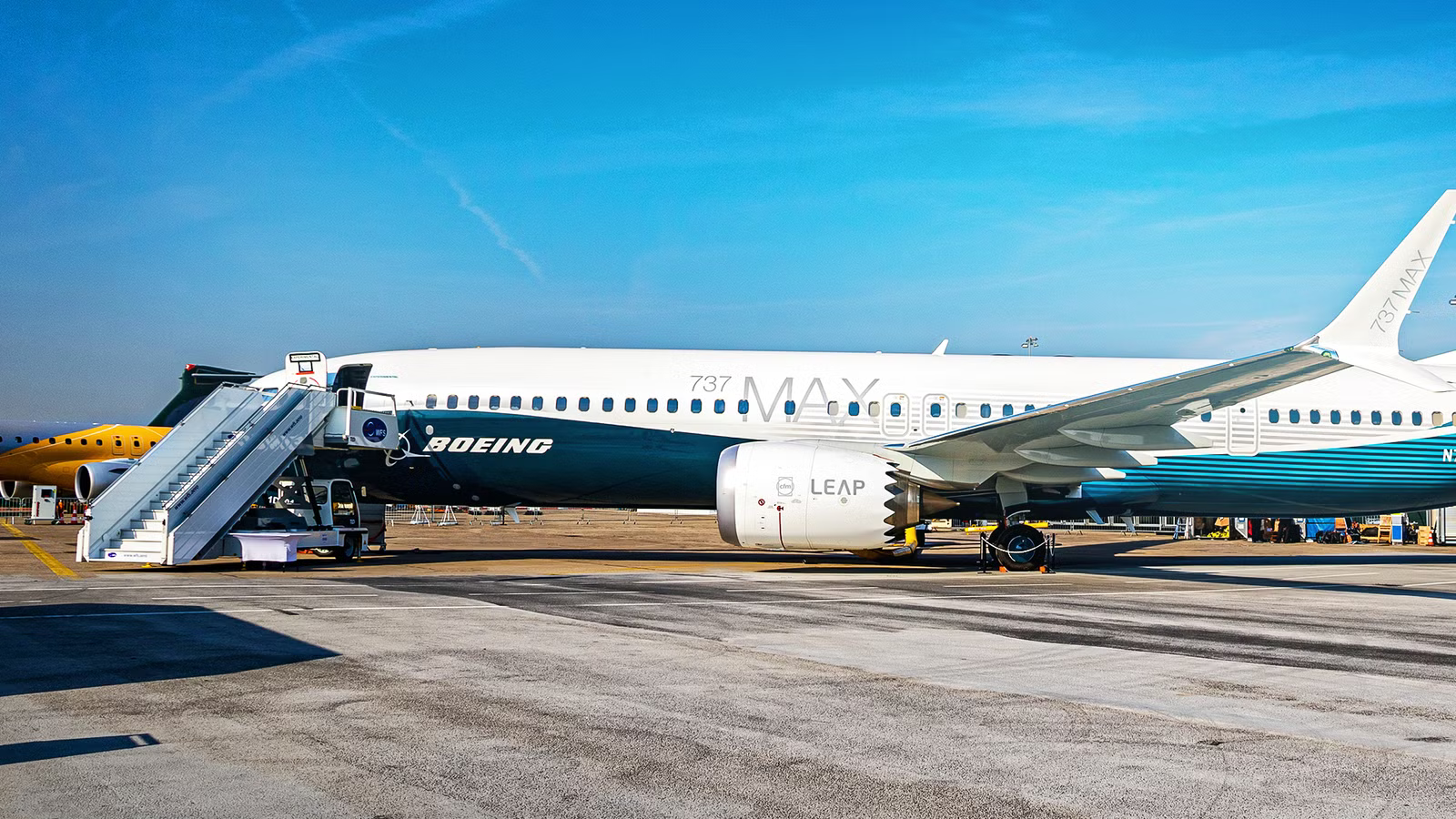
Modern commercial turbofans are miracles of thermodynamic efficiency, though they are still not perfect. Even the world’s most advanced narrowbody engine was being pulled off wings in desert hubs at a fraction of the operational lifespan of its 30-year-old predecessor. In high-temperature, sand-laden environments across the Middle East and India, fine particulate ingestion and extreme thermal stress began eroding hot-section components far faster than legacy baselines ever predicted.
Resolving this durability crisis meant joint venture partners GE Aerospace and Safran had to re-engineer the core architecture of the CFMLEAP engine without sacrificing its thermodynamic advantages. Their solution: a targeted high-pressure turbine upgrade paired with a novel air management system, built to double time on wing in severe operating conditions and match the legendary reliability of the CFM56.
Removing Engines Far Too Early

Inside the high-pressure turbine of a modern jet engine, immense heat drives internal temperatures above 2,000 degrees Fahrenheit (1,093 degrees Celsius), far beyond the melting point of underlying nickel-based superalloys. To survive these internal infernos, LEAP-1A and LEAP-1B engines rely on microscopic air cooling channels and ceramic thermal barrier coatings, but fine airborne sand acts like an abrasive chisel in these hot corridors. When ingested particulates melt into molten silicate glass inside the combustion chamber, they coat turbine blades, clog critical cooling holes, and cause rapid delamination of protective coatings within just three years to four years of hot-and-harsh operation.
For operators flying out of dusty environments in South Asia and the Middle East, early wing removals shattered financial projections that assumed an expected 15,000-flight-hour first shop visit interval. Instead, engines required unscheduled removals after only 3,000 flight hours, leaving carriers to lease expensive spare powerplants and absorb unexpected fleet downtime. CFM International recognized that software adjustments or minor flight-envelope restrictions would not solve the underlying physics, prompting a decision to redesign the entire stage 1 high-pressure turbine module alongside an automated post-shutdown bleed system.
Even though CFM’s engineering teams proved that a trio of redesigned turbine components could withstand these harsh environmental attacks, creating hardware capable of surviving twice as long inside an active combustor was a massive project, requiring a total alteration of airflow dynamics and material science at the component level.
The Solution To The Problem

CFM International addressed the durability deficit through a targeted three-part hardware upgrade to the high-pressure turbine module. Engineers redesigned the stage 1 blade, stage 1 nozzle, and forward inner nozzle support. The new stage 1 blade features revised internal cooling geometry, allowing fine sand particulates to pass through without clogging film-cooling apertures, and the reinforced nozzle structures eliminate circumferential warping caused by intense thermal gradients.
Complementing the metal upgrades, CFM developed an automated reverse-bleed system to prevent carbon coking inside fuel injectors. Upon shutdown, the system reverses airflow through fuel lines, purging stagnant fuel before heat bakes it into carbon deposits. Certified for Airbus A320neo LEAP-1A models in December 2024, the upgrade powers 40% of active aircraft, with 70% utilizing the bleed system as of July 2026, according to updates from CFM International. Following dual FAA and EASA approval on July 18, 2026, for Boeing 737 MAX LEAP-1B engines, full production cutover is scheduled for early 2027.
Proving that re-engineered hardware can survive double the flight hours in laboratory conditions protects engine integrity, but getting these kits out there across a worldwide fleet of over 10,000 active engines is an immense logistical challenge. In these kinds of circumstances, engine manufacturers must balance retrofitting active aircraft against the risk of overwhelming maintenance repair facilities or causing widespread airline flight cancellations.
Upgrading When The Time Is Right

To prevent widespread flight cancellations, CFM International avoids pulling active engines off wings early for these retrofits. GE Aerospace Chief Executive Larry Culp outlined a phased deployment strategy in which the durability kit is installed only during an engine’s first scheduled performance restoration shop visit, per Aviation Week. The approach lets operators maintain flight schedules while upgrading hot-section components during routine overhauls, avoiding sharp spikes in spare engine lease costs.
Airlines running high-frequency narrowbody routes, such as  IndiGo flying Airbus A320neo jets across South Asia, integrate these kits during heavy maintenance windows. By pairing upgrades with planned overhauls, carriers avoid the 150% turnaround delay currently affecting unscheduled engine repairs. Furthermore, CFM’s five-year $2 billion investment across its global MRO network ensures service facilities can process these overhauls efficiently.
The problem was that proving these redesigned components could survive twice as long in harsh environments wasn’t possible without entirely new testing protocols. Laboratory simulations therefore had to reproduce the exact micro-abrasive erosion seen inside active combustors across dusty flight corridors.
Bringing The Desert To The Production Line

To validate the new high-pressure turbine kit before certifying it, GE Aerospace and Safran constructed indoor test cells capable of injecting controlled streams of abrasive dust into running engines. Standard certification test runs rely on ambient air, but proving durability meant feeding synthetic sand blends directly into the combustor at maximum takeoff thrust. Engineers monitored real-time thermal barrier coating degradation, cooling hole blockage, and aerodynamic performance loss under severe, continuous environmental stress.
Testing facilities subjected full-scale LEAP powerplants to thousands of simulated flight cycles using fine quartz dust and calcium-magnesium-alumina-silicate (CMAS) compounds heated past 2,000 degrees Fahrenheit (1,093 degrees Celsius). With over 100 million cumulative fleet flight hours providing baseline operational data, CFM adjusted internal cooling hole diameters and ceramic coating thickness. The resulting endurance trials showed that the redesigned stage 1 blades maintained structural integrity for twice as long as the initial production hardware.
Successfully demonstrating this hardware in rig testing allows aircraft leasing companies and commercial airlines to project far more predictable long-term maintenance costs. Restoring time on wing reduces emergency engine swaps, stabilizes secondary market aircraft valuations, and reassures major fleet customers about narrowbody schedule reliability. However, as CFM transitions these validated components into mass production, the broader industry also needs to adapt to a new operational reality for modern high-efficiency turbofans.
Upping The Standards

With full factory production cutover targeted for early 2027, CFM International’s durability upgrades re-establish a key baseline for modern narrowbody powerplants. Achieving double the time on wing in harsh climates is essential for high-bypass commercial engines to deliver their promised 15% fuel burn reductions without burdening airline operators with premature maintenance costs. This stability also lets carriers confidently expand high-utilization routes across dusty, demanding environments like the Middle East and South Asia.
For a carrier operating 50 Airbus A320neo or Boeing 737 MAX aircraft out of regional hubs like Dubai or Delhi, these upgrades are particularly vital. Extending first shop visit intervals from 3,000 flight hours removes dozens of unscheduled engine removals over a five-year window. Importantly, it saves tens of millions of dollars in spare engine lease rates, heavy maintenance fees, and lost flight availability, bringing LEAP ownership economics directly back into alignment with the peak of CFM56 standards.
With airlines bringing in thousands of upgraded kits during upcoming scheduled shop visits, the true test now leaves the engineering test cells to take center stage on active flight lines. Now, airlines will see whether these hardware modifications permanently tame the world’s harshest operating environments and whether ultra-efficient turbofans can maintain their economic advantage into the next decade of commercial flight, setting the reliability standard for future engine designs.
Moving In The Right Direction

High-bypass turbofans have had their fair share of troubles, but there can be no doubt that technology is evolving in a positive direction, one where the end point holds a fully reliable set of engine options from multiple manufacturers. While initial LEAP models exposed the unforeseen physical limits of running complex ceramic coatings in dusty environments, CFM’s rapid engineering response shows that thermodynamic efficiency does not have to come at the expense of rugged mechanical longevity under tough everyday airline flight conditions.
The proof is, of course, in the monitoring of engine performance telemetry through late 2027 to verify if real-world time on wing matches test cell projections. With more than 10,000 LEAP engines in service and order books extending deep into the 2030s, CFM’s ability to uphold these durability promises will be the main benchmark for every next-generation engine program entering commercial service.