dailynewsnblog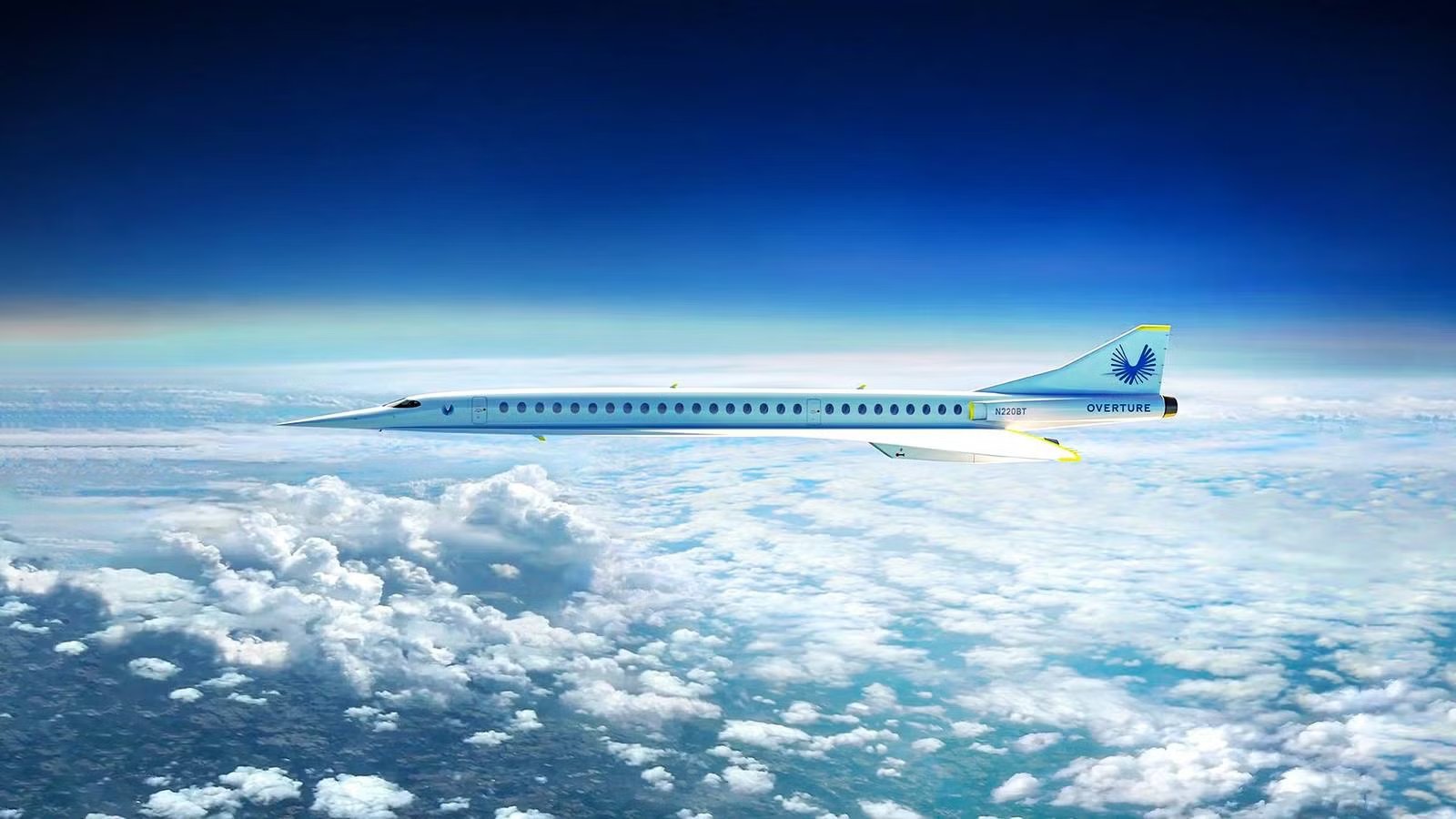
Since 1973, federal regulation 14 CFR 91.817 has prohibited civil aircraft from exceeding the speed of sound over US land. The ban was a response to public backlash against sonic booms during military testing in the 1960s, and it forced Concorde to operate supersonic only over water on its US routes. No commercial supersonic flight has occurred over the continental United States in the 53 years since. On July 2, 2026, the FAA published a Notice of Proposed Rulemaking that would replace the speed-based prohibition with a performance-based noise standard, allowing supersonic flight if the sonic boom overpressure at the ground does not exceed 0.11 lb per square foot.
The timing is not coincidental. NASA’s X-59 completed its first supersonic flight on June 5, 2026, and reached its target mission conditions of Mach 1.4 at 55,030 feet one week later. Boom Supersonic holds approximately 130 conditional orders from  United Airlines,
  American Airlines, and Japan Airlines (JAL) for its Mach 1.7 Overture airliner. President Trump signed an executive order in June 2025 directing the FAA to repeal the ban. Congress is advancing bipartisan legislation with statutory deadlines. Regulatory, technological, and political conditions for supersonic overland flight are aligning for the first time since the ban.
The 1973 Ban & Why It Existed

In 1964, the FAA and the US Air Force conducted a six-month experiment called Operation Bongo II over Oklahoma City to test whether the public would tolerate regular sonic booms from supersonic aircraft. Military jets flew supersonic over the city eight times per day starting in February 1964, producing 1,253 sonic booms over the test period. The booms rattled windows, cracked plaster, and startled residents. The FAA received over 15,000 formal complaints from a city of approximately 500,000 people, along with 9,594 complaints of damage to buildings and 4,629 formal damage claims totaling $12,845 for broken glass and cracked plaster. The FAA rejected 94% of the claims, fueling public anger that helped Congress cancel funding for the Boeing 2707 supersonic transport program in 1971.
The FAA formalized the prohibition in 1973 under 14 CFR 91.817, which bans civil aircraft from operating at speeds above Mach 1 over land in the United States except under the conditions of an operation-specific authorization from the FAA Administrator. The regulation is a speed-based restriction. It does not measure noise. It does not account for altitude, aircraft design, or whether the boom actually reaches the ground. Any civil aircraft exceeding Mach 1 over US land violates the regulations, regardless of the acoustic impact at the surface. The rule has been in effect for 53 years.
The ban shaped how Concorde operated in the United States. British Airways and Air France flew Concorde at subsonic speeds over US land and accelerated through Mach 1 only after reaching the Atlantic coast, adding time and fuel to every westbound departure from New York John F. Kennedy International Airport (JFK) and Washington Dulles International Airport (IAD). Concorde could not serve any US domestic route supersonically. A theoretical New York to Los Angeles service at Mach 2 would have taken about 2.5 hours but was never possible because the aircraft would have produced sonic booms across the entire continental United States.
What The FAA Proposed On July 2, 2026

On July 2, 2026, the FAA published a Notice of Proposed Rulemaking in the Federal Register titled “Enabling Supersonic Overland Flight,” assigned Docket FAA-2026-6935. The proposal would repeal the 53-year-old speed-based ban and replace it with a performance-based noise standard. Instead of prohibiting all civil supersonic flight over land regardless of conditions, the new framework would allow supersonic operations as long as the sonic boom overpressure at the ground does not exceed 0.11 lb per square foot. The distinction is fundamental.
The 0.11 lb per square foot threshold measures the pressure wave that reaches the surface when a supersonic aircraft’s shock waves propagate downward through the atmosphere. A traditional sonic boom from a military jet or Concorde produces an overpressure of 1.0-2.0 lb per square foot at the surface, enough to rattle windows, set off car alarms, and produce the sharp double crack that defined public opposition in the 1960s. The proposed threshold of 0.11 lb per square foot is roughly 10-20 times lower. At that level, the acoustic effect at the surface would be a low thump or distant rumble rather than the sharp crack of a conventional sonic boom. Whether 0.11 lb per square foot is perceptible or objectionable to people on the ground is one question the rulemaking process is designed to answer through public comment and community noise research.
The public comment period closed on August 17, 2026. The FAA received comments from aircraft manufacturers, airlines, environmental groups, community organizations, and members of the public. Researchers at Purdue University submitted comments noting that a simple pressure threshold does not necessarily match perceived noise because human hearing responds differently to different frequencies. Professor William Crossley cautioned that “a simple pressure level is not sufficient to determine how annoying” supersonic overland flights will be and suggested a noise standard measured in decibels or dBA might be more appropriate. The FAA is targeting a final rule by mid-2027. If finalized as proposed, the rule would create the first regulatory pathway for routine civil supersonic flight over the continental United States since the ban was imposed in 1973.
How Aircraft Designers Are Trying To Eliminate The Sonic Boom

The engineering challenge behind the FAA’s proposed rule is whether aircraft can be designed to fly faster than the speed of sound without producing a traditional sonic boom at the surface. A conventional supersonic aircraft generates shock waves that merge as they propagate downward through the atmosphere, producing the sharp double crack that defined public opposition in the 1960s and 1970s. The proposed 0.11 lb per square foot threshold assumes that future aircraft can either prevent those shock waves from merging entirely or attenuate them enough that the acoustic effect at the ground is a low thump rather than a boom.
NASA’s X-59, built by Lockheed Martin’s Skunk Works division, is the aircraft designed to prove that assumption. The X-59 is a single-seat experimental jet measuring 99.7 feet (30.4 meters) long and 29.5 feet (9 meters) wide, shaped specifically to prevent the shock waves from coalescing. The aircraft’s elongated nose, carefully contoured fuselage, and top-mounted engine inlet are designed so that the individual shock waves dissipate as they travel through the atmosphere rather than reinforcing each other into a single concentrated boom. The X-59 completed its first supersonic flight on June 5, 2026, reaching Mach 1.077 at 43,400 feet over Edwards Air Force Base in California. One week later, on June 12, the aircraft reached its target mission conditions of Mach 1.4 at 55,030 feet for the first time, the speed and altitude at which it will eventually fly over US communities to measure public response to its sonic signature.
The X-59’s test program has three phases. Phase one, envelope expansion, validated the aircraft’s handling characteristics and systems at progressively higher speeds and altitudes. Phase two, now underway in 2026, focuses on acoustic validation by measuring the X-59’s actual sonic signature using a shock-sensing probe mounted on an F-15 chase aircraft. Phase three, the most consequential part of the FAA’s rulemaking, will fly the X-59 over multiple US cities while NASA deploys microphones on the ground and surveys residents to measure how people perceive the reduced sonic thump. NASA will share the community response data with the FAA and the International Civil Aviation Organization to inform whether the 0.11 lb per square foot threshold, or a different standard, should govern supersonic overland flight going forward.
The Executive Order And The Congressional Push

President Trump signed an executive order titled “Leading the World in Supersonic Flight” on June 6, 2025. The order directed the FAA Administrator to repeal the prohibition on overland supersonic flight by December 3, 2025, and instructed the White House Office of Science and Technology Policy to coordinate federal supersonic research, identify regulatory barriers, and facilitate industry-led testing at federal test sites. Michael Kratsios, Director of the White House Office of Science and Technology Policy, framed the initiative in industrial terms: “Under President Trump’s leadership, we are clearing the runway for supersonic flight and ensuring the future of aviation is invented and built in America.”
Catch what other flight trackers miss
Emergency squawks, holds, NOTAMs — live signals, no signup.
Open tracker
Catch what other flight trackers miss
Emergency squawks, holds, NOTAMs — live signals, no signup.
Open tracker
The FAA missed the December 2025 deadline. The NPRM was published on July 2, 2026, approximately seven months late. The delay reflected the complexity of drafting a performance-based rule that replaces a simple speed prohibition with a noise standard that must be technically defensible, legally enforceable, and grounded in sufficient acoustic research. The FAA’s 63-page proposed rule addresses the overpressure threshold, the certification pathway for supersonic aircraft, the operational conditions under which supersonic flight would be permitted, and the interim framework governing early commercial operations before a permanent standard is finalized. The final rule is targeted for mid-2027.
Congress has pursued a parallel track through the Supersonic Aviation Modernization Act, known as the SAM Act. The legislation is sponsored in the House by Representatives Troy Nehls of Texas and Sharice Davids of Kansas with nine additional cosponsors. In the Senate, Senators Ted Budd of North Carolina and John Hickenlooper of Colorado lead the bill with four additional cosponsors. The SAM Act would create statutory deadlines requiring the FAA to implement a regulatory framework for supersonic flight, providing a legislative backstop if the rulemaking process stalls or is delayed further. The bipartisan support reflects an unusual alignment between defense-industry Republicans and innovation-focused Democrats on a policy area where the United States has ceded ground to international competitors for five decades.
What This Means For Commercial Supersonic Aviation

The proposed rule would create a regulatory pathway that did not exist when the ban was imposed, but no commercial supersonic aircraft is currently available to use it. Boom Supersonic’s Overture is the furthest along. Designed to carry 64-80 passengers at Mach 1.7 with a range of 4,250 nautical miles (7,867 kilometers), the Overture completed construction of its final assembly facility in Greensboro, North Carolina, in June 2024. Boom’s XB-1 demonstrator broke the sound barrier on January 28, 2025, reaching Mach 1.122. United Airlines has ordered 15 with options for 35 more. American Airlines has ordered 20. Japan Airlines has ordered 20. Together, the three carriers have commitments for about 130 aircraft.
Boom’s approach to overland supersonic flight uses a concept called “Boomless Cruise,” which takes advantage of the Mach cutoff phenomenon. At certain combinations of speed and altitude, the shock waves produced by a supersonic aircraft refract upward through the atmosphere rather than propagating downward to the surface. The aircraft is flying supersonic, but the boom never reaches the ground. Boomless Cruise does not require the aircraft’s shape to prevent shock wave coalescence the way the X-59 does. It relies on atmospheric conditions and flight profile management to keep the boom above the surface. Whether Boomless Cruise can consistently keep ground-level overpressure below 0.11 lb per square foot across varying atmospheric conditions, seasons, and terrain is a question that flight testing and operational data will need to answer.