dailynewsnblog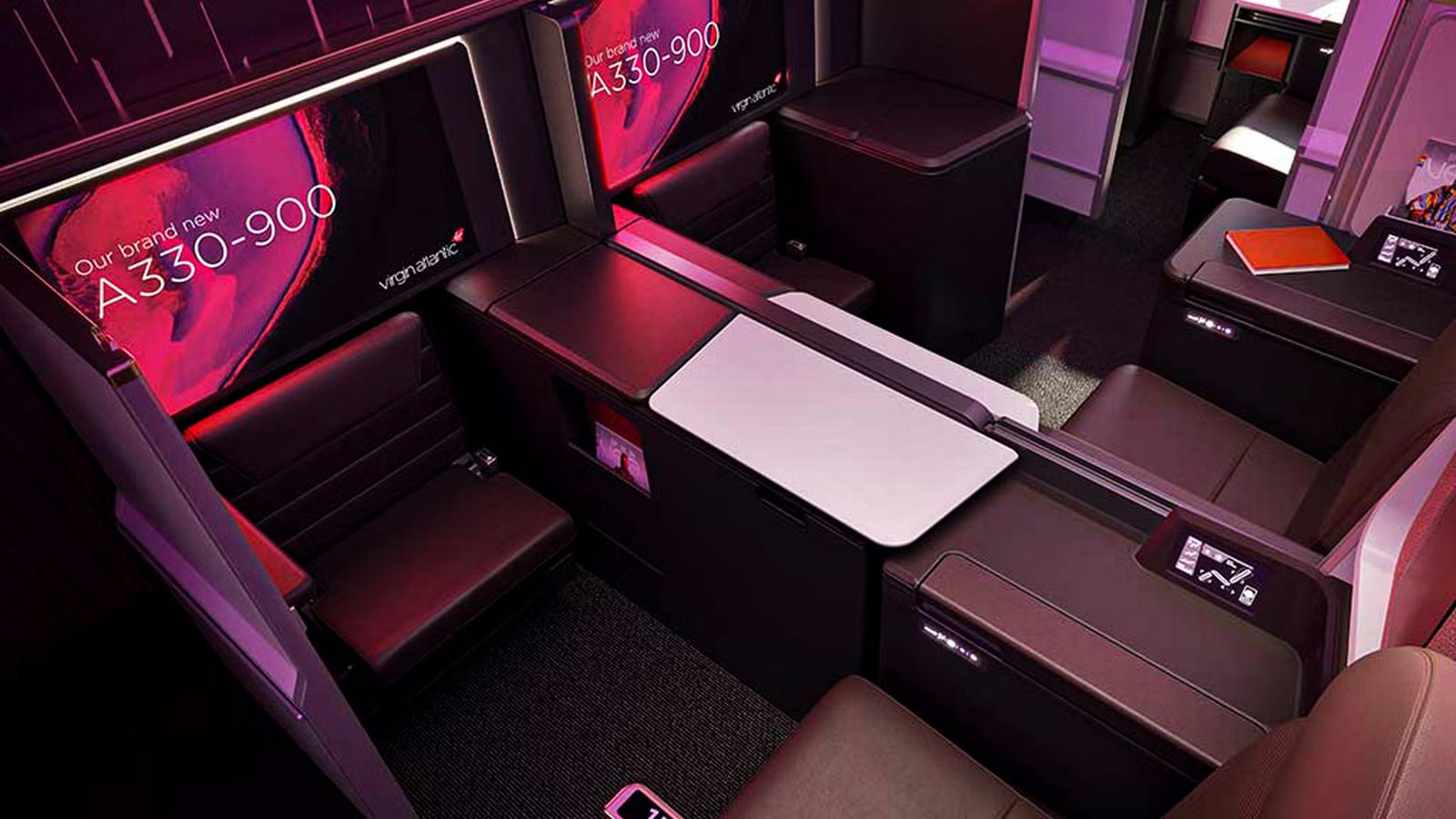
Virgin Atlantic is voluntarily reducing the passenger density of its incoming widebody aircraft, stripping 30 seats off ten new Airbus A330-900neos to make room for high-margin premium real estate. Sacrificing 56 economy seats to expand Upper Class to 48 suites and Premium Economy to 56 seats, the carrier is actively choosing lower headline capacity on its premier routes out of  London Heathrow, but why is this the case?
The trade-off is backed by a $745 million financing agreement with Apollo Global Management, added against 27 of the carrier’s highly coveted London Heathrow takeoff and landing slots. Rather than deploying high-density aircraft to maximize passenger volume, Virgin Atlantic thinks that high-yield corporate travelers will generate superior returns per square foot on core transatlantic corridors.
The Value Of Slot Control

Achieving $745 million in private credit against 27 London Heathrow slots provides the capital required to restructure Virgin Atlantic’s balance sheet without diluting equity. Approximately $180 million of the proceeds pays down old debt from a previous 2015 slot-backed credit facility, while the remaining liquidity directly funds new cabin configurations and fleet-wide technology installations.
Having control over landing slots, which are among the most valuable aviation assets in the world, allows the carrier to fund an intensive capital expenditure program while operating under strict airport capacity constraints. In close collaboration with its joint venture partner,  Delta Air Lines, Virgin Atlantic is positioning its London Heathrow base to capture premium corporate market share across key routes to North America.
Securing prime airport access rights as collateral for the loan demonstrates the financial commitment behind this move toward high-yield seat density. Committing such valuable operational assets to long-term debt comes with its own risks, but the new cabin layout aims to make the most of widebody space to achieve much higher per-passenger revenue.
A Big Cut, But A Worthy One

Ten incoming Airbus A330-900neo aircraft will undergo an interior redesign, which means Virgin has to go back to basics in allocating floor space. Under the high-premium configuration, overall aircraft capacity drops from 262 seats down to 232 seats, as reported by One Mile at a Time. To achieve this 30-seat net reduction, Virgin Atlantic is slashing standard economy capacity from 184 seats down to 128 seats, a 56-seat contraction in the main cabin. It is a big number, but when considering the trend across the industry to cut down standard economy sections, this does not feel that drastic.
That reclaimed floor space directly expands the carrier’s two front cabins. Key to this is Upper Class, which expands by 16 seats, growing from 32 to 48 suites. Crucially, the airline is tripling its front-row Retreat Suites from two to six per aircraft, introducing solo window Retreat Suites alongside central pairs that convert into quad-dining spaces for four travelers. Directly behind Upper Class, premium economy seats increase from 46 to 56, capturing additional mid-tier business and high-end leisure demand.
This floorplan expansion alters the boundary of the premium cabin, pushing Upper Class past the second set of exit doors to create a secondary four-row mini-cabin. Reclaiming three full rows of former economy floor space is a big deal for Virgin, as it allows the airline to install wider lie-flat seat shells and expanded aisle access without sacrificing legroom in premium economy.
The A330s Are Not Alone

The interior redesign is rolling out across the Boeing 787-9 fleet starting in 2028, aiming to promote product harmonization across Virgin Atlantic’s long-haul network. Replicating the spatial design of the Airbus A330-900neo, the retrofit replaces outmoded herringbone seating with modern direct-aisle-access suites equipped with sliding privacy doors. To accommodate this enlarged premium footprint, total capacity on the Dreamliner drops from 258 down to 227 seats, permanently shifting the aircraft’s internal balance away from main cabin passenger volume.
The traditional onboard bar will be no more, sacrificed to make way for revenue-generating hardware. In its place, the carrier is introducing eight front-row Retreat Suites per aircraft, featuring 80-inch (203 centimeter) lie-flat beds and expanded surfaces for four travelers to socialize. Upper Class capacity expands from 31 to 44 suites, while premium economy increases from 35 to 56 seats with a 38-inch (97 centimeter) seat pitch. To make room for these 34 additional premium seats, standard economy capacity is reduced by 65 seats, down to 127.
Complementing the cabin overhaul is a fleet-wide installation of SpaceX Starlink low-Earth orbit satellite connectivity. The low-latency system delivers complimentary streaming-quality WiFi to all Flying Club loyalty members from gate to gate across multiple devices. System installation across the Airbus A350, Airbus A330neo, and Boeing 787-9 fleets began in May 2026, with full fleet coverage slated for completion in 2027.
Capitalizing On Business Revenue

Focusing on yield over seat volume reflects the unique commercial environment of core transatlantic trunk corridors. Routes connecting London Heathrow to North American financial centers like  New York (JFK) and
  Boston Logan(BOS) generate some of the highest business travel revenues in global aviation. Outside the brief peak summer vacation window, standard economy cabins suffer from intense fare competition and lower margins, whereas corporate premium demand remains resilient across all four quarters. Sacrificing 56 economy seats to add 16 Upper Class suites and ten premium economy seats actually directly aligns aircraft capacity with real passenger revenue rather than unyielding headline volume.
Although an Upper Class lie-flat suite occupies roughly three times the physical footprint of a standard economy seat, it sits between four to six times the ticket price on competitive long-haul sectors. Premium economy operates on a similarly attractive equation, delivering significantly higher profit margins per square foot than economy without needing full lie-flat dimensions.
The high-yield cabin design also strengthens Virgin Atlantic’s commercial positioning within its transatlantic joint venture with Delta Air Lines, which is particularly noteworthy. Joint corporate contracts negotiated with global banking, entertainment, and technology firms require guaranteed availability of premium suites across peak morning and evening departure banks. Expanding Upper Class to 48 suites per aircraft enables Virgin Atlantic to fulfill these high-yield corporate seat allocations alongside Delta, protecting long-term market share across key North Atlantic business routes.
Premium Is The Personality

Virgin is ultimately going all in on being a premium, boutique airline, which has its pros; however, a high-premium footprint introduces major commercial risk during economic crises. When corporate budgets contract, business travelers trade down or cancel trips altogether. By removing 56 Economy seats per aircraft, Virgin Atlantic surrenders the volume buffer that traditional carriers use to generate baseline revenue. If premium demand drops, filling 48 Upper Class suites at full fare becomes difficult, leaving expensive lie-flat seating underutilized while price-sensitive passengers turn to lower-cost competitors.
This reduced main cabin footprint also results in exceptionally high breakeven load factors in the remaining 128-seat economy section. Transatlantic leisure travel tends to drop sharply outside the peak summer season, increasing seat-mile costs across the back of the aircraft. Without a larger coach cabin to absorb fixed operational expenses like fuel burn and navigation fees, any drop in off-peak premium yields directly threatens the route’s overall profitability.
Furthermore, this rather rigid premium layout increases competitive exposure at London Heathrow against chief rival  British Airways. British Airways operates a massive, multi-type fleet of Airbus A380s and Boeing 777s, allowing it to swap aircraft and adapt to shifting seasonal demand. In contrast, committing fixed 232-seat A330-900neos to core business corridors leaves Virgin Atlantic with limited operational flexibility if market conditions soften or competitors initiate fare wars.
All About The Revenue

Virgin Atlantic’s decision to remove 30 seats from its Airbus A330-900neo may seem like a shock change on the surface, but it follows what is being seen across the modern airline market. Legacy long-haul carriers are increasingly treating widebody cabin space as premium real estate. Now reallocating floor space to expand high-yield suites, Virgin Atlantic joins a growing list of international airlines prioritizing revenue per square foot over headline passenger volume on key international routes.
Sustaining this commercial pivot over the long term remains a challenge and depends on the success of its 2030 fleet strategy while meeting the debt terms secured against its London Heathrow slots. With plans to increase premium seat capacity across its entire fleet by 30% by 2030, the airline is tying its financial health directly to high-margin corporate yields.
Ultimately, sacrificing main cabin seat volume to create a boutique-density widebody fleet is based on a shared view of the future of transatlantic travel. If high-yield corporate and premium leisure demand remains strong, Virgin Atlantic’s 232-seat Airbus A330-900neo layout will set a new benchmark for profitability across business-heavy corridors.