dailynewsnblog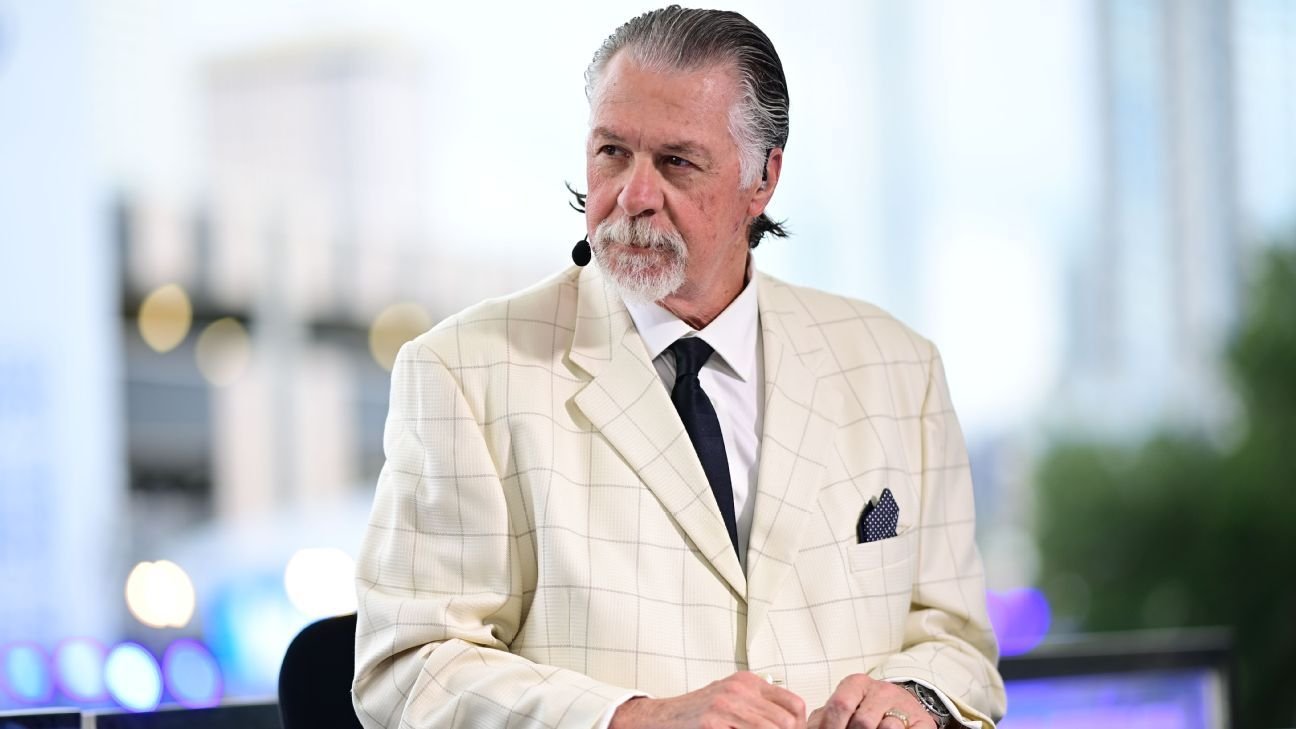
Barry Melrose, a former NHL player and coach who was a beloved hockey analyst for ESPN for over 25 years, died Wednesday, his wife, Cindy, told ESPN’s Steve Levy.
He was 70.
Melrose was diagnosed with Parkinson’s disease in 2023, leading to his retirement from ESPN. He joined the network in 1996.
“For decades, Barry Melrose was one of the most distinctive and trusted voices in hockey,” ESPN said in a statement. “His knowledge of the game was deep, his candor was refreshing, and his passion was unmistakable. He was a foundational part of ESPN’s hockey coverage, and fans and teammates truly appreciated his entertaining delivery and charismatic personality.
“We send our deepest condolences to his loved ones. He always kept it interesting and he will be missed.”
Melrose served as coach of the Wayne Gretzky-led Los Angeles Kings, taking them to the Stanley Cup Final in the first of his three seasons (1992 to 1995). He stepped away briefly from ESPN in 2008 to return to the bench, this time as coach of the Tampa Bay Lightning for 16 games.
Overall, he had an 84-108-29 record as a head coach.
At ESPN, millions watched him as a studio analyst, and within the company’s walls, he was lauded as the consummate teammate.
He was known for his witty personality, flashy suits and recognizable goatee, slicked-back hair and mullet, which endeared him to hockey fans worldwide. He regularly worked alongside Levy and John Buccigross on ESPN’s hockey coverage, including All-Star Games, Stanley Cup playoffs and the Cup Final.
“Barry was my best friend at ESPN,” Buccigross wrote on social media Wednesday night. “A big brother figure of rock solid values. I am shook to my core. Barry gave his life to hockey and some of his ESPN family, like me, learned of his shocking death today while at a hockey rink in Las Vegas preparing for the upcoming season. Chilling and fitting — the rink was Barry’s home. A more beloved ESPN institution there has not been. We love you, Barry. Forever.”
At the time of Melrose’s retirement, Gretzky, The Great One, paid tribute to him with the greatest of compliments: “Hockey is more than a game, it’s a community — a finely tuned orchestra — and Barry was our conductor.”
The Kings hired Melrose in 1992, and with Gretzky leading the way, they made a memorable playoff run, reaching the Cup Final before losing to the Montreal Canadiens in five games.
Rob Blake, a Hockey Hall of Fame defenseman, played for Melrose during that time, and after learning of his death Wednesday, he recalled their days together.
“He was just a terrific person to be in charge of our team,” Blake told ESPN. “A real big personality and he was a pleasure. He loved the game of hockey — the bright lights in L.A. were nothing for him when he got there.”
Blake said he wasn’t surprised when Melrose made a successful pivot to television.
“What he was teaching us about the game of hockey, he was teaching on TV,” Blake said. “He got to promote the game for a number of years at a very high level. It was great.”
Tony Granato, another former King, added: “He could light up a room. He could make people hear his voice and then you turn around and wonder what else he was going to say? There was no phoniness to him. He just was himself.”
Melrose, who was from rural Kelvington, Saskatchewan, began his coaching career in 1987, when he led the Medicine Hat Tigers to the WHL’s Memorial Cup title. He also coached the Seattle Thunderbirds for the 1988-89 season and the Adirondack Red Wings of the American Hockey League for three seasons (1989 to 1992), winning the Calder Cup championship in 1991.
During his 11 years as a player, Melrose appeared in 335 career games as a defenseman in the NHL with the Winnipeg Jets, Toronto Maple Leafs and Detroit Red Wings (1979 to 1986). He also played three seasons with Cincinnati in the WHA (1976 to 1979) — the last teaming with a young Mark Messier.
He finished with 10 goals, 33 points and 728 penalty minutes in 300 NHL career games. His WHA totals were five goals, 32 points and 343 penalty minutes in 178 games.
“From the flowing locks of his distinctive mullet to the flared lapels of his trademark long suit coats, Barry Melrose cut an unmistakable figure whenever you were fortunate enough to run into him at a rink or catch him on your television screen,” NHL commissioner Gary Bettman said. “You were even more fortunate if you engaged him in conversation or listened to his analysis because he never failed to boost your love of the game of hockey.”
Melrose is survived by his wife, Cindy, and two sons, Tyrell and Adrien.
ESPN’s Greg Wyshynski contributed to this report.